Top 11 Use Cases of AI Agents in Healthcare in 2026
Calling a healthcare center shouldn’t be more painful than the reason your patients are on the line.
Yet for thousands, it still is. Long wait times delay care. Misread data leads to incorrect prescriptions. And the consequences are serious: communication breakdowns cause up to 80% of major medical errors—including preventable deaths.¹
Despite the high stakes, many healthcare call centers struggle to handle the 2,000 calls they receive on average every day.² Delivering fast, accurate, and compassionate patient support is no small task.
To meet these demands, more providers are turning to AI agents in healthcare—an automated voice assistant who never gets sick, never misinterprets a prescription, and never confuses one patient’s record for another’s.
In this article, you see how AI voice agents can improve your call center's health—and quite literally help save lives. Read on to discover the 11 most important use cases for AI voice agents in healthcare, with practical examples and clear benefits.
Key Takeaways
- Communication failures account for 80% of serious medical errors, leading to misdiagnoses, delays in care, and even preventable deaths.
- Healthcare call centers face long wait times, misrouted calls, compliance risks, and system gaps, making it difficult to deliver fast, efficient, and secure patient care.
- By choosing an AI voice agent for healthcare, you can ensure your team overcomes these challenges, reducing errors and improving customer experience.
- Voice agent use cases for healthcare span from mental health support to personalized care—proving their versatility across the whole patient journey.
What are AI Agents in Healthcare?
AI agents in healthcare refer to the use of AI voice assistants to manage calls between patients and care providers.
These AI agents work like intelligent virtual receptionists, answering patients’ questions, scheduling appointments, sending reminders, and automating admin workload. Some can even help triage symptoms—all powered by AI and natural language processing.
The big advantage? They don’t get tired, make mistakes from overload, or clock out at the end of the day. That means your team can focus on complex matters while AI handles the basic (and repetitive) tasks.
In practice, healthcare conversational AI cuts down on red tape, boosts patient engagement, and delivers fast, clear, and accurate responses. And when well-integrated into your clinic or hospital workflows, it makes the patient experience smoother and more welcoming.
How Do AI Voice Agents for Healthcare Work?
Here's the technology behind the healthcare AI voice assistant:
1. Speech Recognition
- Converts spoken words into written text in real time.
- Detects various accents, speaking speeds, and background noise.
- Enables the AI to "hear" and process what the caller is saying.
2. Natural Language Understanding (NLU)
- Interprets the meaning and intent behind spoken words.
- Understands context, even when phrased in different ways.
- Helps the AI figure out what the caller wants to do.
3. Multilingual Handling and Human-Like Interactions
- Supports multiple languages with fluid, natural speech
- Adjusts tone and pace to match customer emotions
- Builds rapport through contextual understanding
4. Security, Privacy, and Compliance
- Encrypts data to protect conversations
- Supports HIPAA, and other regulatory needs
- Tracks and logs interactions for audits and transparency
Top 11 Valuable AI Voice Agent Use Cases in Healthcare
From the first “hello” to the final follow-up, conversational AI in healthcare steps in where time is short, stakes are high, and expectations never sleep. Whether it’s automating appointment reminders, answering patient queries, or transcribing clinical conversations, AI-driven tools are reshaping how providers work. For example, Sprypt’s AI Scribe not only captures real-time patient encounters but also integrates seamlessly into documentation workflows.
Below are 11 use cases of AI voice agents in healthcare and how they are transforming communication in clinics, hospitals, and healthcare systems.
#1. Automated Appointment Scheduling
Scheduling is a full-time job in any clinic, and it eats up more time than it should. AI voice agents take that burden off your team by handling appointment calls from start to finish.
With a virtual assistant handling the phone lines, patients can book on their own terms.
- Real-time booking: Patients can schedule, reschedule, or cancel appointments anytime they call—no hold music, no back-and-forth.
- Fewer no-shows: Automated reminders reduce missed appointments by up to 30%.³
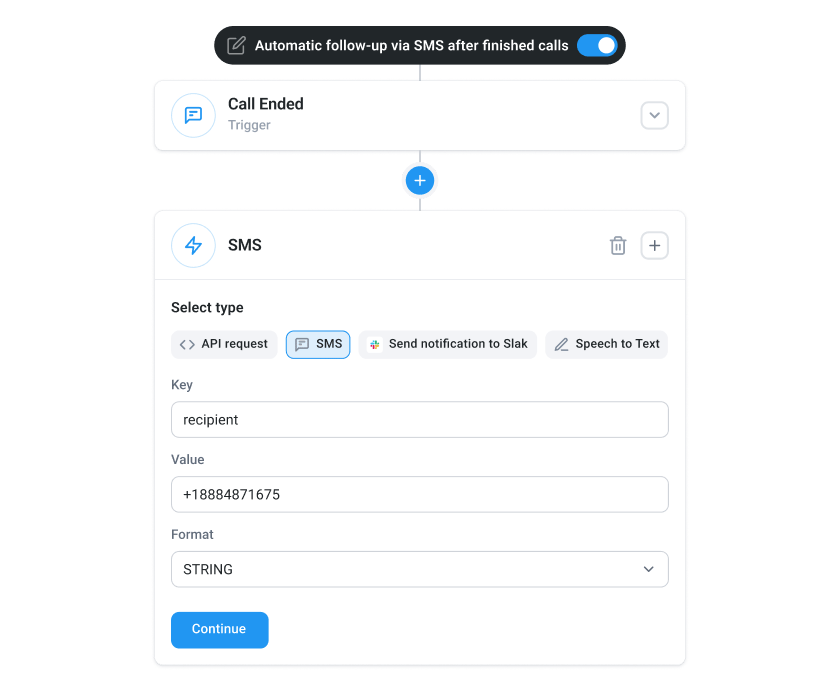
Coupled with Workflow Automation, CloudTalk’s AI Voice Agent takes timely action and ensures every patient touchpoint is handled—no manual work required.
#2. Handling Routine Patient Inquiries (FAQs)
“Are you open on Saturdays?” “Can I eat before my blood test?” These are the kinds of questions that flood front desks—and drain precious time.
Instead of tying up staff with repeat inquiries, AI voice agents step in with quick, consistent answers. They're always on call, ready to respond with accurate info.
- 24/7 Availability: Conversational healthcare bots answer routine questions instantly—24/7, even outside office hours.
- Accurate Info Delivery: Office hours, insurance details, and prep instructions delivered consistently.
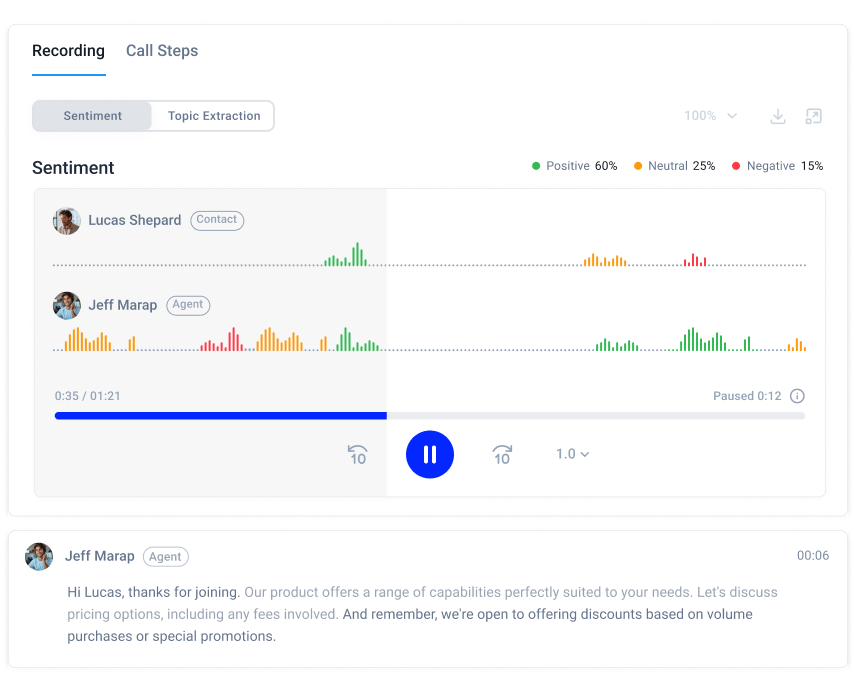
And if you want to go back to these calls, built-in Call Recording and Transcription ensure that every conversation is documented, searchable, and easy to follow up on.
#3. Medication Reminders and Adherence Support
Medication non-adherence is one of the biggest—and most preventable—health risks. But remembering pills isn’t easy, especially for older adults or patients managing multiple conditions. This challenge extends across various treatment types, from daily medications to injectable therapies like liraglutide prescriptions for weight management, where consistent dosing schedules are critical for therapeutic effectiveness.
AI healthcare agents deliver gentle, personalized reminders right on time.
- Timely Prompts: Voice calls remind patients to take their meds or refill prescriptions.
- Better Outcomes: Studies show an 11% boost in adherence with automated reminders.⁴
One call a day shows care and could be the difference between stable health and a hospital readmission.
#4. Symptom Checking and Triage
When something feels off, a phone call is often the first move. Early symptom assessment plays a key role in guiding patients to the right level of care—based on the urgency of their condition.
You don't need to send every caller to the same front desk queue. AI agent services triage concerns immediately—saving time, reducing unnecessary appointments, and ensuring urgent cases get the priority they deserve.
- Symptom-Based Flows: Voicebots in healthcare ask smart, structured questions to understand the issue, provide initial insights, and assess urgency.
- Next-Step Routing: Based on responses, it can recommend home care, schedule follow-ups, or escalate to emergency services.
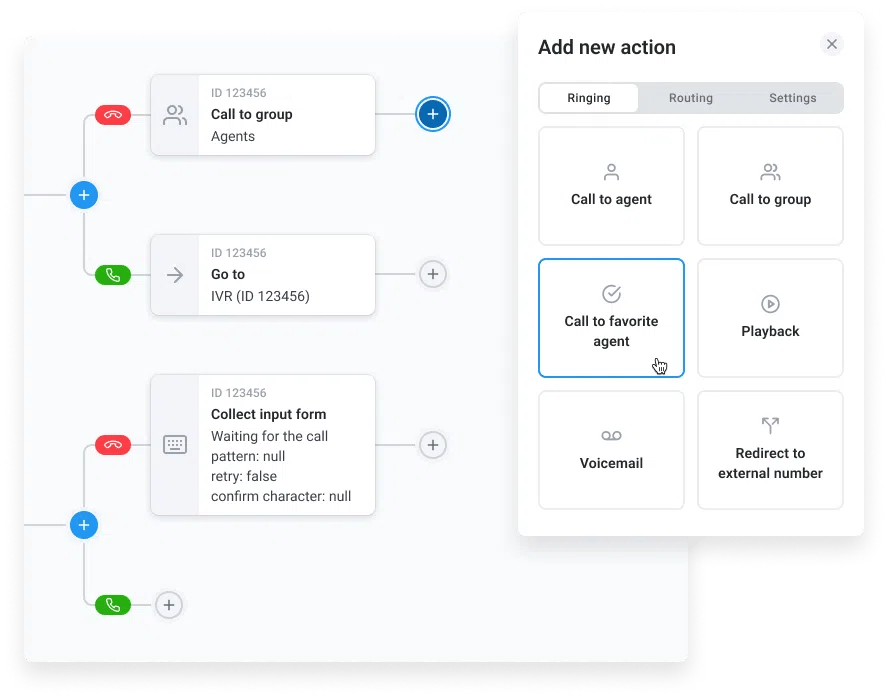
CloudTalk’s AI Voice Agents guide patients through structured health checks using designed call flows, surfacing urgent needs, and routing others appropriately.
#5. Delivering Lab Result Notifications
Whether the news is good or bad, no one likes waiting for test results. With AI voice in healthcare, patients get notified the moment their results are available—securely and efficiently.
No more callback bottlenecks. No more long hold times.
- Instant Delivery: Results reach patients faster than manual callbacks.
- Data Privacy: Shared securely, with permission protocols in place.
CloudTalk’s HIPAA-compliant platform ensures sensitive health information is handled with care, protecting both privacy and trust.
#6. Collecting and Analyzing Patient Feedback
Good care starts with good listening—but chasing down feedback is tough. The use of AI in medical treatment makes it frictionless, collecting insights at the right moment.
- Automated Surveys: Patients complete post-visit surveys through AI, sharing their healthcare experiences conveniently.
- Instant Data Analysis: AI interprets feedback to highlight service strengths and pinpoint improvement areas.
Want to take it a step further? After every interaction, CloudTalk’s Automatic Call Summaries provide concise recaps of each conversation, while Topic Extraction identifies recurring themes and key subjects.
Together, they give your team a clear view of what matters most—so you can adapt faster and respond smarter.
#7. Mental Health Support and Screening
Mental health concerns often go unspoken—especially when patients aren’t ready to seek help. AI medical voice agents offer a safe, low-pressure way for patients to check in on their emotional state.
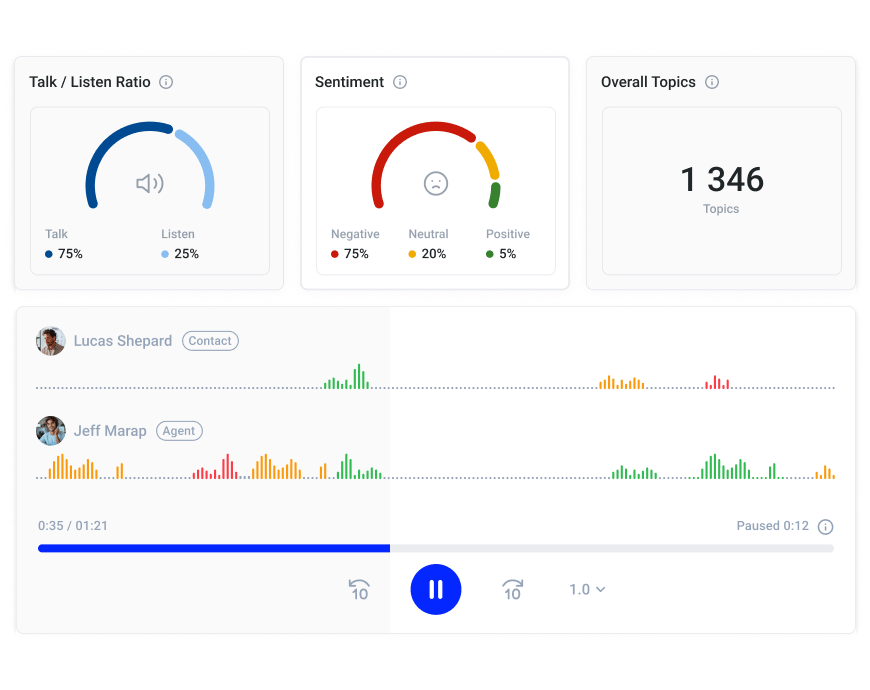
Rather than acting as therapists, these agents can use Sentiment Analysis to detect tone, mood, and emotional cues during conversations. This helps surface early signs of stress, anxiety, or emotional fatigue.
- Empathetic Check-Ins: Voice agents prompt patients to reflect on how they’re feeling, offering space to be heard without judgment.
- Guided Next Steps: When signs of distress are detected, the agent can suggest reaching out to a clinician or provide relevant support resources.
In areas with limited mental health services, this kind of early emotional awareness becomes a vital step in helping patients access the care they need.
#8. Improving Accessibility with Multilingual Service
Access to healthcare and treatments should never depend on the language you speak, especially when you're in pain.
AI in healthcare companies helps bridge these gaps by supporting multilingual conversations and adhering to accessibility best practices. This ensures that patients from all backgrounds can engage with healthcare providers confidently and independently.
- Multilingual Interactions: Voice agents can speak and understand multiple languages, allowing patients to communicate in the language they’re most comfortable with.
#9. Reducing Administrative Overload
Conversational AI in healthcare don’t just support patients—they support the people behind the scenes, too. With burnout affecting nearly 46% of healthcare workers⁵, reducing routine workload isn’t just helpful—it’s critical.
By automating time-consuming tasks like record updates, appointment confirmations, or eligibility checks, AI voice agents free up staff to focus on meaningful, patient-facing work.
- Automated Tasks: From intake forms to insurance verifications, repetitive admin work is handled without delay.
- Smarter Workflows: Fewer manual steps mean fewer errors, faster resolutions, and less staff stress.
CloudTalk’s AI Conversation Intelligence adds another layer of relief—automatically transcribing calls, tagging topics, and generating summaries. It’s like having a virtual assistant who never forgets a detail, helping your team stay focused and efficient.
#10. Enhancing Preventive Care
A check-up today beats a crisis tomorrow. Whether it’s a flu shot, cancer screening, or routine check-up, staying on top of preventive care keeps patients healthier and healthcare costs lower.
AI voice agents help providers stay one step ahead by delivering timely, personalized outreach that encourages patients to take action.
- Customized Reminders: Messages are tailored based on a patient’s age, medical history, and previous visits.
- Higher Engagement: Patients are far more likely to respond when contacted directly, rather than relying on email or portal alerts.
And to deepen the connection even further, CloudTalk lets you choose a tone of voice for CeTe that fits your audience—whether that’s calm and reassuring or upbeat and friendly. Because how you say it matters just as much as what you say.
#11. Insurance Claims and Billing Support
It's true—conversations about money, coverage, and billing can be uncomfortable for everyone involved. Patients may feel awkward asking detailed questions, and staff often struggle to explain complex policies clearly.
The use of artificial intelligence in healthcare removes that discomfort by offering a neutral space for financial conversations. They can gently remind customers about outstanding payments while making it easier for them to explore their options.
- Claim Support: Voice agents guide patients through claim submissions, helping ensure everything is filled out correctly.
5 Best AI Voice Agents for the Healthcare Industry
Not every AI voice agent belongs in healthcare. The stakes are higher, the calls more urgent, and the margin for error smaller. But a few tools do it right. Here are five worth your shortlist.
#1 CloudTalk
Signature Capability
See CloudTalk’s AI Voice Agent in Action!
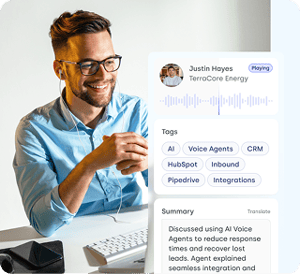
CeTe is an AI that talks like a human: no breaks, no training, no time off. It makes and answers calls, updates CRMs, books meetings, and loops in a human only when needed.
Press play to hear it. Want a wow moment? Get a free test call and try it live.

CloudTalk is redefining healthcare communication with AI-powered voice technology, built to support patient engagement and operational efficiency.
Its AI Voice Agent, CeTe, is a human-sounding virtual assistant that can handle routine calls, like appointment scheduling, follow-ups, and reminders, recognizing returning patients from their CRM history.
Trusted by over 5,500 growing organizations and SMBs, CloudTalk ensures crystal-clear call quality in 160+ countries, helping providers deliver timely, compassionate, and consistent communication at scale.
Best for: Compatible with businesses of all sizes, with a focus on growing organizations.
Key Features:
- AI-Powered Conversation Intelligence
- Intelligent Call Routing
- Advanced AI Call Analytics
- Call Flow Designer
- Workflow Automation
- HIPAA Compliance
- STIR/SHAKEN
Key integrations:
- ERP and EMR systems via API (e.g. Epic, Cerner, or Athenahealth)
- Custom systems via webhook
- Zapier
- HubSpot
- Pipedrive
- Salesforce
- Zendesk
Pricing Plans:
- AI Conversation Intelligence: $9 /user/month
- CeTe Voice Agent: From $99/200 min/month
- Starter: $25 /user/month
- Essential: $29 /user/month
- Expert: $49 /user/month
- Custom: Contact CloudTalk for a tailored solution
14 days for free. Zero patients on hold. Your call.
#2 Sully.ai
Sully.ai delivers a full suite of AI-powered clinical agents—acting as nurse, receptionist, medical scribe, coder, and pharmacy assistant—all in one seamless package.
It integrates directly with your EMR, automates documentation, intake, coding, and follow-up—so clinicians can focus entirely on patients.
Best for: Medium to large healthcare systems and clinics looking to streamline clinical operations.
Key Features:
- AI Nurse, Receptionist, Scribe, Medical Coding
- Voice-to-text medical notes
- Multilingual support
- HIPAA‑compliant
Key integrations:
- Epic
- AthenaHealth
- CRC
- Stripe
- Office Ally
Pricing Plans:
- Pro: $79/provider/month (AI Scribe, Chat, documentation)
- Premium: $99/provider/month (+ advanced agents, automations)
#3 Cognigy
Cognigy offers a flexible conversational AI platform with powerful voice and chat agents. In healthcare, it's used to automate patient questions, prescription refills, insurance claims, and post-discharge follow-up.
Best for: Large healthcare organizations and hospital networks looking for advanced, low-code automation across multiple channels.
Key Features:
- Voice & chat support across multiple languages
- Pre-trained healthcare AI flows
- Intelligent call routing & digital intake
- Live-agent escalation and analytics dashboard
- HIPAA & GDPR-ready platform
Key integrations:
- UiPath
- SAP SuccessFactors
- ServiceNow
- Microsoft Teams
Pricing Plans:
- Basic: Estimated at $2,500/month, usage-based.
(Pricing sourced from third-party review platforms, as official rates are not publicly disclosed.)
#4 Amelia AI (SoundHound)
Amelia is a conversational AI assistant with strong context awareness and emotion detection, making it well-suited for application in healthcare settings. It handles patient intake, FAQs, scheduling, and basic support.
Best for: Healthcare providers that prioritize natural, human-like patient interactions and context-driven support.
Key Features:
- Multi-turn conversational intelligence
- Emotion-aware responses via sentiment detection
- Self-learning behavior refinements
- HIPAA-compliant deployments
Key integrations:
- Epic
- SAP
- Stripe
- Zendesk
Pricing Plans:
- Basic: $80.53/year
- Pro: $121.32/year
- Developer: $253.85/month
(Pricing sourced from third-party review platforms, as official rates are not publicly disclosed.)
#5 Notable Health
Notable Health delivers a unified AI-powered voice and SMS platform designed to handle inbound and outbound patient communication—streamlining scheduling, billing, referrals, authorizations, and more.
Its intelligent agents seamlessly integrate with EHRs, managing real conversations with context and depth while reducing manual burden on staff.
Best for: Healthcare systems, hospitals, and clinics seeking end-to-end automation.
Key Features:
- Inbound & outbound voice/SMS agents
- Flow Builder low-code platform
- Multilingual & multi-channel communication via voice, SMS, and web
- Real-time analytics and dashboards
Key Integrations:
- Epic
- Cerner
- Athena
- Oracle
- Billing and insurance systems
Pricing Plans:
Notable Health does not publish standard pricing; implementation costs vary based on system size, call volumes, and modules chosen.
Prescribe AI to Your Call Center—and Watch It Recover
Patients may be called “patients,” but they’re not waiting around. If the phone isn’t picked up within a minute, 60% of them hang up.⁶
And the consequences stack up quickly: even a 7% abandonment rate on 2,000 daily calls means 140 missed conversations, potentially translating to $45,000 in lost revenue every single day.⁶
AI Voice Agents are changing that equation. By automating routine interactions—like scheduling, reminders, triage, and billing inquiries—they ensure patients get the answers they need quickly, without tying up valuable staff time.
More than just automation, the use of AI in healthcare is bringing consistency, empathy, and 24/7 availability to every patient touchpoint. The result? A communication experience that’s as responsive as the care you aim to deliver.


Sources:
Frequently asked questions
The best AI tool depends on your business needs, but platforms offering voice AI healthcare features, like CloudTalk, are leading the way in boosting efficiency and care quality.
They’re virtual assistants that handle tasks like scheduling, triage, and reminders—common use cases for AI in healthcare that reduce staff workload.
Pricing varies drastically by provider. For example, CloudTalk’s plans start at $25/user/month, and its AI Voice Agent costs $350/team/month.
Not fully. Most examples of AI technology in healthcare follow predefined flows—they’re smart, but still need prompts and pre-settings.
Not yet. Even advanced voice AI healthcare tools support—but don’t replace—human decision-making in clinical settings.
It enables natural conversations with patients and automations such as appointment scheduling, symptom triage, and post-visit surveys via phone or messaging.
Examples include booking, reminders, triage, and billing—all core use cases for AI in healthcare communication.
Streamlining admin work—like intake, documentation, and billing—is one of the top examples of artificial intelligence in healthcare.
A patient chatbot that handles scheduling, FAQs, and refill requests is one of the most effective chatbot use cases in healthcare.
Top voice AI tools in healthcare include CloudTalk, Sully.ai, and Cognigy—and CloudTalk stands out for its clear voice AI, excellent scheduling and reminder automation, seamless EMR integrations, and scalable HIPAA-compliant communication.