TL;DR: 10 Best Alternatives to Smith.ai 2026
| # | Platform | Best for | Starting Price (annual billing) | G2 Rating |
|---|---|---|---|---|
| 1 | CloudTalk | Scaling sales & support teams that want AI reception + a full phone system | $25/user/mo | 4.4/5 |
| 2 | Ruby | Premium 100% US-based human receptionists | $245/mo (50 min) | 3.8/5 |
| 3 | AnswerConnect | All-human 24/7 live answering | ~$350/mo (200 min) | 4.7/5 |
| 4 | Abby Connect | A dedicated team of receptionists | $329/mo (100 min) | 4.6/5 |
| 5 | Nexa | Industry-specialized intake (legal, medical, home services) | Custom (contact sales) | 4.2/5 |
| 6 | PATLive | Budget-friendly live answering with custom scripts | $235/mo (75 min) | 4.6/5 |
| 7 | Dialpad | Built-in conversational AI across calling | $15/user/mo | 4.4/5 |
| 8 | Goodcall | No-code AI receptionist for local & solo businesses | $59/mo (flat) | 4.7/5 |
| 9 | Rosie | Fast, budget AI answering with auto-setup | $49/mo (250 min) | New (no public reviews) |
| 10 | Synthflow | Building custom AI voice agents (no-code) | ~$0.11–0.24/min (PAYG) | 4.5/5 |
Skip the reading. See it live.
Why Are Teams Searching for a Smith.ai Alternative?
Smith.ai built its name by pairing a real human receptionist (or an AI one) with deep legal-CRM integrations, and for low-volume, high-stakes intake it still does that job well. But as sales and support teams grow, the per-call model and the long list of paid add-ons start to work against them.
Based on verified Smith.ai G2 reviews (the AI Receptionist scores 4.7/5 and the human Virtual Receptionist 4.9/5), Trustpilot feedback (4.4/5 across 300+ reviews, where most billing complaints land), and our own testing, here are the six roadblocks that send growing businesses looking for an alternative to Smith.ai.
6 Main Cons of Smith.ai That Make Teams Look for an Alternative
- The per-call "success tax":Smith.ai bills per call, so your bill climbs exactly when business is good. The human plan starts around $292.50/mo for just 30 calls (roughly $9.75 each), and overage runs $9.75–$11.50 per call. A small firm taking 50 calls a month can easily see a $600+ invoice against a $300 sticker price.
- Nickel-and-dime add-ons:The advertised price is rarely the real one. Appointment booking adds +$1.50/call, payment collection +$1.00/call, Spanish answering +$1.00/call, call recording +$0.25/call, and an on-demand live-agent handoff +$3/call. The features most teams actually need stack on top of the base plan fast.
- It's an answering service, not a phone system:Smith.ai answers and routes, but it can't run your team's day-to-day outbound calling. So you end up paying Smith.ai to take messages and a separate call center platform to actually make calls; two vendors, two bills, two sets of data.
- Siloed, third-party data:Because the receptionist sits outside your stack, call notes and lead data are handed over from an external agency rather than living natively in your CRM. Teams that need a single source of truth in Salesforce or HubSpot end up reconciling records by hand.
- Some callers bristle at the AI:In Smith.ai's own G2 reviews, customers note that a share of callers are put off once they realize an AI receptionist is handling the call; not a knock on the handling, but a reminder that a reactive gatekeeper isn't the same as a salesperson.
- Built for one vertical:Roughly 84% of Smith.ai's Virtual Receptionist G2 reviews come from law firms, and its deepest integrations (Clio, MyCase, PracticePanther) reflect that. Outside legal, the fit and the playbook are thinner.
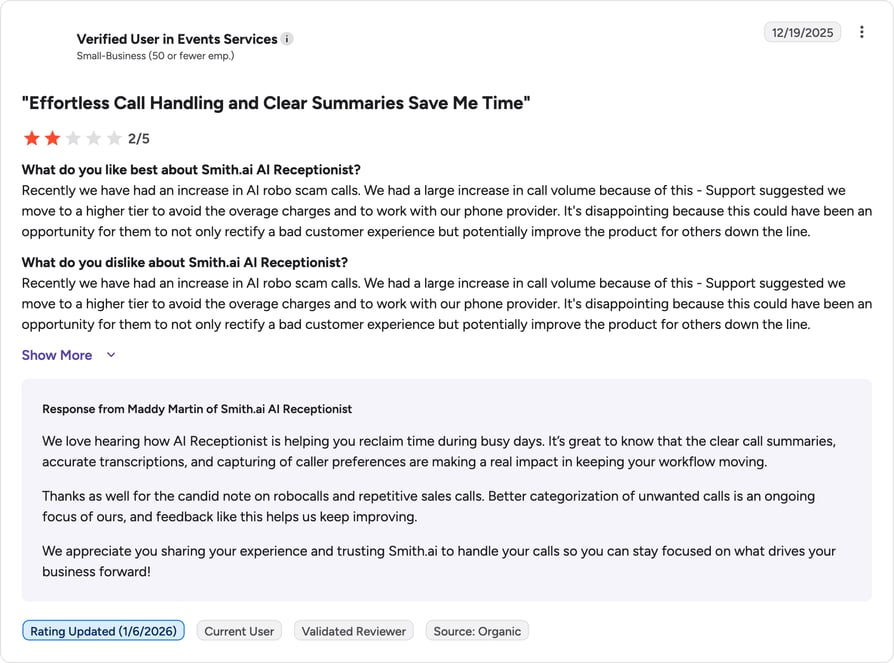
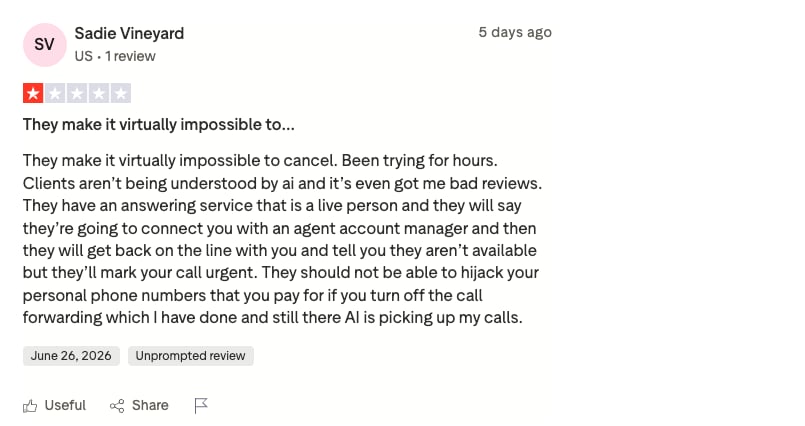
Every claim above is grounded in real user feedback. The review cards below come straight from verified G2, Trustpilot, and Reddit discussions about Smith.ai pricing and call handling.
What Is the Best Alternative to Smith.ai?
CloudTalk is the best Smith.ai alternative for growing sales and support teams, because it replaces both your answering service and your phone system with one platform. Unlike Smith.ai, CloudTalk's AI Voice Agents don't just take a message; they answer 24/7, qualify leads, book meetings, and sync every call to your CRM.
It starts at $25/user/month, guarantees 99.999% uptime, and bundles the bilingual answering, scheduling, and CRM sync that Smith.ai charges extra for, so there's no per-call meter and no second vendor.
Where Smith.ai is a reactive gatekeeper bolted onto the side of your business, CloudTalk is the business phone itself. Your human agents and your AI receptionist share one dashboard, one set of numbers in 160+ countries, and one synced record in tools like Salesforce and HubSpot. That makes it a genuine customer support automation engine, not just message-taking.
Why Do Teams Consider CloudTalk the Best Smith.ai Alternative?
5 Main Pros of CloudTalk and Why Businesses Switch from Smith.ai
- Predictable flat pricing (fixes the per-call tax):Instead of paying $9.75–$11.50 every time the phone rings, you pay one transparent per-user rate from $25/user/month. Busy months don't punish you, and the booking, recording, and bilingual features Smith.ai charges per call for are simply included.
- One platform, not two vendors (fixes double-billing):CloudTalk is your phone system and your AI receptionist. Your team makes and receives calls, runs outbound dialers, and lets AI handle overflow, all under one bill, instead of stitching an answering service onto a separate carrier.
- AI that acts, not just answers (fixes the reactive gatekeeper):CloudTalk's AI Voice Agents work like a virtual SDR. They qualify callers, answer FAQs from your knowledge base, book meetings, and escalate to a human when it matters, so after-hours and overflow calls become booked opportunities, not voicemails.
- True two-way CRM sync (fixes siloed data):Every call, transcript, AI summary, and sentiment score logs automatically into 100+ CRMs. There's no external agency handing over data; your GTM team works from one source of truth.
- Borderless, multilingual coverage (fixes geographic & language surcharges):CloudTalk provides local numbers in 160+ countries, and its AI agents speak dozens of languages out of the box, so you're not paying a $1/call surcharge for Spanish or hitting per-region limits as you expand.
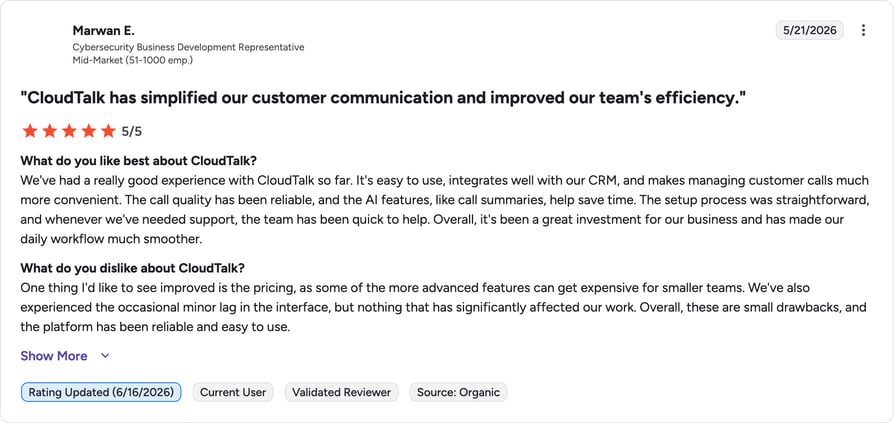
G2 reviewers give CloudTalk across 1,800+ verified reviews, and switchers consistently call out the instant setup and the time the CRM sync saves their reps.
Ready for a Smith.ai alternative that does more than take messages?
How We Chose the Best Smith.ai Alternatives and Competitors
To find the best Smith.ai alternatives for 2026, we combined hands-on testing with verified user data from Reddit, G2, Capterra, and Trustpilot (prioritizing tools with a meaningful review base). We specifically looked for platforms that solve Smith.ai's per-call pricing, its add-on fees, and the gap between an answering service and a real phone system.
Our research focused on six areas that matter most to growing teams:
- Pricing transparency & TCO: Advertised price vs. the real all-in cost once overages and add-ons stack up.
- AI & automation depth: Whether the tool can actually book, qualify, and route, or only relay a message.
- CRM integration: True two-way sync with HubSpot, Salesforce, and Pipedrive vs. shallow, one-way logging.
- Coverage & languages: 24/7 availability and native bilingual support without per-call surcharges.
- Review evidence: A minimum bar of verified G2/Capterra/Trustpilot reviews, weighted toward recent feedback.
- Migration ease from Smith.ai: How quickly a team can switch and keep its numbers and call flows intact.
The Top 10 Alternatives to Smith.ai for 2026
Before the detailed breakdowns, here's how CloudTalk stacks up against Smith.ai and three other popular Smith.ai competitors on the things that decide whether a caller becomes a customer.
CloudTalk vs. Smith.ai: Detailed Feature Comparison
| Feature | Smith.ai | CloudTalk | Ruby | Dialpad | Goodcall |
|---|---|---|---|---|---|
| Pricing model | Per call + add-ons | Flat per-user | Per minute | Per user | Flat (per caller) |
| Starting price | $95/mo (AI) • $292.50/mo (human) | $25/user/mo | $245/mo (50 min) | $15/user/mo | $59/mo |
| Full phone system |  (answering service only) (answering service only) |  | | | |
| AI Voice Agent | (message/route) | (qualify & book) | | | |
| Two-way CRM sync | Via Zapier / handoff | Native, 100+ CRMs | Basic logging | Native (Pro tiers) | Limited |
| Global coverage | US-focused | 160+ countries | US-focused | 70+ countries | US-focused |
| Free trial | 30-day money-back | 14 days | 7-day money-back | 14 days | Free tier |
| G2 rating | 4.7/5 (AI) | 4.4/5 | 3.8/5 | 4.4/5 | 4.7/5 |
The often-overlooked answering-service cost trap:
Smith.ai's $95 sticker looks cheap until you add booking, payments, Spanish, and overage, then add a separate phone system on top. CloudTalk bundles your numbers, AI reception, and outbound calling into one transparent per-user invoice.
1. CloudTalk: The #1 Smith.ai Alternative for Scaling Sales & Support Teams
What Is CloudTalk?
CloudTalk is an AI-powered business phone system that doubles as a 24/7 AI receptionist, built to help sales and support teams capture and convert every call without bolting on a separate answering service. Instead of just taking a message, CloudTalk qualifies leads, books meetings, and logs everything to your CRM automatically.
With 5,500+ businesses calling worldwide, CloudTalk suits SMB-to-mid-market teams that have outgrown a message-taking service and want their phone system and their AI reception under one roof, one bill, and one source of truth.
Why Is CloudTalk a Strong Smith.ai Alternative?
- Predictable flat pricing: No per-call meter and no surprise add-ons. Booking, recording, and bilingual answering are included, not $1–$3 surcharges, so your bill stays the same whether you take 30 calls or 300.
- Phone system + receptionist in one: Run inbound, outbound dialers, and AI overflow from a single dashboard, instead of paying an answering service and a carrier separately.
- AI Voice Agents that act: CloudTalk's AI agents qualify leads, answer FAQs, and book meetings 24/7, turning after-hours calls into pipeline rather than voicemails.
- Native two-way CRM sync: Every call, transcript, and AI summary writes back to 100+ tools like Salesforce and HubSpot automatically.
- Global, multilingual reach: Local numbers in 160+ countries and AI agents that speak dozens of languages, with no per-region or per-language surcharge.
What Are the Pros & Cons of CloudTalk?
| Pros | Cons |
|---|---|
| Phone system + AI reception in one: Replaces both your answering service and your carrier, eliminating double-billing. | Not a pure done-for-you service: Teams that want zero setup and a human on every call may prefer a managed receptionist. |
| Flat, transparent pricing: No per-call meter or add-on surcharges for booking, recording, or Spanish. | Lite plan is regional: The entry-level Lite tier is limited to the LATAM regions—everywhere else begins with Starter plan. |
| 100+ native CRM integrations: True two-way sync that logs every call automatically. | No native video meetings: Pairs with Zoom or Google Meet rather than bundling its own video. |
| AI Voice Agents included as add-ons: Qualify and book on the call from $9/mo, no per-minute metering. | |
| Global coverage: Local numbers in 160+ countries with built-in multilingual support. |
What Are CloudTalk's Plans & Pricing?
CloudTalk pricing starts at $25/user/month (billed annually), with AI features available as flat-rate add-ons from $9/mo:
- Starter - $25/user/month
- Essential - $29/user/month
- Expert - $49/user/month
- Custom - Quote-based pricing
What you don't pay extra for:
Unlike Smith.ai, CloudTalk doesn't bill +$1.50 to book, +$1.00 for Spanish, or +$3 for a live handoff. Those are part of the platform, so your per-user price is the price.
What Are CloudTalk Customers Saying?
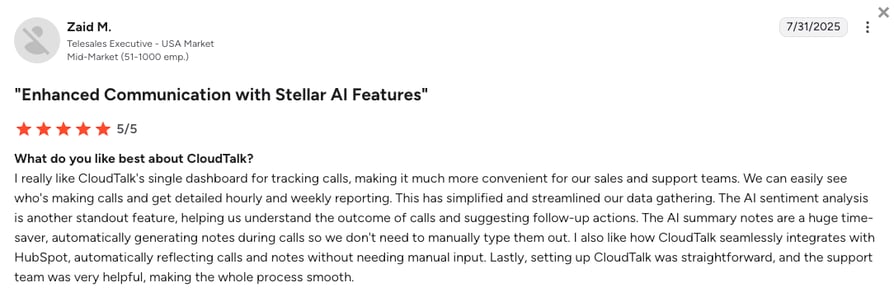
Teams migrating from answering services and legacy phones praise CloudTalk for instant setup, clear global audio, and the hours of manual logging its CRM sync saves their reps.
- Flawless CRM sync: Reps stop typing notes; every call and AI summary lands in the CRM automatically.
- Fast onboarding: Admins get new agents and numbers live in hours, not the days a managed receptionist needs to train.
- Network sensitivity: Because the platform is feature-rich, a few users note it rewards a stable internet connection for the cleanest audio.
How G2 Users Rate CloudTalk?
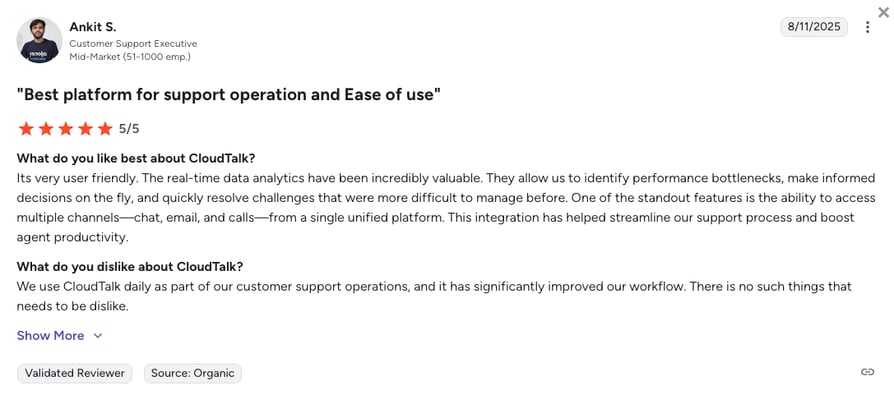
CloudTalk's current G2 rating is 4.4/5, across 1,800+ verified user reviews.
Stop taking messages. Start booking meetings.
2. Ruby: Best for Premium 100% US-Based Human Receptionists
What Is Ruby?
Ruby is one of the longest-running virtual receptionist services in the US, founded in 2003 with 15,000+ customers and a 100% US-based team. It's the gold standard when the caller experience is the brand, think boutique law firms and high-end consulting.
Why Is Ruby a Strong Smith.ai Alternative?
- Warm, human-first answering: Every caller reaches a trained US receptionist who sounds like in-house staff, an edge over Smith.ai's AI-led model for relationship-driven firms.
- Inclusive, no-hidden-fee pricing: No charges for setup, onboarding, or after-hours coverage; scheduling and bilingual answering are available at no extra cost.
- Unified voice + chat: Ruby handles both phone reception and managed website chat from one platform, useful for capturing leads across channels.
What Are the Pros & Cons of Ruby?
| Pros | Cons |
|---|---|
| Exceptional human quality: Callers routinely can't tell Ruby isn't your in-house front desk. | Most expensive in class: Premium per-minute rates put it well above industry average. |
| 100% US-based, bilingual: Warm, culturally fluent answering, 24/7/365. | Per-minute billing: Includes after-call wrap-up time, so chatty months inflate the bill. |
| No hidden fees: Transparent, all-inclusive plans with the same features at every tier. | Reported quality dips: Some long-time reviewers note service quality slipping while prices rise. |
What Are Ruby's Plans & Pricing?
Ruby uses per-minute pricing across its Call Ruby tiers, with answering-service plans running from $245/month for 50 minutes up to roughly $1,725/month for 500 minutes:
- Call Ruby 50 - $245/month (50 receptionist minutes)
- Call Ruby 100 - $385/month (100 minutes)
- Call Ruby 200 - $705/month (200 minutes)
- Higher tiers - up to ~$1,725/month (500 minutes)
The per-minute math to watch:
Ruby bills by the minute including after-call work, so a busy month can quickly blow past your plan. The inflection point where flat-rate AI gets cheaper sits around 80–100 calls/month.
What Are Ruby Customers Saying?
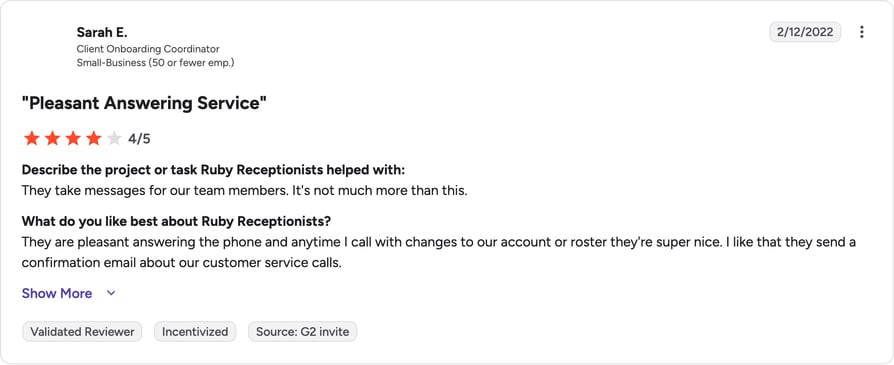
Reviewers love the human warmth and the 100% answer rates, while flagging cost as the recurring sticking point.
- Sounds in-house: Clients frequently say they had no idea the receptionist was outsourced.
- Great gatekeeping: Solicitors get screened out and legitimate callers get a strong first impression.
- Gets pricey fast: Several reviewers report rising prices and limited personalization at lower tiers.
How G2 Users Rate Ruby?
Ruby's current G2 rating is 3.8/5, with consistently strong marks for agent friendliness offset by cost complaints.
3. AnswerConnect: Best for All-Human 24/7 Live Answering
What Is AnswerConnect?
AnswerConnect is a 100% human-powered, 24/7/365 answering service that Forbes named the #1 answering service. It markets a "no bots, no AI" promise, real people answering, qualifying leads, and booking appointments, plus an eco angle: it plants a tree for every customer each month.
Why Is AnswerConnect a Strong Smith.ai Alternative?
- A human on every call, 24/7: North-America-based receptionists answer 99% of calls within one to four rings, with no AI in the loop if that's your preference.
- Native bilingual coverage: English and Spanish answering is included on most plans rather than billed as a per-call surcharge.
- CRM-connected: Integrates with Salesforce, Zoho, Zendesk, and HubSpot so messages and leads flow into your stack.
What Are the Pros & Cons of AnswerConnect?
| Pros | Cons |
|---|---|
| Top-rated human coverage: 24/7/365 live answering with excellent G2 and Trustpilot scores. | Per-minute billing: Overage at $1.85–$2.50/min makes busy months unpredictable. |
| Bilingual on most plans: Spanish answering included rather than an add-on. | Setup & port-out fees: Setup fees on most tiers and a $250–$300 fee to take your number elsewhere. |
| Strong CRM integrations: Salesforce, HubSpot, Zendesk, and Zoho out of the box. | Relays, doesn't run your phones: It takes messages and books, but isn't your outbound phone system. |
What Are AnswerConnect's Plans & Pricing?
AnswerConnect uses per-minute pricing and typically asks you to contact sales, but published bands look like this:
- Entry - ~$350/month for 200 minutes (plus ~$49.99 setup)
- Growth - $395/month for 300 minutes
- Standard - $575/month for 400 minutes
- Overage - $1.85\u2013$2.50 per additional minute
Mind the switching friction:
AnswerConnect's quality is genuinely strong, but the per-minute model plus setup and a $250–$300 port-out fee are what send some buyers to flat-rate options.
What Are AnswerConnect Customers Saying?
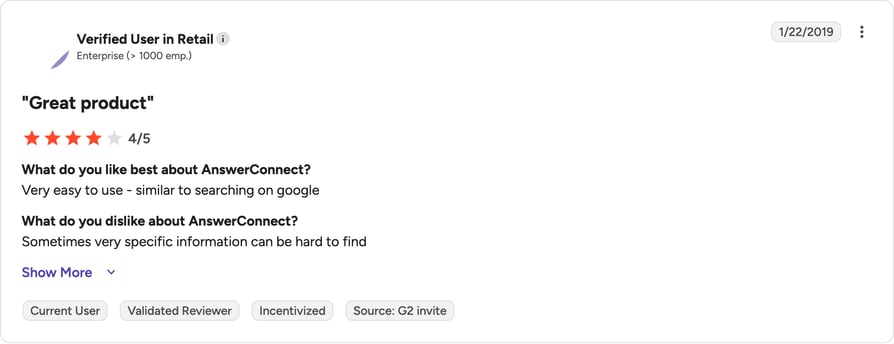
Reviewers praise the reliability and the eco mission, with cost the main caveat.
- Reliable coverage: Consistent 24/7 answering that catches calls outside business hours.
- Genuine differentiator: The tree-planting program comes up repeatedly as a reason teams stay.
- Wishes for a dedicated agent: Some users want one assigned person who can answer deeper questions.
How G2 Users Rate AnswerConnect?
AnswerConnect's current G2 rating is 4.7/5 (with 4.9/5 on Trustpilot across 1,300+ reviews).
4. Abby Connect: Best for a Dedicated Team of Receptionists
What Is Abby Connect?
Abby Connect is a US-based (Las Vegas) virtual receptionist service whose signature feature is a dedicated team of 5\u201310 receptionists per account, no outsourcing, no random rotation. It's popular with law firms and professional services, and now offers an AI receptionist option alongside the human one.
Why Is Abby Connect a Strong Smith.ai Alternative?
- A team that learns your business: The same small group answers your calls, recognizing repeat callers in a way a rotating pool (or Smith.ai's agent pool) can't.
- Predictable tiered AI plans: Abby's AI receptionist tiers have no overage; you upgrade if you outgrow a plan, which keeps billing steady.
- Vertical integrations: Direct connections to Clio, Lawmatics, HubSpot, and vCita suit legal and healthcare intake.
What Are the Pros & Cons of Abby Connect?
| Pros | Cons |
|---|---|
| Dedicated receptionist team: A familiar small team that builds rapport with your callers. | You pay for spam & ring time: Per-minute billing can include time spent on junk calls and ringing. |
| Strong onboarding & support: Reviewers consistently praise the setup experience. | Upsell pressure: Some report being quoted one price, then nudged to upgrade during onboarding. |
| AI + human options: Choose live receptionists, an AI receptionist, or both. | Standard hours are M–F: True 24/7 and weekend coverage cost extra on the human plans. |
What Are Abby Connect's Plans & Pricing?
Abby Connect bills per minute on live plans and per tier on AI plans, with a one-time $95 setup fee on receptionist plans:
- Live receptionist - from $329/month for 100 minutes, scaling to ~$1,199/month
- AI receptionist - $99/month (50 min) up to $690/month (500 min)
- Live chat - from $129/month (10 chats)
- Overage - $2.99 per additional minute
The billable-minute catch:
Abby's per-minute model can charge for spam and ring time, and standard human coverage is weekdays only. Confirm exactly what counts as a billable minute before signing.
What Are Abby Connect Customers Saying?
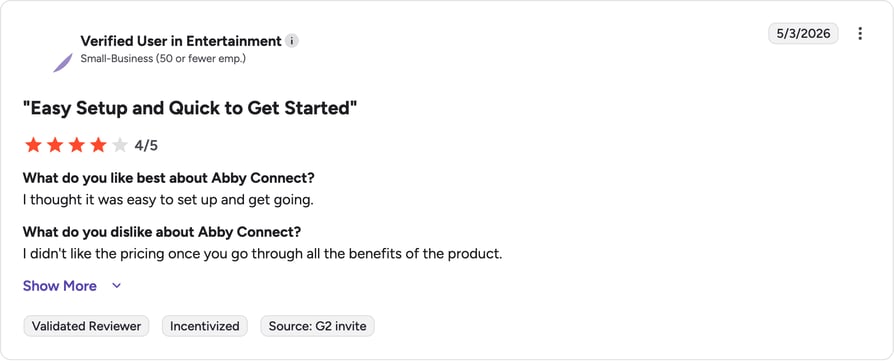
Feedback skews positive on people and service, with billing the main gripe.
- Personable team: Reviewers single out friendly, professional receptionists who feel like part of the firm.
- Hands-on onboarding: Customers switching from Smith.ai cite the white-glove setup as a step up.
- Spam-minute frustration: Some were billed overage when a large share of minutes went to spam and ringing.
How G2 Users Rate Abby Connect?
Abby Connect's current G2 rating is 4.6/5, with high marks for its dedicated-team model.
5. Nexa: Best for Industry-Specialized Intake (Legal, Medical & Home Services)
What Is Nexa?
Nexa (founded in 1982 as Answer 1) is a Phoenix-based, 40-year-old answering service with US receptionists trained for specific verticals: HIPAA-compliant healthcare, legal intake, home-services dispatch, real estate, and more. It now layers a "Voice + AI" hybrid on top of its human team.
Why Is Nexa a Strong Smith.ai Alternative?
- Vertical-trained receptionists: Agents fluent in HVAC dispatch, patient scheduling, or legal screening, broader than Smith.ai's legal-heavy focus.
- Bilingual on every plan: Native English/Spanish answering across all tiers, a real advantage for service businesses with Spanish-speaking customers.
- Outbound + intake, not just messages: Lead qualification, appointment booking, and outbound follow-up via calls, text, and chat.
What Are the Pros & Cons of Nexa?
| Pros | Cons |
|---|---|
| Deep industry training: Receptionists who understand your sector's terminology and workflows. | Opaque pricing: No public rates; you must talk to sales for a quote. |
| Bilingual everywhere: English and Spanish included across all plans. | Per-minute rounding: 30/60-second rounding can inflate billed minutes. |
| Full-service intake: Booking, dispatch, lead qualification, and outbound calling. | Quality varies; no public API/app: Reviewers note occasional name errors and limited self-service tooling. |
What Are Nexa's Plans & Pricing?
Nexa doesn't publish full pricing; plans are quoted by sales and billed per minute with a setup fee. As a directional reference, comparable virtual-receptionist plans run around $200\u2013$300/month for 100 minutes. For the real number, you'll need a quote.
- Plan tiers - listed by minute bundle on Nexa's site; pricing on request
- Billing - per minute with 30/60-second rounding plus a setup fee
- Coverage - 24/7/365, bilingual on all plans
Get the rounding rules in writing:
Because Nexa rounds to 30- or 60-second increments and doesn't post prices, ask for the exact rounding and overage terms before you commit so the per-minute bill doesn't surprise you.
What Are Nexa Customers Saying?
Customers value the industry expertise and 24/7 coverage, with quality consistency the main watch-out.
- Sector fluency: Home-services and medical clients appreciate receptionists who know the workflow.
- Reliable after-hours: 24/7 bilingual coverage keeps the pipeline full overnight.
- Inconsistent handling: Some reviewers report name errors and confused transfers on busier days.
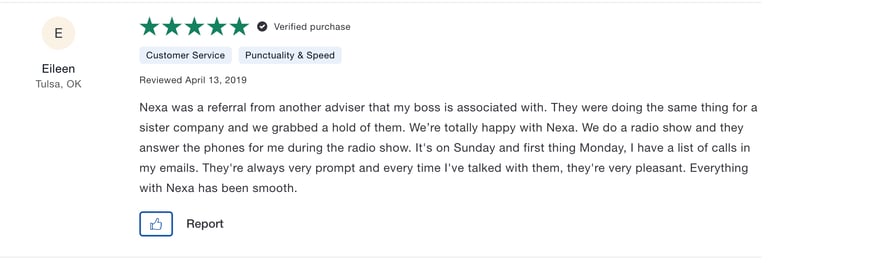
How G2 Users Rate Nexa?
While G2 doesn't have Nexa reviews, ConsumerAffairs.com has plenty, with an average rating of 4.7/5.
6. PATLive: Best for Budget-Friendly Live Answering with Custom Scripts
What Is PATLive?
PATLive has provided US-based live answering since 1990, with a 120+ hour receptionist training program and fully customizable call scripts. Its edge over Smith.ai is transparent per-tier pricing, no contracts, and billing only for live talk time rather than per call.
Why Is PATLive a Strong Smith.ai Alternative?
- Highly customizable scripts: Proprietary scripting software handles complex, multi-step intake (event registration, detailed qualification) precisely.
- Transparent, no-contract pricing: Published per-tier rates and month-to-month terms, a refreshing change from per-call meters.
- Bills live talk time only: You're not charged for hold time, which is fairer than per-call models where a 30-second call costs the same as a 20-minute one.
What Are the Pros & Cons of PATLive?
| Pros | Cons |
|---|---|
| 35+ years & deep training: Fast, accurate answering (about eight seconds in testing) from well-trained US agents. | Per-minute economics: Still human pricing, so heavy call volume adds up. |
| Custom call flows: Complex, multi-step scripts are a genuine strength. | Spanish is an add-on: Bilingual coverage costs roughly $20/month extra. |
| No contracts: Month-to-month with transparent published rates. | Answering service, not a phone system: Handles inbound; doesn't run your outbound calling. |
What Are PATLive's Plans & Pricing?
PATLive bills per minute of live talk time with no setup fees or contracts:
- Starter - ~$235/month for 75 minutes ($2.25/min overage)
- Pro - ~$1,050/month for 600 minutes ($1.85/min overage)
- Bilingual add-on - ~$20/month for Spanish coverage
Best for low-to-moderate volume:
PATLive is a strong value for a human voice at modest volume. For heavy or spiky traffic, the per-minute minutes stack up, where flat-rate AI tends to win.
What Are PATLive Customers Saying?
Reviewers rate PATLive among the best-value human services, especially for custom intake.
- Accurate booking: Receptionists follow detailed scripts and book reliably into client workflows.
- Fast pickup: Quick answer times and a polished, professional tone.
- Minutes add up: High-volume callers note the per-minute bill climbing in busy months.
How G2 Users Rate PATLive?
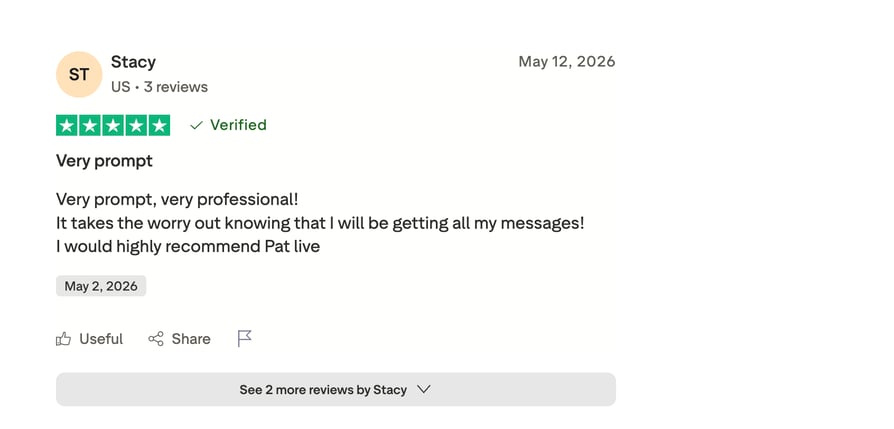
PATLive's rating is roughly 4.9/5 on Trustpilot.
7. Dialpad: Best for Built-In Conversational AI Across Calling
What Is Dialpad?
Dialpad is an AI-powered business phone and contact center platform (founded 2006) built around its own DialpadGPT model. It bakes real-time transcription, AI call recaps, sentiment, and a multilevel auto-attendant into the calling experience, more of a full phone system than a managed receptionist.
Why Is Dialpad a Strong Smith.ai Alternative?
- AI baked into every call: Live transcription, automatic recaps, and sentiment give your team insight Smith.ai's message-taking can't.
- It's a real phone system: Unlike an answering service, Dialpad runs your inbound and outbound calling, messaging, and meetings in one app.
- Proprietary LLM: DialpadGPT is trained on billions of business-call minutes, which can mean fewer transcription errors than generic models.
What Are the Pros & Cons of Dialpad?
| Pros | Cons |
|---|---|
| Strong voice intelligence: Real-time transcripts, recaps, and sentiment on every Connect plan. | Features gated to higher tiers: CRM integrations and 24/7 support sit behind pricier plans. |
| Unified voice, video & chat: One app for calls, meetings, and messaging. | Seat minimums & per-user cost: The Pro plan needs 3+ users, and costs rise with headcount. |
| 60+ integrations: Salesforce, HubSpot, Zendesk, and Google Workspace. | Call-quality & billing gripes: Reviewers report occasional choppy audio and confusing add-on charges. |
What Are Dialpad's Plans & Pricing?
Dialpad pricing is split across products; the core Connect line starts at $15/user/month (billed annually):
- Connect Standard - $15/user/month ($27 monthly)
- Connect Pro - $25/user/month ($35 monthly, 3-user minimum)
- Support (contact center) - from $80/user/month
- AI Agents / Enterprise - quote-based
Watch the tier jumps:
Dialpad's $15 entry looks great, but CRM integrations, 24/7 support, and the strongest AI features live on higher-priced plans, so the real cost depends on which features you actually need.
What Are Dialpad Customers Saying?
Users love the AI productivity features, with pricing transparency and call quality the usual caveats.
- Time-saving AI: Auto-transcription and recaps cut manual note-taking dramatically.
- Unified experience: Calls, texts, and meetings in one place across desktop and mobile.
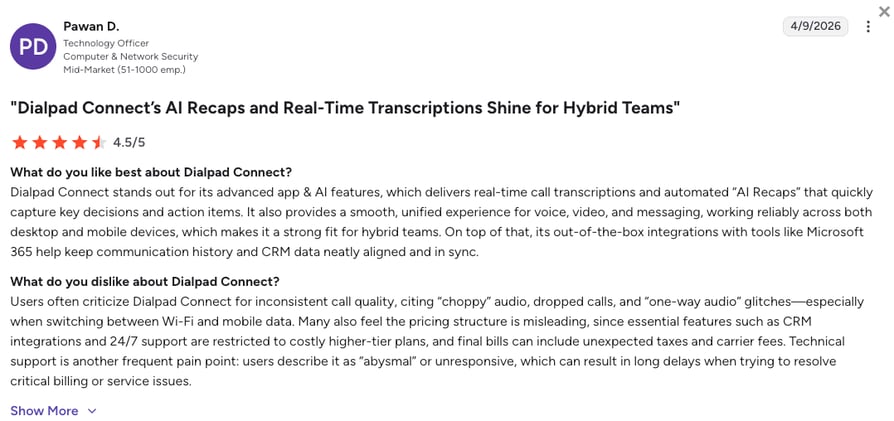
- Quality wobble: Some report choppy or one-way audio when switching between Wi-Fi and mobile data.
How G2 Users Rate Dialpad?
Dialpad's current G2 rating is 4.4/5.
8. Goodcall: Best No-Code AI Receptionist for Local & Solo Businesses
What Is Goodcall?
Goodcall is a no-code AI phone agent (backed by Google's AI fund) aimed at local retail, service businesses, and solo operators who want a simple AI receptionist for inbound calls. It bills per unique caller rather than per minute, which keeps costs predictable for businesses with repeat customers.
Why Is Goodcall a Strong Smith.ai Alternative?
- Flat, no-meter pricing: Per-unique-caller billing avoids Smith.ai's per-call "success tax" for businesses with repeat customers.
- No-code call flows: Build and control how calls are handled without engineers, ideal for a single location or solo owner.
- Instant AI answering: Answers 24/7 in seconds, no human staffing or scheduling required.
What Are the Pros & Cons of Goodcall?
| Pros | Cons |
|---|---|
| Simple, flat pricing: Predictable monthly cost billed per unique caller. | Thin public reviews: Its G2 profile has been inactive, so independent feedback is limited. |
| Easy no-code setup: Good fit for local retail and solo operators. | Per-caller can bite high traffic: Many one-time callers can push the bill up. |
| 24/7 instant answering: No staffing, no scheduling, answers immediately. | Simpler feature set: Less depth than full-platform or hybrid options. |
What Are Goodcall's Plans & Pricing?
Goodcall uses flat monthly pricing billed per unique caller, with advanced routing and transfers on higher tiers:
- Starting plan - from ~$59/month (flat, per unique caller)
- Higher tiers - add call transfers and advanced routing
- Billing model - per unique caller, not per minute
Match the model to your callers:
Per-unique-caller pricing is great if you have repeat customers, but a number that gets lots of one-time callers can run up the count. Estimate your caller mix before choosing a tier.
What Are Goodcall Customers Saying?
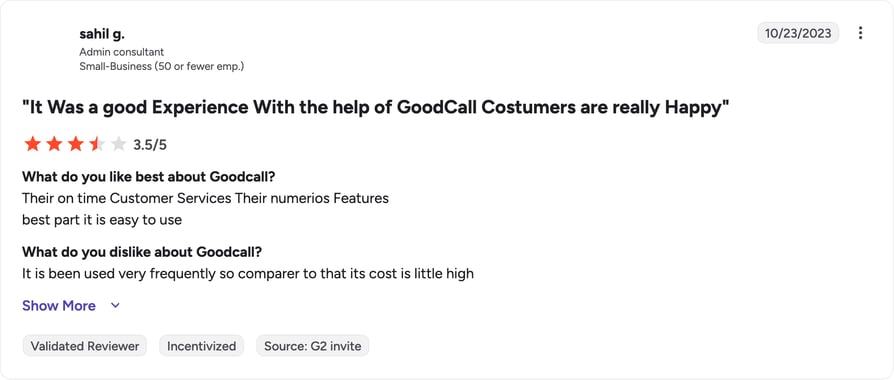
Public, verified reviews are limited, so weigh capabilities and your own test calls over review counts.
- Easy to launch: Owners highlight quick, no-code setup for a single location.
- Predictable bills: The flat model is praised by businesses with steady, repeat callers.
- Limited independent data: An inactive review profile means less third-party validation than incumbents.
How G2 Users Rate Goodcall?
Goodcall's historical G2 rating is around 4.7/5, though its profile has seen limited recent review activity.
9. Rosie: Best for Fast, Budget AI Answering with Auto-Setup
What Is Rosie?
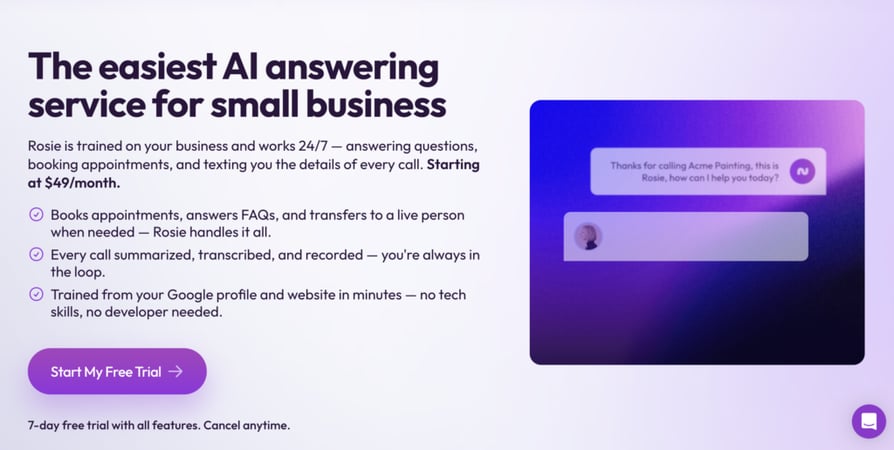
Rosie is an AI-only answering service (launched 2024) built for home-services businesses and sole traders. Its standout trait is setup speed: it scans your website and Google Business Profile to learn your business, so most users go live in under 10 minutes without writing a script.
Why Is Rosie a Strong Smith.ai Alternative?
- Flat-rate, budget pricing: From $49/month with no per-call meter, far below Smith.ai's human plans for predictable, low-volume use.
- Fastest setup in the category: Auto-imports your site and Google Business Profile; no scripting, live in minutes.
- Bilingual on all plans: English/Spanish answering plus free spam filtering, call recording, and transcription.
What Are the Pros & Cons of Rosie?
| Pros | Cons |
|---|---|
| Instant, no-script setup: Learns from your website and Google profile in minutes. | Entry plan is limited: The $49 tier only sends an SMS booking link; full booking starts around $149. |
| Natural voice & flat pricing: Lifelike AI with predictable monthly cost. | No verified public reviews yet: Too new for G2/Capterra/Trustpilot data as of mid-2026. |
| Bilingual + free extras: Spam filtering, recording, and transcription on all plans. | AI-only, no human backup: No live-agent escalation for complex calls. |
What Are Rosie's Plans & Pricing?
Rosie uses flat monthly pricing with a $0.25/minute overage:
- Professional - $49/month (250 minutes; SMS booking link only)
- Scale - $149/month (full on-call appointment booking)
- Growth - $299/month
- Overage - $0.25 per additional minute
Know the real entry price:
The $49 plan only texts a booking link rather than booking on the call, so for most service businesses the functional starting point is the $149 Scale plan.
What Are Rosie Customers Saying?
Feedback (mostly from owner communities, since platform reviews haven't accumulated yet) is broadly positive for home services.
- Reliable capture: Captures job type, address, and callback number accurately on after-hours calls.
- Effortless onboarding: The auto-setup from website and Google profile genuinely impresses.
- Early-stage caveat: A new product with limited independent review history to lean on.
How G2 Users Rate Rosie?
As of mid-2026, Rosie has no verified G2, Capterra, or Trustpilot reviews; it has handled 3M+ calls for 1,900+ businesses but its review presence hasn't caught up to its growth.
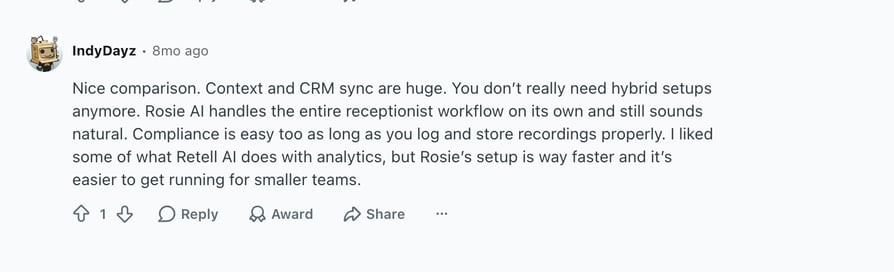
It is talked about on Reddit in a positive light:
10. Synthflow: Best for Building Custom AI Voice Agents (No-Code)
What Is Synthflow?
Synthflow is a no-code AI voice agent builder rather than a turnkey receptionist. With a drag-and-drop flow designer, 200+ integrations, 30+ languages, and ElevenLabs voices, it lets teams and agencies design and white-label their own inbound and outbound voice agents.
Why Is Synthflow a Strong Smith.ai Alternative?
- Fully customizable agents: Design exactly the call logic you want, far more flexible than Smith.ai's fixed Q&A model.
- Multi-language & white-label: 30+ languages and agency-friendly white labeling for serving multiple clients.
- Enterprise compliance: SOC 2, HIPAA, and GDPR support with sub-500ms latency for production deployments.
What Are the Pros & Cons of Synthflow?
| Pros | Cons |
|---|---|
| Powerful no-code builder: Natural voices, 200+ integrations, true flexibility. | It's a builder, not a service: Expect to design, test, and maintain flows yourself. |
| Multi-language & white-label: Great for agencies running many client agents. | Expensive at scale: Per-minute costs and overages are the #1 review complaint. |
| Fast deployment: Go live without engineers if you're comfortable building. | Off-script struggles: Reviewers note latency spikes and trouble with ambiguous requests. |
What Are Synthflow's Plans & Pricing?
Synthflow has shifted toward pay-as-you-go and enterprise pricing, with effective rates that depend on your voice, model, and telephony choices:
- Pay-as-you-go - roughly $0.11\u2013$0.24 per minute (varies by configuration)
- Historical tiers - started around $29/month for older accounts
- Enterprise - custom, above ~10,000 minutes/month
Model your minutes first:
Bring-your-own-key setups and overages can push real costs to two to three times the advertised rate. If you'll run any real volume, forecast minutes carefully before committing.
What Are Synthflow Customers Saying?
Reviewers love the ease of building and the natural voices, while flagging cost and support consistency.
- No-code delivers: Teams genuinely launch voice agents without engineering help.
- Lifelike voices: The ElevenLabs integration clears the "doesn't sound robotic" bar.
- Pricing complaints: "Expensive" is the most-mentioned con; support can be slow after onboarding.
How G2 Users Rate Synthflow?
Synthflow's current G2 rating is 4.5/5, ranking among the top AI agent platforms for fast implementation.
What Users Are Really Saying About Smith.ai Alternatives
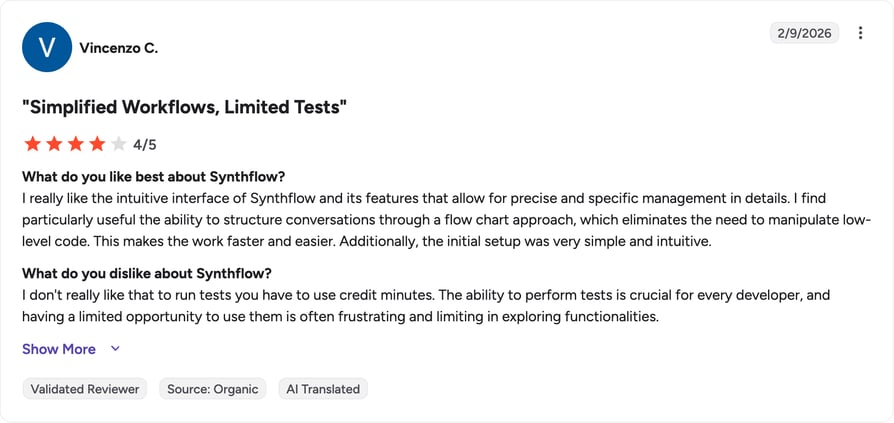
Review scores tell you part of the story; forums tell you the rest. Across Reddit, Quora, and G2, the pattern is consistent: businesses leave Smith.ai over per-call costs and add-on creep, and they split between teams that want a human voice and teams that want AI that actually books the job. Here's what real users are saying.
What Redditors Are Asking and Saying About Smith.ai Alternatives
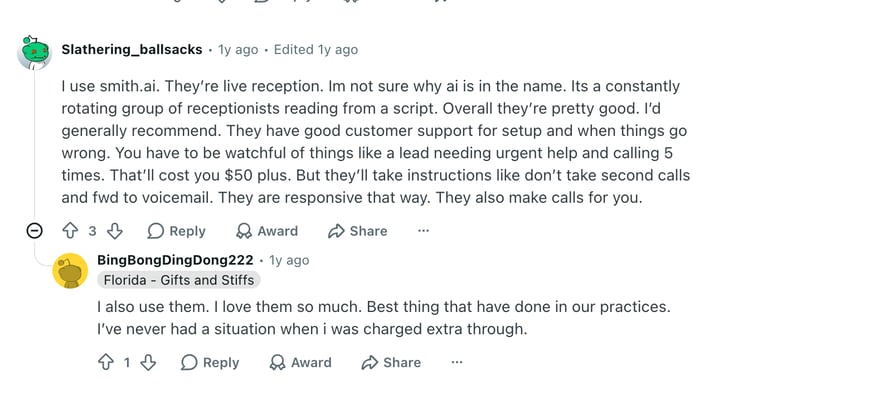
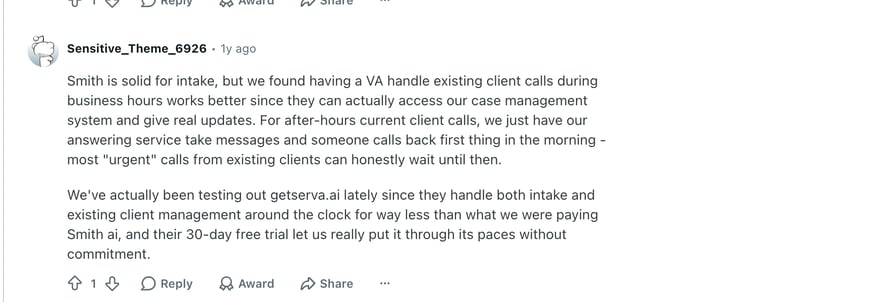
On subreddits like r/smallbusiness, r/lawfirm, and r/AItools, owners trade notes on escaping per-call billing:
- "The overages are the real price": Threads repeatedly warn that Smith.ai's sticker price ignores overage and add-ons, and that a busy month can double the bill. Users tell each other to budget 20–30% above the base plan, or move to a flat-rate tool. For teams that want predictability and a real phone system, CloudTalk comes up as the consolidate-everything option.
- "Human or AI?" is the recurring debate: Posters split between recommending Ruby or AnswerConnect for a polished human voice and Goodcall or Rosie for cheap, flat AI answering. The consensus: AI handles 70–80% of routine calls fine, and humans still win for complex legal or medical intake.
- "I'm paying two vendors": A common frustration is running an answering service and a separate phone system. Redditors increasingly suggest a single AI voice agent platform that is both, so call data lives in one place instead of being handed over by an outside agency.
What Quora Users Are Asking About Smith.ai Alternatives
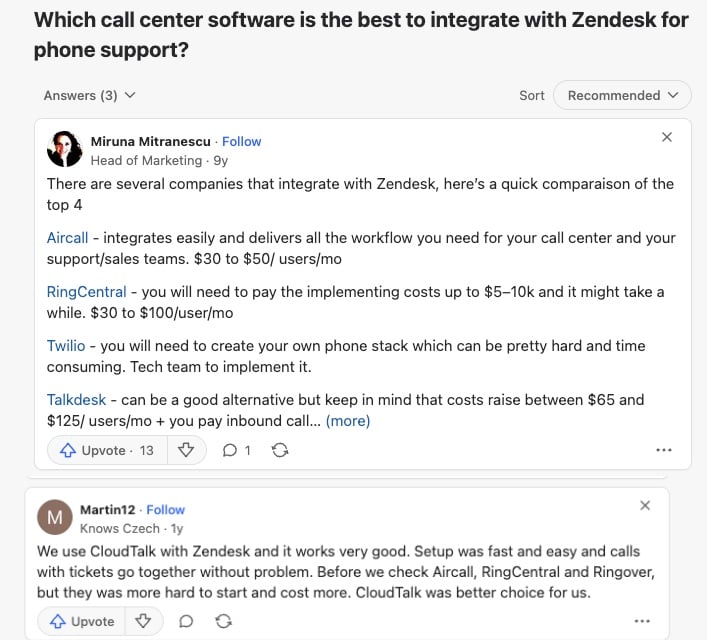
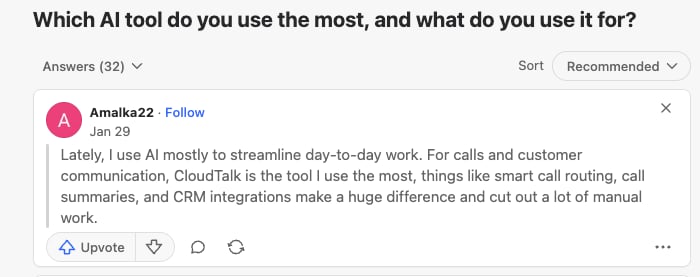
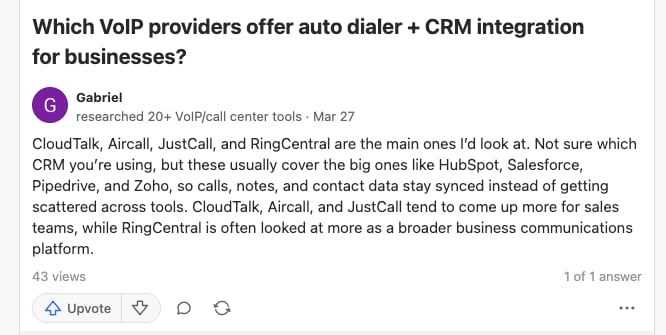
Quora threads from business owners and office managers surface a few dominant themes:
- Most-asked question: "What's the best Smith.ai alternative for a small team?" Answers consistently surface CloudTalk, Ruby, and PATLive as the top three, each for a different reason: CloudTalk for an all-in-one phone system, Ruby for human polish, PATLive for budget human answering.
- CRM integration is a top filter: Answers repeatedly stress that an answering service that only relays messages creates double data entry, and recommend tools with native two-way Salesforce and HubSpot sync.
- Predictable pricing wins: Multiple answers flag Smith.ai's per-call "success tax" and point toward flat-rate options so a good month doesn't trigger a bigger bill.
What Verified G2 Reviewers Say About Switching from Smith.ai
On G2, switchers tend to land on one of two camps, and CloudTalk shows up for the teams that want to consolidate:
- "We replaced two tools with one": CloudTalk reviewers highlight dropping a separate answering service and phone system in favor of a single platform with AI reception and native CRM sync.
- "The CRM sync saves hours": A recurring theme is reps no longer typing call notes, because every call and AI summary logs automatically.
- "Predictable bills": Teams that left per-call or per-minute services praise flat per-user pricing for making budgets steady through busy seasons.
How to Choose the Right Smith.ai Alternative for Your Team
Ten options is a lot. Use these five questions to cut through the noise; each maps a common business situation to the tool that fits it best.
1. What Is the Best Smith.ai Alternative for Predictable Billing?
If surprise overages are your pain, avoid per-call and per-minute models. CloudTalk (flat per-user), Goodcall (flat per caller), and Rosie (flat monthly) all keep a busy month from inflating the bill. CloudTalk wins if you also want it to be your phone system.
2. Which Smith.ai Alternative Has the Best CRM Sync?
If you live in Salesforce or HubSpot, shallow logging means double data entry. CloudTalk offers native two-way sync to 100+ CRMs; Dialpad is a solid runner-up on its higher tiers. Answering services mostly relay data rather than write it back.
3. What Is the Best Smith.ai Alternative for a Premium Human Voice?
When every caller must reach a warm, polished human, Ruby and AnswerConnect lead, and Abby Connect wins if you want one dedicated team that learns your business. Expect to pay a premium per minute for that quality.
4. Which Smith.ai Alternative Is Best for a Specific Industry?
For specialized intake, Nexa trains receptionists for legal, medical (HIPAA), and home-services dispatch, while Abby Connect and Smith.ai itself remain legal-heavy. For appointment-driven practices, pair any of them with a strong AI scheduling receptionist.
5. What Is the Best Smith.ai Alternative for Build-Your-Own AI?
If you (or an agency) want to design custom call flows, Synthflow is the no-code builder of choice, just budget engineering-lite time to maintain it. Most teams that want results without building should choose a turnkey platform like CloudTalk instead.
6. Overall, Which Smith.ai Alternative Is Best for Growing SMBs?
For most growing sales and support teams, CloudTalk is the strongest overall pick: it's the only option here that replaces both your answering service and your phone system, with flat pricing, AI Voice Agents that qualify and book, native CRM sync, and coverage in 160+ countries.
Ready to Try the Best Alternative to Smith.ai?
Switching off Smith.ai usually comes down to four things: predictable billing instead of a per-call meter, one platform instead of two vendors, AI that books instead of just taking a message, and call data that lives in your CRM automatically. CloudTalk delivers all four, starting at $25/user/month with a 14-day free trial. Scale your revenue, not your invoices.
Leave the per-call meter behind
Frequently Asked Questions
about Smith.ai Alternatives
Quick answers to the most common questions about Smith.ai and its top alternatives.
Smith.ai is a virtual receptionist and answering service that pairs AI with human agents to handle inbound calls, qualify leads, book appointments, and manage client intake, billed per call. It's especially popular with law firms.
Smith.ai is well-rated (its AI Receptionist scores 4.7/5 and the human plan 4.9/5 on G2) and strong for low-volume, high-stakes legal intake. The main Smith.ai alternative reviews flag its per-call pricing and add-on fees as it scales.
Teams look for an alternative to Smith.ai when per-call billing gets expensive, add-ons stack up, or they realize an answering service still isn't a phone system. A tool like CloudTalk combines both and uses flat pricing.
Yes. CloudTalk offers native two-way sync with 100+ CRMs including Salesforce, HubSpot, and Pipedrive, so calls and AI summaries log automatically. Dialpad and AnswerConnect also integrate with major CRMs.
Prioritize transparent flat pricing, AI that books and qualifies (not just takes messages), native CRM sync, 24/7 and bilingual coverage without surcharges, and whether the tool is also a full phone system or just an answering service.
There's no truly free Smith.ai alternative for ongoing use, but several offer free trials or free tiers to test. Goodcall has a free tier, and CloudTalk offers a 14-day free trial with no credit card required.
For most growing SMBs, yes. CloudTalk replaces both an answering service and a phone system, uses flat per-user pricing instead of per-call fees, and its AI Voice Agents qualify and book rather than just relay messages, all with native CRM sync.
Yes. A platform like CloudTalk handles inbound support and outbound sales from one system, with dialers for sales teams and AI reception for support, so a single Smith.ai alternative for business covers both functions.