Les 6 meilleurs canaux de communication pour développer votre entreprise
Pour acquérir de nouveaux clients, la première étape consiste à communiquer avec eux d'une manière ou d'une autre : par écrit, par vidéo ou par téléphone. Au lieu de chercher à adapter leur style de communication, de nombreuses entreprises se concentrent aujourd'hui sur des tactiques de croissance fantaisistes qui ne mènent souvent nulle part.
Prenez plutôt du recul et réfléchissez à votre façon de communiquer, tant avec vos clients qu'avec vos employés. Des changements mineurs et subtils peuvent avoir un impact majeur sur vos résultats et sur la satisfaction de votre personnel.
La communication est au cœur de tout ce que nous faisons. C'est ce qui nous rend humains : aucune autre espèce dans l'univers (connu) n'interagit de manière aussi unique que la nôtre. Dès que nous ouvrons les yeux chaque matin, nous avons besoin de communiquer pour mener à bien notre journée.
La communication est également cruciale pour notre façon de travailler. Et grâce aux derniers progrès technologiques, nous disposons aujourd'hui de plus de canaux de communication que jamais, tant en interne avec notre équipe qu'en externe avec nos clients.
Dans l'article d'aujourd'hui, découvrons les meilleurs canaux de communication que vous pouvez utiliser pour développer votre entreprise, acquérir de nouveaux clients et rendre vos employés plus engagés et satisfaits.
Qu'est-ce qu'un canal de communication ?
Les canaux de communication sont les moyens de communication utilisés pour transmettre des messages spécifiques.
Les réseaux sociaux, l'e-mail, le télémarketing, les applications de messagerie instantanée ou même les interactions en face à face sont des exemples de canaux de communication.
Un canal de communication est un moyen de partager des informations avec d'autres personnes. C'est la voie par laquelle l'information circule, que ce soit entre une entreprise et ses clients ou au sein même de l'entreprise. Autrefois, le seul moyen de communiquer était le face à face.
Les canaux de communication sont essentiels pour une entreprise car ils permettent aux gens de se connecter et d'échanger. Ils permettent également aux entreprises de toucher de nouveaux clients et de rester en contact régulier avec leurs employés. De plus, ils jouent souvent un rôle crucial dans la réussite de votre entreprise.
Une approche courante consiste à classer les canaux de communication en deux catégories : la communication directe (en face à face) et la communication indirecte. Toutefois, dans le cadre professionnel, il est plus pertinent de les classer ainsi :
- La communication interne (au sein de votre propre entreprise)
- La communication externe (avec vos clients et autres parties prenantes)
Pour chaque canal mentionné dans cet article, nous aborderons son cas d'usage idéal et déterminerons s'il est plus adapté à une communication interne, externe ou aux deux.
Le choix du bon canal de communication pour votre entreprise dépendra de l'objectif du message et de son public cible.

Offrez à vos agents de support client les outils dont ils ont besoin pour réussir avec CloudTalk.
Comment choisir les bons canaux de communication ?
Cela dépend de nombreux facteurs, mais tout se résume en réalité à vos besoins spécifiques et aux objectifs que vous tentez d'atteindre. Gardant cela à l'esprit, nous avons préparé quelques conseils pratiques pour vous aider dans cette tâche.
Pensez au type de message en fonction de votre public
La première chose à prendre en compte est le type de message et le public. Posez-vous les questions suivantes :
- Que cherchez-vous à communiquer ? S'agit-il d'un message formel ou informel ?
- Les clients ou les employés doivent-ils voir le message dans un délai précis ?
- Est-il nécessaire de transmettre le message à votre équipe ou à l'ensemble de l'entreprise ?
- Cette communication nécessite-t-elle une réponse ou non ?
- Communiquez-vous avec une seule personne ou avec un groupe ?
Cette démarche vous aidera à choisir le ton approprié pour votre message et à le rendre plus engageant pour votre public.
Prenez en compte les valeurs de votre entreprise, les ressources disponibles et les méthodes de diffusion appropriées
Ensuite, veillez à ce que les canaux de communication potentiels soient en phase avec la culture et les valeurs de votre entreprise.
Par exemple, si vous dirigez une entreprise SaaS proposant des logiciels de communication, l'utilisation de votre propre outil pour communiquer avec vos employés serait une excellente idée.
Non seulement cette solution sera très pratique puisque vous connaissez probablement bien ce canal, mais elle montrera également que votre produit est fiable et qu'il a une application concrète au quotidien.
Cependant, la plupart des entreprises ne disposent pas de leurs propres outils personnalisés. Dans ce cas, réfléchissez à la manière dont vous aimeriez que l'on contacte votre entreprise. Prenez également le temps de réfléchir à la façon dont vous souhaitez que vos collaborateurs interagissent entre eux.
De plus, si votre entreprise valorise le travail d'équipe et une collaboration parfaite, vos choix en matière de canaux de communication doivent également refléter cet engagement.
Choisissez des canaux de communication adaptés à votre public
Enfin, veillez à sélectionner les canaux de communication les plus appropriés pour les personnes avec lesquelles vous souhaitez échanger des messages.
S'agit-il de vos clients, de vos employés, de partenaires ou d'autres personnes ? Par exemple, la visioconférence peut s'avérer un excellent outil pour communiquer avec votre équipe, mais beaucoup moins avec des clients qui souhaitent simplement résoudre leur problème dès le premier appel.
Une fois que vous aurez répondu à ces questions, vous serez prêt à vous lancer.
Voici quelques règles générales pour choisir les canaux de communication adaptés à votre activité :
- Consultez les avis sur des plateformes comme Capterra.
- Demandez à vos employés quel mode de communication leur convient le mieux.
- Faites des recherches pour identifier les canaux actuels les plus utilisés par vos clients et en interne par votre équipe.
- Évaluez votre budget et cherchez des solutions adaptées à vos moyens.
- Consultez vos collaborateurs pour savoir s'ils aimeraient tester un outil en particulier.
- Examinez les fonctionnalités proposées par les outils et déterminez leur utilité pour vous.
- Analysez ce qui fonctionne chez vos concurrents.
- Renseignez-vous sur l'efficacité globale des différents canaux de communication.
Suivre ce guide devrait vous permettre de bien vous préparer à choisir les bons outils de communication. Selon vos objectifs et votre public cible, vous pourrez sélectionner la solution la plus adaptée à votre situation.
Voici quelques recommandations pour vous guider.
Les trois meilleurs canaux de communication pour les équipes
Un travail d'équipe efficace est la clé du succès d'une entreprise. Chaque service privilégie des canaux et des modes de communication différents. Pour tirer le meilleur parti de chaque équipe, tenez compte de ces préférences et élaborez une stratégie de communication performante.
1. La communication en personne
Les avantages de la communication en face à face sont multiples, mais l'un d'eux se distingue particulièrement : la capacité de décoder les signaux non verbaux de l'interlocuteur. Ces indices nous indiquent souvent où nous en sommes avec quelqu'un, comment réagir à ses propos et à ses actes, et quelle doit être notre prochaine démarche.
Avant que les réunions vidéo ne deviennent incontournables, rencontrer ses collègues et ses clients en face à face était le principal mode de communication. Bien que cela puisse paraître un peu dépassé aujourd'hui, cette pratique conserve un rôle central dans l'environnement de travail moderne.
La raison est simple : l'essentiel de notre communication est non verbale. En réalité, des études montrent que 90 % de nos messages passent par des canaux non verbaux. Au-delà des mots, nous communiquons par le langage corporel, la posture et les expressions du visage. Ainsi, rencontrer quelqu'un en personne reste la meilleure technique pour transmettre pleinement votre message.
De nombreuses études ont été menées sur le thème de la communication en face à face. Beaucoup d'entre elles indiquent qu'au moins 70 % de la communication interpersonnelle est non verbale. Selon les recherches, ce chiffre peut varier de 70 % à 93 % !
On peut donc facilement en conclure que les personnes qui utilisent d'autres canaux comme les SMS, les e-mails ou les appels vidéo passent à côté de cet aspect essentiel du non-verbal.
Il y a toutefois un inconvénient. La communication en personne s'avère beaucoup plus coûteuse, quel que soit le lieu de rencontre. Pensez simplement au coût de la salle de réunion et aux trajets.
En d'autres termes, le face-à-face a un impact considérable et doit être réservé aux décisions importantes, telles que les réunions de direction ou la signature de contrats de grande valeur.
Toutefois, cela représente un coût élevé. Si vous pouvez les remplacer par d'autres méthodes tout en obtenant des résultats similaires, vous réaliserez d'importantes économies de temps et d'argent.
Comment pouvez-vous intégrer la communication professionnelle en face à face dans votre travail ?
Il existe de nombreuses méthodes pour intégrer le face-à-face au sein de votre espace de travail. En voici quelques exemples :
- des conférences régulières
- des réunions matinales
- de brèves discussions informelles tout au long de la journée
- des séances de remue-méninges en personne
Voici un aperçu des avantages et des inconvénients de cette méthode de communication pour évaluer sa mise en œuvre.
Avantages de la communication en face à face
- Elle renforce l'engagement et la productivité de l'équipe
- Elle constitue un canal de communication ultra-rapide
- Elle se révèle 34 fois plus efficace que la communication par e-mail
- Elle permet des interactions non verbales
- Elle engendre peu de frais d'organisation de réunion si vous disposez déjà de bureaux utilisables
Inconvénients de la communication en personne
- Elle peut être confrontée à d'éventuelles barrières de la langue
- Elle s'avère parfois difficile, voire impossible, pour les équipes virtuelles ou internationales
- Elle est quasiment inapplicable en période de confinement ou dans le cadre du travail à distance
- Elle peut être inadaptée pour les grandes équipes, car diffuser un message lors de grands rassemblements s'avère complexe en raison de l'absence de lien personnalisé
- Elle présente un risque de mauvaise mémorisation de la part de l'auditeur
Malgré ses inconvénients, la communication en face à face doit être privilégiée si vous avez l'opportunité de côtoyer vos collègues chaque jour.
2. La visioconférence
Passons maintenant à la visioconférence, qui a connu un immense succès lors de la pandémie mondiale, lorsque de nombreux salariés ont dû basculer en télétravail.
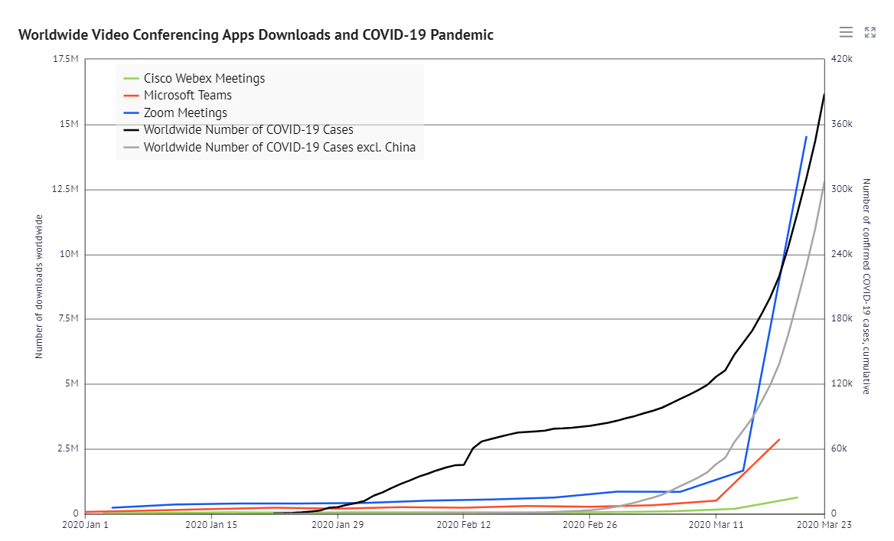
La visioconférence s'apparente en quelque sorte à l'interaction en face à face. Tout comme la communication en personne, elle permet de se voir et de s'entendre. Cependant, se déroulant dans le monde virtuel, ce mode de communication d'équipe présente des avantages spécifiques, ainsi que certains inconvénients.
Soudain, nous avons réalisé que bon nombre de ces réunions physiques pouvaient se faire tout aussi efficacement en vidéo. Vous communiquez toujours par la voix, mais aussi par l'intonation, le ton, les expressions faciales et certains gestes.
Il existe un autre avantage de taille : pour contacter votre équipe (à distance) ou vos clients, les réunions vidéo coûtent bien moins cher qu'une rencontre physique. On croirait presque au canal de communication parfait.
Vous pouvez utiliser les appels vidéo aussi bien en interne qu'en externe, c'est pourquoi de nombreuses entreprises en télétravail en font leur principal mode de communication.
Mais avant d'entrer dans les détails, analysons d'abord quelques chiffres clés :
- Au cours des quatre premiers mois de la pandémie de COVID-19, les recherches de logiciels de conférence web et vidéo ont enregistré une hausse de 500 %.
- Le marché de la visioconférence devrait dépasser les 75 milliards d'euros d'ici 2027.
- 67 % des entreprises prévoyaient de dépenser davantage en conférences web et vidéo en 2021.
Avantages et inconvénients de la visioconférence
Nous avons rassemblé dans ce tableau les principaux points forts et faiblesses de la visioconférence pour vous aider à décider s'il convient ou non de l'adopter dans votre stratégie de communication d'équipe.
AVANTAGES
- Plus interactif que les conférences audio grâce à la présence des caméras qui ajoute une touche personnelle
- Une meilleure qualité d'échange comparée aux simples appels audio, selon 62 % des dirigeants interrogés lors d'une étude
- Augmente la productivité de l'équipe
- Permet de gagner du temps et simplifie la logistique
INCONVÉNIENTS
- Moins engageant qu'une interaction en face à face
- Pas accessible à tous (exigence d'une caméra, d'un microphone, etc.)
- Peut s'avérer difficile en cas de problèmes de connexion (qui se résolvent généralement facilement, mais pas toujours)
- Certaines personnes peuvent avoir du mal à se concentrer sur leur travail avec ce type de communication (bien que l'adaptation soit rapide)
- Peut être complexe à gérer pour les équipes internationales (déplacements, fuseaux horaires différents)
Si votre entreprise dispose des ressources nécessaires pour mettre en place la visioconférence, nous vous la recommandons vivement comme canal de communication pour vos équipes. C’est plus pratique, plus économique et, si vous travaillez à distance sans bureaux physiques, c’est pratiquement la seule option possible.
3. Les plateformes de messagerie en ligne
Enfin, nous retrouvons la méthode de communication la moins « personnelle », mais toujours efficace : les plateformes de messagerie en ligne. Depuis l'apparition d'outils comme Skype, les collaborateurs peuvent échanger par Internet. Skype n'étant plus une option, beaucoup choisissent de transférer leurs numéros Skype.
Aujourd'hui, de nombreuses entreprises s'appuient sur ces plateformes pour leurs échanges quotidiens. Certaines grandes structures choisissent même d'en faire leur principal moyen de communication.
Une simple recherche sur Capterra avec les mots-clés « messagerie en ligne pour équipes » affiche plus de 10 000 résultats de produits différents.
C'est énorme, et nous imaginons sans peine à quel point il peut être difficile pour vous de faire le tri pour trouver la meilleure solution pour vos équipes.
Voici toutefois quelques conseils sur les critères à privilégier pour choisir la plateforme de messagerie en ligne idéale :
- Le prix
- La variété des fonctionnalités
- La compatibilité avec les différents appareils et logiciels
- La facilité d'utilisation
- Les avis clients
Bien cerner vos besoins et exigences spécifiques vous facilitera grandement la tâche pour choisir la bonne plateforme de messagerie. Vos équipes n'en seront que plus épanouies et productives au quotidien.
Les trois meilleurs canaux de communication client
Maintenant que nous avons passé en revue les meilleurs canaux de communication internes, tournons-nous vers vos clients.
1. Les appels téléphoniques
Le tout premier appel téléphonique a eu lieu il y a près de 150 ans. Vu la vitesse à laquelle la technologie évolue, il est fascinant de voir que le téléphone reste un canal de communication incontournable. Ne vous y trompez pas : les appels téléphoniques ont eux aussi grandement évolué.
Le téléphone est un excellent moyen de créer un lien direct et humain avec vos clients. On ne soulignera jamais assez l'importance de faire une excellente première impression, et c'est là que les appels et vos agents de centre de contact font toute la différence.
Le temps du réseau commuté (RTC) est bien révolu, époque où il fallait utiliser un téléphone classique et payer une fortune pour appeler à l'international. Aujourd'hui, la technologie VoIP et des outils comme CloudTalk permettent de joindre n'importe qui dans le monde pour quelques centimes par appel.
De plus, cette méthode de communication offre une approche beaucoup plus personnelle que le chat en direct, par exemple. Le téléphone permet en effet de mieux percevoir l'intonation et les émotions de l'interlocuteur. Dans des secteurs comme la logistique ou l'hôtellerie, l'usage du téléphone permet souvent une compréhension plus rapide entre le client et l'agent qu'un échange d'e-mails.
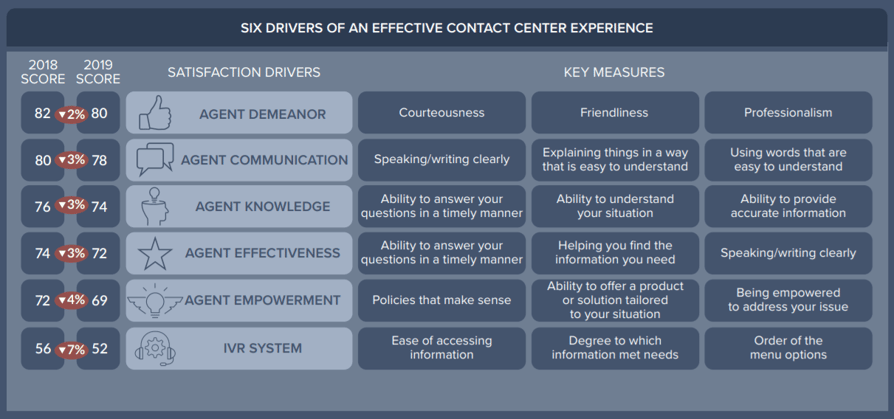
Que vous appeliez un collègue ou un client, les outils VoIP transforment les appels audio. Pour commencer, les appels transitent désormais par votre connexion Internet plutôt que par de vieux fils de cuivre, ce qui les rend plus stables et plus faciles d'accès.
Cela nous amène à un autre avantage de taille : vous pouvez désormais téléphoner en ligne depuis une multitude d'appareils. Smartphone, téléphone VoIP, navigateur Internet, tablette : vous pouvez passer et recevoir des appels depuis presque n'importe quel terminal.
Et ce n'est que la partie émergée de l'iceberg. La VoIP vous permet d'intégrer des fonctionnalités puissantes à vos appels audio, telles que les files d'attente, l'enregistrement des appels, le rappel automatique, le numéroteur automatique, et bien d'autres. Compte tenu de leur coût très abordable, les outils VoIP comme CloudTalk sont une évidence pour la relation client. Et ils s'utilisent tout aussi bien en interne.
Si vous cherchez à mettre en place un canal de communication efficace avec vos clients, les appels téléphoniques et les centres d'appels restent la solution idéale.
Le secteur des centres d'appels s'adresse à de nombreuses entreprises sur des marchés très variés. De plus, le téléphone est un outil formidable pour créer une expérience client positive et fidéliser votre clientèle.
Statistiques clés sur les centres d'appels :
- Le marché mondial des centres d'appels devrait atteindre €496 milliards d'ici 2027.
- 76 % des clients qui contactent un service client le font par téléphone.
- Par rapport aux centres d'appels physiques, les centres d'appels cloud sont 27 % moins chers et connaissent 35 % d'interruptions de service en moins.
Grâce aux technologies en constante évolution, telles que le rappel automatique et le serveur vocal interactif (SVI), les centres d'appels actuels sont encore plus performants et agréables à utiliser. Bonus : les tarifs des SVI et autres fonctionnalités pratiques deviennent de plus en plus abordables avec l'évolution technologique.
Avec une solution comme CloudTalk, outil idéal pour les équipes commerciales et de service client, voici les fonctionnalités auxquelles vous pouvez vous attendre :
- File d'attente des appels
- Enregistrement des appels
- Routage basé sur les compétences
- Masquage et personnalisation du numéro sortant
- Transfert d'appel
- Fonctionnalité click-to-call.
Un fournisseur de téléphonie cloud fiable propose bien d'autres fonctionnalités. C'est pourquoi nous vous recommandons vivement d'étudier les différentes options du marché.
Malgré l'apparition de nombreux outils modernes, le téléphone reste l'un des moyens les plus efficaces pour échanger. Si l'on ajoute à cela toutes les fonctionnalités des centres de contact modernes, l'intégrer à votre stratégie de communication est une évidence.
2. Le chat en direct (live chat)
Parlons à présent du chat en direct sur le web.
Que vous utilisiez un chatbot ou un agent humain, le chat en direct est un excellent moyen de communiquer avec votre public cible. En 2024, entre 74 % et 85 % des entreprises utilisent le live chat pour échanger avec leurs clients.
Le chat en direct est un canal de communication écrite qui permet à vos clients et aux représentants de votre entreprise d'échanger en ligne. Cette communication se fait généralement en temps réel par messagerie instantanée.
Les chiffres parlent d'eux-mêmes. De tous les canaux de communication, le live chat affiche le taux de satisfaction le plus élevé (73 %). Les raisons sont multiples : il est simple d'utilisation et, pour les nouvelles générations habituées aux SMS, il s'avère plus simple et moins stressant que de passer un coup de téléphone.
C'est une excellente méthode pour créer une relation de confiance entre le client et l'entreprise.
Il permet également de transmettre des informations de manière plus claire que par téléphone ou e-mail, où les messages peuvent parfois être mal interprétés ou oubliés (surtout si les appels ne sont pas enregistrés).
De plus, le chat en direct est très économique, ce qui explique sa popularité croissante auprès des entreprises.
Pour optimiser votre productivité, vous pouvez intégrer des chatbots afin de relayer vos agents sur certaines plages horaires ou pour répondre aux questions récurrentes. Très utiles pour les requêtes simples et dopés à l'IA, ils deviennent chaque jour plus intelligents. Veillez toutefois à ce qu'un agent humain puisse prendre le relais pour les demandes complexes.
Si vous n'êtes pas encore convaincu, pensez au caractère direct, personnel et interactif de ce canal. Il vous suffit d'y ajouter un peu de personnalisation et le tour est joué.
Il offre également aux utilisateurs une expérience plus fluide, car ils n'ont généralement pas à attendre longtemps pour obtenir une réponse.
C'est particulièrement utile pour guider les nouveaux visiteurs ou ceux qui découvrent votre site et qui ont besoin d'aide pour naviguer. C'est aussi un excellent levier de génération de leads qualifiés.
L'historique des conversations est archivé, ce qui permet de garder une trace écrite en cas de réclamation ultérieure de la part du client concernant la qualité du service reçu.
Naturellement, le live chat s'impose comme un canal de communication externe, tandis qu'un outil comme Slack conviendra mieux à vos équipes en interne. Il est aujourd'hui très simple d'intégrer un chatbot sur un CMS classique ou un CMS e-commerce.
Parmi les autres avantages du chat en direct, citons la transparence et l'authenticité qu'il apporte en offrant un point de contact unique aux clients. Ne passez pas à côté de ce formidable canal.
3. Les réseaux sociaux
De plus, si votre clientèle se compose majoritairement de Millennials et de membres de la Génération Z, les réseaux sociaux s'imposent comme l'un des meilleurs canaux pour interagir avec eux.
Nous avons parcouru bien du chemin depuis l'époque des seuls échanges verbaux, mais l'usage des réseaux sociaux comme canal de relation client est relativement récent. Les vidéos sont devenues l'un des formats de contenu les plus populaires et polyvalents en raison de leur facilité de consultation, de la profusion de guides marketing vidéo et de leur capacité à raconter des histoires, présenter des produits, partager des témoignages ou dévoiler les coulisses de l'entreprise. Ce format multimédia renforce l'engagement des consommateurs en offrant une expérience plus immersive, notamment sur les réseaux sociaux. Les entreprises peuvent s'appuyer sur des exemples de rapports de réseaux sociaux pour analyser cet engagement et affiner leurs stratégies marketing.
Avec l'omniprésence des smartphones et des réseaux sociaux, les consommateurs sont plus connectés que jamais, et les marques l'ont bien compris.
Statistiques clés :
- Lorsque les marques répondent aux requêtes des clients sur les réseaux sociaux, 74 % des Millennials déclarent que leur perception de la marque s'améliore.
- Selon 65 % des 18-34 ans, les réseaux sociaux sont un bon moyen d'assurer le service client, tandis que 75 % des personnes de 55 ans et plus pensent le contraire.
- 37 % des consommateurs dans le monde attendent une réponse à leurs questions ou réclamations sur les réseaux sociaux le jour même, tandis que 28 % et 18 % l'attendent respectivement dans l'heure ou immédiatement.
Sur Facebook, vous pouvez mettre en place d'excellentes solutions de service client, comme les chatbots Messenger basés sur l'IA.
Non seulement vous vous rapprochez de vos clients, mais grâce au chatbot, vous pouvez répondre aux demandes rapidement et efficacement. Par exemple, l'usage d'une réponse automatique aux commentaires Facebook améliore considérablement l'expérience utilisateur.
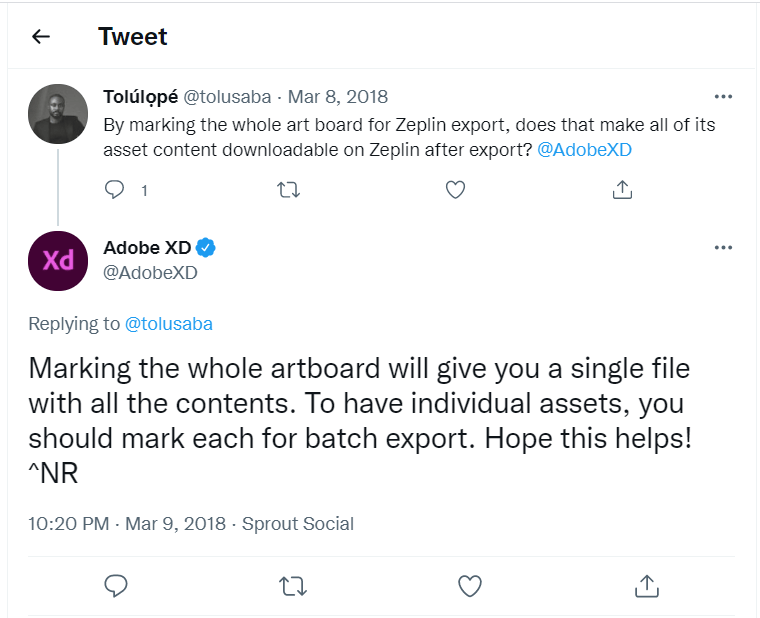
Twitter (X) est également un excellent canal d'assistance, où de nombreuses entreprises interagissent activement pour aider leurs clients. En voici un exemple avec Adobe XD :
Autres plateformes sociales recommandées :
- YouTube
- TikTok
Les réseaux sociaux restent des acteurs majeurs du service client, en particulier pour toucher les jeunes générations et soigner la réputation de votre marque. Ne négligez pas ce canal de communication très efficace.
Autres canaux de communication à envisager
Les SMS
Avant l'avènement des applications de messagerie, le SMS était le canal roi. Aujourd'hui, on pourrait penser qu'il n'a plus sa place dans une stratégie de communication moderne... Ce serait une grave erreur.
Le SMS est redoutablement efficace pour la communication d'entreprise, et très peu de canaux peuvent rivaliser avec lui. Les chiffres parlent d'eux-mêmes.
89 % des personnes lisent un SMS dans les 30 minutes suivant sa réception, et 34 % le font en moins de cinq minutes. Contrairement aux e-mails, nous ne sommes pas habitués à recevoir des SMS promotionnels ou du spam à longueur de journée. La raison est simple : il est plus difficile d'obtenir le numéro de téléphone d'un utilisateur, et l'envoi de SMS est plus coûteux.
Résultat ? Un client a 134 % de chances en plus d'ouvrir et de lire un SMS qu'un e-mail. Bien que le SMS classique ait ses atouts, le débat entre MMS et SMS pour les entreprises devient de plus en plus pertinent, notamment pour transmettre des informations détaillées ou du contenu visuel. Si vous voulez vous démarquer tout en allouant un peu plus de budget à votre marketing, le SMS est un choix évident.
Le SMS est d'ailleurs bien plus adapté à la communication externe avec vos clients. Pour un usage interne, il s'avère un peu trop rigide et onéreux de nos jours.
L'e-mail
Les avis divergent sur la date exacte de création de l'e-mail, mais les experts s'accordent à dire que le tout premier a été envoyé entre 1965 et 1971. Cela en fait un ancêtre par rapport aux canaux plus récents comme la visioconférence. L'e-mail a d'ailleurs connu d'importantes mutations au fil de son histoire.
Nous l'utilisons massivement à des fins professionnelles, tant avec nos équipes qu'avec nos clients. En effet, 293 milliards d'e-mails sont envoyés chaque jour dans le monde. À l'échelle individuelle, nous recevons en moyenne une centaine d'e-mails par jour.
Cette popularité s'explique facilement. Ce canal est extrêmement économique et, avec le bon logiciel d'e-mailing, envoyer des centaines d'e-mails simultanément ne coûte que quelques centimes. Et même si le taux d'ouverture moyen reste assez bas (un peu plus de 16 %), cela suffit amplement à assurer un excellent retour sur investissement (ROI) pour de nombreuses entreprises.
Le problème de l'e-mail réside dans sa surutilisation, favorisée par sa simplicité et son faible coût. Certes, il apporte des résultats, mais comme nous l'avons vu, le SMS génère un impact bien plus fort en comparaison.
Les e-mails professionnels s'utilisent aussi bien en interne qu'en externe. Côté clients, ils offrent toujours un excellent ROI, il convient donc de continuer à les utiliser, mais idéalement en complément d'autres canaux. En interne, l'e-mail a son utilité, mais vous gagnerez à investir dans des outils collaboratifs comme Slack ou Microsoft Teams pour des échanges plus fluides.
Alternativement, vous pouvez utiliser des solutions d'automatisation comme Klaviyo ou des alternatives à Sender pour trouver la plateforme qui correspond le mieux aux besoins de votre entreprise, surtout si vous vous développez au-delà de l'e-mail marketing de base.
En résumé
Gardez à l'esprit que le canal de communication choisi pour vos équipes ou votre service client a un impact majeur sur l'efficacité et les performances globales.
Existe-t-il un canal de communication idéal aujourd'hui ? Pas vraiment, car tout dépend de vos clients et de vos objectifs commerciaux. Chaque canal présenté ici possède ses propres avantages et inconvénients et peut s'avérer excellent (ou catastrophique) selon votre cas d'usage.
Une chose est sûre : le téléphone n'est pas près de disparaître. Si vous êtes prêt à moderniser vos appels et à passer à la téléphonie VoIP pour profiter de fonctionnalités avancées, inscrivez-vous dès aujourd'hui pour un essai gratuit de 14 jours.
Pour découvrir d'autres articles de ce type, n'hésitez pas à consulter notre blog. Nous y abordons des sujets comme le service client, l'organisation du travail, les fonctionnalités des centres de contact, et bien plus encore.
Et si vous cherchez une solution fiable pour gérer la communication de votre service client, essayez CloudTalk — vous ne le regretterez pas !