Best HIPAA-Compliant AI Receptionists for Therapists
TL;DR
The best HIPAA-compliant AI receptionist for a therapy practice in 2026 is CloudTalk for group practices and telehealth teams that need both 24/7 HIPAA-compliant AI inbound handling plus a complete phone system with practice management integrations.
If you're here for quick answers, here's every platform in this guide at a glance:
- 01AgentZap: best for therapy-specific call handling configured out of the box
- 02Simbie AI: best for psychiatry and medication-management intake
- 03DeepCura: best for practices wanting reception and clinical documentation from one vendor
- 04Greetmate.ai: best for multi-provider group practices wanting a managed build
- 05Emitrr: best for practices wanting phone, texting, and forms under one agreement
- 06Sully.ai: best for large group practices and behavioral-health organizations
- 07CloudTalk: best for group practices and telehealth teams needing a full healthcare phone system with granular recording control
- 08Smith.ai: best for AI-first answering with live receptionists as backup, though its compliance position is unresolved
- 09Abby Connect: best for a consistent human voice on sensitive calls, with a HIPAA option published as human-only
The guide also covers what a BAA has to name before it protects you, the three questions that tell you whether crisis escalation is really configurable, and why mid-call recording control separates a usable therapy line from a compliance problem.

Contact Sales for Full BAA

Why Therapists Need HIPAA-Compliant AI Receptionists: The Access and Confidentiality Problem
AI answering servies aren't HIPAA compliant by default, so you need to make sure that the calling platform you choose offers a BAA.
1. You can't answer the phone during sessions
When you're with a patient, you can't exactly get up and answer the phone. A virtual receptionist for therapists answers every call instantly so you never miss a new client, while keeping private medical details completely secure and HIPAA-compliant.
2. Every Missed Call May Be Someone in Crisis
Therapy isn't a standard retail business; a caller reaching voicemail might be in distress and need immediate help. A HIPAA-compliant voicemail script + AI receptionist handles these sensitive moments safely, guiding urgent callers to crisis resources right away instead of leaving them waiting on a recording.
Access is worst where the phone is the only realistic channel. HRSA's same report shows 4,295 of the 7,109 Mental Health Professional Shortage Area designations, just over 60%, are rural. NCHS Data Brief No. 5642, published June 2026, found adults in nonmetropolitan areas were the most likely to be taking medication for their mental health (22.9%) and the least likely to have received counseling or therapy from a professional (10.6%).
3. Standard AI Receptionists Are Not HIPAA Compliant by Default
Most general AI tools store data insecurely and will not sign a Business Associate Agreement (BAA), which legally protects patient privacy. A specialized, HIPAA-compliant VoIP with an AI receptionist ensures all phone calls, transcripts, and client details are encrypted and fully follow healthcare privacy laws.
What Is the Best HIPAA-Compliant AI Receptionist for Therapists in 2026?
The best HIPAA-compliant AI receptionist for therapists is CloudTalk for group practices and telehealth teams needing a full phone system with mid-call recording control.
AgentZap fits solo and group practices wanting mental-health call handling and named SimplePractice and TherapyNotes coverage out of the box.
Simbie AI suits psychiatry and medication management, where refill and insurance calls dominate.
Greetmate.ai suits multi-provider counseling centers wanting the build handed to them.
Abby Connect fits practices where a distressed caller should reach a person, though it publishes its HIPAA option as human-only.
There's no single winner, because what a HIPAA-compliant virtual receptionist must do changes with the job: replacing a front desk, adding a phone system, or buying a safety net for sensitive calls.
One caveat applies to every name here. Verify BAA availability, PHI handling policies, and HIPAA attestation documentation before you sign. These are legal claims, and vendor marketing is not documentation. Ask for the BAA and the SOC 2 Type II report in writing.
Our Methodology: How We Chose the Best HIPAA-Compliant AI Receptionists for Therapists in 2026
The criteria, in the order we applied them:
- Proof of HIPAA Compliance (BAA): Is a signed BAA confirmed on an official page, covering call recordings, transcripts, and AI summaries?
- EHR Integration: Does it truly sync schedules with platforms like SimplePractice, TherapyNotes, or Jane App?
- Crisis Protocols: Does it automatically route emergencies to 988 or an on-call therapist?
- Mental Health Intake: Does it ask tailored intake questions (insurance, urgency, presenting issue) or just take generic notes?
- Data Security & Privacy: Are transcripts encrypted, auto-deleted, and access-controlled?
- Recording Controls: Can callers pause call recording mid-call, and is consent requested upfront?
- Coverage, Tone & Price: Does the voice sound warm, work 24/7, and fit a therapist's budget?
heck for a signed BAA first—not just for legal reasons, but to save your time and money.
If you discover mid-setup that a vendor won't sign a BAA, you'll have to start your search over from scratch. Verifying compliance upfront prevents you from paying for a system you're ultimately forced to throw out.
Which Platforms Did We Exclude, and Why?
Almost every article on this topic declares a BAA mandatory, then recommends platforms that don't publish one. Applying our own filter cost us two picks readers arrive expecting.
Ainora AI was cut despite writing the clearest crisis-routing content in these search results. AINORA, MB publishes GDPR, FDCPA, and TCPA compliance on its own pages, with no HIPAA claim, no BAA statement, and no US data residency statement. Its mental-health article discusses HIPAA only conditionally, as compliant "when properly configured". Good writing about crisis protocols isn't a compliance posture.
My AI Front Desk, now trading as Frontdesk, was cut for the same reason: no publicly advertised HIPAA certification or BAA. Worth naming because it's the number-one pick on an independent page ranking for this query, recommended to therapy practices without that caveat.
We also dropped six platforms from a competitor's listicle we couldn't corroborate as established, currently sold products outside that page and its cluster.
Why Trust Our Software Reviews?
For nearly a decade we've helped 30,000+ professionals find and implement smarter business communication tools, following the same software review methodology on every comparison we publish. We've reviewed 200+ software tools, analyzed 5,500+ verified customer reviews from platforms like G2, Capterra, and Trustpilot, and drawn on real user discussions from Reddit and Quora. In the past year we published 1,000+ articles, each written by humans for humans. Our content integrity statement explains how we keep it that way.
Comparison Table: 9 Best HIPAA-Compliant AI Receptionists for Therapists (Based on Real Reviews & Ratings)
The "BAA Available" column shows where each platform documents its BAA policy:
- 01Specific pages listed: Confirms where the vendor publicly promises a BAA (e.g., pricing or compliance page).
- 02"Not published": Means no official documentation was found on their site as of August 24, 2026. This isn't proof they won't sign a BAA, but you must get written confirmation from their team before moving forward
If you want the underlying regulation before the vendor claims, start with the HIPAA telephone rules governing patient calls.
Quick look: who publishes a BAA
What each vendor states on its own site, read 24 August 2026. This is not the same as what it will sign, so ask all nine in writing before you shortlist.
- Says so on a compliance or pricing page: AgentZap, Greetmate.ai, CloudTalk
- Says so, but only on a blog post: Emitrr
- Says nothing either way: Simbie AI, DeepCura, Sully.ai, Smith.ai
- Says its HIPAA option covers the human receptionists only: Abby Connect
| Software Name | Best For | BAA Available | Voice Quality | Latency | API Access | Languages | SimplePractice / TherapyNotes Integration | Crisis Call Routing | Mental Health Intake Depth | PHI Redaction in Transcripts and Summaries | After-Hours / 24/7 Coverage | Human Backup Option | Free Trial / Credits | Starting Price (monthly) |
|---|---|---|---|---|---|---|---|---|---|---|---|---|---|---|
| AgentZap | Solo and group therapy practices | Yes, stated on its own HIPAA page | Not published | Not published | Not published | Multilingual, count not published | Both named, with dedicated integration pages | Escalates to on-call clinicians, 988, or emergency services "per your protocol" | Presenting concern, insurance, scheduling preferences | Not published | 24/7 on every plan, per AgentZap | Yes, Live Receptionist Backup on all tiers | No trial; 30-day money-back guarantee | $109 for 150 minutes, plus $499 one-time setup |
| Simbie AI | Psychiatry and medication management | Not published; homepage FAQ claims HIPAA compliance | Not published | Not published | Not published | Not published | Not named | Not published | Clinical intake, insurance verification, refills | Not published | 24/7 patient support, per Simbie AI | Not published | Not published | Usage-based, quote only |
| DeepCura | Practices wanting phone and documentation from one vendor | Not published on its pricing page, which lists "HIPAA + PIPEDA Compliance" | Not published | Not published | Not published | Not published | Not in its published EHR list | Not published | Generic; scribe-oriented rather than intake-oriented | Not published | Implied by the product, not published as a commitment | Not published | Yes, credits included, no card required | $129 per provider |
| Greetmate.ai | Multi-provider and multi-location group practices | Yes, per tier on its pricing page; infrastructure described as "HIPAA-ready" | Not published | Not published | Not published | Not published | Not named; "supported EHRs only" on every tier | Not published | Intake automation, mental-health operations page | Not published | Implied by the product, not published as a commitment | Not published | No; 15-minute discovery call | Quote only; its page says most invest $1,000 to $5,000 |
| Emitrr | Practices wanting phone, texting, and forms in one place | Claimed on a marketing blog only, not a compliance or pricing page | Not published | Not published | Not published | Not published | Not named | Not published; zero mentions of 988 in its therapist article | Digital intake forms, generic rather than mental-health specific | Not published | 24/7 AI answering, per Emitrr | Not published | Not stated; free demo | From $99 |
| Sully.ai | Large group practices and behavioral-health organizations | Not published; homepage strip claims SOC 2 Type II, ISO 27001, HIPAA | Not published | Not published | Not published | Not published | Not named; its EHR story is hospital-scale | Not published | Not published | Not published | Implied by the product | Not published | Not published | Quote only |
| CloudTalk | Group practices and telehealth teams needing a full phone system | Yes, signed on request as a Business Associate, through a documented process | Neural voices, per CloudTalk's own materials | Sub-800ms response latency | Yes, public API from Essential, plus webhooks and Zapier | 60+ languages and accents | No native integration; API, webhooks, and Zapier | No purpose-built detection; configurable routing to a human or external number | Healthcare intake and appointment templates, configurable | PHI handling on the recording and transcription pipeline; no separate redaction feature published | 24/7 with the AI Voice Agent add-on, plus IVR, queues, business hours | Yes, transfer to a human agent or external number | 14-day free trial | $25/user, plus AI Voice Agents from $99 for 200 minutes |
| Smith.ai | Practices wanting AI with a person one step away | Unresolved; its AI Receptionist pricing page mentions neither HIPAA nor a BAA | Not published | Not published | Not published | Not published | Not published | Not published; the human tier is the de facto escalation path | Not published | Not published | 24/7, "fully staffed" | Yes, North-America-based live receptionists | Yes, train and test before going live | From roughly $95 |
| Abby Connect | Practices where a distressed caller should reach a consistent human | Human tier only, per its pricing page's "HIPAA Compliance Options [Human only]" | Not published | Not published | Not published | Not published | Not named | Not published; scripted human protocol is the mechanism | Not published | Not published | 24/7, with configurable answering hours | Yes, dedicated receptionist teams | Yes, length not stated | $165 for 50 Abby Minutes |
Best HIPAA-Compliant AI Receptionists for Therapists: Top 9 Honest Picks
Specialized platforms first, larger general ones after, ordered by fit for a mental-health practice rather than company size. Each score table rates the strength of published, first-party evidence we could read on 24 August 2026, not audited compliance and not product quality. A low score means a platform doesn't publish something, which is worth knowing and isn't the same as a capability being absent.
1. AgentZap
What Is AgentZap?
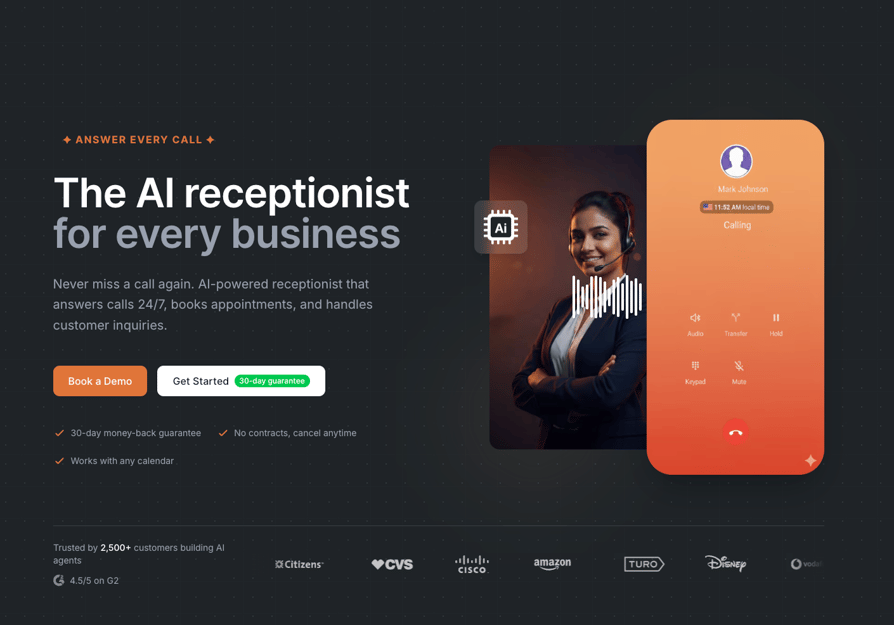
AgentZap sells an AI receptionist built for mental-health practices, headlined on its therapy page as "AI Receptionist for Therapists. Never miss a client seeking help." It's the only platform here whose core marketing is therapy rather than healthcare generally, and the configuration detail reflects that. It has integrations with SimplePractice and TherapyNotes and of course is HIPAA compliant.
What Are AgentZap's Key Features?
- Intake that asks the therapy questions. Collects presenting concern, insurance, and scheduling preferences, then books the intake session.
- A crisis protocol you define. AgentZap states calls "escalate per your protocol: transferring to on-call clinicians, 988 crisis line, or emergency services."
- Named practice-management integrations. SimplePractice, TherapyNotes, DrChrono, and Jane App, with dedicated integration pages for the first two.
- Human fallback on every plan. Live Receptionist Backup and Instant Call Transfers are listed on all tiers.
- Specialty matching and multilingual support, plus telehealth handling and appointment reminders.
What Are AgentZap's Pros and Cons?
| Pros | Cons |
|---|---|
| Its own HIPAA page states a signed BAA is included, the clearest therapy-specific BAA claim in this set | Publishes nothing about SOC 2, mid-call recording control, PHI redaction, or US data residency |
| Deepest published mental-health intake and crisis-escalation detail of any platform here | Two of its own pages disagree on scale, claiming "2,500+ clients" and "800+ mental health professionals" |
| Ships opinionated about mental-health calls, so there's no therapy configuration to build | A $499 one-time setup fee on top of every self-serve tier, and no free trial |
Who Is AgentZap Best For?
Solo and small group therapy practices that want therapy call handling working on day one rather than assembled from a general-purpose product.
How Much Does AgentZap Cost?
- Starter: $109/month, 150 minutes, $0.85 per minute over, plus a $499 one-time training and setup fee
- Professional: $295/month, 450 minutes, $0.75 per minute over, plus the setup fee, waived on a six-month term
- Business: $899/month, 1,500 minutes, $0.70 per minute over, plus the setup fee
- Enterprise: custom
- Annual billing is advertised as two months free, with a 30-day money-back guarantee instead of a trial
What Is AgentZap's G2 Rating?
G2 has no reviews for AgentZap, but it has 4.2 out of 5 starts on Trustpilot, although there are only 6 reviews.
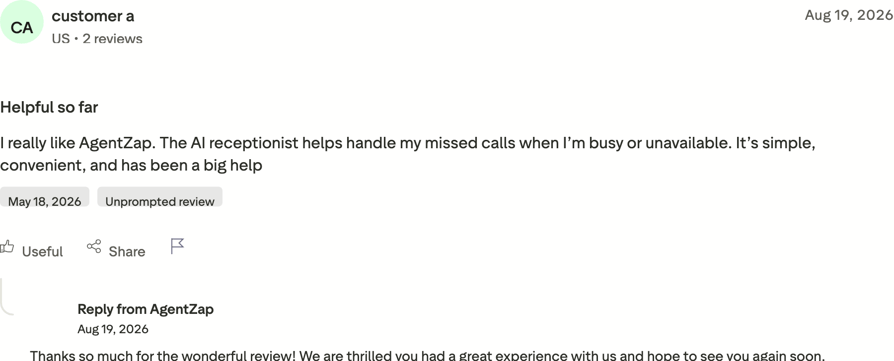
Review Snapshot: What Are Real Users Saying About AgentZap?
AgentZap doesn't have many reviews on public review sites, but it is mentioned on Reddit as a ready-to-go receptionist alternative instead of voice agents you have to build yourself.
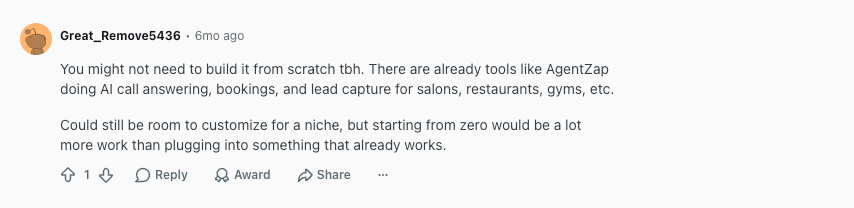
When to Use AgentZap
When you run a solo or small group practice, want SimplePractice or TherapyNotes scheduling working immediately, and would rather buy an opinionated therapy configuration than build one.
When Not to Use AgentZap
When you need a whole phone system, when your compliance officer requires a SOC 2 Type II report, or when documented mid-call recording control is a hard requirement.
AgentZap Score
| Category | Score |
|---|---|
| Published BAA evidence | 4/5 |
| SimplePractice / TherapyNotes integration | 5/5 |
| Crisis routing and escalation | 5/5 |
| Mental-health intake depth | 5/5 |
| Published PHI and recording controls | 2/5 |
2. Simbie AI
What Is Simbie AI?
Simbie AI positions itself as "AI Medical Staff" for specialty practices, handling patient calls end to end rather than capturing leads. Its intake framing is clinical rather than commercial, which makes it the closest fit here for psychiatry and med management.
What Are Simbie AI's Key Features?
- AI phone agents covering appointment scheduling, patient intake, insurance verification, and prescription refill requests
- Outbound as well as inbound calling, reaching patients, providers, and pharmacies
- Electronic medical record (EMR) integration, with major systems named in secondary coverage rather than on a page we could read
What Are Simbie AI's Pros and Cons?
| Pros | Cons |
|---|---|
| Clinical intake and refill workflows go deeper than lead capture | Nothing published on crisis routing, recording control, or PHI redaction |
| Outbound calling to pharmacies and providers, not just inbound answering | Pricing is utilization-based and never published, so a solo practice can't size it |
| Homepage FAQ states plainly that Simbie AI is secure and HIPAA-compliant | Glitches and speed issues reported |
Who Is Simbie AI Best For?
Psychiatry and medication-management practices where refill, insurance, and pharmacy calls dominate the volume.
How Much Does Simbie AI Cost?
Quote only. Simbie AI's FAQ says cost "is based on utilization, so you're only paying for direct value adds to your practice." A $0.20 per minute figure on its site applies to transcription rather than the phone agent, so treat the phone agent as unpriced until you have a quote.
What Is Simbie AI's G2 Rating?
Simbie does not have reviews published on public review sites like G2, TrustPilot or Capterra.
Review Snapshot: What Are Real Users Saying About Simbie AI?
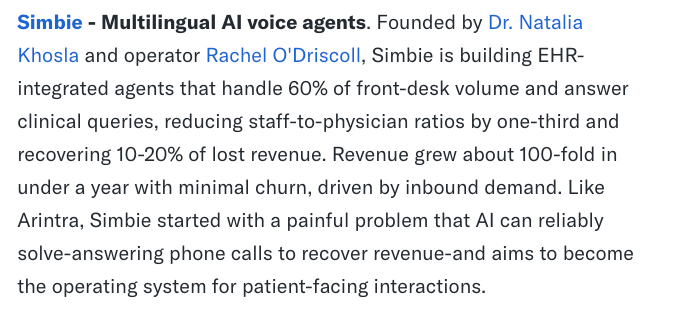
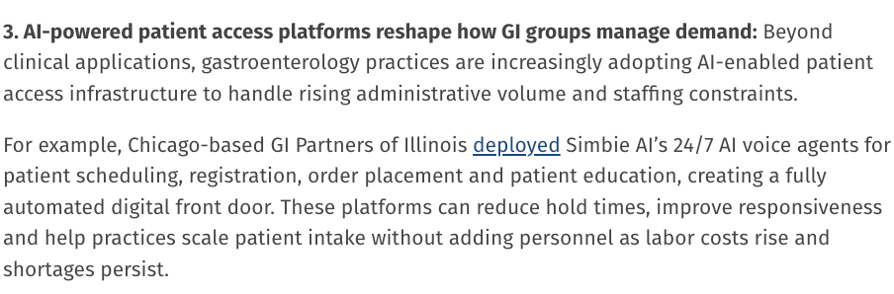
While Simbie doesn't have reviews published on public review sites, it name-drops some impressive institutions like Stanford and Yale, as places from whence their researchers hale.
Additionally, self-published Customer testimonials
It's also mentioned in online publications like Yahoo Finance and and the ASC Review as a tool to make clinics from smoother and lower costs.
When to Use Simbie AI
When you run psychiatry or med management and want an agent that speaks the clinical workflow rather than a booking script.
When Not to Use Simbie AI
When you need 988 escalation and presenting-concern intake, or a published price before a sales call.
Simbie AI Score
| Category | Score |
|---|---|
| Published BAA evidence | 1/5 |
| SimplePractice / TherapyNotes integration | 1/5 |
| Crisis routing and escalation | 1/5 |
| Mental-health intake depth | 3/5 |
| Published PHI and recording controls | 1/5 |
3. DeepCura
What Is DeepCura?
DeepCura bundles seven AI agents into one flat per-provider subscription, headlined on its pricing page as "7 AI Agents. $1,197 in Value. One $129 Plan." The receptionist is one agent among several, alongside a clinical scribe and coding automation.
What Are DeepCura's Key Features?
- AI receptionist with a free phone number included
- AI medical scribe, plus automated ICD-10, CPT, and E&M code generation
- AI Fax with a free fax number
- 1,000 monthly credits shared across all seven agents, with an extra-credits add-on at $59/month
- EHR integration at no extra cost with OptiMantra, AdvancedMD, athenahealth, eClinicalWorks, Practice Fusion, Epic, Charm Health, and OpenEMR
What Are DeepCura's Pros and Cons?
| Pros | Cons |
|---|---|
| One flat per-provider price covering reception and clinical documentation | No BAA statement on its pricing page; the only "BAA" string there is an integration label |
| Free trial with credits and no card required, rare in this category | SimplePractice and TherapyNotes are absent from its published EHR list |
| Published price, so a small practice can size the cost before talking to sales | Its SOC 2 position is contested, described as "SOC 2-aligned" in one place and not certified in another |
Who Is DeepCura Best For?
Small practices wanting reception and clinical documentation from one vendor at a predictable per-provider price.
How Much Does DeepCura Cost?
- Monthly: $129 per provider per month, covering all seven AI agents
- Annual: $999 per provider per year, which DeepCura states is 35% off monthly
- Volume pricing offered for three or more providers
- Extra credits: $59/month, doubling the allowance from 1,000 to 2,000
- Free trial: included with credits and no credit card, length not stated
What Is DeepCura's G2 Rating?
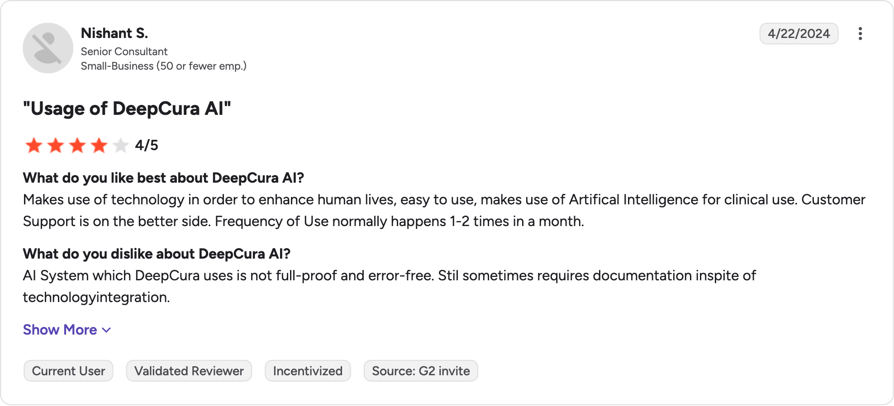
DeepCura has 4.6/5 stars on G2 with 13 reviews.
When to Use DeepCura
When your EHR is on its published list and you'd rather buy phone coverage and documentation together than integrate two vendors.
When Not to Use DeepCura
When you schedule in SimplePractice or TherapyNotes, or your compliance review needs a SOC 2 Type II report before signature.
DeepCura Score
| Category | Score |
|---|---|
| Published BAA evidence | 1/5 |
| SimplePractice / TherapyNotes integration | 1/5 |
| Crisis routing and escalation | 1/5 |
| Mental-health intake depth | 2/5 |
| Published PHI and recording controls | 1/5 |
4. Greetmate.ai
What Is Greetmate.ai?
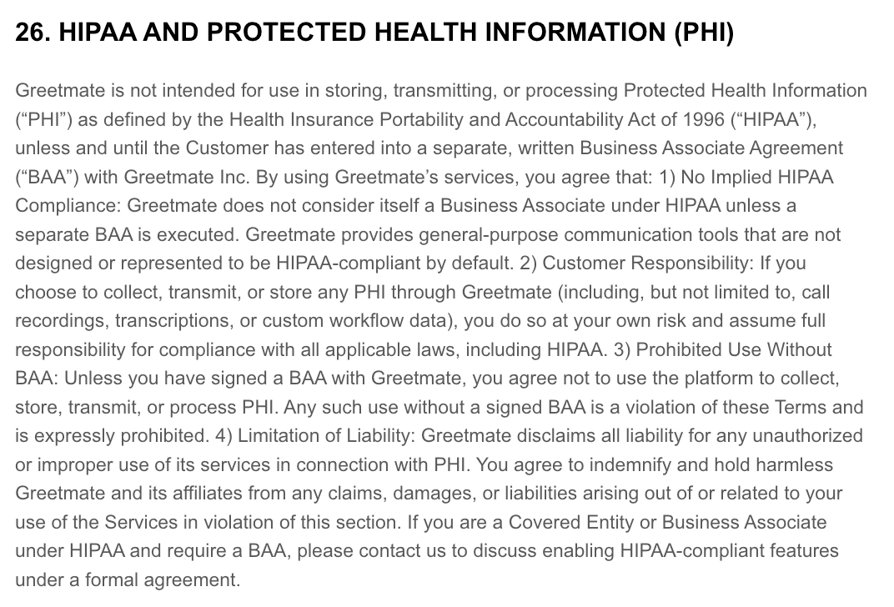
Greetmate.ai sells "HIPAA-Ready Voice AI Infrastructure for Healthcare Operations" as a managed build rather than self-serve setup. It's one of two platforms here with a page dedicated to mental-health operations, and the only one whose pricing page states a signed BAA per tier.
What Are Greetmate.ai's Key Features?
- Voice AI and SMS AI for mental-health operations, including discreet routing, intake automation, and provider scheduling across locations
- Managed implementation into existing telephony, scheduling, and EHR systems
- A no-code workflow builder, with 300+ integrations claimed
- Tiering by practice size, with sub-accounts, workflow limits, and concurrent-call limits varying by tier
What Are Greetmate.ai's Pros and Cons?
| Pros | Cons |
|---|---|
| Its pricing page states "BAA signed with your practice: Yes" on all three tiers, the most specific BAA statement here | Describes its infrastructure as "HIPAA-ready" rather than HIPAA compliant, a meaningful hedge |
| A dedicated mental-health operations page, not therapy bolted onto a general product | No published tier prices, and its own range starts at $1,000 per month |
| Managed implementation suits a group practice with no IT resource | EHR support is qualified as "supported EHRs only" on every tier, with no therapy tools named |
Who Is Greetmate.ai Best For?
Multi-provider and multi-location counseling centers with the budget for a managed build and no IT resource to run one.
How Much Does Greetmate.ai Cost?
Quote only, with a published range. Its pricing page says "most customers invest between $1,000 and $5,000 per month, depending on call volume, workflow complexity, integrations, and feature requirements." Tiers are sized by practice: Pro for one to two providers at one location, Growth for three to eight, Multi for eight to 20. Published line items include A2P 10DLC registration at $20 one-time, a $5 monthly campaign fee, and outbound SMS at $0.05 each. No free trial; the entry point is a 15-minute discovery call.
What Is Greetmate.ai's G2 Rating?
Greetmate.ai has no reviews on G2.
When to Use Greetmate.ai
When you run a multi-location counseling center, want someone else to build the call flows, and a four-figure monthly spend fits your volume.
When Not to Use Greetmate.ai
When you're a solo therapist, you need a trial before committing, or SimplePractice scheduling has to work on day one.
Greetmate.ai Score
| Category | Score |
|---|---|
| Published BAA evidence | 5/5 |
| SimplePractice / TherapyNotes integration | 2/5 |
| Crisis routing and escalation | 1/5 |
| Mental-health intake depth | 3/5 |
| Published PHI and recording controls | 1/5 |
5. Emitrr
What Is Emitrr?
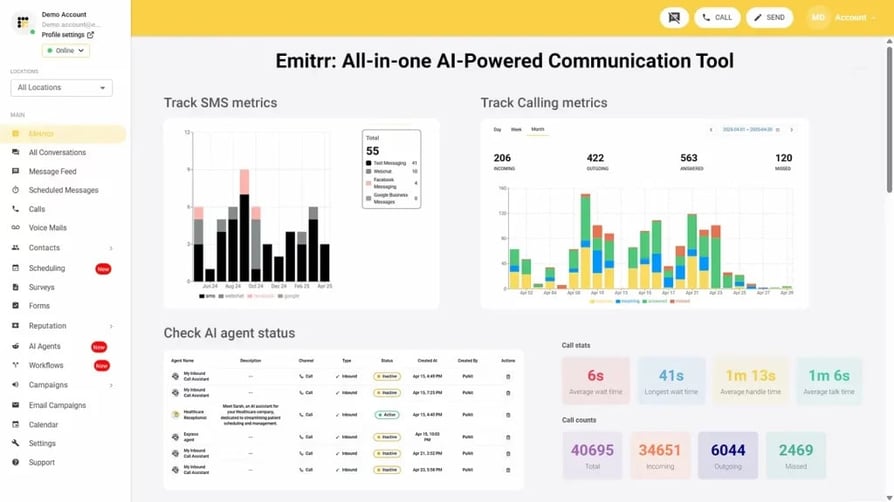
Emitrr is a patient-communication platform for healthcare practices covering voice, SMS, webchat, scheduling, and digital forms. Its pitch is breadth: one agreement for the phone and the texting around it, rather than a voice agent you bolt onto an existing stack.
What Are Emitrr's Key Features?
- Emitrr AI Agent for voice answering, alongside SMS, webchat, and missed-call text-back
- Self-serve scheduling and digital intake forms, with local number text-enablement
- A Chrome extension for texting patients straight from the browser
- 500+ integrations claimed across industries
- Round-the-clock customer support staffed by people, per Emitrr's own claim
What Are Emitrr's Pros and Cons?
| Pros | Cons |
|---|---|
| One platform for calls, texts, forms, and scheduling under what Emitrr describes as a single BAA | That single-BAA claim sits on a marketing blog rather than a compliance or pricing page |
| Published entry price at the low end of this comparison | No mention of 988 or crisis routing anywhere in its own therapist article |
| Missed-call text-back catches the caller who hangs up before voicemail | SOC 2 is not mentioned anywhere, including in a 7,000-word article about HIPAA |
Who Is Emitrr Best For?
Practices running on texting as much as calling, where price is the binding constraint.
How Much Does Emitrr Cost?
From $99 per month, then custom-quoted. Emitrr states its AI pricing starts at $99 a month and that you contact its team for a quote covering only the features you need. Treat the $99 as a floor rather than a plan price, and read our breakdown of Emitrr pricing before you take a quote at face value.
What Is Emitrr's G2 Rating?
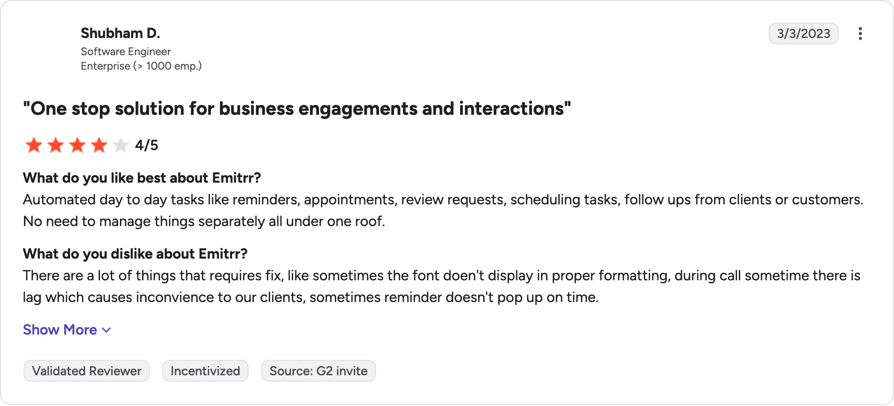
Emitrr gets 4.8/5 stars on G2.
Review Snapshot: What Are Real Users Saying About Emitrr?
Nothing verified yet. Emitrr publishes plenty of its own comparison content; none of it counts as independent sentiment.
When to Use Emitrr
When intake forms, reminders, and two-way texting matter as much as the call itself, and you want them in one system.
When Not to Use Emitrr
When crisis routing has to be documented and configurable, or your compliance officer needs the BAA claim somewhere more load-bearing than a blog post.
Emitrr Score
| Category | Score |
|---|---|
| Published BAA evidence | 3/5 |
| SimplePractice / TherapyNotes integration | 1/5 |
| Crisis routing and escalation | 1/5 |
| Mental-health intake depth | 2/5 |
| Published PHI and recording controls | 1/5 |
6. Sully.ai
What Is Sully.ai?
Sully.ai sells a "superhuman team of AI Employees for Hospitals": voice reception, ambient clinical scribing, and back-office agents inside one environment. It's built for scale, and it's the only platform here whose homepage names both SOC 2 Type II and ISO 27001.
What Are Sully.ai's Key Features?
- AI "employees" covering voice reception, ambient clinical documentation, and back-office work
- Deep EHR integration with real-time monitoring and compliance reporting
- Encryption in transit and at rest, role-based access controls, and audit logs across integrations
What Are Sully.ai's Pros and Cons?
| Pros | Cons |
|---|---|
| The only platform here naming SOC 2 Type II and ISO 27001 on its own homepage | No BAA statement on any page we could read; its help-center HIPAA article renders client-side and returned no text |
| One PHI environment covering reception and clinical documentation | No published pricing at all, and secondary coverage cites four figures a month |
| Built for the scale of a large behavioral-health organization | Nothing published on crisis routing, mental-health intake, or recording control |
Who Is Sully.ai Best For?
Large group practices and behavioral-health organizations with a procurement process and no need for self-serve.
How Much Does Sully.ai Cost?
Not published. Secondary coverage cites a Pro tier around $1,580 per month for a 20-clinician practice, which we can't confirm first-party. Treat Sully.ai as quote-only.
What Is Sully.ai's G2 Rating?
Sully does not have any ratings on G2.
Review Snapshot: What Are Real Users Saying About Sully.ai?
Nothing verified yet, which is common for enterprise-sold platforms where buyers go through procurement rather than a trial.
When to Use Sully.ai
When you want reception and clinical scribing under one vendor with a named security posture, at organizational scale.
When Not to Use Sully.ai
When you're a solo or small practice. There's no self-serve entry, no published price, and no therapy-specific configuration to buy.
Sully.ai Score
| Category | Score |
|---|---|
| Published BAA evidence | 1/5 |
| SimplePractice / TherapyNotes integration | 1/5 |
| Crisis routing and escalation | 1/5 |
| Mental-health intake depth | 2/5 |
| Published PHI and recording controls | 2/5 |
7. CloudTalk
What Is CloudTalk?
CloudTalk is an AI-powered business calling platform: a cloud phone system with an AI Voice Agent layer and 100+ native integrations, used by 5,500+ customers. CloudTalk has been HIPAA compliant since Q1 2025 and is SOC 2 Type 1 and Type 2 compliant. It acts as a Business Associate handling PHI on behalf of customers who are Covered Entities, and signs a Business Associate Agreement with customers who require one through a documented process on request.
That makes it a different purchase from most of this list. You're buying the phone system a practice runs on, with the AI receptionist as a layer on top, rather than an answering service sitting in front of a phone system you already have.
What Are CloudTalk's Key Features?
- AI Voice Agent (CeTe / VoiceAgents) handles autonomous inbound and outbound conversations across 60+ languages at sub-800ms response latency, with pre-built healthcare intake and appointment-scheduling templates. Always an add-on, never included in a plan.
- Pause/Resume Recording lets agents pause and resume call recording mid-call to protect sensitive moments, across all packages including the CloudTalk Go mobile app.
- Call recording consent management for consent-recording laws, plus Call Masking to hide caller ID on outbound calls (Custom, Essential, and Expert).
- IVR (Interactive Voice Response) with skill and smart condition-based routing from the Starter plan up, so a call reaches an on-call clinician or external number without a human transferring it.
- Integration path through 100+ native CRM and helpdesk integrations (first available on Essential), a public API, webhooks, and Zapier, reaching roughly 5,000 downstream apps. There's no native SimplePractice, TherapyNotes, or Jane App integration, so scheduling sync is API, webhook, or Zapier work rather than a switch you flip.
- Virtual numbers in 160+ countries, with call queues, ring groups, and business hours, which matters for a telehealth practice licensed across state lines.
What Are CloudTalk's Pros and Cons?
| Pros | Cons |
|---|---|
| Pause/Resume Recording on every package, the one platform here publishing mid-call recording control | No native SimplePractice, TherapyNotes, or Jane App integration; that path runs through the API, webhooks, or Zapier |
| Signs a BAA on request as a Business Associate, and is SOC 2 Type 1 and Type 2 compliant | No purpose-built crisis-detection or 988 feature; escalation is configured with IVR and routing rules |
| A full phone system rather than an answering layer, with routing, queues, and a mobile app | The AI Voice Agent is a paid add-on, so the real monthly cost is the plan plus minutes |
Who Is CloudTalk Best For?
Group practices and telehealth teams that need a phone system underneath the AI, and for whom recording control is a compliance requirement rather than a preference.
How Much Does CloudTalk Cost?
- Starter: $25/user/month, the baseline plan, including IVR with skill and smart condition-based routing
- Essential: $29/user/month, adding the 100+ native integrations and API access
- Expert: $49/user/month
- Custom: contact sales
- AI Voice Agents add-on: AI Receptionist from $99/month for 200 minutes, first 50 minutes free in month one; AI Specialist from $349/month for 1,000 minutes. Always an add-on, never bundled.
- AI Conversation Intelligence add-on: $9 per user/month billed annually, covering transcription, AI call summaries, sentiment, and transcript search. Also always an add-on.
- Free trial: 14 days
Budget the plan and the add-on together. A three-clinician practice on Starter with AI Receptionist pays the plan cost plus $99 a month for the first 200 AI minutes, and the AI minutes scale with call volume. CloudTalk pricing itemizes the AI layer separately from seats for exactly that reason.
What Is CloudTalk's G2 Rating?
4.4/5 (1938+ reviews).
Review Snapshot: What Are Real Users Saying About CloudTalk?
Nothing verified yet. We have no cached review themes for CloudTalk either, so the rating above is all we're publishing here.
When to Use CloudTalk
When you need a phone system rather than only an answering layer, when recording must stop mid-call, and when the AI should cover a mid-day gap then hand the call to a named clinician.
When Not to Use CloudTalk
When you're a solo therapist wanting therapy call flows preconfigured out of the box, or native SimplePractice scheduling is a hard requirement you can't solve with an integration build.
Customer story: a high-volume services provider deflected nearly 40% of inbound calls with CloudTalk's AI Voice Agent. It isn't a therapy practice, so read it as evidence about deflection at volume, not about mental-health calls.
CloudTalk Score
| Category | Score |
|---|---|
| Published BAA evidence | 4/5 |
| SimplePractice / TherapyNotes integration | 2/5 |
| Crisis routing and escalation | 2/5 |
| Mental-health intake depth | 3/5 |
| Published PHI and recording controls | 4/5 |
Signature Capability
See CloudTalk’s AI Voice Agent in Action!
CeTe is an AI that talks like a human: no breaks, no training, no time off. It makes and answers calls, updates CRMs, books meetings, and loops in a human only when needed.
Press play to hear it. Want a wow moment? Get a free test call and try it live.

8. Smith.ai
What Is Smith.ai?
Smith.ai calls itself "Your AI Front Desk", pairing an AI receptionist you train and test before going live with North-America-based live receptionists for calls needing a person. You pick whether each call runs AI-first or human-first, and you can switch the mix.
What Are Smith.ai's Key Features?
- An AI receptionist you can train and test before it takes a real call
- AI-first and human-first modes you choose between and change later
- Live North-America-based receptionists as the human tier
What Are Smith.ai's Pros and Cons?
| Pros | Cons |
|---|---|
| The human tier is genuinely staffed, so an acutely distressed caller reaches a person | Its AI Receptionist pricing page mentions neither HIPAA nor a BAA |
| You train and test the AI before it goes live, which surfaces tone problems early | Nothing published on crisis routing, PHI redaction, or practice-management integration |
| Lower entry price than the managed platforms here | Its blog says HIPAA compliance is built in, which its own pricing page doesn't support |
Who Is Smith.ai Best For?
Practices wanting AI on routine calls with real receptionists behind it, and willing to get the compliance position answered before piloting.
Smith.ai's position is unresolved and we're reporting it that way rather than guessing. Its AI Receptionist pricing page, read 24 August 2026, contains no HIPAA or BAA mention. Its marketing blog says HIPAA compliance comes built in. Secondary sources assert its medical page places the service outside HIPAA-compliant PHI handling. Those can't all be true, and until Smith.ai answers directly we can't place it inside the gate.
How Much Does Smith.ai Cost?
- AI Receptionist, self-service: from roughly $95/month with a prepaid call allotment, with higher tiers around $270/month and $800/month
- Done-for-you AI plans: from roughly $500/month, billed annually
- Virtual Receptionist (human): from roughly $292.50/month per user
- Trial: train and test the AI, then go live, before paying
Our breakdown of Smith.ai pricing walks through how those tiers add up once minutes are included.
What Is Smith.ai's G2 Rating?
When to Use Smith.ai
When you want AI handling routine calls with real receptionists for the rest, and you'll get the compliance answer in writing first.
When Not to Use Smith.ai
When you need a signed BAA before you pilot anything, which for a therapy practice handling PHI is most of the time.
Smith.ai Score
| Category | Score |
|---|---|
| Published BAA evidence | 1/5 |
| SimplePractice / TherapyNotes integration | 1/5 |
| Crisis routing and escalation | 2/5 |
| Mental-health intake depth | 1/5 |
| Published PHI and recording controls | 1/5 |
9. Abby Connect
What Is Abby Connect?
Abby Connect combines 20 years of human receptionist service with an AI tier, describing itself as one service with three ways to answer: human, AI, or hybrid, switchable at any time. Its differentiator is the dedicated team model, where the same small group of receptionists learns your practice instead of a caller reaching whoever is free.
What Are Abby Connect's Key Features?
- Human, AI, or hybrid answering, changeable whenever your needs change
- Dedicated receptionist teams, so a returning caller hears a familiar voice
- Encrypted call recordings, with customized call handling and answering hours
- The AbbyGO app and portal for changing call handling in the moment
- White-glove onboarding, with 1,000+ integrations claimed
What Are Abby Connect's Pros and Cons?
| Pros | Cons |
|---|---|
| The strongest human-backup answer here; a distressed caller reaches a consistent person | Its pricing page lists "HIPAA Compliance Options [Human only]", which read literally excludes the AI receptionist |
| Published tier prices and a free trial on every tier | Nothing published on crisis protocol, PHI redaction, or practice-management integration |
| Doubles your included minutes when you choose AI | Minute allowances are small, so overage is the real cost driver |
Who Is Abby Connect Best For?
Practices whose priority is a consistent human voice on sensitive calls rather than intake depth.
The scope limitation deserves stating plainly, since at least one independent page recommends Abby Connect to therapy practices without it. Abby's pricing page publishes HIPAA compliance as an option "[Human only]". Read literally, that option and any accompanying BAA cover the human receptionist service and not the AI receptionist. If that reading holds, you can't put PHI near the AI tier, which changes what you're buying.
How Much Does Abby Connect Cost?
- Starter: $165/month, 50 Abby Minutes
- Essential: $329/month, 100 Abby Minutes
- Professional: $599/month, 200 Abby Minutes
- Double your Abby minutes when you choose AI, offered on every tier
- Free trial available on every tier, length not stated
What Is Abby Connect's G2 Rating?
When to Use Abby Connect
When a person should answer sensitive calls, you want the same voices handling your practice, and you'll confirm the HIPAA scope before the AI tier touches a caller.
When Not to Use Abby Connect
When you want an all-AI receptionist with mental-health intake depth, or your call volume makes a small minute allowance expensive.
Abby Connect Score
| Category | Score |
|---|---|
| Published BAA evidence | 2/5 |
| SimplePractice / TherapyNotes integration | 1/5 |
| Crisis routing and escalation | 2/5 |
| Mental-health intake depth | 2/5 |
| Published PHI and recording controls | 1/5 |
Start a 14-day free trial
How to Choose the Right HIPAA-Compliant AI Receptionist for Your Therapy Practice
Compliance first, features second. That sequence is the one that doesn't cost you a quarter of implementation work you then have to undo.
Verify the BAA First, Before Evaluating Any Other Feature
Ask for the BAA as a document, not a checkbox on a comparison page, and read what it covers. A BAA naming "the service" without naming call recordings, transcripts, and AI summaries leaves the artifacts most likely to contain PHI outside the agreement.
Then ask about the model provider. Your AI receptionist passes caller audio to a large language model somewhere, so check the provider is named as a subcontractor with flow-down terms. If the vendor can't produce that documentation, you've found the gap. One more thing worth knowing before you sign: a BAA shifts some financial recovery to the vendor, but regulatory exposure stays with you as the covered entity, which is why the HIPAA verification requirements you put a vendor through are your own compliance work.
Test SimplePractice and TherapyNotes Integration Depth
A logo on an integrations page tells you a connection exists. It doesn't tell you whether a completed intake lands in the system your staff open every morning. Run one real call end to end and check the record arrives complete, in the right fields, where a coordinator will find it. Practices whose intake tool and clinical record sync by manual export will take the export, as long as the AI captured the fields without gaps. Whether you're buying an AI voice agent for appointment scheduling or a whole receptionist, that one call is the test.
Then test the failure mode nobody writes about. When a client returns a call to the number that dialed them, does it reach the staff member who called, or land back on the AI? Practices have lost intakes outright to that misroute, because a returning caller who gets an automated agent instead of the coordinator they spoke to yesterday reads it as being handed off, and cancels.
Evaluate Crisis Call Protocol and Safety Escalation Logic
Ask three things about escalation, in this order. Can you define the trigger? Can you define the destination, whether that's an on-call clinician, 988, or emergency services? Can you change either without a support ticket?
Then scope the AI itself. Behavioral-health buyers draw this line explicitly: routing, messaging, and intake are fine, anything involving clinical or medication judgment reaches a person, and the AI never makes a care decision. Some go further and want time windows plus an on/off switch controlling when the AI is active at all. Look for a platform where you write the "what to do, what not to do, and what to do if" rules yourself, on call routing you can change without a ticket, instead of inheriting a fixed path.
Pew Research Center's April 2026 report on health information3 found 85% of Americans get health information from a health care provider at least sometimes, against 22% from AI chatbots. Trust sits with the clinician, so an AI handing the caller to one fast is working with the grain.
Check PHI Handling in Transcripts, Summaries, and Storage
Transcripts and AI summaries are the highest-risk artifacts here: searchable, copied into other systems, easy to forget. Establish who can open them, how long they live, whether deletion is scheduled or manual, and whether you control an export.
Then handle recording, where "does it record?" is the wrong question. Four better ones, and none of the nine platforms above publishes an answer to more than one:
- Can recording be stopped mid-call? A psychiatry practice needs to stop the moment a conversation turns sensitive or a patient withdraws consent, without ending the call.
- Can consent language live in the greeting? Stating that the call is recorded and can be stopped on request puts the choice with the caller at second three, not paragraph nine of a privacy policy.
- Do transcripts and AI summaries expire on a schedule? Some behavioral-health organizations don't want clinical calls recorded at all; others need scheduled deletion and export they control.
- Can you bound what the AI writes down? Restricting which fields the agent emits after the call is the cheapest way to keep clinical detail out of the AI layer, and the control most likely to be missing.
CloudTalk's Pause/Resume Recording covers the first: agents pause and resume recording during a live call, available across all packages rather than gated behind a compliance tier. Whichever platform you pick, get all four answers and the HIPAA call recording requirements behind them before your first live call.
Review After-Hours Coverage for Distressed Callers
"24/7" is a weaker criterion than it looks. Practices consistently report their worst gap is mid-day, when a solo owner is in back-to-back sessions or a part-time assistant checks messages every few hours, rather than at 2 a.m.
Ask where your own gap falls before buying coverage for someone else's. A group practice covering the phone in shifts is running a small HIPAA-compliant call center whether it calls it that or not. And remember callers redial rather than leave voicemail, so your voicemail count undercounts the problem.
Calculate the True Cost of a Missed Therapy Intake Call
Every platform here prices minutes, and minutes are where the estimate goes wrong. Flat-rate and unlimited pitches land with solo therapists for an honest reason: they remove a sizing decision most buyers can't make before they have data. Before signing, get answers to the questions vendors rarely publish. Does a call connecting to voicemail bill as connected? Can you cap call length? Can you restrict the agent's active hours? Are minutes, seats, numbers, and porting itemized separately? What's the overage rate and the one-time setup fee?
Then set the number against a single lost intake. A new client relationship runs for months, so the arithmetic rarely turns on the subscription. It turns on whether the AI adds cost on top of your existing tools or replaces work you already pay for. An AI voice agent ROI calculator won't settle that, but it will show which side of the line your call volume falls on.
Key Features to Look for in a HIPAA-Compliant AI Receptionist for Therapists
If you read nothing else, take these five into your evaluation:
- A BAA explicitly naming call recordings, transcripts, and AI summaries, with the model provider covered as a subcontractor. Mandatory, not a nice-to-have.
- Real bidirectional scheduling with SimplePractice, TherapyNotes, or whatever you book in, tested with one live call.
- Configurable crisis detection with immediate routing to 988 or an on-call clinician, plus an emergency disclaimer in the call flow directing psychiatric emergencies to emergency services.
- A mental-health intake script covering presenting concern, urgency screening, insurance, availability, and minor consent, which separates AI receptionist software for medical scheduling from something usable in a therapy practice.
- PHI controls on stored artifacts: redaction, per-user access controls, an audit trail, and mid-call recording control.
Run the checklist against a live setup
Quick Answers: What People Ask About HIPAA-Compliant AI Receptionists for Therapists
What Does "HIPAA-Compliant" Actually Mean for an AI Receptionist?
HIPAA compliance for an AI receptionist means a signed BAA plus documented PHI handling, not a badge on a marketing page. Caller identity plus reason for calling is PHI, which makes the vendor a Business Associate. That's true of any AI voice agent for healthcare, and a virtual receptionist for therapists without that agreement can't lawfully collect the one thing making intake useful.
Why Should You Verify the BAA Before Anything Else?
Because it decides whether the rest of the evaluation is worth doing. HIPAA requires a covered entity to have a BAA in place with any vendor handling PHI on its behalf, and the AI touches PHI the moment it asks why someone is calling. Get the agreement as a document and check it names recordings, transcripts, and AI summaries rather than "the service".
What Should Happen When a Caller Is in Crisis?
The call should reach a qualified human, fast. An AI receptionist can recognize a call needs a person immediately and route it to a named on-call clinician, 988, or emergency services on a protocol you define. It must not assess clinical risk itself. Treat the AI as the fastest route to a qualified person, never as the person.
How Deep Do the SimplePractice and TherapyNotes Integrations Go?
Usually less deeply than the logo suggests. Of the platforms here, AgentZap names both with dedicated integration pages. CloudTalk has no native integration and connects through its public API, webhooks, or Zapier. Test one live intake end to end before assuming scheduling works.
What Real Users Say About HIPAA-Compliant AI Receptionists for Therapists
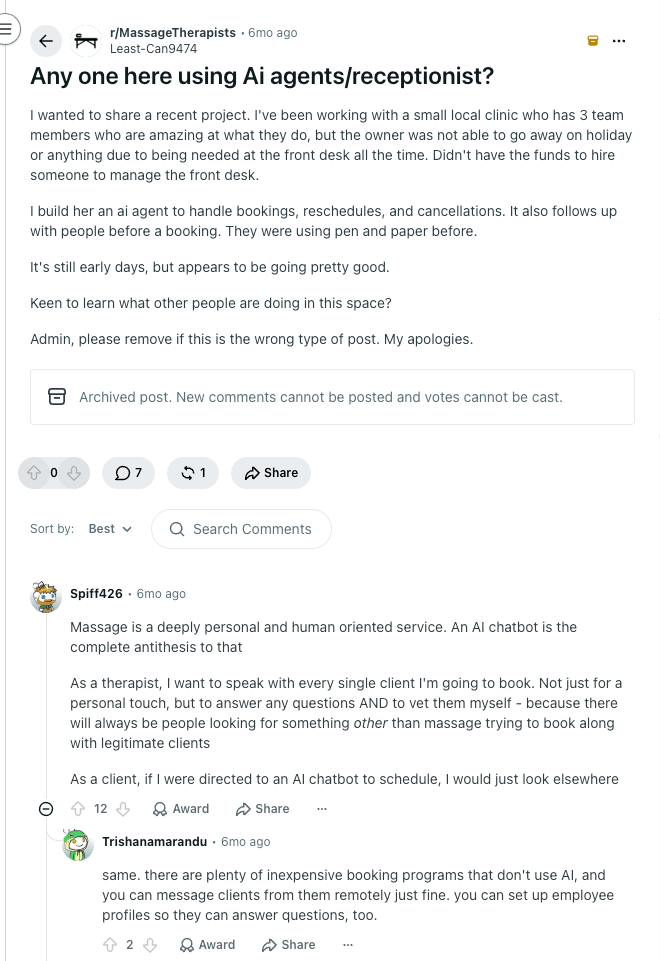
In general, clinic managers are not impressed with AI receptionists for the use case.
Practice owners describe worrying a synthetic-sounding greeting will make a client hang up in a context where hanging up has consequences, and wanting the opener to sound as human as the situation demands. Others want the caller to feel somebody answered rather than reaching a menu behaving like a dead end. A common ask is that voice and tone read as that practice's receptionist rather than a generic bot; a prebuilt healthcare AI receptionist template gets you a starting script, not a voice your clients recognize. Practices serving older clients raise clarity and accent. Teams running voice agents at scale report greeting tone drifting between calls, sometimes loud or high-pitched, which patients read as unprofessional.
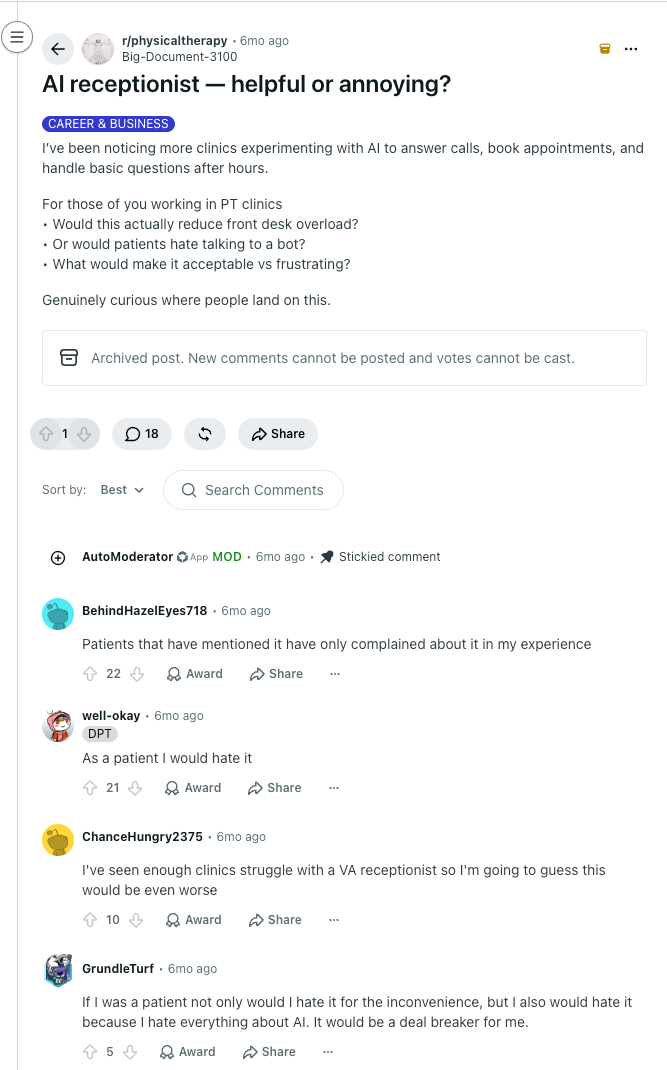
That gives you a trial test worth more than a feature matrix. Call your own line as a nervous first-time caller would, say nothing for two seconds, then listen to the first eight. If you wouldn't stay on the line, a first-time caller won't either.
Compliance anxiety is the second theme, usually phrased as liability rather than regulation: what happens to the practice, not the vendor, if the vendor turns out not to be compliant. Then crisis handling, then whether SimplePractice sync holds up.
The moral of the story may well be that AI receptionists in therapy are best suited for after-hours calls when the call would go unanswered anyways, or clinics with a high volume inbound calls, but it's clear that a human somewhere down the line is necessary.
Test it on your own worst-case call
Top HIPAA-Compliant AI Receptionists for Therapists by G2 Reviews and Ratings
Based on G2 reviews and ratings, CloudTalk is the most reviewed platform in this comparison, with 1938+ reviews and a 4.4/5 rating.
Read that with a caveat. Review count measures how many people use a product, not how well it handles a mental-health call. The purpose-built platforms here are newer and smaller, so a thin review profile tells you about their user base rather than their therapy-specific compliance depth. It's why we scored published evidence separately from popularity, and why most lists of the best AI medical receptionist software in 2026 over-reward whoever has been selling longest. The same distortion runs through general best AI voice agents roundups.
| Platform | G2 Reviews | G2 Rating | Full Review Link | Summary from G2 Reviews |
|---|---|---|---|---|
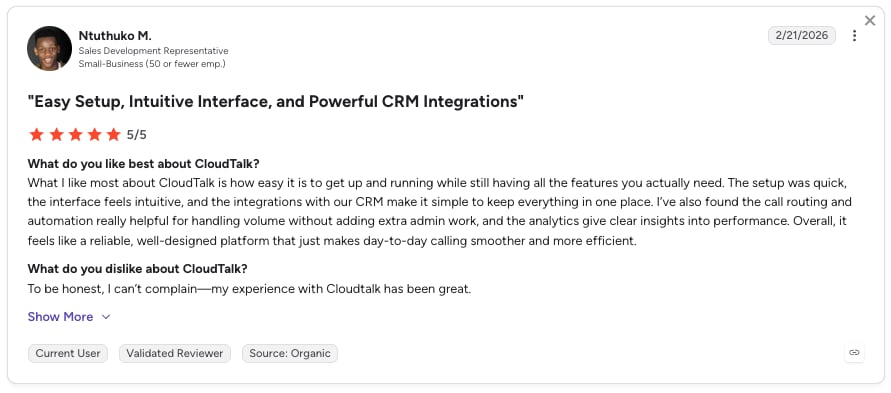
| CloudTalk | 1938+ | 4.4/5 | Read CloudTalk reviews on G2 | Customers frequently praise CloudTalk for its user-friendly interface and dependable audio clarity, which streamline daily communications. Its smooth compatibility with CRM platforms is another major plus for boosting team efficiency. That said, some reviewers report intermittent connectivity hiccups that can occasionally interrupt calls. |
| AgentZap | None | N/A | N/A | N/A |
| Simbie AI | None | N/A | N/A | N/A |
| DeepCura | 13 | 4.6/5 | Read DeepCura reviews on G2 | Feedback regularly highlights the platform's efficiency and user-friendly design, particularly how it speeds up paperwork and improves client communication. Features that automatically generate transcriptions and care instructions are widely praised for simplifying daily routines. Nevertheless, a notable drawback is its reliance on live audio capture, which isn't always practical in every scenario. |
| Greetmate.ai | None | N/A | N/A | N/A |
| Emitrr | 24 | 4.8/5 | Read Emitrr reviews on G2 | Emitrr gets high marks for its quick-to-help support staff and straightforward layout that keeps daily work simple. Users love how smoothly the automation and messaging features work together, though there are occasional complaints about minor system slowdowns. |
| Sully.ai | None | N/A | N/A | N/A |
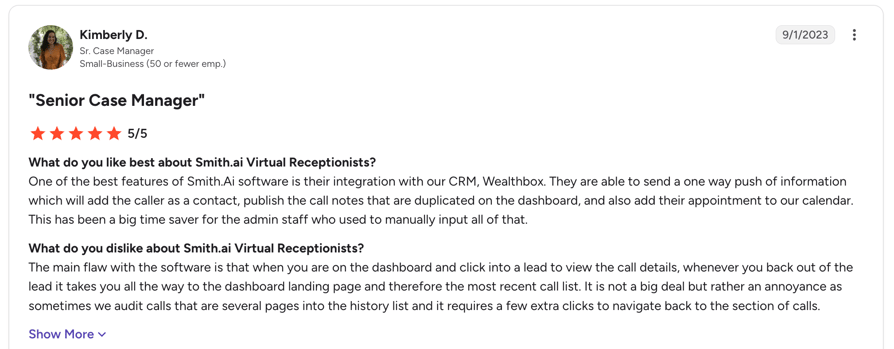
| Smith.ai | 73 | 4.9/5 | Read Smith.ai reviews on G2 | Customers are big fans of Smith.ai for handling calls professionally and plugging right into their existing CRMs, which saves a ton of manual data entry. People love that the virtual receptionists can easily book appointments and that the company's support team is always quick to help out. The only real complaints? You might get a different receptionist each time, which can make the service feel a little hit-or-miss, and the call dashboard can be a bit clunky to click through when you're trying to look at older call logs. |
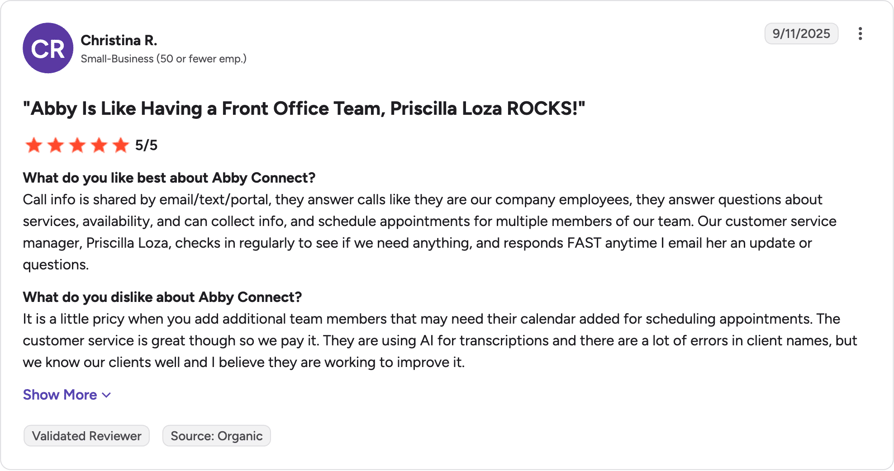
| Abby Connect | 12 | 4.5/5 | Read Abby Connect reviews on G2 | Not verifiPeople really appreciate how Abby Connect feels like a true extension of their team. The virtual receptionists are great at taking messages and scheduling appointments, and the dedicated account managers are incredibly helpful and quick to respond. The downside? It can get pretty expensive, especially if you need to add more team members or specific calendar integrations. A few users also mentioned being frustrated by being billed for spam calls and having customers placed on hold for too long.ed |
What Your AI Receptionist Should Handle Differently for Mental Health Callers
A general AI receptionist answers the call and qualifies the lead. A mental-health receptionist has a harder job: it meets someone at a vulnerable moment and has to make them feel heard before doing anything else. The configuration requirements differ, which is why a general AI medical receptionist configured for therapy needs work before it takes a real call, and why HIPAA customer service on a mental-health line is a higher bar than on a dental one.
Empathetic, Trauma-Informed Conversation Tone
Pace and silence tolerance matter more than script wording. A caller who pauses mid-sentence shouldn't get interrupted by the next question, and a caller who says something difficult should hear it acknowledged before the agent asks about insurance.
Check whether you can adjust the voice, speaking rate, and greeting text yourself, the way you'd tune an IVR text-to-speech prompt, and whether tone holds steady across calls. Then check again after any prompt change, since a tone regression stays invisible until a client mentions it.
Crisis Call Detection and 988/Emergency Routing Protocol
Two things belong in the call flow itself. First, an explicit emergency disclaimer directing psychiatric emergencies to emergency services, stated early enough that a caller in acute distress hears it before intake questions start. Second, a documented escalation path with a defined trigger, destination, and fallback if the destination doesn't answer.
Write the trigger on the cautious side. An ambiguous answer to a risk question should escalate the same way an affirmative one does, because an unnecessary transfer costs a few minutes of a clinician's time and the alternative costs far more.
Mental Health Intake Questions
The ten questions below are the intake set a therapy practice needs. Treat the urgency-screening row as mandatory.
| Question category | Sample questions | Why the AI should capture this |
|---|---|---|
| Reason for reaching out | Are you calling to schedule a new appointment, or is this for an existing client? | Routes new versus returning client into the correct booking flow immediately. |
| Presenting concern | Can you share a little about what has brought you to reach out today? (anxiety, depression, trauma, relationship issues, and so on) | Allows the therapist to prepare and match with the right clinician or specialty. |
| Urgency screening | Are you currently experiencing any thoughts of hurting yourself or others? | MANDATORY. Triggers the 988 or crisis routing protocol if the answer is affirmative or ambiguous. |
| Previous therapy experience | Have you worked with a therapist or counselor before? | Informs onboarding depth and initial session structure. |
| Insurance status | Are you planning to use insurance, or will you be paying out of pocket? | Determines the eligibility verification workflow and the fee schedule discussion. |
| Insurance provider | Which insurance plan are you covered under? | Enables a pre-call insurance panel check before booking is confirmed. |
| Availability | What days and times generally work best for you? | Filters available slots to show only times that match caller availability. |
| Age of client (if calling for a minor) | Is this appointment for yourself, or for a child or family member? | Triggers the minor-consent workflow and guardian information capture. |
| Preferred therapist or specialty | Do you have a preference for a specific therapist, or are you open to whoever is available? | Routes to the preferred provider or enables round-robin assignment. |
| Telehealth versus in-person | Do you prefer in-person sessions, telehealth, or are you open to either? | Filters session type and location availability. |
Ten questions is a lot for a distressed caller. Sequence them so you can book from the first four, the way an AI voice agent for patient booking would, then gather the rest by text or portal afterward, and let the agent stop asking the moment the caller wants a human.
Compliance and Legal Risks Before Deploying an AI Receptionist in a Therapy Practice
Therapy practices sit under several overlapping regimes at once: HIPAA, state mental-health privacy laws, 42 CFR Part 2 where substance use disorder treatment is involved, and licensing board rules. The HIPAA call center requirements applying to a hospital's phone room apply to a two-person practice too. Everything below is a list of requirements to verify with legal and compliance counsel, not legal advice.
BAA Requirements and What They Must Cover for Therapy Practices
Saying "we're HIPAA compliant" means nothing without a signed agreement naming the artifacts. Start with scope: call recordings, transcripts, AI summaries, and any data used to train or tune a model. Then the subcontractor chain, including the model provider. Then the part legal teams actually negotiate, which no vendor comparison covers:
- A stated, finite liability cap covering HIPAA regulatory fines and breach-notification costs, rather than uncapped exposure
- A cap defined by a number, not by whatever an insurer might choose to reimburse
- Proof of insurance, plus what the policy covers
- Damages limited to direct damages
- The access-control model, audit logging, and deletion policy supplied as documentation rather than asserted on a call
Ask for those in writing before technical evaluation, because they take longer than the pilot does.
PHI in Call Transcripts, Recordings, and AI Summaries
Establish who can open transcripts and summaries, how long they live, whether deletion is scheduled or manual, and whether you control an export. Then bound what the AI writes down: restricting the fields the agent emits after a call is the cheapest way to keep clinical detail out of the AI layer. The everyday habits in our HIPAA tips for call centers decide who actually opens a transcript.
Crisis Call Liability and Documentation Requirements
Decide in advance what the system records when a call escalates, who gets notified, and how fast. A crisis transfer with no timestamped record is a documentation gap you'll notice at the worst possible moment, so whatever you use for HIPAA-compliant call tracking has to log the escalation, not just the call. Your licensing board may have views HIPAA doesn't cover, so take this to counsel and your malpractice carrier rather than a vendor.
Consent Requirements for Recording Therapy-Related Calls
Recording consent law varies by state, and whether call recording is legal without the caller's explicit agreement depends on where that caller is sitting. For a therapy practice that generally means consent language in the greeting rather than buried in a privacy notice, ideally stating the call is recorded and that recording can be stopped on request. Confirm the mechanics too: if a caller withdraws consent partway through, can whoever is on the call stop the recording without hanging up?
State-Level Mental Health Privacy Laws That Exceed HIPAA
HIPAA is the floor. Several states impose stricter rules on mental-health records, and 42 CFR Part 2 applies its own consent and redisclosure regime to substance use disorder treatment records, tighter than HIPAA in places. Minor consent adds another layer, since who may authorize treatment and who may access records differs by state and age.
The HHS Office for Civil Rights breach portal states it investigates all breaches of protected health information and Part 2 records affecting 500 or more individuals, and may investigate smaller ones. Read that alongside the residual-liability point above: the covered entity is the one under investigation, whichever vendor caused the problem.
One scoping note. The BAA-first sequence here isn't specific to mental health. If you're evaluating an AI receptionist for physio therapists, or a virtual receptionist for doctors in a primary-care office, the filter is identical; only the intake script and escalation path change.
Conclusion
Nine platforms, and four state a BAA somewhere while only three do it on a compliance or pricing page. None answers all four recording-control questions. That's the honest state of this category in 2026, and it's why the platform you want is the most verifiable one fitting how your practice runs, rather than the one with the longest feature list.
Best HIPAA-Compliant AI Receptionist for Solo Therapists
AgentZap, on balance. It's the only platform shipping opinionated about therapy calls, with mental-health intake, a configurable crisis protocol, and named SimplePractice and TherapyNotes integrations at $109/month for 150 minutes. Budget the $499 setup fee, and get the HIPAA add-on question answered in writing before paying it. If price binds, Emitrr's $99 entry point is lower with less therapy specificity behind it.
Best HIPAA-Compliant AI Receptionist for Group Practices and Counseling Centers
Greetmate.ai if you want the build handed to you and a four-figure monthly spend fits, since its pricing page is the only one stating a signed BAA on every tier. CloudTalk if you'd rather own the phone system underneath, with routing, queues, and recording control included and the AI added on top. Sully.ai belongs on a larger organization's shortlist, though it publishes no BAA statement and no price. At counseling-center scale you're staffing something closer to a healthcare call center than a front desk.
Best HIPAA-Compliant AI Receptionist for Telehealth and Hybrid Practices
CloudTalk, for the unglamorous reason that a telehealth practice needs virtual numbers, routing across time zones, and a mobile app as much as an answering layer. Numbers in 160+ countries, IVR with skill-based routing from Starter up, and Pause/Resume Recording on every package cover the operational side; the AI Voice Agent add-on covers the gap. A virtual receptionist for therapy practice teams working across state lines is a phone-system problem before it's an AI problem, sitting alongside whichever HIPAA-compliant telehealth platforms you already run sessions on.
Best HIPAA-Compliant AI Receptionist for Practices Needing Human Backup on Sensitive Calls
Abby Connect, with the caveat in its entry above. Dedicated receptionist teams are the strongest human-backup model here, but its published HIPAA option reads as human-only, so confirm the scope before the AI tier handles a caller. Smith.ai is the other hybrid option, and its compliance position is unresolved on its own pages.
Best Starting Option for Most Therapy Practices Going AI-First
Start with the BAA, then start small. Ask for the agreement, check it names recordings, transcripts, and AI summaries, confirm the model provider is a named subcontractor, then run one live intake call and follow the record into the system your coordinator opens in the morning. Whether you land on the best AI medical receptionist software for a psychiatry group or the cheapest medical receptionist software clearing your compliance review, that sequence keeps you from paying twice.
Bring your BAA questions to a live call
Sources
- Health Resources and Services Administration
- National Center for Health Statistics
- Pew Research Center
FAQ
A HIPAA-compliant AI receptionist for therapists is an AI voice agent that answers practice calls under a signed BAA. The compliance lives in the paperwork and the data handling, not in how human the voice sounds.
Yes. Once the AI hears who's calling and why, the vendor is a Business Associate, so the BAA is mandatory. Buyers who skip it tend to restart the search later. It should cover HIPAA-compliant texting platforms too if you text clients.
No. An AI receptionist can recognize that a call needs a person and move it immediately, using inbound call routing rules you define to reach an on-call clinician, 988, or emergency services. It must never assess risk or triage an emergency itself.
Sometimes, and only as deeply as the vendor built it. AgentZap names both. CloudTalk has no native connector, so scheduling sync runs through its API, webhooks, or Zapier integrations. Test one live intake before you assume it works.
Yes, with a BAA in place. A virtual receptionist for healthcare can capture presenting concern, insurance, availability, and minor consent. Without that agreement you have to strip out the questions that make intake worth doing.
No. Scheduling, intake, insurance questions, and routing are administrative work, which is where AI voice agents in healthcare belong. Clinical and medication questions have to reach a licensed clinician, and the agent should say so and transfer.
Neither wins outright. AI is cheaper per call and consistent on intake; a person reads distress better. Most practices land somewhere hybrid, which is why the benefits of a virtual receptionist are worth weighing per call type, not per vendor.
Published entry prices here run about $95 to $165 a month, before setup fees and overage. CloudTalk runs $25/user/month plus a $99 AI add-on. Minutes drive the bill, so what a virtual receptionist costs per minute matters most.