
Multi-Level IVR: Less Waiting, Faster Routing
Streamline support and eliminate misdirected transfers with a Multi-Level IVR.
Cut wait times by routing callers to the right team sooner through self-service
Improve call routing accuracy and customer satisfaction with a flexible IVR phone system
 SOC2 CompliantISO 27001
Trusted by 30,000+ sales & support professionals to power more & better conversations
















Why Businesses Choose Multi-Level IVR Systems
Shorter Wait Times, Faster Resolutions
Customers want answers fast, not hold music and transfers. A Multi-Level IVR routes callers to the right team sooner, cutting friction at the very first step and keeping queues moving.
Lower Agent Workload Through Self-Service
When your IVR handles the basics, your agents can focus on real problems, not repeating the same directions all day. Self-service also aligns with what customers prefer today.
Scalable Call Handling Without Growing Headcount
As you add teams, regions, and support lines, your call flows get more complex. A Multi-Level IVR helps you scale without breaking the caller experience by keeping routing consistent, structured, and predictable.
We’ve helped thousands of global companies
Case studies featuring customers who are building faster.

Global Sales Engine Powered by Connected Conversations
“CloudTalk’s AI transcripts and analytics make it easier to track talk ratios, discovery depth, and regional performance—all without requiring formal training to get started.”

Revolutionizing Revolut’s Efficiency and Saving 40+ Hours
"Thanks to CloudTalk’s reliability, we could improve sales teams’ performance and close more deals than we could have ever imagined."

Increasing productivity for 200 customer support agents
"With CloudTalk's Analytics I now get to see every step of the way. We can find discrepancies and gain a much better understanding of our teams."

Delivering success for Glovo’s customer support team
"CloudTalk improved our team's cost and efficiency. The script feature allows us to lead the calls in a much more systematic way."
Explore How Multi-Level IVR Works for Global Call Handling
Take an interactive tour and discover how easy it is to use.
Multi-Level IVR
Reduced Call Volumes Through Self-Service Automation
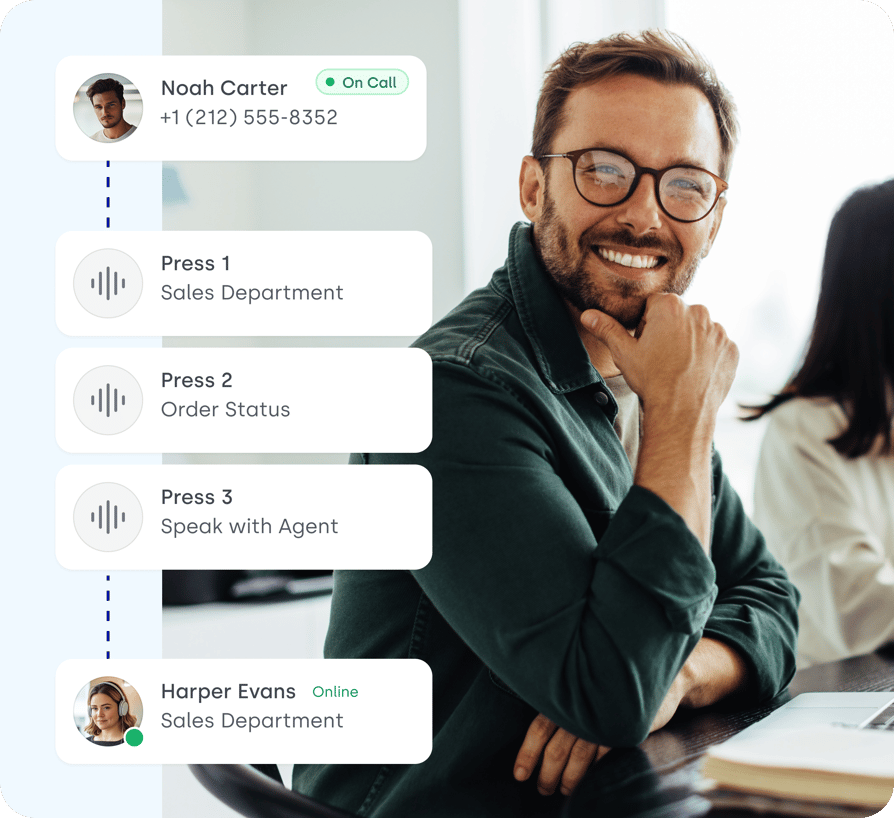
A well designed Multi-Level IVR feature handles routine questions before they ever reach your agents. That matters because every “quick request” that gets resolved in the menu is one less live call clogging your queue.
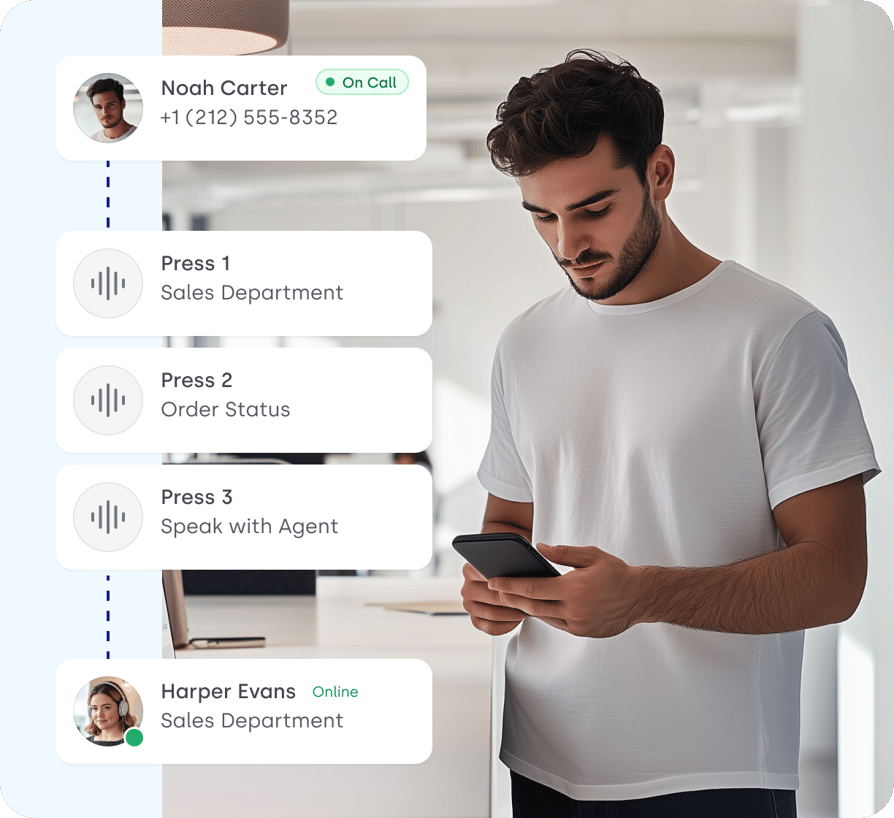
With CloudTalk’s Interactive Voice Response (IVR), you can build layered self-service paths that guide callers to the right action fast, like order status, billing info, opening hours, or support triage. Instead of forcing customers to wait, you give them a shortcut to resolution.
Consistent Support Without Expanding Agent Coverage
When call volume spikes, consistency is usually the first thing that breaks. A Multi-Level IVR solution keeps customer journeys stable by routing calls the same way every time, even when teams are busy or short staffed.
By combining structured menus with best practices from smart IVR solutions, CloudTalk helps you reduce misroutes, cut hold time frustration, and keep service levels predictable without hiring extra agents just to survive peak hours.
Professional Call Handling That Scales with Your Business
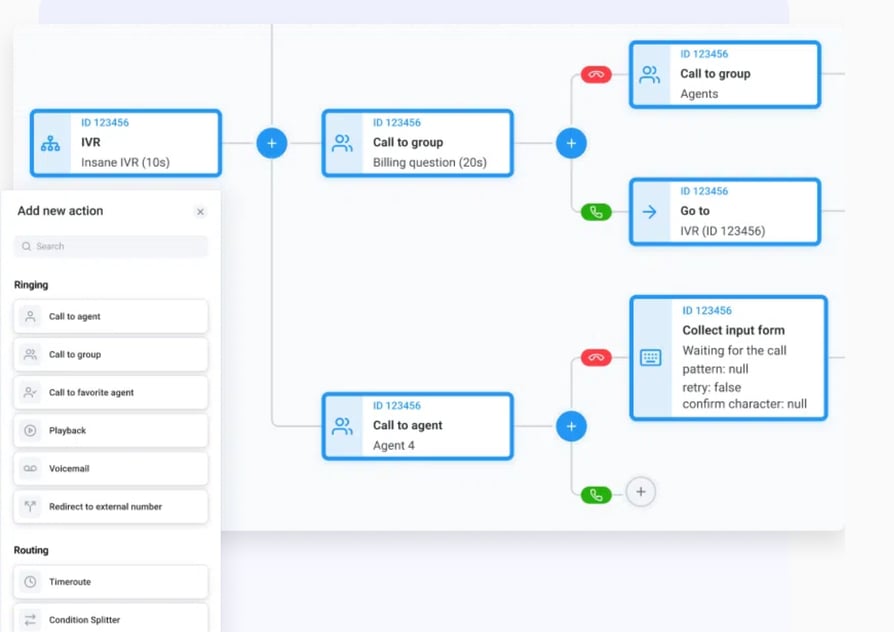
As your company grows, your call flows get more complex. More teams, more regions, more queues, more “press 1 then press 2” moments. A structured Multi Level IVR for business keeps that complexity organized, so callers never feel lost in a phone maze.
CloudTalk helps you design scalable routing logic, guided by proven IVR scripting principles that keep menus clear, intentional, and easy to navigate. The result is a more professional front door for your phone support, with better routing accuracy and fewer transfers.
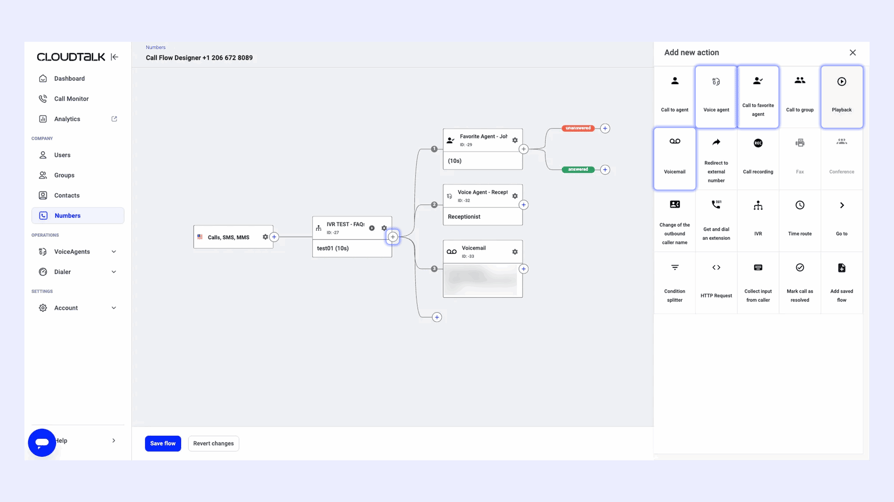
How to Set Up Multi-Level IVR in CloudTalk
- 01Map your call paths and destinations to create a clear Multi-Level IVR overview with the right menu levels for each caller need.
- 02Write short, natural prompts using proven IVR scripting so customers know exactly where to go next.
- 03Assign routing rules, queues, and fallback options to build a reliable Multi level IVR setup that works even when callers press the wrong key.
- 04Choose recordings or IVR text-to-speech to keep your menu voice consistent and easy to update.
- 05Test and optimize regularly using IVR self-service best practices to reduce misroutes, shorten wait times, and improve the caller experience.
Features
Other features you might like

Call Flow Designer
Design your inbound calling journey to fit the unique needs of your business and customers’ expectations.
Learn more about Call Flow Designer
VIP Queues
Assign VIP tags to your higher-priority customers so they can skip the queue and reach the right agent instantly.
Learn more about VIP Queues
Skill-Based Routing
Assign custom skills to your agents or teams and route customer calls automatically based on their expertise.
Learn more about Skill-Based Routing
Caller-Based Routing
Automatically route customers based on factors such as location, purchase history, and language.
Learn more about Caller-Based Routing
Ready to get started?
Join over 5,500+ modern companies that already trust CloudTalk to have MORE and BETTER calls.
Frequently asked questions
A Multi-Level IVR is an Interactive Voice Response system that guides callers through multiple menu layers to reach the right department, team, or self-service option. Instead of routing every call to an agent, it uses structured prompts like “Press 1 for Support, press 2 for Billing,” then follows up with submenus to narrow the request and route accurately using an Interactive Voice Response (IVR) flow.
A Multi-Level IVR for business is designed to handle higher call volume, more departments, and more complex routing needs than a basic phone menu. It helps teams reduce transfers, shorten wait times, and deliver faster resolutions by getting callers to the right destination the first time, even when queues are busy or support is distributed across regions.
A Multi-Level auto attendant is a phone menu system that automatically answers calls and routes them based on keypad selections, but it is usually more limited than a full IVR. If you are comparing the two, the best breakdown is this guide on Auto attendant vs IVR, because IVR generally supports more advanced logic like deeper menus, smarter routing rules, and self-service flows.
The most important Multi-Level IVR features focus on clarity, routing accuracy, and flexibility. A strong system typically includes:
-Multi-step menus with nested routing levels
-Smart call routing to teams, queues, and regions
-Failover options for incorrect input or no selection
-Business-hours and after-hours call paths
-Voice prompts with recordings or IVR text-to-speech
-Menu optimization insights driven by IVR experience best practices
-Optional AI enhancements through AI IVR capabilities
The biggest benefit is reducing friction at the start of the call, so customers reach the right team faster. A Multi-Level IVR system helps you:
-Improve call routing accuracy and reduce misdirected transfers
-Shorten wait times by sending callers to the right queue immediately
-Reduce agent workload with better self-service options
-Create a more consistent experience across departments and regions
-Scale support operations without rebuilding your phone menu every quarter
For smaller teams, these benefits can be especially noticeable when paired with practical guidance like an IVR system for small business setup.
A strong Multi-Level IVR solution reduces call volume by resolving common requests before they ever reach an agent. That includes menu paths for FAQs, business hours, order updates, and basic routing choices that stop “quick questions” from clogging your queues.
If you also use automated surveys, you can collect feedback without tying up agent time, which is why some teams pair IVR routing with IVR surveys.
The best practices come down to keeping menus short, logical, and easy to understand. High-performing teams typically:
-Keep the first menu to 4–6 options max
-Use simple labels callers can recognize instantly
-Always include an option to speak to a human
-Route urgent issues early to avoid frustration
-Test menu flows regularly and adjust based on real call behavior
-Improve self-service gradually using IVR self-service best practices
A good IVR should feel like a shortcut, not a maze.
The best Multi-Level IVR software is the one that matches your call routing needs and can evolve as your company grows. Focus on:
-Easy menu editing without technical support
-Strong routing logic, queues, and fallback rules
-Clear voice prompt management and script control
-Analytics to improve menus over time
-Cloud reliability and scalability through a cloud IVR setup
If your current setup feels outdated, it helps to compare modern IVR software options that support deeper routing and smarter workflows.
Multi-Level IVR is most useful when a business has multiple call reasons, teams, or locations. Common use cases include:
-Customer support triage and ticket routing
-Sales inquiry routing by product line or region
-Billing and payment related call flows
-International support menus by language
-Service desk routing for technical issues
-Routing based on caller intent and IVR selection
These use cases are why many teams adopt Multi-Level IVR solutions for businesses that need structured call handling at scale.
The two most common types are:
-DTMF IVR, where callers press keys to navigate menus
-Speech-enabled IVR, where callers respond using voice prompts
Many teams now combine both approaches, especially as AI IVR improves voice understanding and self-service quality.
CloudTalk gives you a flexible Multi-Level IVR feature that helps you build menu layers, route calls intelligently, and keep call flows easy to manage as you scale. You can design structured menus using best practices from smart IVR solutions and refine your prompts using proven IVR scripting techniques to improve caller clarity.
If your goal is building a modern IVR phone system that feels professional and easy for customers to navigate, CloudTalk is built for exactly that.
Multi Level IVR price depends on your plan, call volume, and the level of routing complexity you need. Some teams only require a simple menu with a few branches, while others need multi-region routing, language menus, and deeper layers of call handling.
The best way to evaluate cost is to map the call paths you need, then compare the time saved through better routing and self-service versus the time lost to misroutes and transfers.
Yes. A good Multi-Level IVR app should let you update menus quickly, adjust call paths, and refine prompts without relying on developers. That flexibility is critical because call flows change constantly as teams grow, departments shift, and new support queues are added.
An IVR number is the phone number customers call to reach your IVR menu. It can be a local, national, or toll-free number depending on how you support customers. If you want a deeper explanation of how it works, this guide on What an IVR number is breaks down the basics.


Hello 👋 My name is Emma. Still have questions?
Can’t find the answer you’re looking for? Please chat to our friendly team.
Frequently asked questions
IVR means Interactive Voice Response, a phone menu system that answers calls automatically and routes callers using keypad or voice inputs.
Yes. IVR is still one of the fastest ways to route calls correctly, reduce hold times, and offer self-service without increasing agent workload.
Yes. You can expand menus, add routing layers, and support new teams or locations without rebuilding your entire call flow.
Yes. CloudTalk makes it easy to edit prompts, change options, and update routing rules without needing developer help.
You can configure it by creating menu levels, assigning routing rules, choosing prompt audio or text-to-speech, and testing the flow to ensure customers reach the right team quickly.
Hello 👋 My name is Emma. Still have questions?
Can’t find the answer you’re looking for? Please chat to our friendly team.