10 Best Cartesia Alternatives: TL;DR Comparison Table
| # | Tool | Best For | Starting Price (annual billing) | G2 Rating |
|---|---|---|---|---|
| 1 | CloudTalk | SMB sales & support teams needing full voice operations with AI agents and human teams inside a full business phone system | $25/user/mo | 4.4/5 |
| 2 | ElevenLabs | TTS voice quality and cloning for content | $5/mo (Starter) | 4.5/5 |
| 3 | Retell AI | Developer-built low-latency voice agents | PAYG ~$0.13/min all-in | 4.8/5 |
| 4 | Vapi | Engineering teams that want a BYO voice stack | $0.05/min + provider costs | 4.2/5 |
| 5 | Deepgram | Speech-to-text plus TTS for regulated telephony | $0.030 per 1K chars | 4.6/5 |
| 6 | RingCentral | Enterprise UCaaS with AI writing assistant | $20/user/mo (Core) | 4.2/5 |
| 7 | Azure AI Speech | Enterprise TTS inside the Microsoft cloud | $16 per 1M chars (PAYG) | 3.9/5 |
| 8 | Murf AI | Creators and teams making video voiceovers | $19/mo (Creator, annual) | 4.7/5 |
| 9 | Synthflow | Agencies building no-code voice agents | $29/mo (Starter) | 4.5/5 |
| 10 | Dialpad | Small business phone with basic AI transcription | $15/user/mo (Standard) | 4.4/5 |
Skip the Reading. See It Live.
Why Teams Are Searching for a Cartesia Alternative
Teams start looking for Cartesia alternatives the moment they realize what Cartesia's pricing actually covers. Sonic 3 is a fast text-to-speech API, sub-100ms latency and expressive voices, but that's the whole product. There's no built-in telephony, no CRM sync, no human fallback, no dialers. Before a customer hears "hello," you're paying for Twilio, an LLM (Large Language Model), and CRM middleware on top. And Cartesia has near-zero verified reviews on G2, Trustpilot, or Capterra to lean on.
Based on developer feedback across Reddit, Product Hunt, and public technical comparisons, here are the five structural gaps Cartesia users consistently run into.
5 Main Cons of Cartesia That Push Teams to Alternatives
- API-only, no built-in telephonyCartesia gives you a TTS (Text-to-Speech) endpoint and voice cloning, nothing else. Developers report weeks of engineering stitching Twilio or LiveKit, an LLM provider, and a CRM connector before the first live call. Every stack layer is your problem.
- No CRM sync or contact loggingCartesia does not touch HubSpot, Salesforce, Pipedrive, or Zendesk. Every call, transcript, and contact update has to be built in-house. Teams end up with audio outputs that never reach the CRM where sales and support actually work.
- Per-character billing that's hard to forecastCartesia charges $50 per 1M characters on pay-as-you-go, with credit-based subscriptions on top. That sounds fine until a chatty agent burns through credits mid-campaign and costs balloon without warning.
- No human fallback or hybrid workflowWhen the AI voice cannot answer, there is nowhere to hand the call off. Cartesia has no live agent seats, no queues, no shared inbox. Every escalation becomes another engineering ticket instead of a routed transfer.
- Near-zero public review baseCartesia has no G2 rating and no Trustpilot presence. Buying committees relying on peer validation get almost nothing to work with. When you compare against CloudTalk's 1,800+ verified reviews, missing social proof stalls deals.
What Is the Best Alternative to Cartesia?
CloudTalk is the best alternative to Cartesia for growing sales and support teams that want a working voice operation, not a raw TTS API. CloudTalk's plans start at $25/user/mo (Starter), with basic calling features like call recording, queues, transfers, 500 free outbound minutes, and unlimited inbound and internal calling. Two-way, native CRM integrations start on Essential and the platform offers virtual numbers in 160+ countries, with fast provisioning regardless of your plan.
Why Do Teams Consider CloudTalk the Best Cartesia Alternative?
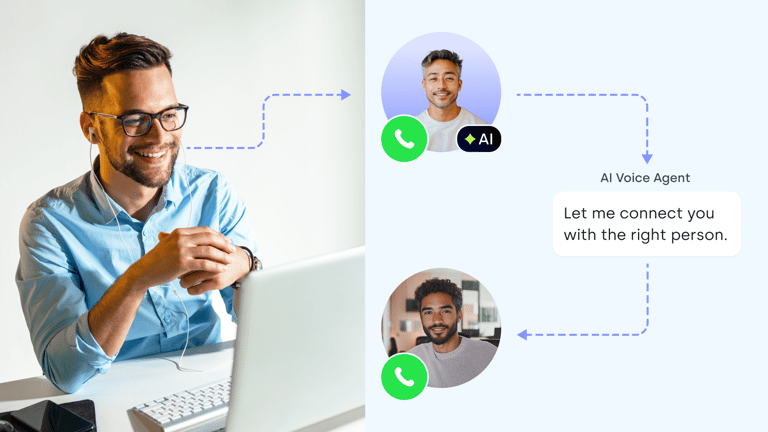
The main reason CloudTalk wins against Cartesia is that it gives teams a complete AI-powered voice stack in one platform instead of a single API layer. Numbers, routing, dialers, and AI voice agents all live on the same tool. CRM integrations (HubSpot, Pipedrive, Zendesk, and 100+ others) start on the Essential plan.
And unlike Cartesia, CloudTalk offers a free 14-day trial, letting you test the whole platform before you commit, with no credit card required. AI Receptionist ships with 50 free minutes on every account.
5 Reasons CloudTalk Is the Best Cartesia Alternative
- Complete voice stack in one platform, not just a TTS endpointWith CloudTalk, you skip the DIY infrastructure phase entirely. Numbers, routing, dialers, and AI voice agents live on the same platform, backed by a 99.999% uptime SLA. Setting up a live phone line takes minutes, not weeks of engineering.
- Native two-way CRM sync from Essential ($29/user/mo)CloudTalk logs every call, transcript, and voice agent interaction back into your CRM or helpdesk automatically. HubSpot, Pipedrive, Zendesk, and Zoho sync natively from the Essential plan. On top of that, deep-sync with Salesforce ecosystem unlocks on Expert.
- AI Receptionist with 50 free minutes on every planEvery CloudTalk account includes 50 free AI Receptionist minutes pre-loaded, ready to answer inbound calls after a 10-minute setup. Cartesia gives you an endpoint. CloudTalk gives you an agent that answers the phone.
- Global calling in 160 countries out of the boxVirtual numbers in 160+ countries to provision. Cartesia teams needing global coverage typically end up integrating a second telephony provider before their voice agent can dial internationally.
- Free 14-day trial with no credit card requiredCloudTalk lets you test the full platform for 14 days before committing. Cartesia offers credits, but you still need to build the whole voice stack around the API before you can actually make a phone call.
Stop Assembling a Voice Stack. Get Voice Operations.
How We Tested and Rated Cartesia Alternatives in 2026
To build this list, we reviewed live pricing pages, technical documentation, and thousands of unfiltered developer posts across Reddit, Product Hunt, Quora, and G2. Our focus was the segment where Cartesia is most often used: teams building AI voice applications who want to move faster than a raw API allows.
We evaluated every platform against six criteria that matter most to teams switching away from Cartesia.
- Voice quality and latencyWe tested how natural each AI voice sounds and how fast it responds under real telephony conditions, not just in a clean demo.
- Total cost of ownershipWe modeled real cost per call including per-character or per-minute fees, provider stacks, and hidden overage charges.
- CRM and helpdesk integration depthWe checked which platforms offer true two-way sync with HubSpot, Salesforce, Pipedrive, and Zendesk instead of just outbound webhooks.
- Global coverage and number availabilityWe prioritized platforms with virtual numbers in multiple countries so voice agents can dial internationally without a second carrier contract.
- Support quality and availabilityWe compared response times, channels available, and whether human help exists beyond documentation and Discord.
- AI and automation capabilitiesWe assessed how deep the AI voice agent layer goes, from simple TTS output to full inbound and outbound conversation handling.
10 Best Cartesia Alternatives: Feature Comparison
Here's how Cartesia stacks up against the four strongest alternatives across the features that decide real voice operations.
Cartesia vs. CloudTalk vs. ElevenLabs vs. Retell AI vs. Dialpad
| Feature | Cartesia | CloudTalk | ElevenLabs | Retell AI | Dialpad |
|---|---|---|---|---|---|
| Starting Price (annual) | Free tier + $50 per 1M chars | $25/user/mo | $5/mo (Starter) | PAYG ~$0.13/min all-in | $15/user/mo (Standard) |
| Free Trial | Free credits |  | | Free signup credits | |
| Built-in Telephony |  | | | | |
| Call Recording | N/A (no calling) | From Starter | N/A (no calling) | Inside agent flows | Pro plan ($25/mo) |
| CRM Integrations | | 100+ tools from Essential | | Zapier and webhooks | Salesforce, HubSpot on Pro |
| AI Voice Agents | TTS output only | AI Receptionist + AI Specialist (add-ons from $99/mo for 200 mins) | Conversational AI (beta) | Full voice agent builder | Ai Assist transcription |
| Outbound Dialers | | Smart, Preview, Power, Parallel (from Expert or add-ons) | | | Basic click-to-call |
| Country Coverage | N/A (no numbers) | 160+ countries | N/A (no numbers) | Twilio-dependent | 50+ countries |
| Customer Support | Docs and Discord | 24/7 (phone on Expert) | Email and Discord | Docs and email | 24/7 chat, phone on higher tiers |
| G2 Rating | No G2 data | 4.4/5 (1,800+ reviews) | 4.5/5 (1,140+ reviews) | 4.8/5 (2,600+ reviews) | 4.4/5 (5,500+ reviews) |
The Cartesia Cost Trap: Cheap Per Character, Expensive Per Operation
Cartesia's $50 per 1M characters looks like a bargain on paper. But before a customer hears the first "hello," you are also paying for Twilio telephony ($0.014/min inbound + $0.014/min outbound in the US), an LLM provider ($0.006-0.50/min), and any CRM middleware. A real conversation stack can hit $0.20-0.35 per minute all-in, before engineering time is factored in.
CloudTalk keeps voice operations on flat per-seat pricing from $25/user/mo, plus predictable AI voice add-ons: 50 free AI Receptionist minutes on every plan, then from $99/mo.
Top 10 Cartesia Alternatives for 2026: Detailed Breakdowns
Below are the 10 best alternatives to Cartesia, ranked and reviewed. Each profile covers what the tool does, where it beats Cartesia, its pros and cons, pricing, and real user sentiment. CloudTalk leads as the best overall Cartesia alternative for scaling SMB teams that want voice operations instead of voice infrastructure. The other nine cover TTS APIs, voice agent platforms, and business phone systems.
1. CloudTalk: Best Cartesia Alternative for Growing Teams That Want Voice AI Inside a Full Business Phone System
What Is CloudTalk?
CloudTalk is an AI-powered cloud phone system built for SMB and mid-market teams that want a working voice operation, not a raw TTS API. It sits between developer voice tools and monolithic enterprise platforms, giving teams AI voice agents, CRM sync, dialers, and global calling on one platform.
Unlike Cartesia, which ships as a TTS endpoint and expects you to build the rest of the stack, CloudTalk is purpose-built for teams that need voice AI, human agents, workflow automation, and multi-country numbers in one place. Below are a few more reasons why CloudTalk is trusted by 5,500+ businesses worldwide.
Why Is CloudTalk a Strong Cartesia Alternative?
- Full voice stack in one platform, not a raw TTS endpointCartesia gives you TTS. CloudTalk gives you calling, routing, auto dialers, and AI voice agents on the same tool, backed by a 99.999% uptime SLA. Setup takes minutes, not weeks of engineering.
- 100+ CRM integrations from the Essential planCloudTalk connects natively to HubSpot, Zendesk, Pipedrive, and 100+ CRM tools from the Essential plan ($29/user/mo). Salesforce deep-sync is on Expert. Every call logs automatically, no manual data entry.
- AI Receptionist with 50 free minutes on every planEvery CloudTalk account includes 50 free AI Receptionist minutes pre-loaded, ready to handle inbound calls right after a quick 10-minute setup. Cartesia has no built-in voice agent, just a TTS API you build around. Also, CloudTalk's AI receptionists and voice agents speak 60+ languages, making them an ideal solution for teams that want to sell and support customers all across the world.
What Are the Pros & Cons of CloudTalk?
| Pros | Cons |
|---|---|
| Complete voice stack: calling, dialers, AI agents in one platform | No native video meetings, you will need a separate tool |
| 100+ CRM integrations with deep, two-way sync | CRM integrations require Essential plan ($29/user/mo) |
| AI Receptionist with 50 free minutes on every plan | Parallel Dialer is a paid add-on ($39/user/mo) |
| Virtual numbers for 160+ countries with fast provisioning | |
| Free 14-day trial, no credit card required |
What Are CloudTalk's Plans & Pricing?
CloudTalk pricing starts at $25/user/month (billed annually), with the following plans:
CloudTalk Pricing Plans
| Plan | Price (annual billing) | Key Features |
|---|---|---|
| Starter | $25/user/mo | Essential calling features like call recording, call queues, call flow designer, basic dashboards + unlimited inbound and internal calls, 500 outbound mins for your region, SMS, voicemail drop, call queues, click-to-call |
| Essential | $29/user/mo | Everything in Starter + 100+ CRM integrations, IVR, skill-based routing, real-time dashboards, workflow automation |
| Expert | $49/user/mo (3-seat min) | Everything in Essential + Salesforce deep-sync, Power Dialer, 24/7 phone support, 99.999% uptime SLA |
| Conversation Intelligence (add-on) | $9/user/mo | Available on all plans: real-time transcription, call summaries, topic detection, sentiment analysis |
| AI Receptionist | 50 free min/account, then from $99/mo (200 min) | No-code inbound AI voice agent: FAQ handling, call routing, appointment booking. Tiers up to $699/mo (2,500 min) |
| AI Voice Agent (Specialist) | From $349/mo (1,000 min) | Sales-led setup for complex multi-step workflows: lead qualification, outbound campaigns, appointment booking. Scale from $749/mo |
AI Add-On Pricing at a Glance
Conversation Intelligence: $9/user/mo. AI Receptionist: 50 free minutes on every plan, then from $99/mo. AI Voice Agent (Specialist, sales-led): from $349/mo (1,000 min). Power Dialer: included on Expert or $15/user/mo add-on. Parallel Dialer: $39/user/mo add-on on any plan.
What Are CloudTalk's Customers Saying?
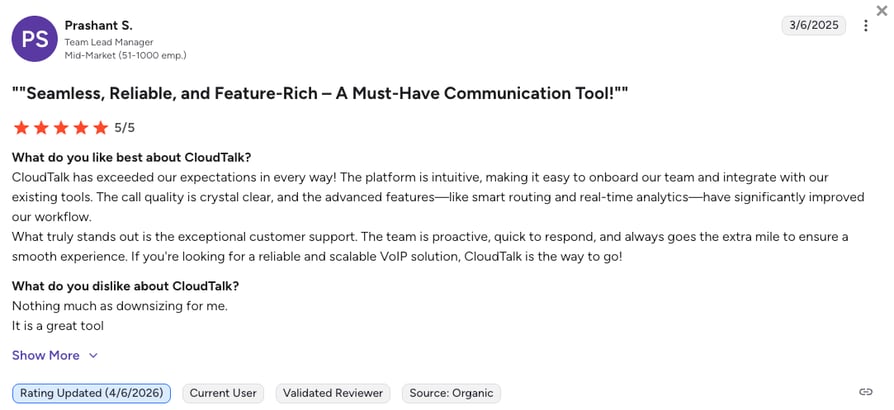
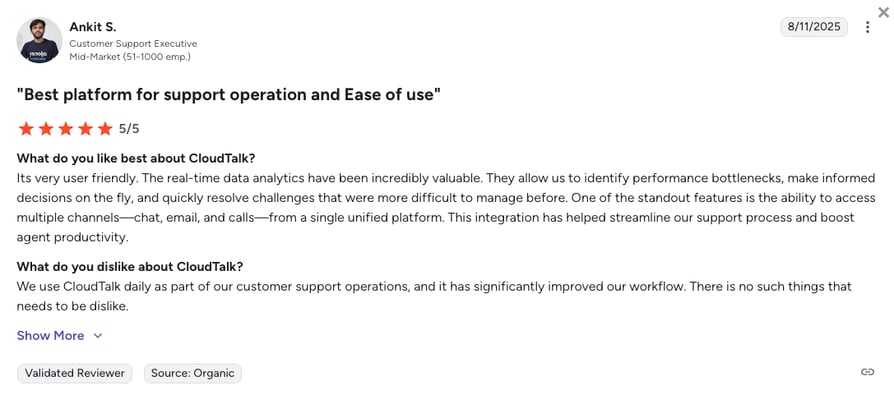
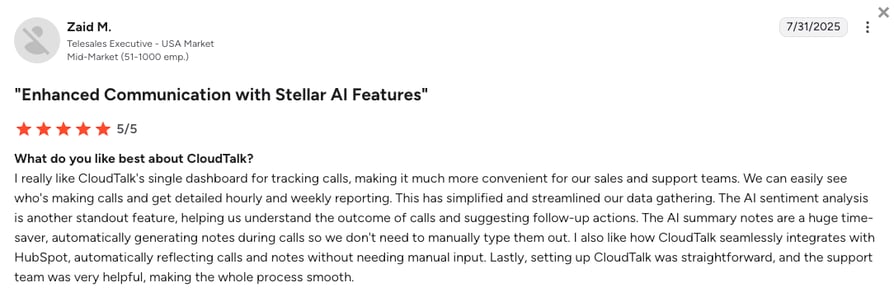
CloudTalk users consistently highlight three advantages over raw voice APIs: setup that takes hours instead of engineering sprints, CRM sync that logs every call automatically, and support that responds to complex tickets without multi-week delays. The most common frustration is that Salesforce deep-sync requires the Expert plan.
How Do G2 Users Rate CloudTalk?
CloudTalk's current G2 rating is 4.4/5, out of 1,800+ verified user reviews. That's a meaningful contrast against Cartesia, which has no G2 data across any category.
See Why 5,500+ Teams Chose CloudTalk over Voice APIs
2. ElevenLabs: Best for Studio-Grade TTS Voice Quality and Cloning
What Is ElevenLabs?
ElevenLabs is the current voice quality leader in the TTS category, and the tool most Cartesia users benchmark against first. It serves content creators, product teams, and voice AI developers who prioritize natural-sounding voices, emotional range, and voice cloning from short samples.
Starting at $5/mo (Starter, monthly billing), ElevenLabs is cheaper to try than Cartesia at scale. Its Conversational AI beta pushes into voice agent territory, though telephony still lives outside the platform.
Why Is ElevenLabs a Strong Cartesia Competitor?
- Best-in-class voice quality and emotional rangeG2 reviewers consistently call ElevenLabs' voices the most natural-sounding on the market, with an 8.8/10 Natural-Voice Score in G2 research. Cartesia matches on latency but not on expressive character.
- Instant voice cloning with commercial usage rightsClone a voice from ~1 minute of audio. Commercial rights unlock on Starter, no separate license needed. Cartesia's Pro Voice Cloning charges training fees on top.
- Broadest verified review base of any TTS competitor1,100+ G2 reviews at 4.5/5. That is real peer validation for buying committees, versus Cartesia's zero G2 reviews.
What Are the Pros & Cons of ElevenLabs?
| Pros | Cons |
|---|---|
| Best voice quality and emotional range in the TTS category | Trustpilot at 3.0/5 across 1,005+ reviews, mostly billing complaints |
| Instant voice cloning from ~1 minute of audio | Credit-based pricing gets expensive at scale (600K credits burns fast) |
| 1,100+ verified G2 reviews at 4.5/5 | Still primarily TTS, no built-in telephony or CRM sync |
What Are ElevenLabs's Plans & Pricing?
ElevenLabs pricing starts at $5/mo (Starter, annual billing). Compared to monthly billing, an annual ElevenLabs subscription saves you two months of cost.
ElevenLabs Pricing Plans
| Plan | Price (annual billing) | Key Features |
|---|---|---|
| Free | $0 | 10,000 credits per month, non-commercial use only |
| Starter | $5/mo | 30,000 credits, instant voice cloning, commercial rights |
| Creator | $18.33/mo | 121,000 credits, professional voice cloning, higher-quality audio |
| Pro | $82.50/mo | 600,000 credits, 44.1 kHz audio, API access, usage analytics |
| Scale | $249.17/mo | 1.8M credits, 3 seats, higher API concurrency |
The ElevenLabs Credit Trap
Credits look generous until you use them. 600,000 Pro credits sound like a lot, but a 2-minute voice agent call burns ~2,000 credits at full quality. That is 300 calls a month before you hit overages. Buyers switching from ElevenLabs to CloudTalk get flat AI voice pricing (50 free minutes then $99/mo for 200 minutes), plus the full telephony, CRM, and dialer stack ElevenLabs does not include.
What Are ElevenLabs's Customers Saying?
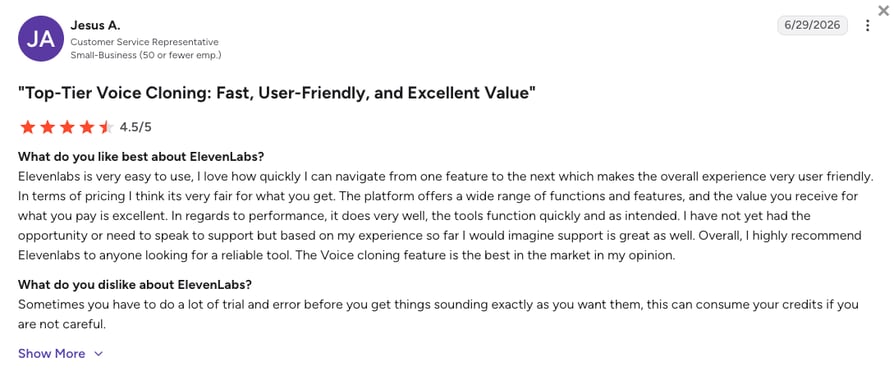
G2 reviewers praise ElevenLabs voice quality above almost every competitor and regularly cite the ease of cloning voices for podcasts, dubbing, and product demos. The most consistent complaint, echoed across Trustpilot and Reddit, is billing frustration: users report being charged for credits they did not use, or unable to cancel cleanly.
How Do G2 Users Rate ElevenLabs?
ElevenLabs holds a 4.5/5 rating on G2, based on 1,100+ verified reviews.
3. Retell AI: Best for Developer Teams Building Low-Latency Voice Agents
What Is Retell AI?
Retell AI is a voice agent infrastructure platform aimed at engineering teams. Where Cartesia sells you TTS only, Retell wraps voice, LLM, and telephony into a single API for conversational agents.
Retell's low-latency turn-taking is a genuine strength, and G2 gives it 4.8/5 across 2,600+ reviews, one of the highest ratings in the category. It is the closest developer-first alternative to Cartesia that also handles the phone call itself.
Why Is Retell AI a Strong Cartesia Alternative?
- Full voice agent stack in one API, not just TTSRetell bundles voice, LLM, and telephony behind one endpoint. Cartesia gives you TTS only, so you stitch three providers together yourself.
- Low-latency voice engine tuned for phone callsReal-time turn-taking that does not feel robotic on live calls, tested at scale in production.
- Strong verified review base with 2,600+ G2 reviews at 4.8/5One of the highest-rated tools in the voice agent category. Cartesia has zero G2 reviews to compare against.
What Are the Pros & Cons of Retell AI?
| Pros | Cons |
|---|---|
| Bundled voice + LLM + telephony from one API | Pay-as-you-go stacks up fast (voice + LLM + telephony) |
| Best-in-class turn-taking on live phone calls | Still developer-first, requires engineering to build routing and CRM sync |
| 2,600+ verified G2 reviews at 4.8/5 | No native CRM integrations (Zapier or webhooks only) |
What Are Retell AI's Plans & Pricing?
Retell AI pricing is pay-as-you-go, stacked across voice, LLM, and telephony:
Retell AI Pricing Tiers
| Plan | Price (annual billing) | Key Features |
|---|---|---|
| Voice engine | ~$0.07-0.08/min | Retell's proprietary low-latency voice engine |
| LLM | ~$0.006-0.50/min | Scales with model choice (GPT-4o, Claude, etc.) |
| Telephony | ~$0.015/min | Twilio-based SIP; 20 free concurrent lines, $8/mo per line above that |
| Enterprise | Custom (~$0.05/min at volume) | Dedicated support, volume discounts, SLAs |
The Voice-API Stack Trap
Retell bundles voice, LLM, and telephony into one API, but every use case (from a simple FAQ receptionist to a multi-step outbound campaign) routes through the same per-minute rate. CloudTalk splits the layer in two: a no-code AI Receptionist for inbound triage (50 free minutes on every plan, then from $99/mo) and a sales-led AI Specialist from $349/mo for complex outbound. Matching the tool to the workflow keeps costs predictable.
What Are Retell AI's Customers Saying?
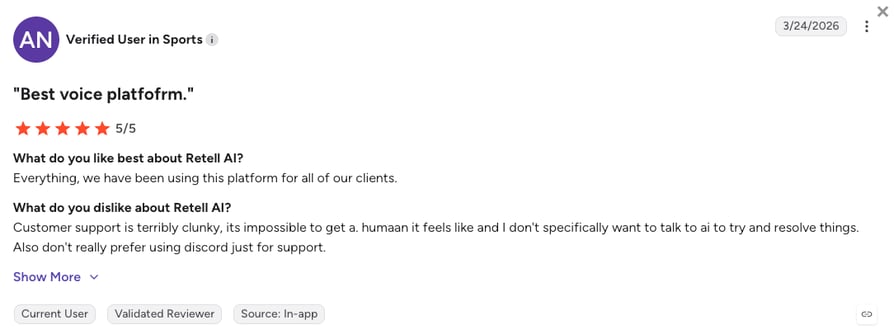
G2 reviewers praise Retell for low latency, clean documentation, and the way its voice engine handles interruptions on live calls. Complaints center on pricing: teams report that all-in cost per minute is hard to predict, especially when LLM choice changes mid-flow. A few also flag that Retell is still primarily a developer tool, not an operator dashboard.
How Do G2 Users Rate Retell AI?
Retell AI holds a 4.8/5 rating on G2, based on 2,600+ verified reviews.
4. Vapi: Best for Engineering Teams Building a Bring-Your-Own-Stack Voice Platform
What Is Vapi?
Vapi is a voice agent orchestration platform for developers who want to pick their own LLM, STT (Speech-to-Text), and TTS providers. Where Cartesia gives you TTS, Vapi gives you the plumbing to plug Cartesia (or ElevenLabs, or Deepgram) in as the voice layer.
At $0.05/min plus provider costs, Vapi is fast to prototype with but heavy on engineering time. Compliance features (HIPAA, Zero Data Retention) live behind expensive add-ons that price out most SMB teams.
Why Is Vapi a Strong Cartesia Alternative?
- Bring-your-own provider architecturePick your own LLM, STT, and TTS providers. You can plug Cartesia in as the TTS layer instead of replacing it, then stitch it to your LLM and telephony of choice.
- Vapi handles orchestration cleanlyTurn-taking, session management, and function calling are built in. You get the hard parts of voice agent infrastructure without locking yourself to one voice engine.
- Fast prototyping starting at $0.05/min$0.05/min Vapi cost plus BYOC (Bring Your Own Carrier) provider fees. Cheap way to get a working prototype in front of stakeholders.
What Are the Pros & Cons of Vapi?
| Pros | Cons |
|---|---|
| Modular BYO stack (LLM, STT, TTS, telephony) | Compliance features priced as expensive add-ons ($2,000/mo HIPAA) |
| Clean orchestration and function calling out of the box | Small verified review base (10+ G2 reviews) |
| Compliance add-ons available (HIPAA, Zero Data Retention) | You still bring telephony and CRM layers yourself |
What Are Vapi's Plans & Pricing?
Vapi pricing is pay-as-you-go on top of your BYO provider costs:
Vapi Pricing Tiers
| Plan | Price (annual billing) | Key Features |
|---|---|---|
| Build (PAYG) | $0.05/min Vapi + provider costs | 10 concurrent lines, +$10/line/mo, BYO API keys for LLM/STT/TTS |
| Scale (annual) | Custom | SOC 2, SSO, RBAC, dedicated support |
| HIPAA add-on | $2,000/mo | Signed BAA, HIPAA-eligible infrastructure |
| Zero Data Retention add-on | $1,000/mo | No data retention across the Vapi platform |
The BYO-Stack Trap
Vapi's modular architecture is a strength for engineers who want control, but a cost curve for operators who want to launch. You pay Vapi ($0.05/min), plus voice provider ($0.03-0.08/min), plus LLM ($0.006-0.50/min), plus telephony ($0.015/min), plus CRM middleware. CloudTalk collapses that stack into one platform at $25/user/mo.
What Are Vapi's Customers Saying?
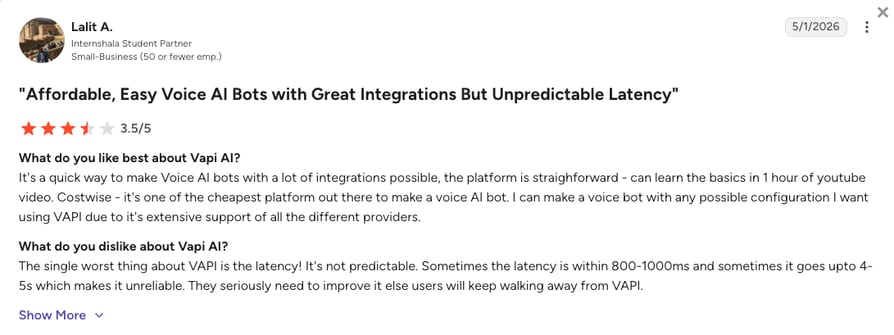
Developers on G2 and Product Hunt praise Vapi's flexibility, function-calling implementation, and speed to first prototype. The recurring complaint is cost visibility: with four providers in the stack, real per-minute cost is hard to model in advance. Compliance pricing gets called out often, since HIPAA at $2,000/mo prices out most SMB teams.
How Do G2 Users Rate Vapi?
Vapi holds a 4.2/5 rating on G2, based on very few verified reviews.
5. Deepgram: Best for Speech-to-Text Plus TTS in Regulated Telephony
What Is Deepgram?
Deepgram is a full voice AI platform: Aura for TTS, Nova for STT, and a Voice Agent API that wraps both. It is the strongest Cartesia alternative when you need a combined speech-to-text and text-to-speech pipeline, especially for call centers, healthcare, or financial services.
Priced at $0.030 per 1K characters (Aura TTS) with a $200 free credit on signup, Deepgram is a lower-cost entry than Cartesia at scale. Its 4.6/5 rating on G2 across 400+ reviews is one of the strongest in the developer voice AI category.
Why Is Deepgram a Strong Cartesia Alternative?
- End-to-end voice pipeline in one APIDeepgram bundles STT (Nova) and TTS (Aura) behind one endpoint, plus a Voice Agent API. Cartesia gives you TTS only.
- Domain-tuned models for regulated industriesMedical, financial, and legal transcription accuracy that generic TTS/STT tools can't match. Enterprise buyers get real compliance depth.
- $200 free credit and 400+ verified G2 reviews at 4.6/5Long runway to test in production, plus real peer validation. Cartesia has near-zero G2 presence.
What Are the Pros & Cons of Deepgram?
| Pros | Cons |
|---|---|
| Combined STT + TTS + Voice Agent API in one platform | Aura TTS voice character less expressive than ElevenLabs or Cartesia |
| Enterprise-grade accuracy for regulated industries | Per-character billing still needs forecasting at scale |
| $200 free credit on signup, no credit card required | No native telephony, CRM, or dialers |
What Are Deepgram's Plans & Pricing?
Deepgram pricing is pay-as-you-go with volume discounts at the Growth tier:
Deepgram Pricing Tiers
| Plan | Price (annual billing) | Key Features |
|---|---|---|
| Pay-as-you-go | $0.030 per 1K chars (Aura TTS) | $200 free credit, no card required, full API access |
| Growth | $0.027 per 1K chars | Volume discount, higher rate limits, priority support |
| Enterprise | Custom | Dedicated SLAs, custom rate limits, dedicated account team |
The Per-Character Trap
Per-character pricing looks cheap until agent length grows. A 2-minute AI voice call at 150 words per minute equals ~1,800 characters, so ~$0.054 per call for TTS alone. Multiply by STT, LLM, telephony, and CRM middleware and the real cost per call climbs fast. CloudTalk stays on flat per-seat pricing with clear AI voice add-ons, so per-call cost stays predictable.
What Are Deepgram's Customers Saying?
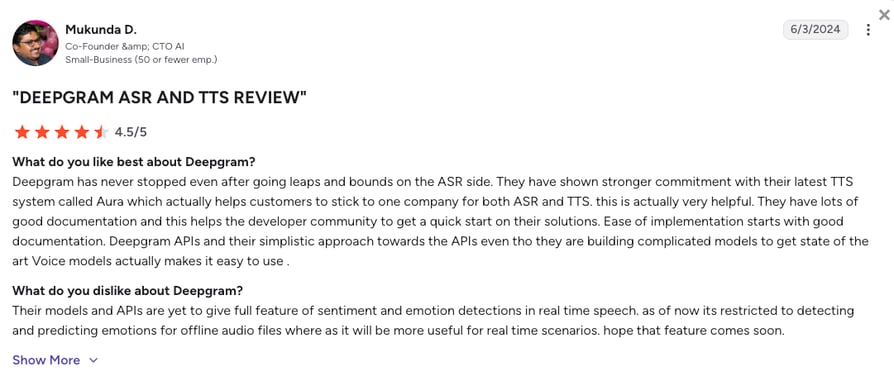
Developers rate Deepgram's transcription accuracy consistently high, especially against Google and Amazon. Aura TTS gets positive early feedback for latency, though a few reviewers say voice character is not yet as expressive as ElevenLabs. The main gap flagged in reviews is that Deepgram still expects you to bring the telephony and orchestration layers.
How Do G2 Users Rate Deepgram?
Deepgram holds a 4.6/5 rating on G2, based on 400+ verified reviews.
6. RingCentral: Best for Mid-Market Teams Needing Enterprise UCaaS with AI Baked In
What Is RingCentral?
RingCentral (marketed as RingEX) is a UCaaS platform (Unified Communications as a Service) combining voice calling, video meetings, team messaging, and AI writing assistance in one workspace. It targets mid-market and enterprise teams that want a full comms stack instead of a raw voice API.
Starting at $20/user/mo (Core, annual billing), RingCentral is a working business phone system where Cartesia is just a TTS API. AI Writing Assistant and IVR ship on Core, though real CRM integrations and call recording live on the Advanced plan ($25/user/mo).
Why Is RingCentral a Strong Cartesia Alternative?
- Full UCaaS platform, not a raw TTS endpointCalling, video meetings, team messaging, and AI writing assistant bundled on Core. Cartesia gives you TTS only, so you build the rest of the stack yourself.
- 300+ integrations on Advanced ($25/user/mo)Native connectors for Salesforce, HubSpot, Microsoft Teams, and Google Workspace, plus auto call notes. Cartesia has zero CRM integrations.
- 1,400+ verified G2 reviews at 4.2/5Real peer validation for enterprise buying committees. Cartesia has no G2 data at all.
What Are the Pros & Cons of RingCentral?
| Pros | Cons |
|---|---|
| Full UCaaS: voice, video, messaging, AI writing on Core | AI Writing Assistant is basic (no autonomous voice agent) |
| 300+ CRM and productivity integrations on Advanced | CRM integrations and call recording locked behind Advanced ($25/user/mo) |
| Enterprise trust with 1,250+ verified G2 reviews | Heavier setup than SMB-focused tools like CloudTalk or Dialpad |
What Are RingCentral's Plans & Pricing?
RingCentral pricing starts at $20/user/month (Core, billed annually):
RingCentral Pricing Plans
| Plan | Price (annual billing) | Key Features |
|---|---|---|
| Core | $20/user/mo | Unlimited calling, video meetings (100 participants), team messaging, IVR, AI writing assistant |
| Advanced | $25/user/mo | Everything in Core + call recording, 300+ integrations (Salesforce, HubSpot), auto call notes |
| Ultra | $35/user/mo | Everything in Advanced + unlimited storage, advanced analytics, device analytics |
RingCentral's AI Receptionist: What We Found
RingCentral's AI Receptionist handles inbound call routing, FAQ responses, and after-hours coverage for RingEX customers. It's a natural fit if you're already on RingCentral, but the AI capability sits behind a separate add-on and lacks the bundled minutes and no-code visual builder that come standard on platforms designed AI-first. We tested it and broke down where it wins and where it falls short.
What Are RingCentral's Customers Saying?
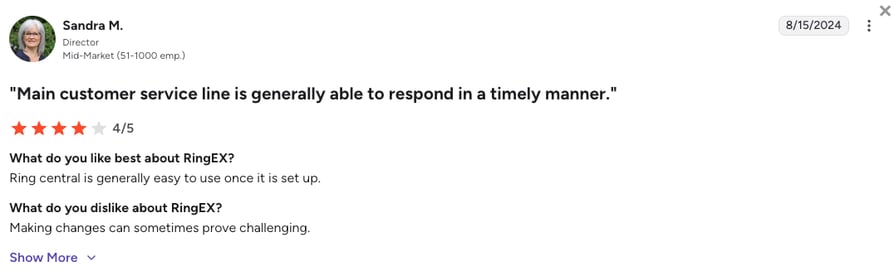
G2 reviewers highlight RingCentral's feature depth, video quality, and the way voice, messaging, and meetings live in one app. The most consistent complaints are steep setup complexity for smaller teams, upsell pressure toward Advanced and Ultra tiers, and support response times that lag behind SMB-focused competitors. Enterprise buyers usually accept the trade-off; SMB teams often outgrow it in reverse.
How Do G2 Users Rate RingCentral?
RingCentral (RingEX) holds a 4.2/5 rating on G2, based on 1,400+ verified reviews.
7. Azure AI Speech: Best for Enterprise TTS Inside the Microsoft Cloud
What Is Azure AI Speech?
Azure AI Speech is Microsoft's enterprise TTS and STT platform. If your org already runs on Azure and needs voice synthesis for regulated workloads or global multilingual apps, this is a lower-risk pick than Cartesia.
Starting at $16 per 1M characters (Neural, pay-as-you-go), Azure AI Speech ships 140+ languages, neural HD voices, and custom voice cloning. The trade-off is complexity, and it is still just an API.
Why Is Azure AI Speech a Strong Cartesia Alternative?
- Enterprise-grade compliance and reliabilitySOC 2, HIPAA, ISO, GDPR, FedRAMP. Real coverage for regulated industries that Cartesia does not offer.
- 140+ languages and neural HD voicesOne of the broadest language libraries. Custom Neural Voice supports brand voice cloning at commitment-tier pricing.
- Volume discounts down to $7.50 per 1M charactersCommitment tiers give a 53% discount off pay-as-you-go at scale, making enterprise volume more affordable than Cartesia.
What Are the Pros & Cons of Azure AI Speech?
| Pros | Cons |
|---|---|
| Enterprise-grade compliance (SOC 2, HIPAA, ISO, FedRAMP) | Steep learning curve inside Azure portal (3.9/5 on G2) |
| 140+ languages with neural HD voices | Voice character less expressive than ElevenLabs or Cartesia |
| Volume discounts down to $7.50/1M chars | Still API-only, no built-in telephony or CRM sync |
What Are Azure AI Speech's Plans & Pricing?
Azure AI Speech pricing is pay-as-you-go with commitment discounts:
Azure AI Speech Pricing Tiers
| Plan | Price (annual billing) | Key Features |
|---|---|---|
| Free tier | 500K chars/mo free | Standard neural voices, limited concurrent requests |
| Neural (PAYG) | $16 per 1M characters | Standard neural voices, full API access |
| Neural HD | $22 per 1M characters | Higher-quality expressive voices |
| Custom Neural Voice | $24 per 1M chars (from $48 for HD) | Brand voice cloning with training fee |
| Commitment tier | From $7.50 per 1M chars | Volume commitment discount, 53% off PAYG |
The Azure Ecosystem Trap
Azure AI Speech makes sense if your team already lives in Azure and Microsoft 365. Outside that ecosystem, the complexity of provisioning, billing, and voice tuning becomes a real cost. And even inside Azure, you are still stitching together a phone system, CRM, and dialer stack on top. CloudTalk gives you voice operations as a product, not a set of building blocks.
What Are Azure AI Speech's Customers Saying?
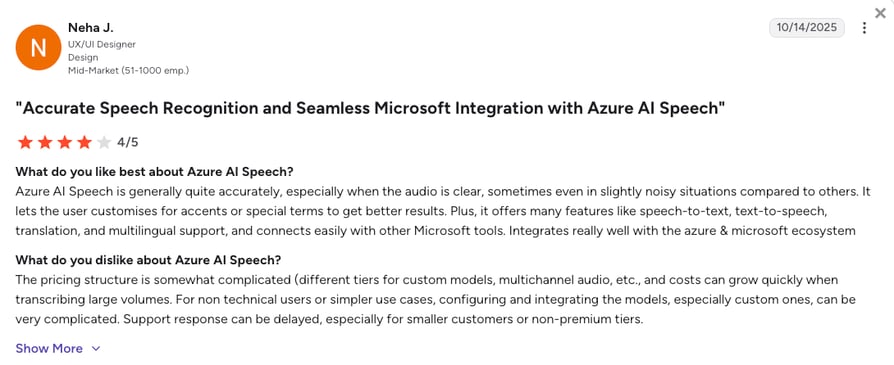
Reviewers praise Azure AI Speech's compliance posture, language coverage, and integration with the broader Azure AI stack. The main complaints are setup complexity and pricing opacity: understanding neural vs. neural HD vs. custom neural vs. commitment tiers takes real effort. Voice character is often called "clean but flat" compared with ElevenLabs and Cartesia.
How Do G2 Users Rate Azure AI Speech?
Azure AI Speech holds a 3.9/5 rating on G2, based on 50+ verified reviews.
8. Murf AI: Best for Creators and Teams Making Video Voiceovers
What Is Murf AI?
Murf AI is a creator-first TTS platform aimed at video producers, e-learning teams, and marketers who need studio-quality voice generation without writing code. Where Cartesia is developer-first, Murf ships a full voice studio with editing, background music, and pronunciation controls.
Starting at $19/mo (Creator, annual billing), Murf AI is the practical Cartesia alternative for content teams, not voice agent builders. Its 4.7/5 rating on G2 across 1,400+ reviews is one of the highest in the TTS category.
Why Is Murf AI a Strong Cartesia Alternative?
- Full voice studio with editing built inAdjust pitch, pace, and emphasis inside the studio. No coding required. Cartesia is a raw API by comparison.
- Deep integrations with content creation toolsNative connectors to Canva, PowerPoint, and Adobe. Fits creator workflows out of the box.
- Strong review base and category leadership1,400+ G2 reviews at 4.7/5, with three consecutive years of G2 Momentum Leader status.
What Are the Pros & Cons of Murf AI?
| Pros | Cons |
|---|---|
| Full voice studio with editing built in | Not tuned for real-time voice agents on live calls |
| 200+ voices across 40+ languages | Character limits tight on lower tiers |
| 1,400+ verified G2 reviews at 4.7/5 | No built-in telephony, dialers, or CRM sync |
What Are Murf AI's Plans & Pricing?
Murf AI plans start with a free tier and paid subscriptions billed annually or monthly:
Murf AI Pricing Plans
| Plan | Price (annual billing) | Key Features |
|---|---|---|
| Free | $0 | 10 minutes total generation, 32 voices, no downloads |
| Creator | $19/mo | 200+ voices, 24 hours generation/year, commercial rights |
| Business | $66/mo | 96 hours generation/year, 1 editor seat, priority support |
| Enterprise | Custom | Unlimited generation, voice cloning, SOC 2, dedicated account manager |
| API (PAYG) | $0.03 per 1K chars (Studio TTS) | $0.01/1K chars for Falcon conversational AI |
The Voice Studio Trap
Murf is excellent for voiceovers, not for voice agents. If you are producing training videos or marketing content, it is a strong pick. If you are answering phone calls, you still need a phone system, routing, dialers, and CRM sync on top. CloudTalk gives you the AI voice agent piece plus the whole operational layer, in one platform at $25/user/mo.
What Are Murf AI's Customers Saying?
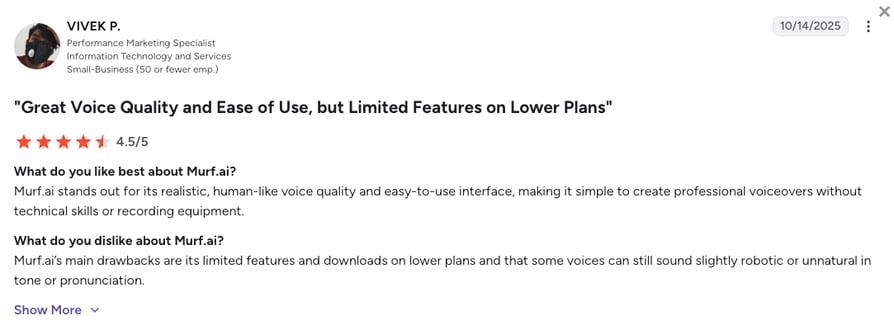
G2 reviewers consistently rate Murf's ease of use above almost every TTS competitor (169+ positive mentions), followed by natural-sounding output and voice customization. Complaints show up in higher-volume workflows: character limits, credit rollovers, and cost per hour of generated audio at scale.
How Do G2 Users Rate Murf AI?
Murf AI holds a 4.7/5 rating on G2, based on 1,400+ verified reviews.
9. Synthflow: Best for Agencies Building No-Code Voice Agents for Clients
What Is Synthflow?
Synthflow is a no-code AI voice agent platform aimed at marketing agencies and small teams that want to build client-facing voice agents without engineering. Its deep GoHighLevel integration is a real differentiator for agency buyers.
Starting at $29/mo (Starter, monthly billing), Synthflow is a practical Cartesia alternative for agencies that need a no-code builder. Its 4.5/5 rating on G2 across 1,000+ reviews reflects strong adoption in the agency segment.
Why Is Synthflow a Strong Cartesia Alternative?
- No-code agent builder for fast agency workflowsShip voice agents in hours, not weeks of engineering work. Cartesia expects you to build the whole agent yourself.
- Agency-ready with white-label and multi-client managementAgency plan supports multi-client oversight and rebranding. Fits agencies serving GoHighLevel-based local business clients.
- GoHighLevel integration for agency stacksDeep native integration lets agencies plug voice into their existing client tech stack.
What Are the Pros & Cons of Synthflow?
| Pros | Cons |
|---|---|
| No-code voice agent builder for agencies | Steep tier jumps ($29 to $450 with nothing in between) |
| Deep GoHighLevel integration for local business clients | Overages at $0.09/min plus LLM and telephony |
| White-label and multi-client management on Agency plan | Best suited to agencies, less so to in-house ops teams |
What Are Synthflow's Plans & Pricing?
Synthflow pricing is monthly with clear minute limits:
Synthflow Pricing Plans
| Plan | Price (annual billing) | Key Features |
|---|---|---|
| Starter | $29/mo | 50 minutes, 1 assistant, basic integrations |
| Pro | $450/mo | 2,000 minutes, custom actions, GoHighLevel integration |
| Growth | $900/mo | 4,000 minutes, advanced workflows |
| Agency | $1,400/mo | 6,000 minutes, white-label, multi-client management |
The Agency-Pricing Trap
Synthflow's $29 Starter looks accessible, but the next tier is $450/mo with nothing in between. That is a real jump for teams that want a reliable production voice agent without agency-scale volume. CloudTalk's AI Receptionist starts at $99/mo for 200 minutes on top of the base per-seat plan, and scales linearly.
What Are Synthflow's Customers Saying?
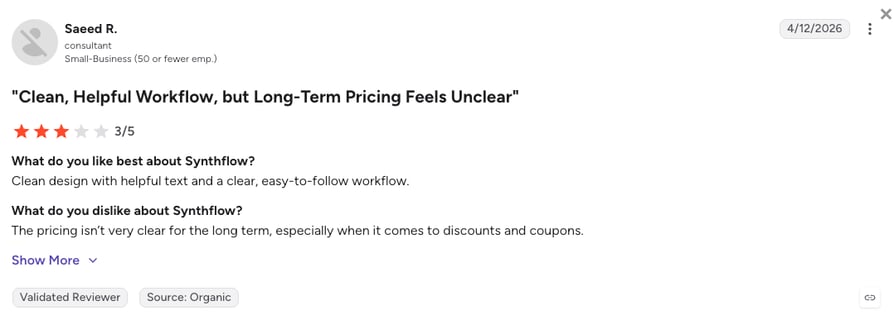
Agency users love Synthflow's no-code builder and the way it plugs into GoHighLevel client stacks. The most consistent complaint is the pricing gap between Starter and Pro: teams outgrow 50 minutes fast but are not ready to spend $450/mo. A few reviewers also flag that voice character can feel less natural than ElevenLabs or Cartesia at higher speaking rates.
How Do G2 Users Rate Synthflow?
Synthflow holds a 4.5/5 rating on G2, based on 1,000+ verified reviews.
10. Dialpad: Best for Small Business Phone with Basic AI Transcription
What Is Dialpad?
Dialpad is another UCaaS platform with AI transcription and call summaries built in. It serves SMB and mid-market teams that want video, chat, and voice bundled with basic AI features.
Starting at $15/user/mo (Standard, annual billing), Dialpad is a working phone system where Cartesia is a raw TTS API. But its AI voice agent capabilities still stay thinner than CloudTalk's split AI Receptionist + AI Specialist architecture.
Why Is Dialpad a Strong Cartesia Alternative?
- Full UCaaS platform bundled from $15/user/moCalling, video, and messaging in one platform. Cartesia is a raw TTS API by comparison, so Dialpad ships a working phone system out of the box.
- AI transcription and call summaries on StandardAi Assist ships on the Standard plan with no add-on. Cartesia has no built-in call features.
- Broadest verified review base on this list4,100+ G2 reviews at 4.4/5. Strong social proof for buying committees.
What Are the Pros & Cons of Dialpad?
| Pros | Cons |
|---|---|
| Full UCaaS platform for the same price as most VoIP tools | AI Voice Agent capabilities thinner than CloudTalk's AI Specialist |
| AI transcription and call summaries included on Standard | CRM integrations require the Pro plan ($25/user/mo) |
| 4,100+ verified G2 reviews at 4.4/5 | Call recording behind Pro plan too |
What Are Dialpad's Plans & Pricing?
Dialpad pricing starts at $15/user/month (Standard, annual billing):
Dialpad Pricing Plans
| Plan | Price (annual billing) | Key Features |
|---|---|---|
| Standard | $15/user/mo | Unlimited calling, AI transcription, AI call summaries, SMS, voicemail |
| Pro | $25/user/mo | Everything in Standard + call recording, CRM integrations (Salesforce, HubSpot), international numbers |
| Enterprise | Custom | Everything in Pro + SSO, custom SLAs, dedicated support |
The AI Voice Depth Gap
Dialpad's AI features work well for transcription and summaries, but the autonomous voice agent capability is thinner than CloudTalk's. CloudTalk splits AI voice in two: no-code AI Receptionist for inbound triage (50 free minutes, then from $99/mo) and sales-led AI Specialist from $349/mo for complex outbound. Match the tool to the workflow instead of bolting on one AI mode.
What Are Dialpad's Customers Saying?
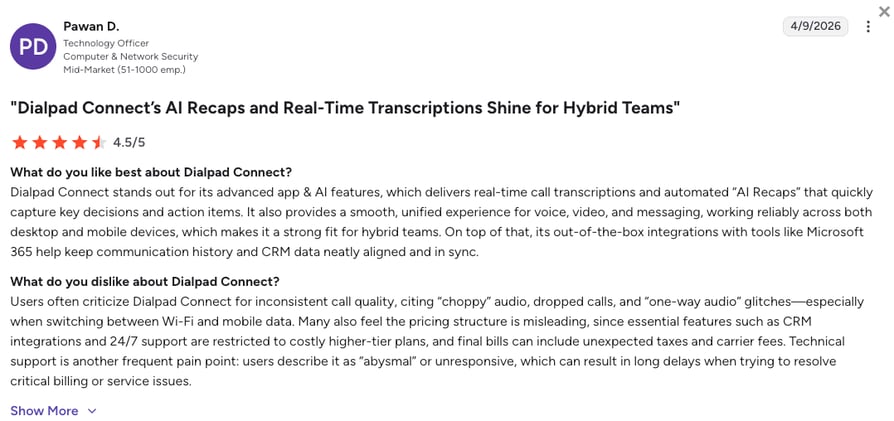
G2 reviewers highlight Dialpad's clean interface, reliable calling, and AI transcription accuracy. The most consistent complaint is that CRM integrations and call recording live behind the Pro plan, doubling the entry cost for teams that want a full-featured phone system. Users on Standard often end up upgrading within a few months.
How Do G2 Users Rate Dialpad?
Dialpad Connect holds a 4.4/5 rating on G2, based on 4,100+ verified reviews.
What Real Users Are Saying about Cartesia and Its Alternatives
Pricing pages tell you what a tool does. Real user posts tell you whether it works. We pulled from developer threads on Reddit, comparison questions on Quora, and G2's side-by-side data to see how Cartesia and its alternatives actually perform in production.
What Redditors Are Saying about Cartesia Alternatives
We reviewed three active Reddit threads across r/artificial, r/generativeAI, and r/AI_Agents, where developers openly compare Cartesia, ElevenLabs, PlayHT (not on our list), Azure TTS, and full voice agent platforms. The recurring pattern: teams start with a TTS API, then quickly hit the "now I need telephony, CRM, and routing" wall.
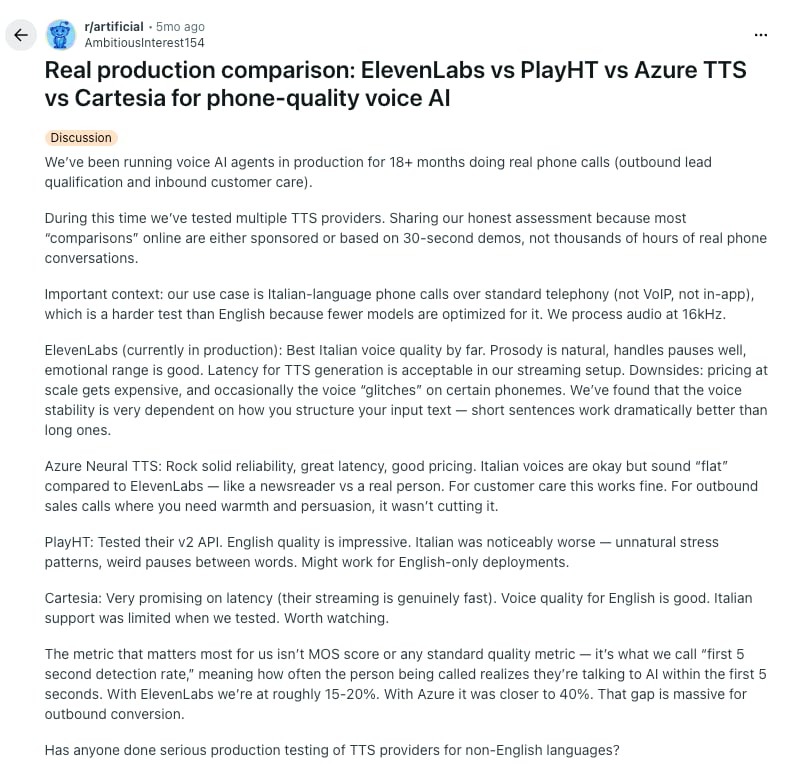
- Production comparison of TTS providers for phone-quality voice AI: In r/artificial, a team running 18+ months of Italian outbound calls tested ElevenLabs, PlayHT, Azure TTS, and Cartesia. ElevenLabs won on voice quality, Azure won on reliability, and Cartesia showed strong latency but limited Italian support. None solved the full operational stack. Teams needing a working phone system with AI, CRM integrations, outbound dialers, and human fallback typically look at CloudTalk instead.
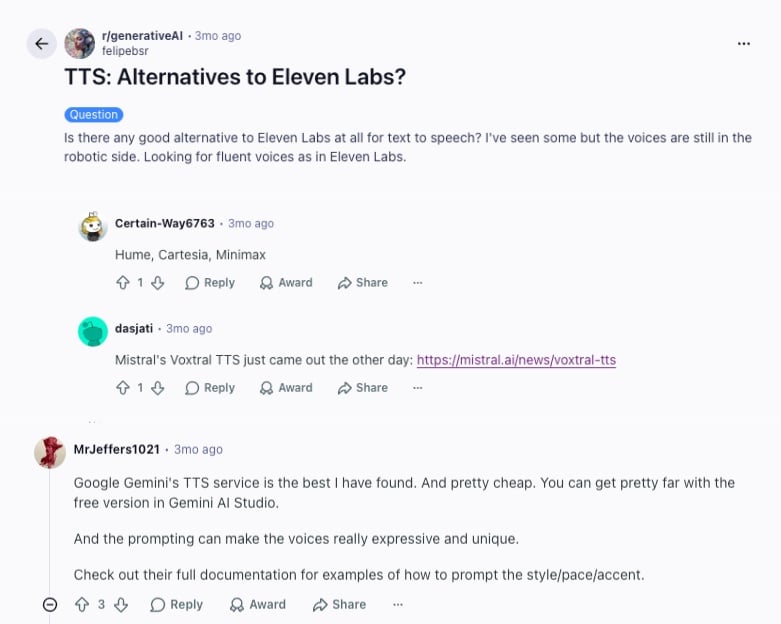
- TTS alternatives to ElevenLabs (and Cartesia by extension): In r/generativeAI, users mention Hume, Cartesia, and Minimax as the main TTS alternatives, plus Google Gemini TTS and Mistral Voxtral for cheap options. Every recommendation is a TTS engine only. None answer the "how do I turn this into a working call center" question that CloudTalk's AI Receptionist and voice agents solve out of the box.
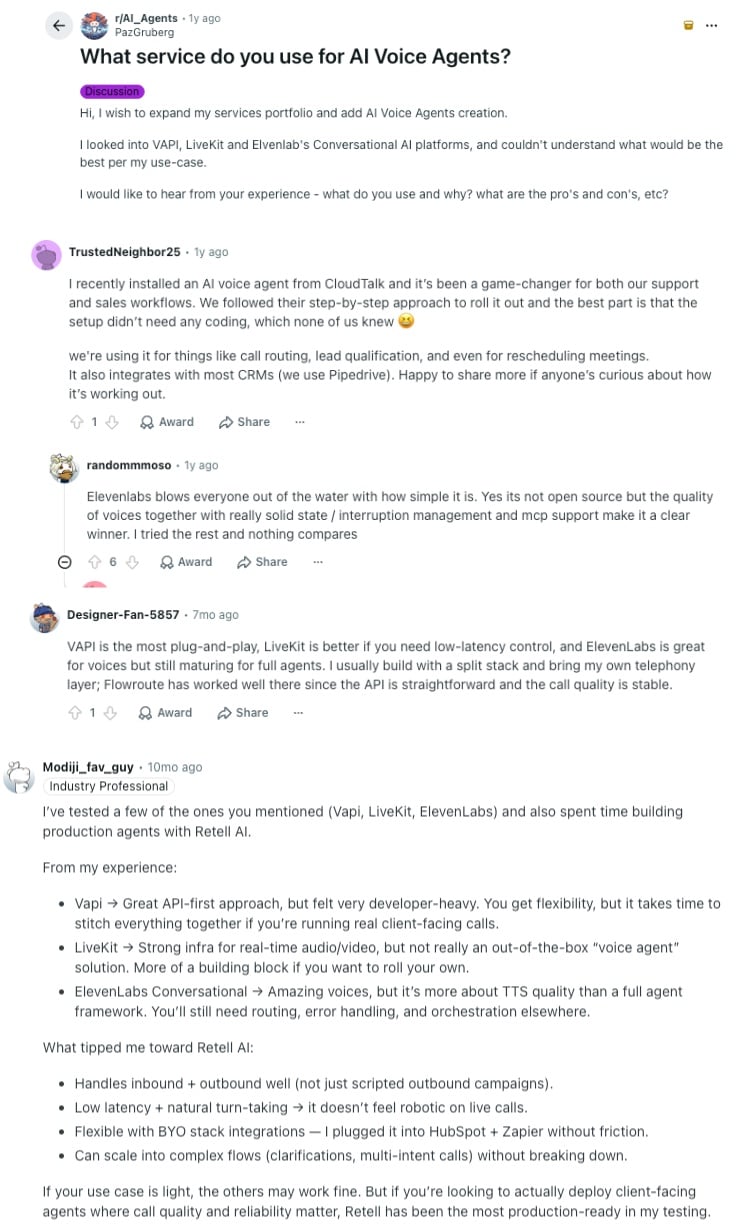
- Which service to use for AI voice agents: In r/AI_Agents, users comparing Vapi, LiveKit, and ElevenLabs Conversational AI keep landing on the same conclusion: raw APIs need engineering, while a team from CloudTalk describes plugging in a no-code voice agent that handles call routing, lead qualification, and meeting rescheduling with native Pipedrive sync. That is the difference between a voice API and a voice operation.
What Quora Users Are Asking about Cartesia Alternatives
Quora threads on voice AI, call center software, and CRM integration keep surfacing the same buyer question: which tool actually connects to Zendesk, HubSpot, or Salesforce out of the box? Cartesia does not appear in any of them, because it is a TTS engine, not a phone system. On the other hand, AI-powered business phone systems like CloudTalk show up repeatedly.
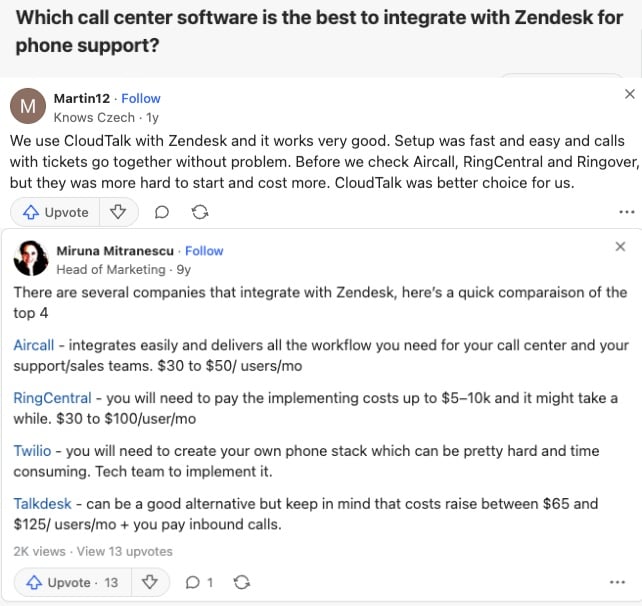
- Best call center software with Zendesk integration: A user says "We use CloudTalk with Zendesk and it works very good. Setup was fast and easy and calls with tickets go together without problem." Aircall, RingCentral, and Ringover come up as harder to start and more expensive. Cartesia never enters the conversation, because raw TTS does not solve the Zendesk sync problem.
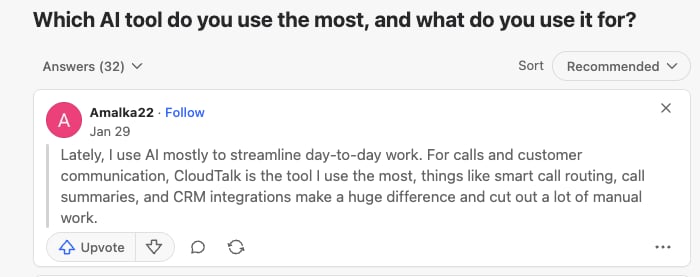
- Which AI tool do you use the most: Users mention CloudTalk directly for smart call routing, call summaries, and CRM integrations as the tool they lean on daily. Voice AI is one capability among many, and users pick the platform that ties it to the rest of their stack, not a standalone TTS API.
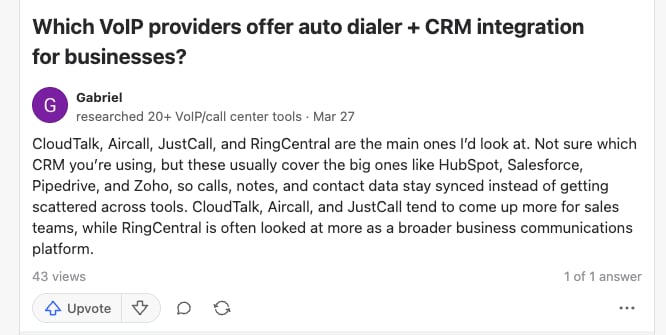
- Auto dialer with CRM integration: A researcher answering "which VoIP provider offers auto dialer plus CRM sync" names CloudTalk alongside Aircall, JustCall, and RingCentral, with CloudTalk called out for HubSpot, Salesforce, Pipedrive, and Zoho coverage. Cartesia has no dialer at all.
How CloudTalk, Cartesia, ElevenLabs, and Retell AI Compare on G2
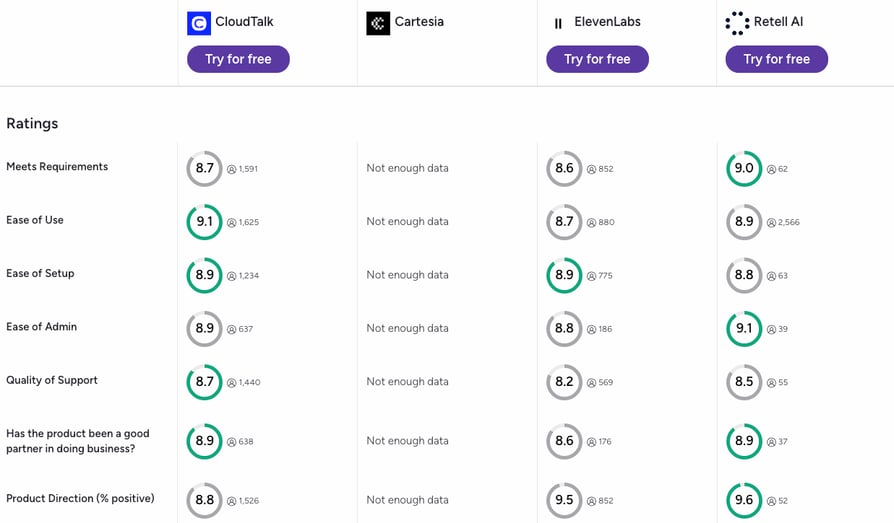
G2's side-by-side comparison of CloudTalk, Cartesia, ElevenLabs, and Retell AI reveals a striking gap: Cartesia has no G2 data across any category. Every other tool has real numbers you can benchmark against.
- Meets Requirements scores: CloudTalk 8.7 (1,591 reviews), Retell AI 9.0 (62 reviews), ElevenLabs 8.6 (852 reviews), Cartesia: not enough data. When 1,800+ people validate a tool versus zero, buying committees notice.
- Ease of Use: CloudTalk leads at 9.1 (1,625 reviews), ElevenLabs 8.7 (880), Retell AI 8.9 (2,566). Cartesia cannot be scored. Teams testing before committing find it easier to trial a platform with peer feedback than one with none.
- Quality of Support: CloudTalk scores 8.7 (1,440 reviews), Retell AI 8.5 (55), ElevenLabs 8.2 (569). Cartesia offers docs and Discord. When something breaks in production, 24/7 human support like that offered by CloudTalk (including phone on Expert) matters more than API responsiveness.
CloudTalk vs. Cartesia: Final Head-to-Head Comparison
CloudTalk and Cartesia solve different problems. Cartesia is a text-to-speech API for developers building custom voice applications. CloudTalk is a working, AI-powered business phone system with AI voice agents, CRM sync, and outbound dialers built in.
After testing both platforms against the criteria that matter most to teams building voice operations, here's how CloudTalk and Cartesia compare feature by feature. This table uses verified pricing and publicly confirmed feature availability as of 2026.
CloudTalk vs. Cartesia: Feature-by-Feature Comparison
| Feature | CloudTalk | Cartesia | Winner |
|---|---|---|---|
| Starting Price | $25/user/mo | Free tier + $50 per 1M chars | Tie (different models) |
| Free Trial | 14 days, no credit card | Free credits on signup | Tie |
| Minimum Agents | 1 (3 on Expert) | None (API keys only) | Cartesia |
| Deployment | Cloud, live minutes to hours (AI receptionist takes 10 mins to set up) | API-only, developer setup | CloudTalk |
| CRM Integrations | 100+ tools (from Essential) | None (custom integration only) | CloudTalk |
| Auto Call Recording | From Starter | N/A (no calling) | CloudTalk |
| Outbound Dialers | Smart, Preview, Power, Parallel (from Expert or as add-ons) | N/A (no calling) | CloudTalk |
| AI Voice Agents | AI Receptionist + AI Specialist (from $99/mo) | TTS output only | CloudTalk |
| Voice Quality/Latency | Native voices tuned for calls | Sonic 3, sub-100ms latency | Cartesia |
| Global Coverage | Numbers for 160+ countries | N/A (no telephony) | CloudTalk |
| Transparent Pricing | Flat per-seat, clear AI add-ons | Per-character + credits | CloudTalk |
| Human Fallback | Live agents on same platform | No human agent seats | CloudTalk |
| G2 Rating | 4.4/5 (1,800+ reviews) | No G2 data | CloudTalk |
The Only Use Case When Cartesia Wins
Cartesia is the right pick for one specific scenario: an engineering team that already has telephony, CRM, and orchestration in place and just needs a fast, expressive TTS layer. Sonic 3's sub-100ms latency is genuinely excellent for that job. Outside that scenario, CloudTalk delivers a working voice operation without the stack-building phase.
How to Choose the Right Cartesia Alternative for Your Business
Not every Cartesia alternative on this list is right for every team. Your best choice depends on whether you need a raw text-to-speech layer or a full voice operation, the tools you already use, your geographic footprint, and how much engineering time you can put in. Use our qiuck buyer's guide to narrow down the shortlist before starting a trial.
What Is the Best Cartesia Sonic Alternative for Voice Quality?
If you need a pure TTS API with the best voice character and emotional range, ElevenLabs is the best alternative to Cartesia Sonic 3. Its 4.5/5 G2 rating across 1,100+ reviews and top marks for natural-sounding voices make it the standard comparison point for premium TTS. For teams that also need telephony and CRM sync, CloudTalk's AI voice agents ship with native voices tuned for phone calls, plus the full operational layer.
Which Cartesia Alternative Is Best for Low-Latency Real-Time Voice Agents?
Retell AI is the strongest pick for developer teams building low-latency voice agents at scale. Bundled voice, LLM, and telephony behind one API, with turn-taking tuned for real phone conversations. For operators who want low-latency AI voice without engineering the plumbing, CloudTalk's AI Receptionist deploys in minutes with 50 free minutes on every account.
What Is the Best Cartesia Alternative for Ecommerce?
CloudTalk is the best Cartesia alternative for ecommerce teams handling order status calls, returns, and high-volume inbound. Its AI voice agent for ecommerce handles order lookup, delivery updates, and return requests, with Shopify, HubSpot, and Zendesk sync starting on the Essential plan ($29/user/mo). Cartesia's TTS output alone cannot log a return to Shopify or check an order status.
Which Cartesia Alternative Is Best for Global Outbound Sales Teams?
CloudTalk is the best Cartesia replacement for global outbound sales teams. The platform offers virtual numbers in 160+ countries, native Power Dialer from Expert (or as a $15/mo add-on), and sync with 100+ tools including HubSpot and Pipedrive from Essential plan. Retell AI works if your team wants to build a custom outbound agent, but you will still bring the CRM layer yourself.
Case study: Revolut
When global fintech Revolut expanded its outbound sales team, their previous provider lacked the agent oversight and deep CRM syncing they needed to scale. Rolling out CloudTalk's Smart Dialer alongside local numbers in 193+ markets fully automated their call logging, saved their sales operations team over 40 hours every single month, and helped them onboard 500+ sales reps without slowing pipeline.
What Is the Best Cartesia Alternative for Enterprise Voice AI?
For enterprise teams with strict compliance and multilingual needs, Azure AI Speech is a defensible pick if you already run on Microsoft cloud, thanks to SOC 2, HIPAA, ISO, and FedRAMP coverage. For operational voice AI at enterprise scale (not just TTS), CloudTalk's voice agent tier handles inbound and outbound campaigns with a sales-led setup and dedicated support.
Which Cartesia Alternative Is Best for No-Code Voice Agent Building?
For no-code voice agent building, Synthflow is a strong alternative to Cartesia for agencies serving GoHighLevel-based clients. For in-house ops teams that want no-code AI voice tied to their real phone system, CloudTalk's AI Receptionist deploys in minutes with 50 free minutes on every plan, plus native CRM sync so every call updates HubSpot or Pipedrive automatically.
What Is the Best Cartesia Alternative for Growing Teams?
CloudTalk is the best Cartesia alternative for growing teams. It solves every structural limitation Cartesia creates for scaling teams: no built-in telephony becomes 180+ countries of coverage; no CRM sync becomes 100+ native integrations from Essential; no human fallback becomes live agents on the same platform; no AI voice agent becomes AI Receptionist with 50 free minutes on every plan. Pricing scales predictably per seat, and you can test the full platform for 14 days with no credit card required.
Ready to Replace Cartesia? Start with CloudTalk.
Ready to Make the Switch from Cartesia?
Cartesia is a legitimate TTS API for engineering teams already deep into building a custom voice application. But if you are looking for a Cartesia replacement that ships a working phone system, the missing layers add up fast: no telephony, no CRM sync, no dialers, no human fallback, no G2 reviews to lean on.
Every platform on this list fixes at least one of Cartesia's structural gaps. CloudTalk fixes all of them: AI voice agents built in, 100+ CRM integrations from Essential, 160+ national number types, calling in nearly 200 countries, and 24/7 human support (phone on Expert), all with transparent per-user pricing and a free 14-day trial.
- Complete voice stack: calling, dialers, AI agents in one platformSkip the DIY infrastructure phase entirely. Numbers, routing, dialers, and AI voice agents live on the same tool from day one.
- 100+ CRM integrations from Essential, Salesforce on ExpertEvery call, transcript, and voice agent interaction syncs to HubSpot, Pipedrive, Zendesk, or Zoho automatically. No manual data entry.
- AI Receptionist with 50 free minutes on every planInbound triage, appointment booking, and after-hours calls handled automatically. Cartesia has no built-in agent, just a TTS API.
- 160 countries, 160+ national number typesProvision local virtual numbers wherever your customers are. Voice agents can dial internationally without a second carrier contract.
- Trusted by 5,500+ businesses with 1,800+ verified G2 reviewsWhere Cartesia has zero G2 reviews, CloudTalk carries a 4.4/5 rating and real peer validation for buying committees.
See Why 5,500+ Teams Are Switching from Raw Voice APIs to CloudTalk
Frequently Asked Questions about Cartesia Alternatives
Answers to the most common questions about Cartesia pricing, voice quality, alternatives, and switching to a better voice platform in 2026.
Cartesia is an AI research and product company that builds real-time voice models. Its flagship product, Sonic (now Sonic 3), is a text-to-speech API known for sub-100ms latency and expressive, human-like voices. It is developer-first and API-only, not a full voice operations platform. For teams that want built-in telephony, dialers, and CRM sync, see CloudTalk's business phone system.
CloudTalk is the best alternative to Cartesia, especially for teams that want a working voice operation. It ships AI voice agents, 100+ CRM integrations from Essential, and coverage across 160 countries.
If you specifically want a Sonic-style low-latency TTS API, Deepgram Aura and ElevenLabs are the two closest replacements. But most teams looking for a Sonic alternative are actually building a voice agent, not a TTS layer. For that use case, CloudTalk's AI Receptionist is faster to deploy because it includes telephony, routing, and CRM sync out of the box.
Cartesia pricing opens with a free tier with limited credits, then paid plans at $4/mo (Pro), $39/mo (Startup), and $239/mo (Scale). Pay-as-you-go pricing is $50 per 1M characters. Enterprise pricing is custom.
Cartesia offers a free tier with a limited credit allowance for developers to try the API. Paid plans start at $4/mo. Every plan bills additional usage per character. For teams comparing free trials, CloudTalk offers a 14-day free trial with no credit card required, plus 50 free AI Receptionist minutes on every account.
Cartesia is a text-to-speech API. It does not include telephony, CRM sync, call routing, dialers, human agents, or analytics. Teams building voice agents on Cartesia typically stitch in Twilio, an LLM provider, and CRM middleware to get a working phone experience. Full voice agent platforms like CloudTalk bundle those layers.
Yes, open-source TTS alternatives to Cartesia include Coqui TTS and Mistral's Voxtral. Free tiers on ElevenLabs, Murf AI, and Azure AI Speech let you generate limited audio without paying.
Unfortunately, most Cartesia TTS API alternatives (ElevenLabs, Deepgram, Azure AI Speech, Murf) don't integrate directly with CRMs or helpdesks. Voice agent platforms like Retell AI and Synthflow use Zapier or webhooks. Full platforms like CloudTalk ship native two-way sync with 100+ popular tools including HubSpot, Pipedrive, Zendesk, and Zoho from Essential (plus Salesforce from Expert).
When comparing Cartesia and ElevenLabs, Cartesia wins on latency (sub-100ms), while ElevenLabs wins on voice quality and cloning. Both are TTS APIs, so both leave telephony, CRM, and orchestration to you. If you are building a voice agent from scratch, pick one based on your priority. If you want a working voice agent out of the box, CloudTalk handles the full pipeline.
Most teams switching from Cartesia are moving up the stack, from a raw TTS API to a full voice platform. The migration steps: audit your current stack (TTS + LLM + telephony + CRM middleware), pick a platform that consolidates those layers, then port your agent scripts. CloudTalk's 14-day free trial lets you build and test a voice agent before switching, as well as port your phone numbers.
ElevenLabs matches or exceeds Cartesia on voice quality and emotional range. Deepgram Aura and Retell AI match on latency. Cartesia's Sonic 3 still leads on raw streaming speed for TTS-only use cases. For real phone conversations, latency is only one factor. CloudTalk's voice agents use natively tuned voices designed for phone-quality output.
For pure TTS latency, Cartesia and Deepgram Aura lead. For real-time voice agents on live calls, CloudTalk and Retell AI are the top picks because they bundle voice, LLM, and telephony behind one integration. Real-time feel depends on the whole stack, not just the TTS layer.
CloudTalk is the best Cartesia alternative for small businesses that need a working phone system with AI voice agents. CloudTalk's plans start at $25/user/mo with no seat minimum until Expert. For creator-focused voiceovers on a budget, Murf AI is a good alternative.
Cartesia Sonic runs as a cloud API with streaming output; there is no on-device model for consumer devices. Teams needing on-device TTS typically use open-source models like Coqui or Piper. For cloud-based voice agents with sub-second latency and crystal-clear audio, CloudTalk's AI voice agents are the practical operational choice.