What Happens When AI Joins the Conversation?
Three out of four companies are using or testing AI¹. The fourth? They're falling behind.
The adoption of AI in business communication is picking up speed fast. By 2029, AI is expected to handle 80% of common customer service issues without human intervention—slashing operational costs by 30%, according to Gartner².
And it’s not just about efficiency. McKinsey’s research³ shows early adopters are reporting up to 10% revenue growth—within a single year of rollout. These are no longer early experiments. They’re business levers.
So, what does that look like in practice?
In this article, we’ve pulled insights from companies that are taking advantage of AI tools in business communication—across teams and with customers.
You'll learn how real-world teams are solving everyday communication challenges, streamlining workflows, and generating higher-quality leads by integrating smart tools into their sales and support strategies.
Key Takeaways
- Companies using AI in business communication are seeing faster workflows, stronger customer engagement, and even revenue growth—all within months of adoption.
- Across channels like phone, email, chat, and internal messaging, AI tools in business communication helps teams respond quicker, stay consistent, and personalize at scale.
- By handling repetitive tasks and distributing work intelligently, AI gives teams room to collaborate more freely, move faster, and take on new challenges with less friction.
- Every interaction becomes a learning opportunity. AI surfaces insights from calls, emails, and messages—helping teams improve strategy and act with clarity.

Watch how CloudTalk’s AI turns business communication into your team’s biggest advantage.

How Has Communication in Business Changed?
Remember when interacting with customers meant long wait times, copy-paste emails, and being bounced between agents? Those days are fading. AI has joined the conversation, making communication faster, smarter, and a whole lot more human.
AI Voice Agents pick up the phone on the first ring and route calls where they belong. Chatbots handle FAQs while you sleep. And meeting transcripts—with smart summaries—show up in your inbox before you’ve even left the room.
And it’s not just about doing things quicker; it’s about doing them better. AI enables deeply personalized communication, whether it’s tailoring a message to a customer based on purchase history or adapting onboarding materials to new hires.
And while all this is happening, AI is quietly analyzing the interactions. It identifies rising frustrations, spots red flags, and serves up data-driven insights. Suddenly, businesses aren’t just communicating—they’re listening, learning, and adapting.
What’s behind the curtain? Technologies like Natural Language Processing (NLP), machine learning, and speech analysis. They’re the engines powering this new era of AI in business communication. An nlp chatbot is a prime example, using these technologies to understand intent and provide human-like responses in real time.
Natural Language Processing (NLP)
Makes human language understandable to machines.
- Breaks down text into words, sentences, and meaning
- Identifies intent, tone, and context in real time
- Powers chatbots, auto-replies, and smart summarization
- Supports multilingual communication with instant translation
Machine Learning (ML)
Learns from data to make smarter decisions over time.
- Analyzes patterns in conversations and outcomes
- Continuously improves based on feedback and usage
- Recommends next steps, content, or responses
- Personalizes messages for individual customers or segments
Speech Analysis
Turns voice into actionable insights.
- Converts spoken words into accurate text
- Detects emotion, pace, and stress in tone
- Enables real-time transcription and meeting summaries
- Helps monitor call quality and customer sentiment
Explore the Use Cases of AI in Business Communication
Business communication used to mean too many notifications, too few things done. The application of AI in business communication is changing that—cutting the noise, linking the right people, and turning scattered messages into real momentum.
Customer Support & Customer Success
For years, customers and B2B clients have suffered from long ticket queues, copy-paste replies, and endlessly looping hold music. Now, AI has broken the loop, making the experience feel faster, more intuitive, and, honestly, a lot more human.
At SupportYourApp, we integrate AI across several touchpoints of our outsourced support services—from AI-powered chatbots that resolve up to 80% of Tier-1 inquiries to intelligent routing systems that match queries with the most qualified consultant.
As Vasyl Popovych highlights, AI tools in business communication detect urgency, understand intent, and either handle the issue or send it straight to the right person. There are no repeats, no bottlenecks.
We also use basic chatbot automation to deliver targeted information to clients and prospects, helping them find what they need faster and improving their overall experience with our platform and customer-facing teams.
But support isn’t just happening in chats and inboxes. Phone calls remain a dominant channel, accounting for 53% of all support interactions⁵.
That’s where AI Voice Agents come into play. Available through platforms like CloudTalk, they are ready to answer the phone instantly, carry on conversations in natural language, and resolve routine requests with speed and consistency.
Signature Capability
See CloudTalk’s AI Voice Agent in Action!
CeTe is an AI that talks like a human: no breaks, no training, no time off. It makes and answers calls, updates CRMs, books meetings, and loops in a human only when needed.
Press play to hear it. Want a wow moment? Get a free test call and try it live.

Meet CeTe:
Sales Calls & Outreach
Sales outreach has come a long way from spray-and-pray emails and templated follow-ups. Today, AI tools in business communication are giving sales teams an edge, helping them connect with the right prospects at the right time with messages that actually resonate. In high-volume outbound scenarios, comparing ISP vs. residential proxies can be critical for maintaining deliverability, compliance, and accurate outreach analytics.te.
Static residential proxy offer the reliability of a fixed IP address while maintaining the trust and authenticity of real residential networks. This makes static residential proxies ideal for long-term sessions, account management, and outreach campaigns that require consistent connectivity and reduced detection risks.
One of the biggest shifts is how teams handle sales calls. Instead of scrambling to take notes or track every detail, many now rely on AI tools to automatically transcribe, summarize, and highlight key moments.
One practical example is using AI to record and summarize client calls. It allows us to be fully present in conversations without the pressure of taking detailed notes… AI-generated summaries and highlighted pain points make our follow-ups more thoughtful and actionable.
AI goes beyond efficiency when it comes to outreach. As Daniel Tomcala mentions below, sales teams are layering intelligence into every stage of their funnel, from data-enriched research to predictive lead scoring and personalized messaging.
We leverage AI-driven strategies to power multi-channel outreach—combining intelligent email campaigns, dynamic content creation and execution, data-enriched research, and predictive lead insights. Our approach includes social media engagement, hyper-personalized messaging, and the development and distribution of thought leadership content.
To support this evolution, platforms like CloudTalk equip sales teams with AI features designed for this new pace. These AI tools in business communication capture every call, surface key takeaways, and connect seamlessly with broader outreach and CRM systems.
In addition, AI Dialers and AI Voice Agents play a key role in streamlining outbound outreach. While AI Dialers automate call flows and remove the need for manual dialing, Voice Agents can call and handle first conversations with speed and consistency. Together, they turn high-volume outreach into real, measurable momentum.
Data Analysis & Conversational AI
Every call, chat, and email holds valuable insight—but you need the right tools to get it. AI tools in business communication convert conversations into a source of intelligence that teams can actually use.
Behind the scenes, AI helps us analyze customer interactions at scale, spot friction points, and continuously refine scripts and workflows. It’s how we empower our teams to deliver more consistent, empathetic, and data-informed communication.
With AI handling the heavy lifting of analyzing conversations at scale, teams gain real-time visibility into what's working and what's not. You no longer need to dig through thousands of call recordings to uncover insights.
CloudTalk’s AI conversation intelligence drastically improved our efficiency. We’ve cut call quality analysis time from 2 hours to 20 minutes a day and reduced wrongly targeted leads by 24%, enabling us to focus on strategic growth while maintaining consistency across markets.
Whether it’s analyzing sentiment, flagging pain points, or optimizing messaging, Conversation Intelligence is giving teams the feedback loop they never had. In this space, CloudTalk helps teams unlock the full value of their interactions.
Internal Communication & Endomarketing
As companies grow, so does internal noise. Messages pile up, meetings multiply, and critical updates get buried in threads. AI helps cut through the clutter, turning scattered messages into useful information.
We use [AI] for internal updates on marketing, website, and product analytics, as well as on sales calls, and for email management.
From auto-summarized Slack channels to smart inbox prioritization, AI enables teams to stay aligned without adding another call to the calendar. It highlights what matters, filters the rest, and keeps everyone in the loop.
When multiple team members need visibility into a customer relationship or sales call, they can quickly review the AI-generated notes and pain points without needing a full handover or meeting replay. It’s a subtle shift, but it’s made collaboration much smoother across our customer-facing and product teams.
Of course, all of this only works if everything stays connected. AI needs to work across the tools teams already rely on. This kind of integration is built into CloudTalk, supporting faster, clearer, and more collaborative communication.
Benefits of AI in Communication Workflows
There’s what your team tries to say to your customers—and then there’s everything that slows them down from saying it. AI in business communication clears the runway so conversations can actually take off.
Boost Agent Confidence and Productivity
AI gives agents the backup they never knew they needed. Instead of juggling note-taking, context-switching, and digging through inboxes, they get the support to do more, do it better, and do it faster.
Call handling time dropped, and our agents were able to take on more without feeling overwhelmed. Productivity shot up: agent utilization increased by 30%, and our first-call resolution (FCR) improved by 20%. Instead of getting stuck in admin work, our team could focus on what really mattered: our clients.
This productivity boost isn’t a projection—it’s already underway. Studies show that AI increases agent productivity by 14%⁶, and forward-looking teams are watching that advantage scale across their organizations.
Easy AI has helped us save time across the board—streamlining the sales process, improving HelpDesk operations, and creating more efficient workflows overall.
Deliver Better Customer Experiences
When AI in business communication lifts the burden of admin and repetitive tasks, agents are free to listen, respond, and guide with real care. The result is immediate: better service and more meaningful interactions.
One major benefit we've seen is the ability to stay fully present and focused during client conversations, knowing we’ll have accurate summaries and transcripts afterward. This has noticeably improved the quality of our interactions—we can focus on listening more actively, asking better questions, and follow up more effectively.
That kind of shift pays off. Companies using AI capabilities report a 3.5x greater increase in customer satisfaction rates⁶, proving that when agents are supported, customers feel it—and respond to it.
AI allows our consultants to focus on more complex tasks. This not only improves customer experience but also reduces cognitive load for our teams, leading to higher job satisfaction and lower turnover.
It increased our TAM (Total Addressable Market). AI has made it super easy for us to add new languages to our app, to keep these languages up to date with every release, and it allows our customers to communicate with us in their local language.
More attention. More empathy. Better outcomes.
Streamline Workloads and Team Collaboration
AI tools in business communication also help teams work smarter together. By prioritizing tasks and automating workflows, they remove the chaos from collaboration and keep things moving smoothly.
It also expands what teams are capable of. By providing accessible, AI-powered tools, people can take on tasks outside their core expertise. The result is faster execution, greater autonomy, and more collaborative momentum across teams.
We work a lot with developers internally when creating content. Before, we would go to the developer and ask him to code the form and explain everything. Now, our content writer can do it himself in minutes.
The result is leaner communication without all the back-and-forth.
Turn Conversations Into Strategic Insights
With access to AI Analytics and performance insights, leaders can move from bets to grounded strategy. Patterns become clear, coaching becomes more targeted, and team improvements become measurable.
From an operations and supervisor perspective, CloudTalk's analytical tools give us clear insights into team performance and areas for improvement, helping us fine-tune workflows and set better goals.
These insights turn vague feedback into concrete guidance. The result is more informed decisions, sharper strategy, and performance improvements that actually stick.
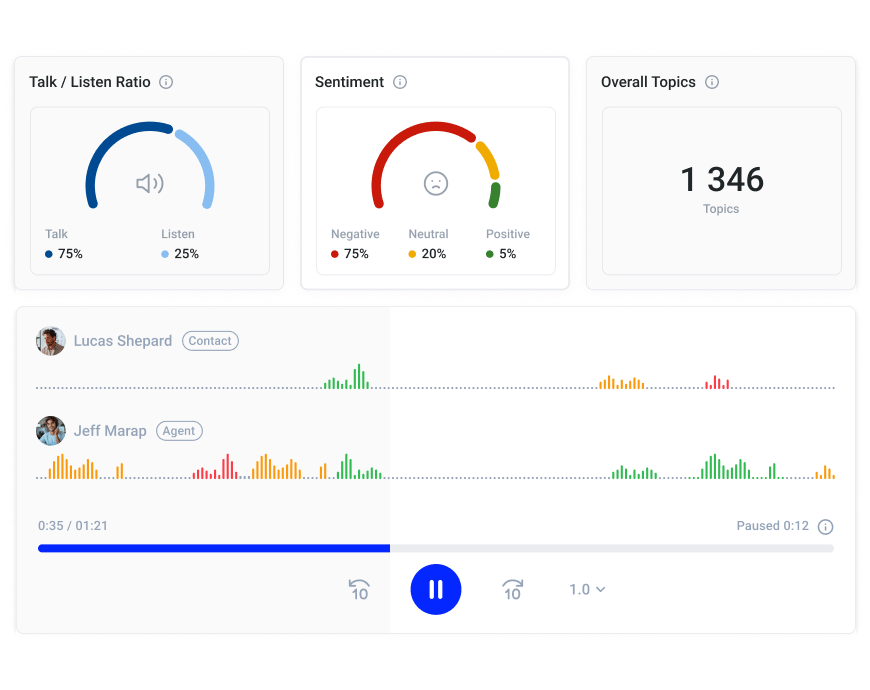
I also love how [CloudTalk] shows the balance between talking and listening. If a salesperson isn’t selling well, I can compare their call to a top performer – one listens 90% and talks 10%, while the struggling rep does the opposite. If I just tell them to listen more, they might ignore it. But when I show them the data it really clicks. The numbers make it real.
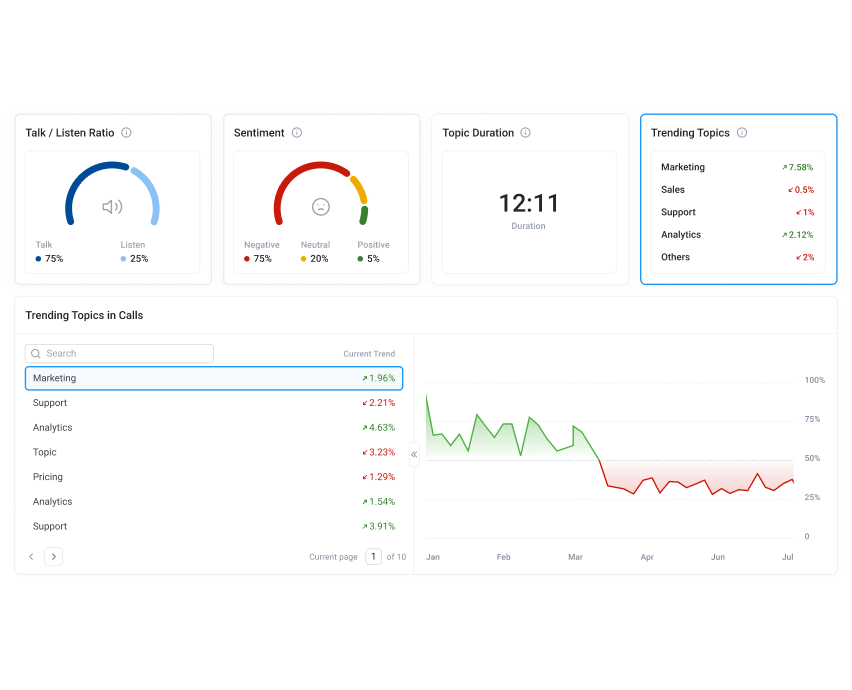
AI also adds another deeper layer of intelligence. While AI Topic Extraction identifies recurring themes and topics through the conversations, Sentiment Analysis helps teams understand how customers feel during them.
These insights help businesses fine-tune their messaging, anticipate issues, and make smarter strategic moves, all backed by real data.
Solve Real Business Communication Challenges with AI
AI is fixing what has slowed down business communication for years. Here are some of the most common challenges it helps overcome:
- High Support Volume
From support tickets to emails and DMs, volume adds up fast. AI-powered chatbots, auto-replies, and smart triage help manage the load—so teams can respond quickly, without drowning in messages. - Missed Calls & Lost Leads
Unanswered emails, forgotten Slack threads, stalled texts—every missed message can cost you. AI detects urgency, routes conversations where they belong, and makes sure nothing critical slips through. - Slow Follow-Ups
Following up shouldn’t depend on memory. AI summarizes meetings, flags next steps, and auto-generates reminders—across email, CRM, and internal tools—so nothing gets lost in the shuffle. - Inconsistent Responses
Tone and accuracy vary from agent to agent and message to message. AI helps standardize replies, enforce brand voice, and pull from a single source of truth—whether it's an email, chatbot, or internal note. - Overloaded Reps
Manual tasks eat up focus. AI takes over repetitive work like tagging tickets, updating fields, sorting inboxes, and assigning tasks—freeing teams to spend more time in meaningful conversations. - Lack of Visibility
Calls, chats, and messages generate data—but most of it gets ignored. AI analyzes interactions across channels, uncovers patterns, and highlights what’s working (or not), so teams can act with clarity.
Platforms Solving Communication Challenges with AI
These platforms help businesses streamline, scale, and sharpen their communication workflows, with AI tools in business communication at their core. While they serve a range of use cases, they’re especially effective when it comes to powering efficient outreach.
1. CloudTalk
CloudTalk leads the way in AI-powered business calling software, purpose-built to enhance the performance of sales and customer support teams. Trusted by more than 5,500 innovative SMBs, CloudTalk enables teams to have meaningful, results-driven conversations.
Best for: Compatible with businesses of all sizes, with a focus on growing SMBs
Key Features:
- AI-Powered Conversation Intelligence
- AI Voice Agents
- Intelligent Call Routing
- Seamless CRM Integration
- AI Advanced Call Analytics
- Call Flow Designer
Integrations:
2. Textmagic

Textmagic is a business messaging platform that helps companies communicate with customers via SMS, email, live chat, and popular messaging apps like WhatsApp, Messenger or Instagram DMs. Used by over 30,000 businesses worldwide, it offers tools for mass texting, customer support, AI and automation—all in one place.
Best for: Support teams needing reliable, high-volume SMS communication
Key Features:
- Bulk SMS campaigns
- Two-way messaging
- Text-to-email and email-to-text functionality
- Scheduled messaging and SMS automation
- Delivery tracking and reporting
Integrations:
- Zapier
- Salesforce
- Custom integrations via API
3. GrowMeOrganic
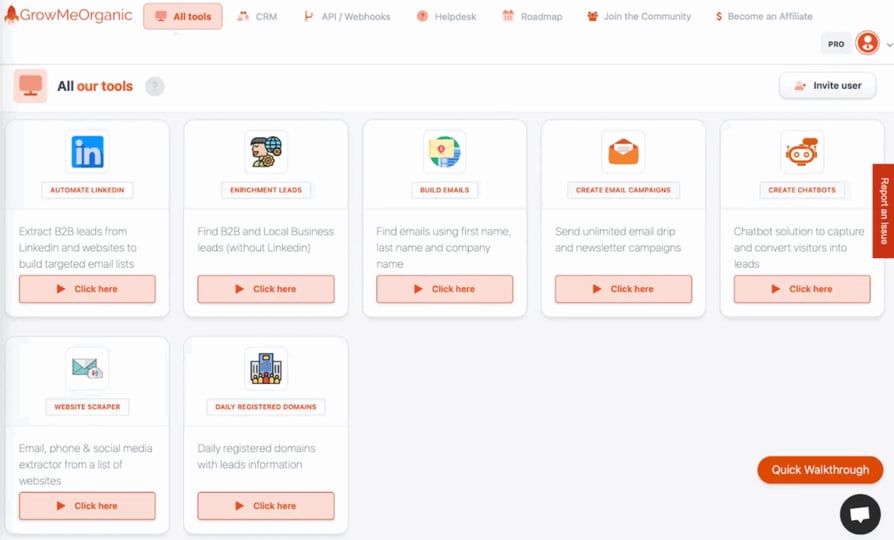
GrowMeOrganic is a LinkedIn and email outreach platform focused on cold outreach. It automates the tedious parts of prospecting while keeping outreach personal and targeted. It’s just a straightforward tool that helps sales teams connect with the right people and get more responses.
Best for: Startups and B2B sales teams doing outbound at scale and growth marketers looking to automate cold outreach
Key Features:
- LinkedIn and email automation
- Contact scraping and enrichment
- Unified outreach sequences
- Email finder and verifier
- CRM sync and lead tracking
Integrations:
- HubSpot
- Zoho CRM
- Pipedrive
- CSV-based workflows
4. Exclaimer

Exclaimer is a centralized email signature management platform. It enables consistent, branded email signatures across teams—while also turning signatures into dynamic marketing and compliance tools.
Best for: Teams managing large email volumes, enterprises and companies in regulated industries.
Key Features:
- Centralized signature control
- Signature banners for marketing campaigns
- Role-based targeting and scheduling
- Signature templates and drag-and-drop editor
- Legal disclaimers and compliance tools
Integrations:
- Microsoft 365
- Google Workspace
- Exchange
- Salesforce
5. Saleshandy

Saleshandy is a sales engagement platform designed to boost email outreach. It helps teams send personalized, automated emails at scale, track engagement, and optimize follow-ups using detailed analytics.
Best for: Outbound sales teams and SDRs focused on cold emailing.
Key Features:
- Cold email automation with follow-up sequences
- Email performance analytics (opens, clicks, replies)
- Smart scheduling and A/B testing
- Mail merge with personalization
- Inbox rotation to improve deliverability
Integrations:
- Gmail
- Outlook
- HubSpot
- Pipedrive
The Future of Business Communication Is Calling You
AI isn’t coming for business communication—it’s coming with it. It’s already embedded in the way support teams triage tickets, sales reps follow up with leads, and managers uncover what’s really happening in their pipelines.
And we’re only scratching the surface. Gartner predicts that by 2026, conversational AI will reduce contact center labor costs by $80 billion globally⁷. That’s not just a stat—it’s a wake-up call.
The companies leaning into AI today are setting the tone for what good communication looks like tomorrow. They’re reducing missed messages, speeding up resolutions, and turning every call, email, and Slack ping into something more valuable.
CloudTalk is built for this shift. With AI-powered features that simplify conversations across channels, it helps teams act faster and respond smarter.
The future’s already dialing. The only question is: will you pick up?
Sources:
Frequently asked questions
AI automates routine tasks, routes messages smartly, analyzes conversations, and helps teams respond faster—across calls, emails, chats, and internal tools.
AI powers chatbots, auto-replies, smart routing, and real-time transcription—making conversations faster, more consistent, and easier to manage across channels.
AI will drive more personalized, efficient, and data-informed communication—helping businesses reduce costs, boost satisfaction, and turn conversations into strategy.
Use AI to streamline internal updates, summarize meetings, manage emails, and ensure consistent messaging—so teams stay aligned and communication flows without friction.