21 Best Cloud Phone Systems for Healthcare in 2026
Summary
Upgrading to a modern cloud phone system for healthcare helps clinics, hospitals, and private practices improve patient communication and streamline operations. In this guide, we review the top 21 solutions to help you find the best phone system for healthcare in 2026.
TL;DR
Here is a quick list of the Top 21 Cloud Phone Systems for Healthcare Industry 2026 reviewed in this guide:
- 01CloudTalk – Best overall for clinics and healthcare support teams needing AI automation, 100% call recording, and smart routing.
- 02RingCentral – Best for large hospitals needing a Unified Communication (UCaaS) suite with Fax and video.
- 03Nextiva – Best for medical practices prioritizing reliability, uptime, and patient experience management.
- 04Dialpad – Best for modern healthcare providers requiring AI-powered transcription and compliance-friendly features.
- 05Grasshopper – Best for solo practitioners and mobile doctors needing a separate business line on personal devices.
- 06CallHippo – Best for budget-conscious medical call centers needing global virtual numbers and automation.
- 07KrispCall – Best for clinics managing patient appointments via a unified callbox for voice and SMS.
- 08Dialaxy – Best for healthcare startups needing a straightforward, secure cloud phone system with global coverage.
- 09Aircall – Best for medical support teams requiring seamless integration with helpdesk software and patient records.
- 10MightyCall – Best for small to mid-sized practices looking for an affordable, user-friendly system with auto-attendant.
- 11Genesys – Best for large healthcare organizations requiring an AI-powered, omnichannel contact center for patient engagement.
- 12Five9 – Best for high-volume medical contact centers needing intelligent routing and workforce optimization.
- 13Talkdesk – Best for enterprise healthcare facilities focused on automation, patient self-service, and deep analytics.
- 14Quo – Best for collaborative medical teams needing shared phone numbers and a unified inbox for patient queries.
- 15Squaretalk – Best for healthcare BPOs and support centers prioritizing high-level data security (ISO 27001).
- 16LiveAgent – Best for practices wanting to consolidate patient support tickets, calls, and live chat into one dashboard.
- 17Ringover – Best for multi-location clinics needing an all-in-one solution for unlimited calling and patient interaction monitoring.
- 18JustCall – Best for productivity-focused medical teams needing SMS automation and CRM integration for patient reminders.
- 19Readymode – Best for large healthcare outreach teams managing high-volume appointment scheduling or billing collections.
- 20TalkRoute – Best for small medical offices needing a virtual phone system with custom call menus and no hardware costs.
- 21Voiso – Best for agile healthcare contact centers requiring rapid setup and AI-driven speech analytics.
A single dose of CloudTalk can save your call center’s health. No side effects.

How We Chose the Best Healthcare Cloud Phone Systems Providers
To bring you this guide, we compared 30+ leading call centers for healthcare solutions, using direct feedback from over 2,000 healthcare professionals via trusted platforms like G2, Capterra, and TrustRadius.
The top 21 providers were selected based on their patient support features, ease of use, EHR/CRM integrations, compliance (HIPAA, GDPR), and how well they performed in real-world clinical settings. We also factored in the latest healthcare communication trends and performance benchmarks from sources like KLAS and HIMSS.
What you’ll find here:
Only healthcare software that delivers real impact, with clear notes on which settings and team types each solution fits best.
Why Trust Our Software Reviews?
For nearly a decade, we’ve helped over 30,000 professionals choose and implement communication tools that fit their needs. We’ve reviewed 200+ platforms, analyzed 5,500+ verified reviews, and consulted real discussions from providers on Reddit, Quora, and industry forums.
In the past year alone, we’ve published 1,000+ articles—written and reviewed by humans, for humans—to offer honest, data-backed insights you can trust.
Learn how we keep our content integrity and our software review methodology.
Top 21 Cloud Phone System for Healthcare
1. CloudTalk
CloudTalk is a secure, cloud phone system for healthcare professionals designed to streamline inbound and outbound patient interactions. It offers 100+ advanced tools, including IVR for patient routing and automated workflows that can help administrative staff manage high call volumes efficiently. With 160+ international numbers and seamless CRM integrations, medical facilities can maintain a local presence while centralizing patient data.
Key-Features of CloudTalk
- AI-Powered Conversation Intelligence: Includes transcription and sentiment analysis to monitor patient interaction quality.
- Smart Call Routing & IVR: Directs patients to the right department (e.g., billing vs. appointments) using skill-based routing.
- CRM Integrations: Connects with major platforms like HubSpot and Salesforce to keep patient records synchronized.
- Real-Time Analytics: Provides insights into call volume and wait times to improve clinic efficiency.
- Call Recording: Automatically records calls for compliance and training purposes.
Pros of CloudTalk
- Easy-to-use and intuitive interface for medical staff.
- Reliable call quality ensures clear communication with patients.
- Seamless integrations with CRMs and helpdesk tools.
- Comprehensive analytics for monitoring practice performance.
- Helpful and responsive support team.
Cons of CloudTalk
- Advanced AI features may require additional costs.
- Requires a stable internet connection for optimal VoIP performance.
- Mobile app experience can vary depending on the device.
CloudTalk Pricing:
- Starter: $25/user/month, billed annually
- Essential: $29/user/month, billed annually
- Expert: $49/user/month, billed annually
G2 Rating of CloudTallk
- 4.4/5
Missed calls? Long wait times? CloudTalk’s 15-minute demo is what any doctor would prescribe
2. RingCentral
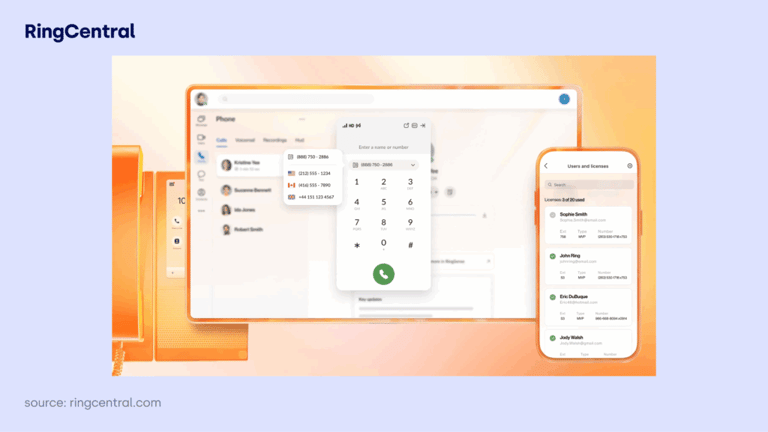
RingCentral is a leading business phone system for healthcare that combines voice, video, SMS, and team messaging into a single app. It helps medical teams collaborate efficiently while moving phone services from traditional landlines to the cloud. Its AI-driven features, such as conversation intelligence, assist in optimizing patient interactions and operational efficiency.
Key-Features of Ringcentral
- Omnichannel Support: Manages patient inquiries across voice, email, chat, and social media.
- AI-Driven Routing: Optimizes patient interactions by directing calls to the most suitable staff member.
- Workforce Engagement: Tools for scheduling and performance monitoring of medical staff.
- CRM Integration: Connects with systems like Salesforce and Microsoft Dynamics.
- Advanced Call Management: Includes IVR, call recording, and monitoring.
Pros of Ringcentral
- Seamless integration with over 30 communication channels.
- Robust security measures and a 99.99% uptime guarantee.
- AI-powered features like intelligent routing improve efficiency.
- Strong integration capabilities with leading CRM systems.
- Comprehensive workforce engagement tools.
Cons of Ringcentral
- Extensive feature set may present a steep learning curve.
- Pricing is not publicly available; requires contacting sales.
- Platform’s complexity can be overwhelming for smaller clinics.
- Some advanced features demand additional training.
- Certain capabilities locked behind higher-tier plans.
Pricing of Ringcentral
- Core: $20/user/month | paid annually
- Advanced: $25/user/month | paid annually
- Ultra: $35/user/month | paid annually
G2 Rating of Ringcentral
- 4.1/5
Recommended Reads
3. Nextiva
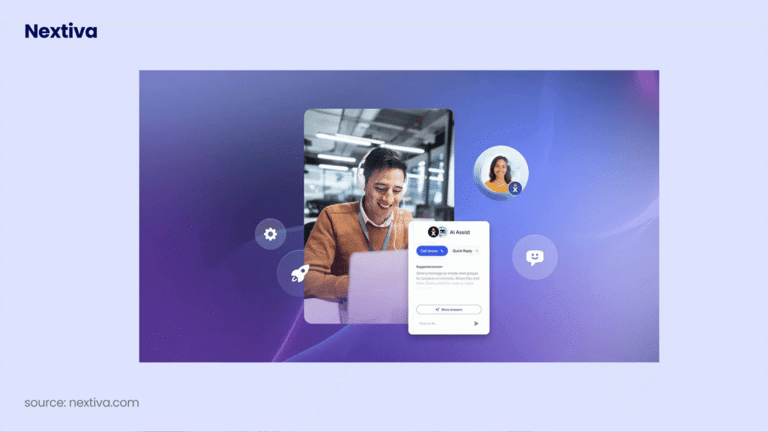
Nextiva is a cloud-based healthcare phone system focused on Unified Customer Experience Management (CXM). It centralizes VoIP, video, and chat into one hub, helping medical practices manage patient interactions and internal collaboration. With a focus on the customer journey, it uses AI and automation to boost productivity and provide a single view of patient interactions.
Key-Features of Nextiva
- Unified Communications: Combines VoIP calls, video conferencing, and team chat in one app.
- Omnichannel Platform: Consolidates patient messages from voice, text, and chat into a single inbox.
- AI & Automation: Handles voicemail transcription and intelligent routing for efficiency.
- Customer Experience (CXM): Tools tailored for personalized patient engagement.
- Analytics: Detailed reporting on call data and staff performance.
Pros of Nextiva
- Reliable 99.999% uptime guarantee ensures constant availability.
- Integrates voice, video, chat, and CRM in one platform.
- High customer satisfaction rating (4.7/5 on Trustpilot).
- User-friendly desktop and mobile apps.
- Scalable for a range of medical practice sizes.
Cons of Nextiva
- Some users report customer support responsiveness issues.
- Pricing may be higher than some competitors.
- Learning curve due to extensive features.
- Limited international calling on certain plans.
- Advanced integrations may require higher tiers.
Pricing of Nextiva
- Core: $15/user/month | paid annually
- Engage: $25/user/month | paid annually
- Power Suite CX: $75/user/month | paid annually
G2 Rating of Nextiva
- 4.5/5
4. Dialpad
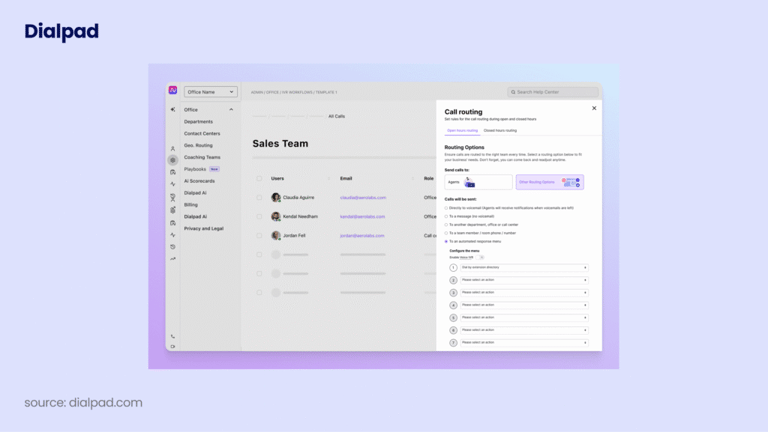
Dialpad is an AI-powered cloud phone system for healthcare that integrates voice, video, and messaging. It is designed to modernize communications with features like real-time call transcription and AI coaching. It is particularly noted for being a scalable solution for remote teams and offers HIPAA-compliant features (depending on the plan), making it a strong contender for the best phone system for healthcare.
Key-Features of Dialpad
- Real-Time AI Transcription: Provides automatic call summaries and live transcription.
- HD Voice & Video: Ensures clear professional communication for telehealth or admin calls.
- Seamless Integrations: Connects with tools like Salesforce and Google Workspace.
- Customizable IVR: Smart call routing to direct patients to the right department.
- Device Switching: Flexibly transfer calls between desktop and mobile devices.
Pros of Dialpad
- Real-time AI transcription and meeting summaries.
- Easy to use, with a modern interface.
- Seamless device switching and call transfers.
- Strong integrations with G Suite and Salesforce.
- Unlimited call recording and messaging in US/Canada.
Cons of Dialpad
- Occasional connection or call quality issues.
- Relies on strong, stable internet for best performance.
- Advanced features may require higher-tier plans.
- Initial setup can be complex for some users.
- Some reported issues with call recording disconnections.
Pricing of Dialpad
- Standard: $15/user/month | paid annually
- Pro: $25/user/month | paid annually
G2 Rating of Dialpad
- 4.5/5
5. Grasshopper
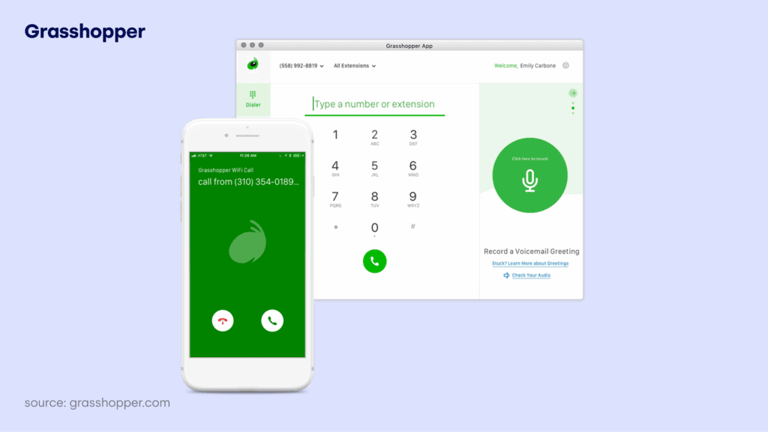
Grasshopper is a virtual phone system for healthcare industry professionals, specifically suited for solo practitioners or small clinics. It allows doctors to separate work and personal calls using existing mobile devices without needing new hardware. It provides essential professional features like custom greetings and virtual extensions.
Key-Features of Grasshopper
- Virtual Phone Numbers: Offers local, toll-free, and vanity number options.
- Call Forwarding: Routes business calls to any mobile or desktop device.
- Voicemail Transcription: Delivers transcribed voicemails directly to email.
- Custom Greetings: Creates a professional first impression for patients.
- Business Texting: Enables texting patients using the dedicated business number.
Pros of Grasshopper
- Separates work and personal lines on one device.
- Easy call forwarding and custom greetings.
- Voicemail transcription for efficient message management.
- No additional hardware required.
- Intuitive mobile and desktop apps.
Cons of Grasshopper
- Customer service can be slow or inconsistent.
- Higher cost compared to some competitors for basic features.
- Limited integrations with third-party medical applications.
- Occasional call drops or connection issues.
- Missing advanced analytics features.
Pricing of Grasshopper
- True Solo: $14/month | paid annually
- Solo Plus: $25/month | paid annually
- Small Business: $55/month | paid annually
G2 Rating of Grasshopper
- 3.9/5
Recommended Reads
6. CallHippo
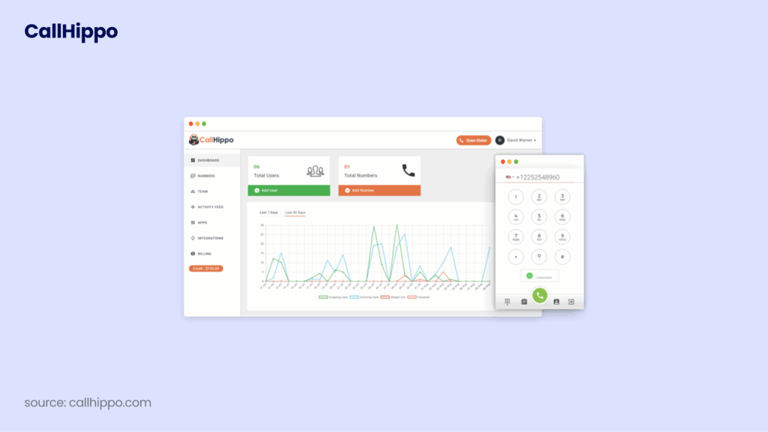
CallHippo is a flexible cloud phone system for healthcare that enables medical teams to set up virtual numbers and automated workflows quickly. It is designed to improve productivity with features like power dialers (useful for appointment reminders) and detailed call analytics.
Key-Features of CallHippoo
- AI-Powered System: Includes tools for intelligent call management.
- Omnichannel Inbox: Manages calls, SMS, and WhatsApp from one platform.
- Global Connect: Access to virtual phone numbers in over 50 countries.
- Advanced Analytics: Real-time insights into call metrics and staff performance.
- Smart Integrations: Connects seamlessly with tools like Salesforce and Zoho.
Pros of CallHippoo
- User-friendly interface with quick setup and deployment.
- Comprehensive feature set including AI tools.
- Seamless integrations with major CRMs.
- Omnichannel support for calls, SMS, and social apps.
- Competitive international calling rates.
Cons of CallHippoo
- Lacks some advanced contact center features compared to enterprise tools.
- Call quality may vary on certain routes.
- Basic reporting may not meet complex clinic needs.
- Some advanced features require higher-tier plans.
- Occasional support responsiveness issues reported.
Pricing of CallHippoo
- Starter: $19 Per User/Month | paid annually
- Professional: $29 Per User/Month | paid annually
- Ultimate: $45 Per User/Month | paid annually
G2 Rating of CallHippoo
- 4.5/5
Recommended Reads
7. KrispCall
KrispCall is a modern phone system for healthcare that offers a unified callbox for managing patient calls, SMS, and voicemails. It provides features like IVR and intelligent call routing, which are essential for directing patient inquiries to the correct department efficiently.
Key-Features of KrispCall
- Unified Callbox: Centralizes calls, voicemails, and SMS for streamlined communication.
- AI-Powered Call Management: Includes voice transcription and automated follow-ups.
- Global Virtual Numbers: Provides numbers in over 100 countries.
- CRM Integrations: Seamlessly connects with HubSpot, Salesforce, and Pipedrive.
- Advanced Call Management: Offers multi-level IVR and call queueing.
Pros of KrispCall
- Unified Callbox improves team efficiency.
- Advanced call management with IVR and routing.
- Seamless CRM integrations.
- Cross-platform access on iOS, Android, and desktop.
- Global virtual numbers available in 100+ countries.
Cons of KrispCall
- Advanced AI features not available in the Starter plan.
- No built-in video conferencing.
- Some integrations are still in beta.
- Not ideal for very large contact centers (500+ seats).
- Limited availability of some new features.
Pricing of KrispCall
- Essential: $12 Per User/Month | paid annually
- Standard: $32 Per User/Month | paid annually
G2 Rating of KrispCall
- 4.5/5
Recommended Reads
8. Dialaxy
Dialaxy is a cloud phone system for healthcare startups and small teams that need a straightforward solution. It focuses on facilitating global communication with features like AI-powered call routing and IVR, helping clinics manage patient flow effectively.
Key-Features of Dialaxy
- Interactive Voice Response (IVR): Automated system for handling patient interactions.
- Desktop Agent: Seamless management of communications from the desktop.
- Enterprise-Grade Security: Bank-level encryption, SOC 2 & GDPR compliant.
- Real-Time Analytics: Monitors call performance and workflows.
- Customizable Voicemail: enhances caller experience with custom greetings.
Pros of Dialaxy
- Enterprise-grade security ensures data protection.
- Rapid setup with no hardware required.
- Real-time analytics for monitoring performance.
- Integrates with 100+ tools.
- Global coverage with numbers in 100+ countries.
Cons of Dialaxy
- Potential learning curve for users unfamiliar with telephony.
- Dependence on reliable internet connectivity.
- Limited public information on exact pricing tiers.
- May require effort to integrate with existing tools.
- Some advanced features may be unnecessary for small teams.
Pricing:
- Basic: $10 Per User/Month | paid annually
- Plus: $20 Per User/Month | paid annually
- Pro: $30 Per User/Month | paid annually
G2 Rating of Dialaxy
- 4.7/5
9. Aircall
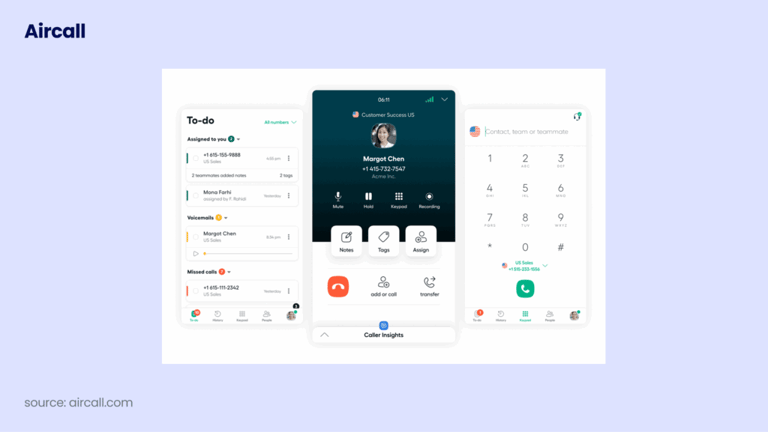
Aircall is a flexible business phone system for healthcare support teams. It allows for quick setup of toll-free numbers and integrates with over 100 business tools. Its features like Smartflows IVR and call recording are excellent for managing patient queries and ensuring quality assurance.
Key-Features of Aircall
- Smartflows IVR: Advanced call routing to direct patients to the right staff.
- Call Queuing: Manages high call volumes efficiently with queue callbacks.
- Shared Inboxes: Streamlines team collaboration on patient inquiries.
- Real-Time Analytics: Provides insights into team performance.
- Call Recording: Tools for coaching and quality assurance.
Pros of Aircall
- Easy to use and set up.
- Seamless integration with 250+ apps.
- Advanced call routing and queuing.
- Reliable call recording capabilities.
- Helpful analytics and reporting.
Cons of Aircall
- Occasional connection issues reported.
- Some call quality problems.
- Minimum 3-user requirement.
- Missing certain advanced features.
- Dialer or number assignment issues.
Pricing of Aircall
- Essentials: $30/license (min 3 licenses)
- Professional: $50/license (min 3 licenses)
G2 Rating of Aircall
- 4.4/5
10. MightyCall
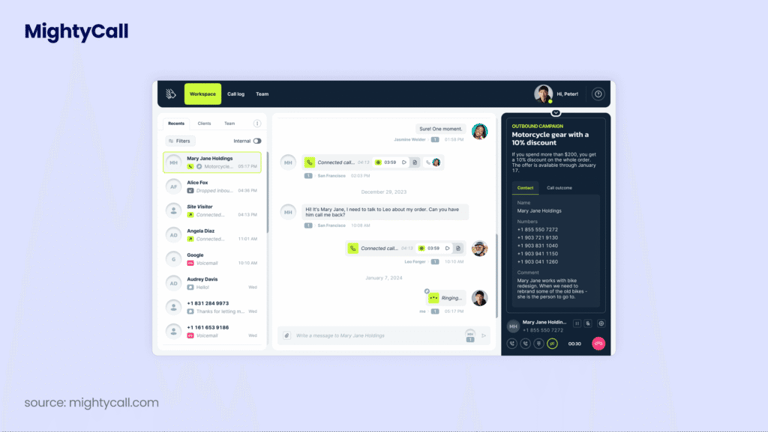
MightyCall is a user-friendly phone system for healthcare designed for small to mid-sized practices. It focuses on affordability and ease of use, providing features like auto-attendant, call forwarding, and voicemail-to-text to ensure patient calls are never missed.
Key-Features of Mightycall
- Advanced Call Routing: Distributes calls to the right person or department.
- Live Call Monitoring: Supervisors can listen or join calls for coaching.
- Voicemail to Text: Automatically transcribes patient voicemails.
- CRM Integrations: Connects with platforms like Salesforce and Zoho.
- Auto Dialers: Includes dialers to optimize outbound calling campaigns.
Pros:
- User-friendly interface and easy setup.
- Comprehensive call management and routing features.
- High-quality customer support and live onboarding.
- Flexible plans for different business sizes.
- Integrations with leading CRM platforms.
Cons of Mightycall
- Occasional call quality issues.
- Some advanced features only in higher tiers.
- Limited international calling options.
- Reporting is less advanced than competitors.
- Mobile app is less feature-rich than desktop.
Pricing of Mightycall
- Core: $20 Per User/Month | paid annually
- Pro: $38 Per User/Month | paid annually
G2 Rating of Mightycall
- 4.4/5
Recommended Reads
11. Genesys
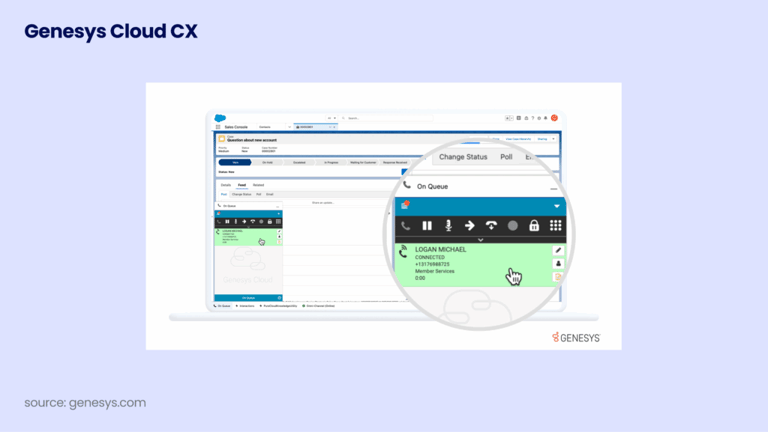
Genesys Cloud CX is a robust cloud phone system for healthcare organizations that need to scale. It is an AI-powered platform offering omnichannel communication across voice, email, and chat. It is ideal for larger hospitals needing predictive routing and deep CRM integration.
Key-Features of Genesys
- Omnichannel Communication: Manages interactions across voice, email, and chat.
- AI-Powered Automation: Uses AI for predictive routing and virtual agents.
- Workforce Engagement: Tools for scheduling and staff performance analysis.
- Customer Journey Management: Analyzes patient interactions across touchpoints.
- Cloud-Native Architecture: Ensures scalability and security.
Pros of Genesys
- Comprehensive omnichannel support.
- Native AI capabilities for predictive insights.
- Scalable architecture ensuring high availability.
- Integrated workforce engagement tools.
- Robust real-time reporting and analytics.
Cons of Genesys
- Complexity in initial setup and configuration.
- Potentially high costs for small practices.
- Steep learning curve for advanced AI features.
- Dependence on strong internet connectivity.
- Advanced tools may require additional training.
Pricing of Genesys
- Genesys Cloud CX 1: $75 Per User/Month | paid annually
- Genesys Cloud CX 2: $115 Per User/Month | paid annually
- Genesys Cloud CX 3: $155 Per User/Month | paid annually
G2 Rating of Genesys
- 4.4/5
Recommended Reads
12. Five9
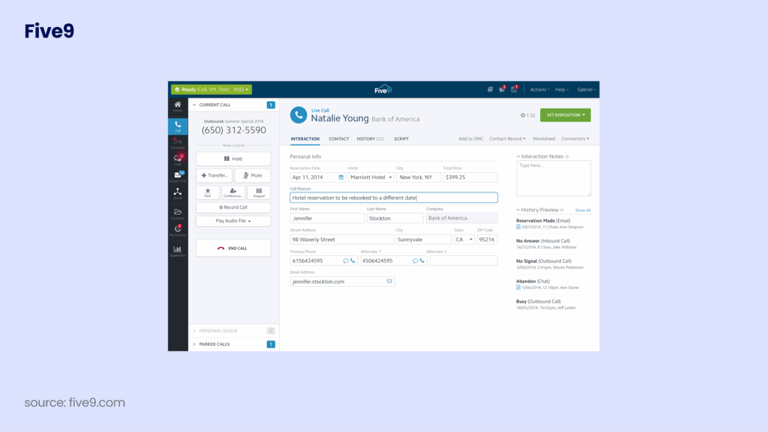
Five9 is a leading AI-driven healthcare phone system provider for blended contact centers. It enables medical staff to manage voice, email, and chat from a browser-based platform. Its intelligent routing and CRM integrations help streamline patient services and improve operational efficiency.
Key-Features of Five9
- Intelligent Call Routing: Routes calls based on agent skills and patient needs.
- AI-Powered Automation: Includes virtual agents and predictive dialing.
- Omnichannel Engagement: Seamless interactions across voice, email, and SMS.
- Real-Time Analytics: Detailed reporting for data-driven decisions.
- CRM Integrations: Pre-built connections with Salesforce and Oracle.
Pros of Five9
- Extensive AI and automation features improve efficiency.
- Strong CRM integration ecosystem.
- Scalable cloud architecture for growth.
- Omnichannel engagement for consistent patient experience.
- Real-time analytics and reporting tools.
Cons of Five9
- May require integration work for customized analytics.
- Initial setup can be time-consuming.
- Pricing may be higher compared to competitors.
- Complexity could be high for smaller teams.
- Depends on stable internet connectivity.
Pricing of Five9
- Digital: $119 Monthly/Seat
- Core: $159 Monthly/Seat
G2 Rating of Five9
- 4.1/5
13. Talkdesk
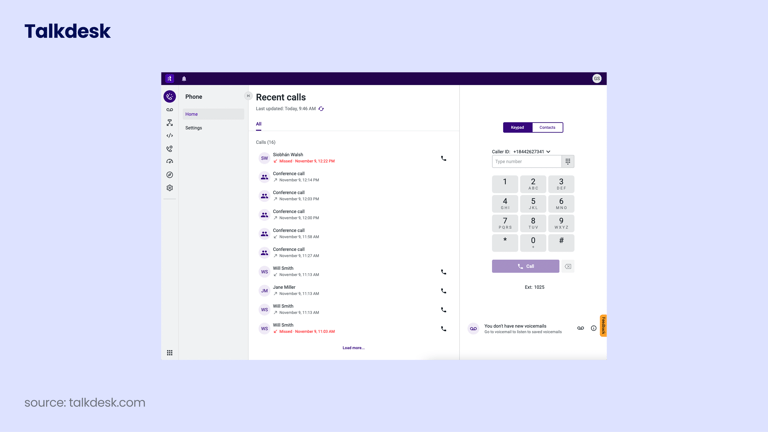
Talkdesk is an AI-powered business phone system for healthcare built on a cloud platform. It unifies contact center operations with general business communication. It is designed to help hybrid medical teams collaborate and uses AI to automate tasks like call routing and sentiment analysis.
Key-Features of Talkdesk
- AI-Powered Automation: Automates routing and sentiment analysis.
- Omnichannel Engagement: Handles voice, SMS, and email in one interface.
- Customer Self-Service: Uses AI virtual agents for common patient issues.
- Workforce Management: Performance analytics and predictive scheduling.
- Knowledge Management: AI tools to provide accurate answers during interactions.
Pros of Talkdesk
- User-friendly interface shortens learning curve.
- Advanced analytics provide deep insights.
- Seamless integration with Salesforce and Zendesk.
- Reliable performance with high availability.
- Supports omnichannel interactions.
Cons of Talkdesk
- Pricing may be higher, concerning for small businesses.
- Occasional technical issues and outages reported.
- Limited customization options compared to some competitors.
- Complexity in advanced features may require training.
- Dashboards and reporting need more flexibility.
Pricing of Talkdesk
- Digital Essentials: $85 Per User/Month
- Voice Essentials: $105 Per User/Month
- Elite: $165 Per User/Month
G2 Rating of Talkdesk
- 4.4/5
Recommended Reads
14. Quo
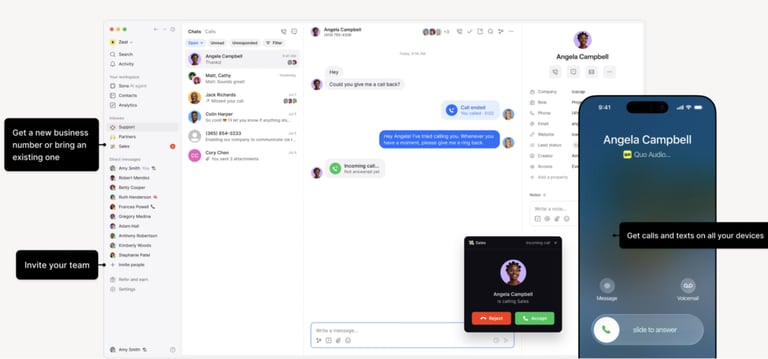
Quo (formerly OpenPhone) is an AI-powered cloud phone system for healthcare businesses that need a collaborative approach. It offers shared numbers and a unified inbox, allowing medical teams to manage calls and texts together. Its AI receptionist, Sona, helps streamline patient interactions.
Key-Features of Quo
- Sona AI Agent: 24/7 virtual receptionist for handling calls.
- Shared Numbers: Enables team collaboration on a single line.
- AI Call Tags: Automatically categorizes calls based on content.
- Visual Call Flow Builder: Drag-and-drop interface for routing.
- CRM Integrations: Syncs with HubSpot and Salesforce.
Pros of Quo
- Intuitive and user-friendly interface.
- Powerful team collaboration with shared inboxes.
- Easy CRM integrations.
- Affordable pricing for startups and small clinics.
- Excellent customer support.
Cons of Quo
- Occasional call quality issues reported.
- Some features only in higher-tier plans.
- Connection issues in weak networks.
- Support responsiveness can be inconsistent.
- Integration limitations in some CRMs.
Pricing of Quo
- Starter: $15 Per User/Month | paid annually
- Business: $23 Per User/Month | paid annually
- Scale: $35 Per User/Month | paid annually
G2 Rating of Quo
- 4.7/5
15. Squaretalk
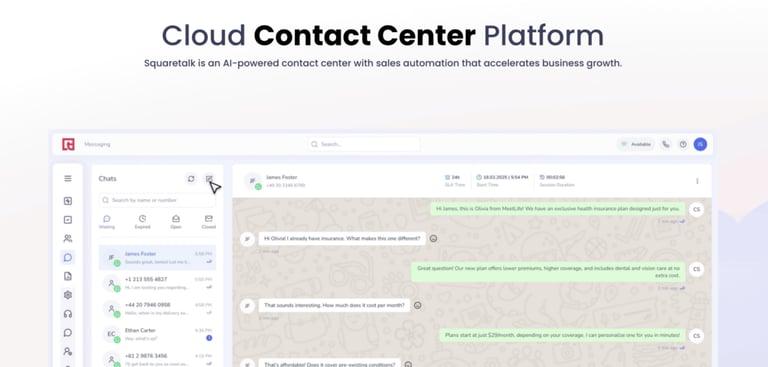
Squaretalk is a secure phone system for healthcare support centers. It is ISO 27001 certified, ensuring strong data protection which is crucial for medical data. It offers omnichannel communication and predictive dialing to enhance efficiency in patient outreach and support.
Key-Features of Squaretalk
- Security & Compliance: ISO 27001 certified for data protection.
- Advanced Call Management: Routing and recording for inbound/outbound calls.
- Multi-Channel Messaging: Supports SMS, WhatsApp, and more.
- CRM Integration: Works with Salesforce and Zoho.
- Real-Time Analytics: Monitors KPIs and agent performance.
Pros of Squaretalk
- Strong security certification (ISO 27001).
- Comprehensive call management features.
- Seamless integration with leading CRMs.
- Multi-channel messaging support.
- Real-time analytics tools.
Cons of Squaretalk
- Learning curve for new users.
- Advanced features may require extra training.
- Integrating some third-party apps needs technical skill.
- Pricing info not readily available online.
- Extensive functionalities may be overwhelming.
Pricing of Squaretalk
- Core: $15 annual contract
- Connect: $25 annual contract
G2 Rating of Squaretalk
- 4.8/5
16. LiveAgent
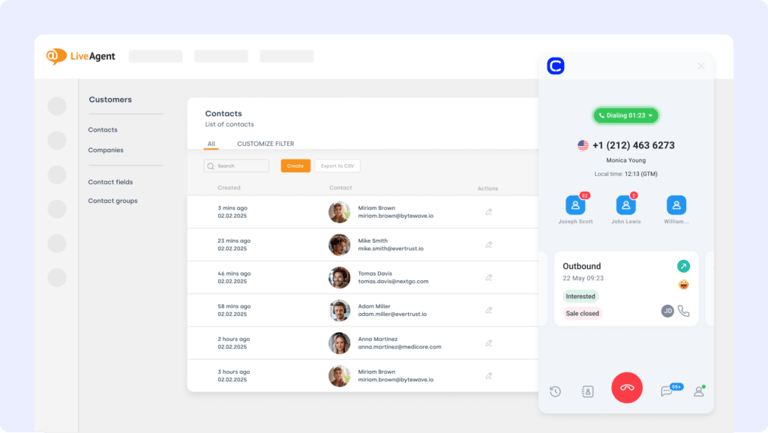
LiveAgent is a comprehensive help desk and cloud phone system for healthcare that consolidates communication. It centralizes calls, emails, and chats into a single ticketing dashboard. This allows medical staff to manage patient inquiries efficiently with features like IVR and unlimited call recording.
Key-Features of Live Agent
- Universal Inbox: Centralizes calls, emails, and chats into one system.
- Built-in Call Center: Includes IVR, routing, and recording.
- Patient Portal: Provides self-service options with knowledge bases.
- AI Chatbot: Automates responses to common questions.
- Live Chat: Real-time communication with typing previews.
Pros of Live Agent
- Omnichannel support consolidates all communication.
- Built-in AI tools like chatbots improve response time.
- Robust reporting and analytics.
- Customer portal reduces ticket volumes.
- Advanced automation streamlines tasks.
Cons of Live Agent
- Feature-rich interface has a learning curve.
- Some advanced features only in higher tiers.
- Customization can be complex.
- Integrations may require extra setup.
- Higher-tier plans may be costly for small clinics.
Pricing of Live Agent
- Small business: $15 Per agent/month billed annually
- Medium business: $29 Per agent/month billed annually
- Large business: $49 Per agent/month billed annually
G2 Rating of Live Agent
- 4.5/5
Recommended Reads
17. Ringover
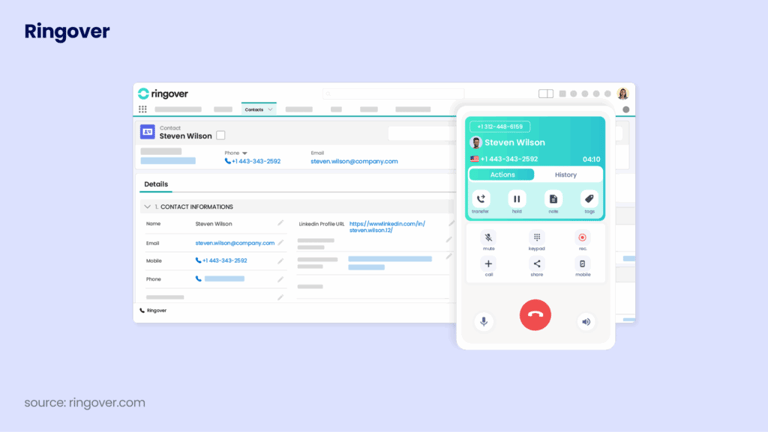
Ringover is an all-in-one healthcare phone system that provides VoIP calling, video, and SMS. It is designed to be user-friendly and offers advanced features like AI call transcription and integration with over 80 business tools, making it a versatile choice for medical practices.
Key-Features of Ringover
- AI Assistant: Provides meeting summaries and call analysis.
- Omnichannel Messaging: Centralizes conversations across multiple channels.
- Call Monitoring: Tools for whisper and coaching.
- Broad Integrations: Connects with CRM and helpdesk apps.
- AI Transcription: Offers actionable conversation insights.
Pros of Ringover
- Unified communication channels streamline workflows.
- AI-powered features provide valuable insights.
- Integrates with 100+ business applications.
- Scalable for businesses of all sizes.
- Real-time analytics and customizable reports.
Cons of Ringover
- Advanced features may require higher-tier plans.
- Setup and integration can be complex.
- Dependence on internet connectivity.
- May be costly for smaller teams.
- Some features locked in top pricing tiers.
Pricing of Ringover
- Smart: $21 Per User/Month | paid annually
- Business: $44 Per User/Month | paid annually
G2 Rating of Ringover
- 4.6/5
Recommended Reads
18. JustCall
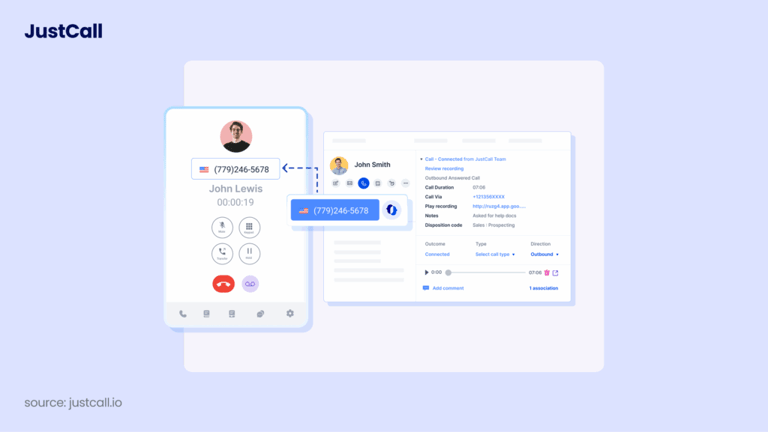
JustCall is an AI-powered cloud phone system for healthcare focused on productivity. It offers virtual numbers in 70+ countries and integrates with over 100 CRMs. Features like AI coaching and SMS automation help medical staff manage patient communications effectively.
Key-Features of Justcall
- IVR System: Efficiently routes incoming patient calls.
- SMS and MMS: Supports automated text messaging for reminders.
- Call Recording & Transcription: Quality assurance tools.
- CRM Integration: Connects with Salesforce and HubSpot.
- Cloud-Based System: accessible from any device.
Pros of Justcall
- Omnichannel platform integrating voice and SMS.
- AI-powered features like real-time agent assist.
- Seamless CRM and helpdesk integrations.
- Intuitive workflow for remote/hybrid teams.
- Advanced dialing modes available.
Cons of Justcall
- No built-in video conferencing.
- Can become costly at scale.
- Feature availability varies by pricing tier.
- Learning curve for advanced routing.
- Additional charges for high-volume calling.
Pricing of Justcall
- Team: $29 Per User/Month, billed annually
- Pro: $49 Per User/Month, billed annually
G2 Rating of Justcall
- 4.3/5
Recommended Reads
19. Readymode
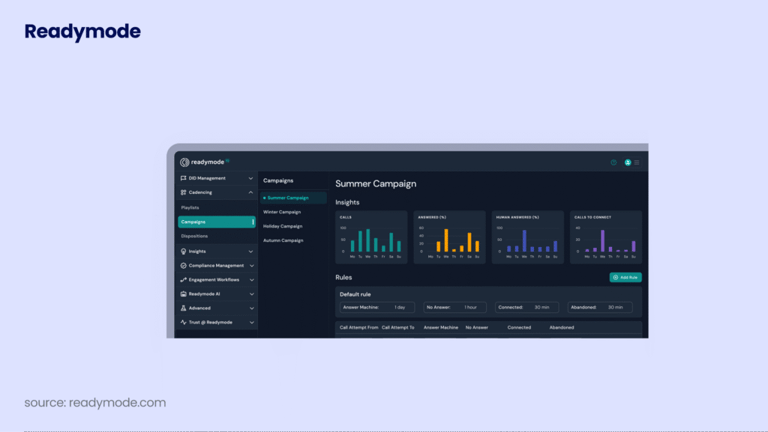
Readymode is a specialized phone system for healthcare outreach teams. It features a powerful predictive dialer and built-in CRM, making it ideal for larger clinics or networks that need to manage high volumes of outbound calls for appointments or follow-ups.
Key-Features of Readymode
- Predictive Dialer: Adjusts speed to maximize contact rates.
- Built-in CRM: Manages patient leads natively.
- Compliance Tools: Features to manage DNC lists and recording.
- Real-time Reporting: Monitors agent performance instantly.
- Managed Remediation: Improves caller ID reputation.
Pros of Readymode
- Integrated CRM eliminates extra software needs.
- Advanced dialing modes increase efficiency.
- Real-time monitoring and analytics.
- Built-in compliance features.
- Tools for caller ID reputation.
Cons of Readymode
- Initial setup may require a learning curve.
- Advanced features may be excessive for small clinics.
- Dependence on strong internet connectivity.
- Pricing information not publicly transparent.
- May require ongoing optimization.
Pricing of Readymode
- Readymode Starter: $199 per license/month
- Readymode iQ: $249 per license/month
G2 Rating of Readymode
- 4.6/5
20. TalkRoute
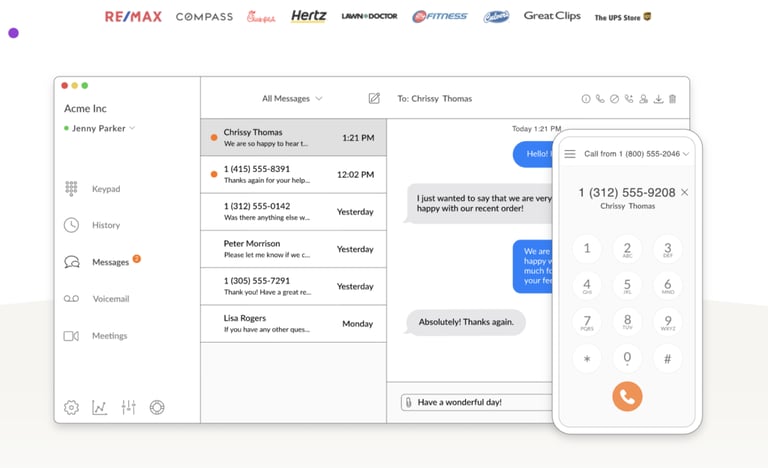
TalkRoute is a virtual business phone system for healthcare ideal for small practices. It turns existing devices into a business phone system without new hardware. It offers features like custom call menus, text messaging, and video meetings to help manage patient communications professionally.
Key-Features of TalkRoute
- Custom Call Menus: Routines calls with submenus.
- Text Messaging: Capabilities for business communication.
- Video Meetings: Includes screen sharing and conferencing.
- Call Forwarding: Routes calls to multiple devices.
- Dedicated Numbers: Local or toll-free options.
Pros of TalkRoute
- No hardware required; works across devices.
- Easy setup and intuitive interface.
- Transparent pricing with no hidden fees.
- Responsive customer support.
- Flexible for remote medical teams.
Cons of TalkRoute
- Limited international calling options.
- Occasional call quality issues in weak internet areas.
- Mobile app lacks some advanced features.
- Limited integrations (mainly Zapier).
- Advanced features only in higher tiers.
Pricing of TalkRoute
- Basic: $19/Month (1 user)
- Plus: $39/Month (3 users)
- Pro: $59/Month (10 users)
G2 Rating of TalkRoute
- 4.7/5
Recommended Reads
21. Voiso
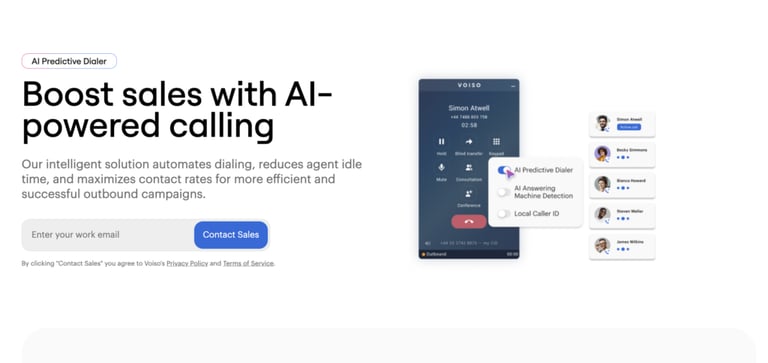
Voiso is an AI-driven cloud phone system for healthcare contact centers. It emphasizes rapid setup and enhancing patient experience (CX). With predictive AI dialers and speech analytics, it helps medical centers analyze interactions for sentiment and compliance.
Key-Features of Voiso
- AI Predictive Dialer: Boosts efficiency by connecting agents faster.
- AI Speech Analytics: Transcribes and analyzes calls for sentiment.
- Flow Builder: No-code tool for creating smart call flows.
- Omnichannel Communication: Unifies voice, SMS, and chat.
- Real-Time Dashboards: Monitors KPIs and agent performance.
Pros of Voiso
- Comprehensive omnichannel support.
- Real-time AI Speech Analytics.
- No-code Flow Builder for easy design.
- Seamless CRM integrations.
- AI-powered Predictive Dialer.
Cons of Voiso
- Advanced AI features may have a learning curve.
- Pricing may be higher than basic solutions.
- Full functionality depends on reliable internet.
- Some features require configuration.
- Not all clinics need advanced analytics.
Pricing of Voiso
- Core: $21 Per User/Month, billed annually
- Pro: $45 Per User/Month, billed annually
G2 Rating of Voiso
- 4.8/5
Recommended Articles
Benefits of Using Cloud Phone System for Healthcare
Switching to a cloud phone system for healthcare offers numerous advantages over traditional landlines:
- Enhanced Accessibility: Staff can access the system from anywhere, facilitating telehealth and remote work.
- Cost Efficiency: Reduces the need for expensive hardware and maintenance.
- Scalability: Easily add lines or features as your medical practice grows.
- Improved Patient Experience: Features like IVR and smart routing ensure patients reach the right department quickly.
- Security: Reputable providers offer robust encryption and security features essential for protecting patient data.
Key Features to Look for in a Cloud Phone System for Healthcare
When selecting the best phone system for healthcare, prioritize these features:
- HIPAA Compliance Support: Ensure the provider offers features that help maintain compliance with patient data regulations.
- Reliability: Look for high uptime guarantees (e.g., 99.99%) to ensure you are always reachable.
- Integrations: Ability to sync with Electronic Health Records (EHR) and CRM systems.
- Advanced Routing: IVR and skill-based routing to manage high call volumes effectively.
- Mobile App: Essential for doctors and staff who need to stay connected on the go.
How to Choose the Right Phone System for Healthcare
- 01Assess Your Needs: Determine the size of your practice and specific requirements (e.g., telehealth, multi-location).
- 02Verify Security: Check for security certifications and compliance support.
- 03Evaluate Usability: Choose a system with an intuitive interface to minimize training time.
- 04Test Support: Ensure the provider offers responsive customer support, preferably 24/7.
- 05Compare Costs: Look at the total cost of ownership, including hardware, implementation, and monthly fees.
Why Choose CloudTalk’s Cloud Phone System for Your Healthcare Business
CloudTalk stands out as a top phone system for healthcare industry professionals due to its balance of security, ease of use, and advanced features. It offers:
- Secure Infrastructure: Designed with enterprise-grade security to help protect sensitive communications.
- Intelligent Routing: Ensures patients are directed to the right staff member instantly, reducing wait times.
- Seamless Integrations: Connects effortlessly with your existing CRM tools to centralize patient interaction history.
- Scalability: Grows with your practice, from a single clinic to a multi-location network.
By choosing CloudTalk, you ensure a reliable, efficient, and patient-centered communication experience.
One appointment can save your Cloud Phone System
Frequently asked questions
VoIP enables instant voice, text, and conference calls between staff, specialists, and patients, speeding up collaboration, referrals, and decision-making while reducing treatment delays.
Healthcare VoIP security uses end-to-end encryption, role-based access, secure authentication, and HIPAA-compliant providers to protect sensitive patient data and communications.
Yes. VoIP can integrate with EHRs and practice management systems, enabling real-time access to patient records during calls and automatic updates to reduce errors.
VoIP supports secure voice consultations, expanding access to care, enabling remote assistance, improving follow-ups, and streamlining prescriptions and patient communication.
VoIP enables real-time alerts, automated calls, and direct communication between patients and care teams, helping providers track patient status and respond quickly to issues.