Summary
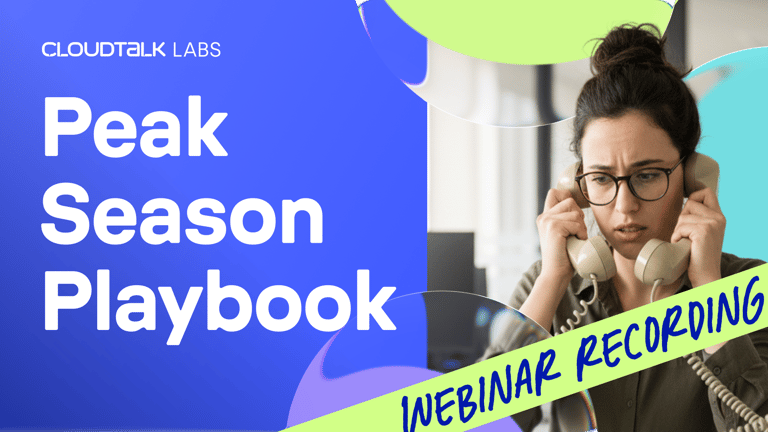
Seasonal demand creates massive pressure on support and sales teams across industries — from e-commerce and tourism to education and home services. This webinar explored how AI voice agents help businesses manage peak-season demand by automating repetitive calls, qualifying leads, and routing complex conversations to human agents — without expanding headcount.
Every business has its version of peak season. The moment when call volume spikes and team capacity doesn't. Up to 25% of inbound calls go unanswered during these periods, and 85% of those callers won't call back.
In this session, we show you how AI voice agents fill that gap: operating 24/7, handling routine inquiries, routing complex cases to humans, and integrating with CRM and booking systems so no interaction falls through the cracks. You'll see real use cases from retail, fitness, tourism, and education.
Peak Season Challenges
Seasonality affects almost every industry. The real challenge is not the spike itself — it's teams' inability to scale fast enough to handle it.
When call volume exceeds capacity
During peak periods:
- Inbound call volumes surge dramatically
- Team capacity remains relatively fixed
- Response times increase
- Up to 25% of inbound calls go unanswered
The true cost of missed calls
- 85% of consumers switch companies after one bad service experience
- 76% will contact a competitor if their first choice doesn't answer
- Contact centers report 30–45% annual agent turnover, often driven by peak-period burnout
Traditional solutions fall short
Common approaches — temporary staff, voicemail, IVR menus, chatbots — introduce new problems:
- Temporary staff require training and quality control
- Voicemails create larger backlogs
- Complex IVR trees frustrate callers
- Chatbots cannot fully replace voice conversations
Voice Agent Solutions
AI voice agents offer a scalable alternative by handling routine conversations automatically while routing complex issues to human teams.
AI receptionist: the first line of support
Typical capabilities include:
- Answering FAQs and providing business hours or location information
- Checking order status and explaining return policies
- Guiding customers through next steps
These agents operate 24/7, ensuring customers receive assistance even outside business hours.
Smart call routing and handoffs
Voice agents triage conversations and transfer calls when needed, passing contextual information such as call summaries, customer intent, and products discussed — preventing agents from restarting conversations.
Knowledge bases and API integrations
Voice agents can access structured information through:
- Knowledge bases — PDFs, documentation, FAQ files, policy documents
- API integrations — CRM platforms, order management systems, shipping providers, booking tools
Multilingual voice and customization
- 6,000+ available voice options
- 60 supported languages
- Regional accents and dynamic language switching during conversations
Industry Use Cases
E-commerce support automation
Voice agents handle order status checks, shipment tracking, returns, and modifications — querying platforms like Shopify or Magento and delivering instant updates.
Lead qualification and inbound follow-up
A typical flow:
- 01Prospect fills out a website form
- 02Voice agent calls immediately
- 03Agent asks qualifying questions
- 04Information is sent to the CRM
- 05Qualified leads are routed to sales
Tourism and hospitality
- Inbound — travel package inquiries, itinerary information, booking questions
- Outbound — lead follow-ups after form submissions, post-trip satisfaction surveys, itinerary confirmations
Fitness and membership businesses
One fitness platform deployed four specialized agents:
- 01Pre-qualification agent — confirms customer interest and preferred gym location
- 02Return-call agent — handles callbacks outside business hours
- 03AI receptionist — manages general inquiries and FAQs
- 04Customer success agent — follows up after trial sessions to collect feedback or reschedule
Key Takeaway
Seasonal demand spikes are predictable, but traditional staffing strategies cannot scale efficiently to handle them. AI voice agents provide a scalable alternative by automating repetitive conversations, qualifying leads, and routing complex inquiries to human teams.
When integrated with CRM systems, knowledge bases, and automation workflows, voice agents help businesses reduce missed calls, improve response times, and maintain consistent customer experiences — even during the busiest periods.