9 Best Call Center Software For Healthcare Providers in 2026
Best Call Center Software for Healthcare: TL;DR
As healthcare call center services specialists, we've reviewed and tested 30+ leading call center software for healthcare providers to help clinics, hospitals, and medical practices streamline patient communication, meet HIPAA compliance, and deliver better care outcomes in 2026.
Here are the 9 best call center software solutions for healthcare providers that made our list:
- 01CloudTalk — Best overall call center software for healthcare providers: HIPAA-compliant, AI-powered, with smart routing, 100% call recording, and 160+ global numbers.
- 02JustCall — Best for healthcare teams needing a fast-to-deploy VoIP solution with CRM integrations and mobile-first calling.
- 03Five9 — Best for large healthcare contact centers requiring AI-driven blended omnichannel support and enterprise-grade automation.
- 04Genesys — Best for health systems needing a fully customizable, enterprise cloud contact center with predictive routing.
- 05RingCentral — Best for large hospital networks needing a unified UCaaS suite combining voice, video, and fax in one platform.
- 06Nextiva — Best for medical practices that prioritize high reliability, uptime SLAs, and HIPAA-compliant virtual faxing.
- 07Dialpad — Best for modern healthcare providers that need real-time AI transcription and compliance-friendly conversation intelligence.
- 08Talkdesk — Best for mid-to-large health systems seeking a purpose-built healthcare CX cloud with EHR integrations.
- 098x8 — Best for healthcare organizations needing an all-in-one contact center with global reach and built-in analytics.
Read on for the full list, feature comparisons, and our expert buying advice for selecting the right call center software for healthcare providers.

Cut Patient Wait Times by 80% with CloudTalk

How We Chose the Best Call Center Software for Healthcare Providers
To create this guide, we reviewed and compared over 30 leading call center software for healthcare platforms, drawing on real feedback from 2,000+ healthcare professionals on platforms like G2, Capterra, and TrustRadius.
The top 9 providers were selected based on their performance in real clinical workflows—patient scheduling, FNOL triage, insurance processing, appointment reminders, and post-discharge follow-up. We also evaluated ease of deployment, EHR and CRM integrations, HIPAA compliance posture, and total cost of ownership.
What you'll find here: Only healthcare call center services that deliver measurable patient and operational impact—plus clear guidance on which platforms best fit solo practices, growing clinics, and large hospital networks.
Why Trust Our Software Reviews?
For nearly a decade, we've helped over 30,000 professionals choose and implement better communication tools. We've reviewed 200+ products, analyzed 5,500+ verified reviews from G2 and Capterra, and consulted firsthand insights from healthcare administrators, clinical staff, and patient experience leaders.
In the last year alone, we've published 1,000+ expert-written articles to help healthcare teams adopt technology with confidence. Learn how we maintain our content integrity and our software review methodology.
Comparison Table: Best Call Center Software for Healthcare Providers in 2026
Comparison Table: Best Call Center Software for Healthcare Providers
| Software Platform | Best For | Starting Price (monthly billing) | G2 Rating |
|---|---|---|---|
| CloudTalk | HIPAA-compliant VoIP with AI routing, call recording & 160+ global numbers | From $19/user/month | 4.4/5 |
| JustCall | Cloud VoIP with CRM integrations & mobile-first calling | From $19/user/month | 4.2/5 |
| Five9 | AI-driven blended omnichannel for enterprise healthcare | From $175/user/month | 4.0/5 |
| Genesys | Fully customizable enterprise cloud contact center | From $75/user/month | 4.3/5 |
| RingCentral | Unified UCaaS suite: voice, video & fax for hospital networks | From $20/user/month | 4.0/5 |
| Nextiva | High-reliability VoIP with HIPAA-compliant virtual faxing | From $30/user/month | 4.5/5 |
| Dialpad | AI transcription & conversation intelligence for modern providers | From $15/user/month | 4.4/5 |
| Talkdesk | Purpose-built healthcare CX cloud with EHR integrations | From $85/user/month | 4.4/5 |
| 8x8 | All-in-one contact center with global reach & built-in analytics | From $24/user/month | 4.0/5 |
What Is Call Center Software for Healthcare?
Call center software for healthcare is a cloud-based communication platform that connects patients with medical providers, administrative staff, and support teams. Unlike generic call center tools, healthcare-grade solutions are built with HIPAA compliance at their core—protecting Protected Health Information (PHI) across every patient interaction.
Modern healthcare call center services go far beyond basic phone routing. They handle appointment scheduling and reminders, prescription refill requests, insurance verification, post-discharge follow-ups, and urgent triage—all while integrating with EHR systems like Epic or Cerner and CRM tools like Salesforce and HubSpot.
According to CNBC, 88% of medical appointments still happen over the phone. Yet most healthcare organizations face a critical mismatch: call centers handle over 2,000 calls per day on average, while peak staffing typically covers only 60% of demand. The right call center software for healthcare providers bridges that gap—automating routine tasks, routing calls intelligently, and giving agents the patient context they need to deliver faster, more empathetic care.
Top 9 Call Center Software for Healthcare Providers in 2026
Below are the best-performing healthcare call center services platforms we reviewed, ranked for their real-world clinical impact. Each tool has been evaluated on HIPAA compliance, EHR/CRM integrations, AI capabilities, call quality, and ease of deployment for healthcare teams.
1. CloudTalk — Best Overall Call Center Software for Healthcare Providers















CloudTalk is the top-rated call center software and AI voice agent platform for healthcare for growing clinics, hospitals, and telehealth providers that need to handle high patient call volumes without sacrificing compliance or care quality. Built on HIPAA-, SOC 2 Type II-, and GDPR-certified infrastructure, CloudTalk secures every patient interaction from intake to discharge follow-up.
CloudTalk's intelligent IVR and skills-based routing ensure every inbound call—whether a scheduling request, billing inquiry, or emergency escalation—reaches the right department instantly. AI-powered call summaries, transcripts, and sentiment analysis eliminate manual note-taking, giving clinicians and administrators more time for actual patient care.
With 160+ international numbers, seamless integrations with EHR and CRM systems, and a no-code Call Flow Designer, CloudTalk is the most comprehensive yet approachable healthcare call center software for SMB and mid-market organizations.
Key Features of CloudTalk for Healthcare Providers
- HIPAA + SOC 2 Compliance: End-to-end encryption, EU-based data centers, and signed Business Associate Agreements (BAAs) for full PHI protection.
- Smart IVR & Skills-Based Routing: Automatically route patients to the right department, specialist, or language agent based on need, priority, or time of day.
- 100% Call Recording & Transcription: Record, store, and search every patient call with AI-generated transcripts and automatic summaries—HIPAA-securely.
- AI Conversation Intelligence: Sentiment analysis, trending topics, and talk/listen ratio tracking help supervisors coach staff and improve patient satisfaction.
- EHR & CRM Integration: Native integrations with HubSpot, Salesforce, Zendesk, and 100+ tools surface patient records and automate follow-up workflows during live calls.
- 160+ International Numbers: Support multilingual patient populations and telehealth across regions with local numbers in 160+ countries.
- No-Code Call Flow Designer: Non-technical staff can build and update custom call routing flows, after-hours rules, and appointment reminder sequences without IT support.
What Is CloudTalk for Healthcare Missing?
CloudTalk does not include native video conferencing or built-in team messaging, which means organizations that require an all-in-one UCaaS suite for internal collaboration may need to pair it with a dedicated tool like Microsoft Teams. For teams whose primary focus is patient phone communication and compliance, this is rarely a limitation in practice.
What Type of Healthcare Business Is CloudTalk Best For?
CloudTalk is ideal for small-to-mid-sized clinics, telehealth providers, and growing healthcare businesses that need HIPAA-compliant, AI-augmented call handling without the complexity or cost of an enterprise platform. It excels equally at inbound patient support and outbound appointment management.
What Is the Pricing of CloudTalk for Healthcare?
CloudTalk pricing starts at $19/user/month (billed annually) and scales with your team size and required features. HIPAA-compliant plans with BAA support are available on eligible tiers. A 14-day free trial is available with no credit card required.
CloudTalk for Healthcare Reviews and G2 Rating
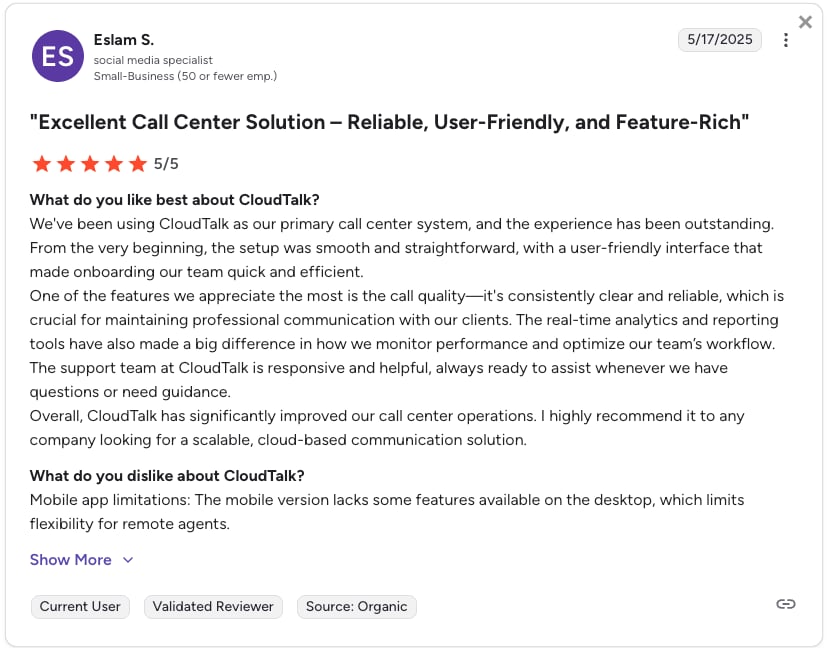
G2 reviewers give CloudTalk 4.4/5.
CloudTalk: Pros and Cons for Healthcare
| Pros | Cons |
|---|---|
| Full HIPAA compliance with signed BAA | No native video conferencing feature |
| AI call summaries eliminate manual note-taking | Advanced AI features require higher-tier plan |
| 160+ country numbers for multilingual patient populations | Reporting depth may not suit large enterprise BI teams |
| No-code setup — clinical admins can configure flows | |
| Strong EHR/CRM integration ecosystem |
"We use CloudTalk on a daily basis for both outbound calling and patient support. Its reliability and efficiency in our workflow is outstanding — it seamlessly manages our communication interactions, making it easy to monitor, record, and analyze calls."
HIPAA-Compliant Calling That Scales With Your Practice
2. JustCall — Best Healthcare Call Center Software for Fast VoIP Deployment
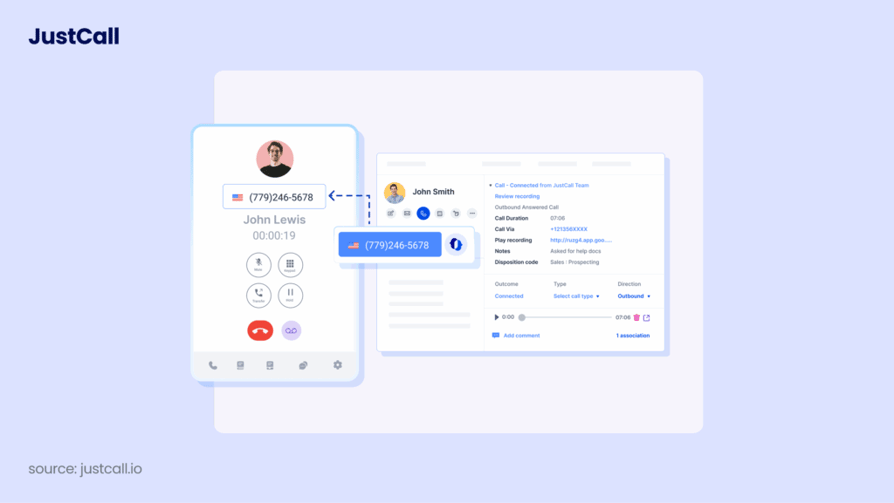
JustCall is a cloud-based VoIP phone system built for teams that need to be up and running quickly. Founded in 2016, it now serves over 6,000 businesses globally and is particularly well-suited to healthcare practices that already use CRM tools like HubSpot, Zendesk, or Freshdesk and want native calling built into those workflows.
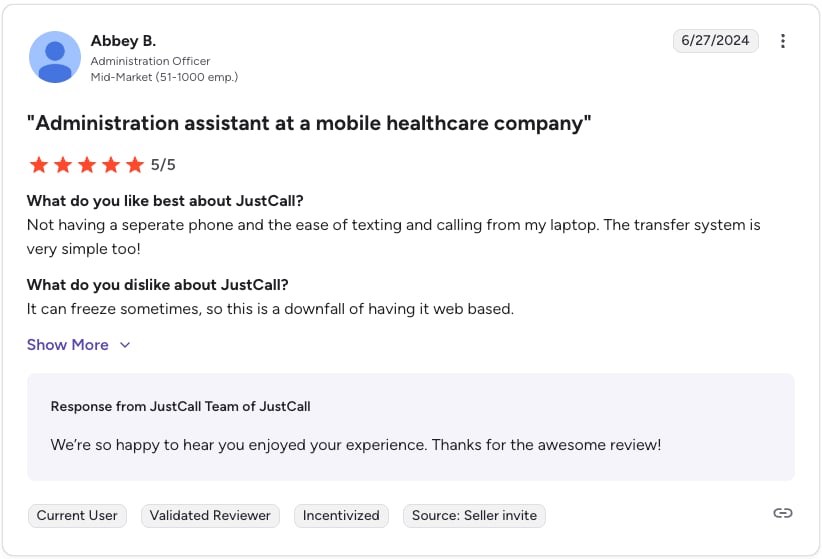
For healthcare organizations, JustCall offers automatic call distribution, call recording, and a dedicated mobile app for iOS and Android—enabling clinical staff and patient coordinators to handle calls from anywhere. Local numbers in 95+ countries make it a practical choice for multi-location healthcare groups.
Key Features of JustCall for Healthcare Providers
- Automatic Call Distribution (ACD): Route patient calls to the right agent or department based on skill set and real-time availability.
- Call Recording: Keep a full, searchable record of all inbound and outbound patient calls for compliance and quality review.
- CRM Integrations: Native integrations with HubSpot, Zendesk, Freshdesk, and Salesforce keep patient records synced without manual data entry.
- Mobile App (iOS & Android): Clinical staff can handle patient calls from any device, supporting remote and hybrid care teams.
- 95+ Country Virtual Numbers: Expand telehealth reach across regions with local numbers that build patient trust.
- Real-Time Analytics: Track agent performance, call volumes, and response times with a live reporting dashboard.
What Is JustCall for Healthcare Missing?
JustCall's AI features and conversation intelligence capabilities are less mature than dedicated healthcare platforms like CloudTalk or Talkdesk. It also lacks the depth of compliance documentation—particularly around HIPAA BAAs—that larger health systems require. Teams with complex inbound routing logic may find its IVR builder more limited.
What Type of Healthcare Business Is JustCall Best For?
JustCall is best suited for smaller healthcare practices, telehealth startups, and medical offices that want a quick-to-deploy VoIP solution tightly integrated with an existing CRM stack. It works well for outbound appointment reminders and inbound patient query handling.
What Is the Pricing of JustCall for Healthcare?
JustCall pricing starts at $19/user/month (billed annually) for the Essentials plan. AI-powered features are available on higher tiers.
JustCall for Healthcare Reviews and G2 Rating
G2 reviewers give JustCall 4.2/5.
JustCall: Pros and Cons for Healthcare
| Pros | Cons |
|---|---|
| Fast deployment — up and running within hours | Limited HIPAA documentation compared to enterprise tools |
| Strong CRM integration ecosystem | AI features less mature than competitors |
| Mobile-first design for on-the-go clinical staff | IVR builder lacks depth for complex routing |
| Competitive entry-level pricing | 95-country number coverage smaller than CloudTalk's 160+ |
Choose JustCall if: You are a small practice or telehealth startup that is already using HubSpot or Zendesk and needs a quick-to-launch VoIP layer without heavy configuration.
Choose CloudTalk if: You need full HIPAA compliance with signed BAAs, AI call intelligence, and a scalable routing system that grows with your patient volume.
Recommended Reads
3. Five9 — Best Call Center Software for Healthcare for Enterprise Omnichannel AI
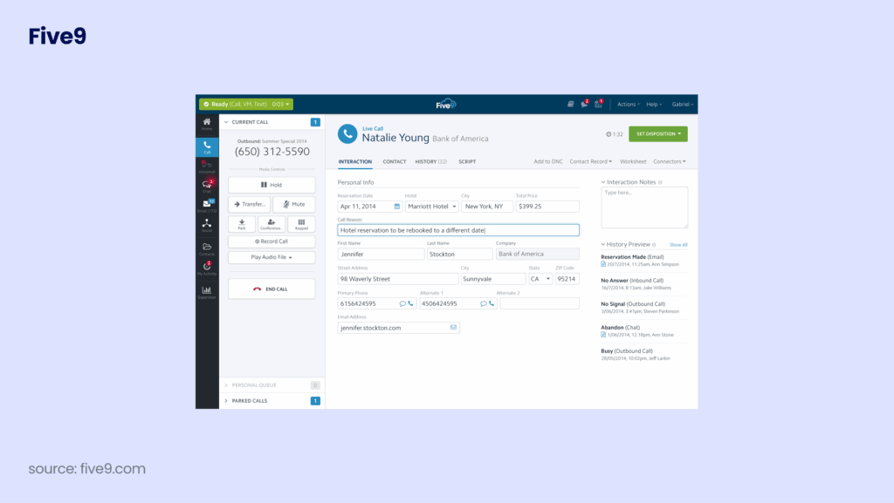
Five9 is a leading AI-driven contact center platform used extensively across the healthcare industry. It enables medical staff and patient service representatives to manage voice, email, and chat interactions from a single browser-based interface. Its intelligent routing, predictive dialing, and CRM-connected workflows make it a strong choice for large, blended healthcare contact centers.
For health systems processing high volumes of inbound patient calls alongside proactive outbound outreach—such as appointment reminders, medication adherence calls, or care gap closures—Five9's blended dialer and omnichannel capabilities provide significant operational leverage. Pre-built integrations with Salesforce Health Cloud and Oracle further streamline clinical data access during live calls.
Key Features of Five9 for Healthcare Providers
- Intelligent Call Routing: Routes patient calls based on agent skills, priority levels, and real-time availability using AI-powered ACD logic.
- AI-Powered Virtual Agents: Conversational AI handles routine patient inquiries—like appointment status or prescription refills—without agent involvement.
- Omnichannel Engagement: Manages voice, email, chat, and SMS interactions in a single agent workspace for a consistent patient experience.
- Predictive Dialing: Maximizes outbound campaign efficiency for care gap closures, wellness reminders, and post-visit follow-ups.
- Salesforce & Oracle Integration: Pre-built connectors surface patient records and care histories in real time during agent interactions.
- Real-Time Analytics Dashboard: Supervisors monitor live call queues, agent performance, and SLA adherence with actionable reporting.
What Is Five9 for Healthcare Missing?
Five9's entry-level pricing and implementation complexity make it a poor fit for small practices. Setup typically requires IT involvement, and the platform's full value is only realized with significant configuration. Smaller healthcare organizations will find CloudTalk or JustCall faster to deploy and easier to manage day-to-day.
What Type of Healthcare Business Is Five9 Best For?
Five9 is best suited for large hospital systems, health plans, and enterprise-scale patient access centers that handle thousands of daily interactions across multiple channels and need deep AI automation and CRM integration.
What Is the Pricing of Five9 for Healthcare?
Five9 pricing starts at approximately $175/user/month for the Core plan. Enterprise plans with full AI and analytics suites are custom-quoted.
Five9 for Healthcare Reviews and G2 Rating
G2 reviewers give Five9 4.0/5.
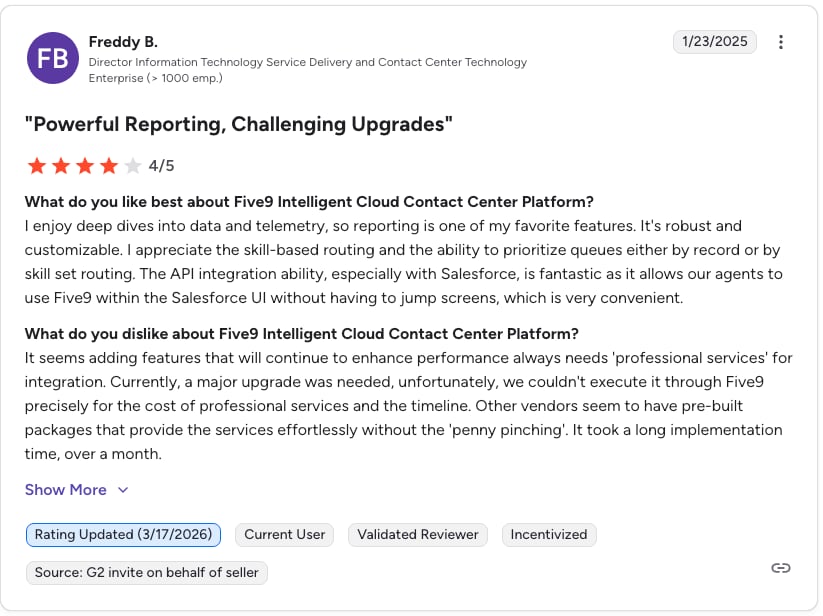
Five9: Pros and Cons for Healthcare
| Pros | Cons |
|---|---|
| Extensive AI and automation for large-scale patient operations | High starting price — not suited for small practices |
| Strong omnichannel: voice, email, chat, and SMS | Complex implementation requires IT expertise |
| Pre-built Salesforce Health Cloud integration | Steeper learning curve for clinical staff |
| Scalable cloud architecture for growth | Reporting UI can feel overwhelming for new users |
Recommended Reads
4. Genesys — Best Call Center Software for Healthcare for Enterprise Customization

Genesys Cloud CX is one of the most powerful and customizable contact center platforms available to healthcare organizations. Its predictive routing engine uses AI and machine learning to match each patient call to the best available agent based on historical interaction data, sentiment, and care history—going far beyond simple skills-based routing.
For health systems that need to orchestrate complex patient journeys across multiple departments, touchpoints, and care settings, Genesys provides the configurability and scalability to do so. Its open API architecture also enables deep integrations with proprietary EHR systems and clinical data warehouses.
Key Features of Genesys for Healthcare Providers
- AI Predictive Routing: Matches patients to the right agent at the right time using machine learning and real-time behavioral signals.
- Omnichannel Orchestration: Manages patient journeys consistently across voice, chat, email, SMS, and social channels from a unified platform.
- Workforce Engagement Management: Built-in quality management, scheduling, and coaching tools help healthcare supervisors maintain service standards.
- Open API Architecture: Deep integration capabilities with Epic, Cerner, and custom healthcare data systems for full clinical context during calls.
- Speech & Text Analytics: Automated interaction analysis surfaces compliance issues, patient dissatisfaction signals, and coaching opportunities.
What Is Genesys for Healthcare Missing?
Genesys is an enterprise-first platform with pricing and implementation complexity to match. Smaller healthcare providers and independent practices will find it significantly over-engineered and expensive for their needs. Setup and configuration typically require a certified Genesys partner and months of implementation time.
What Type of Healthcare Business Is Genesys Best For?
Genesys is best for large integrated health networks, regional hospital systems, and national health plans that need a fully customizable, enterprise-grade contact center capable of handling millions of patient interactions per month.
What Is the Pricing of Genesys for Healthcare?
Genesys pricing starts from approximately $75/user/month for the Cloud CX 1 plan. Enterprise features and custom healthcare configurations are priced on request.
Genesys for Healthcare Reviews and G2 Rating
G2 reviewers give Genesys Cloud CX 4.3/5.
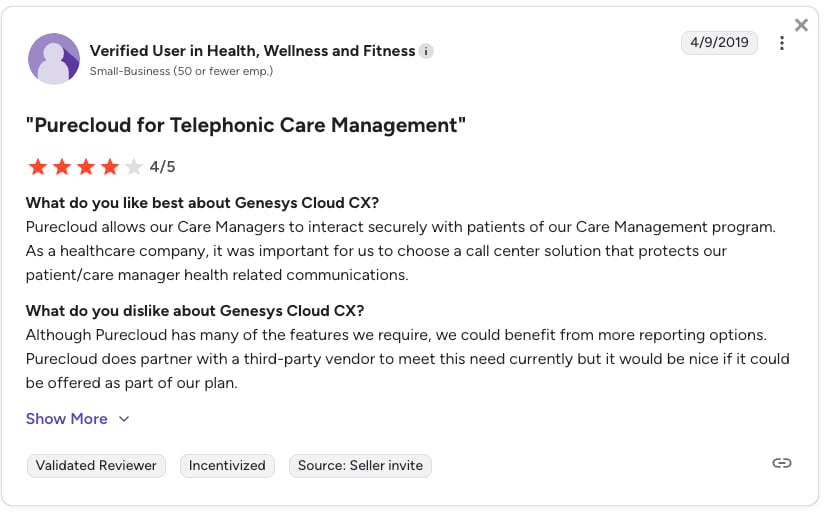
Genesys: Pros and Cons for Healthcare
| Pros | Cons |
|---|---|
| Industry-leading AI predictive routing engine | High cost and complexity — enterprise-only in practice |
| Deep EHR integration via open APIs | Months-long implementation timeline |
| Omnichannel patient journey orchestration | Requires certified partner for configuration |
| Built-in workforce management and quality monitoring | Too complex for independent practices |
Recommended Reads
5. RingCentral — Best Call Center Software for Healthcare for Unified Communications

RingCentral MVP (Message, Video, Phone) is a leading Unified Communications as a Service (UCaaS) platform used by large hospital networks and multi-site healthcare organizations that want a single platform for all internal and external communication. Beyond patient-facing call handling, RingCentral enables secure team messaging, HD video meetings, and HIPAA-compliant faxing—critical for clinical care coordination.
Its deep ecosystem of healthcare-specific integrations, including Epic and Cerner certified connections, makes RingCentral a practical backbone for organizations that want to consolidate their communication stack while maintaining care continuity.
Key Features of RingCentral for Healthcare Providers
- Unified UCaaS Platform: Voice, video, messaging, and fax in a single HIPAA-compliant environment for both patient-facing and internal clinical communication.
- HIPAA-Compliant Faxing: Send and receive sensitive patient documentation securely without physical fax hardware.
- Epic & Cerner Integrations: Certified EHR connections provide agents with in-context patient data during live calls.
- Advanced Call Routing (IVR/ACD): Multi-level menus route patients to the right department, specialist, or on-call clinician automatically.
- HD Video Meetings: Integrated video for telehealth consultations, care team huddles, and administrative meetings.
- Call Recording & Analytics: Automatic call recording with customizable retention policies and performance dashboards.
What Is RingCentral for Healthcare Missing?
RingCentral's contact center capabilities (RingCX) are sold separately from its UCaaS platform, which can drive up total cost of ownership significantly. Some users report that the platform's breadth can make configuration and ongoing administration complex, particularly for IT-light healthcare organizations. AI features are also less advanced than purpose-built contact center competitors.
What Type of Healthcare Business Is RingCentral Best For?
RingCentral is ideal for large hospital networks, multi-location health systems, and integrated delivery networks (IDNs) that want to unify their entire communications infrastructure—including internal clinical communication—on a single HIPAA-compliant platform.
What Is the Pricing of RingCentral for Healthcare?
RingCentral pricing for the Core UCaaS plan starts at approximately $20/user/month. Contact center (RingCX) plans are separately priced and require a consultation.
RingCentral for Healthcare Reviews and G2 Rating
G2 reviewers give RingCentral 4.0/5.
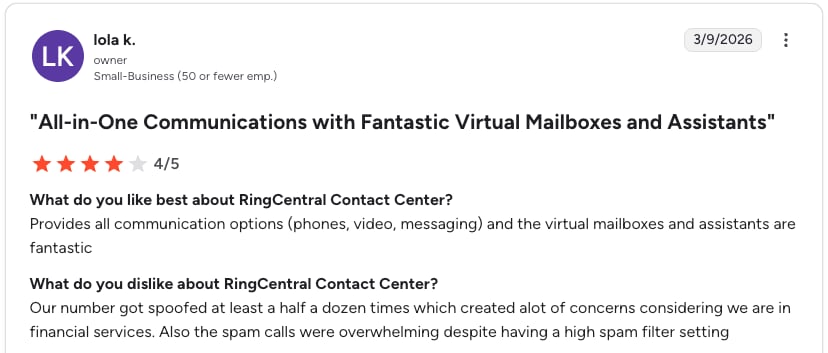
RingCentral: Pros and Cons for Healthcare
| Pros | Cons |
|---|---|
| Full UCaaS suite: voice, video, messaging, and fax | Contact center requires a separate, additional license |
| Certified Epic and Cerner EHR integrations | AI features less advanced than dedicated CCaaS tools |
| HIPAA-compliant faxing for clinical document sharing | Admin complexity for IT-light organizations |
| Global reach with local numbers in 100+ countries | Total cost of ownership can rise quickly |
Recommended Reads
6. Nextiva — Best Healthcare Call Center Software for Reliability and HIPAA-Compliant Faxing
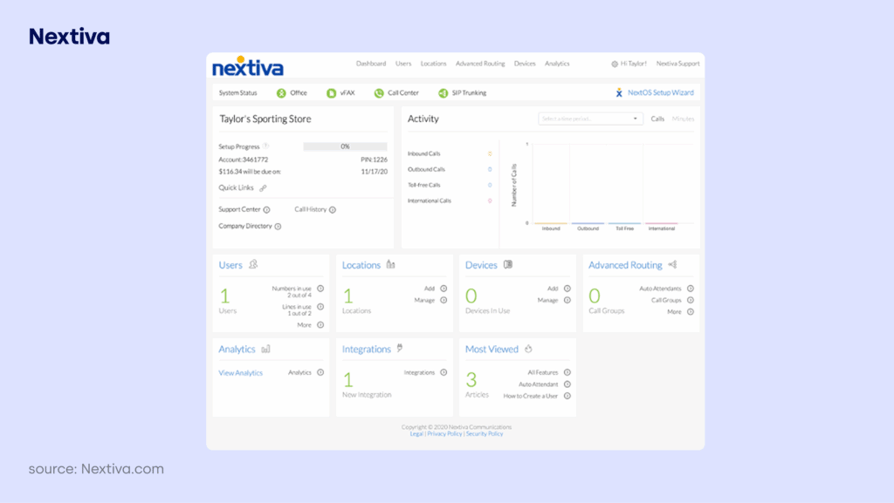
Nextiva is a well-established VoIP provider serving more than 15,000 businesses with a reputation for high uptime and exceptional customer support. For healthcare organizations, its standout feature is HIPAA-compliant virtual faxing—enabling medical teams to share patient documentation securely without physical fax hardware or the risk of data exposure through consumer-grade fax services.
Nextiva's intuitive setup—described by many users as being live within minutes—makes it a practical choice for medical practices that lack dedicated IT resources. Integration with platforms like Zendesk and Microsoft Teams extends its reach for clinical coordination and patient communications management.
Key Features of Nextiva for Healthcare Providers
- HIPAA-Compliant Virtual Fax: Send and receive protected patient documentation digitally with full compliance and an audit trail.
- High Uptime SLA: Nextiva's infrastructure delivers strong reliability, critical for healthcare environments where missed calls mean missed care.
- Multi-Level Auto Attendant: Route patients to the right department or on-call clinician with customizable voice menus.
- Voicemail Transcription: Automatically convert patient voicemails to text for faster response and documentation.
- 24/7 Customer Support: Round-the-clock support ensures healthcare teams can resolve technical issues at any hour.
- Conference Calling: Multi-party calls for care team coordination, case conferences, and remote consultations.
What Is Nextiva for Healthcare Missing?
Nextiva is missing some key integrations that modern healthcare tech stacks rely on, notably Slack for internal team communication. Its AI and conversation intelligence features are less advanced than competitors like CloudTalk or Dialpad, which may limit its usefulness for organizations looking to move beyond basic call routing toward data-driven care optimization.
What Type of Healthcare Business Is Nextiva Best For?
Nextiva is best for medical practices, dental offices, and outpatient clinics that prioritize uptime reliability, straightforward setup, and HIPAA-compliant faxing over advanced AI or analytics capabilities.
What Is the Pricing of Nextiva for Healthcare?
Nextiva pricing starts at approximately $30/user/month for the Essential plan. HIPAA-compliant features and BAA availability require higher-tier plans.
Nextiva for Healthcare Reviews and G2 Rating
G2 reviewers give Nextiva 4.5/5.
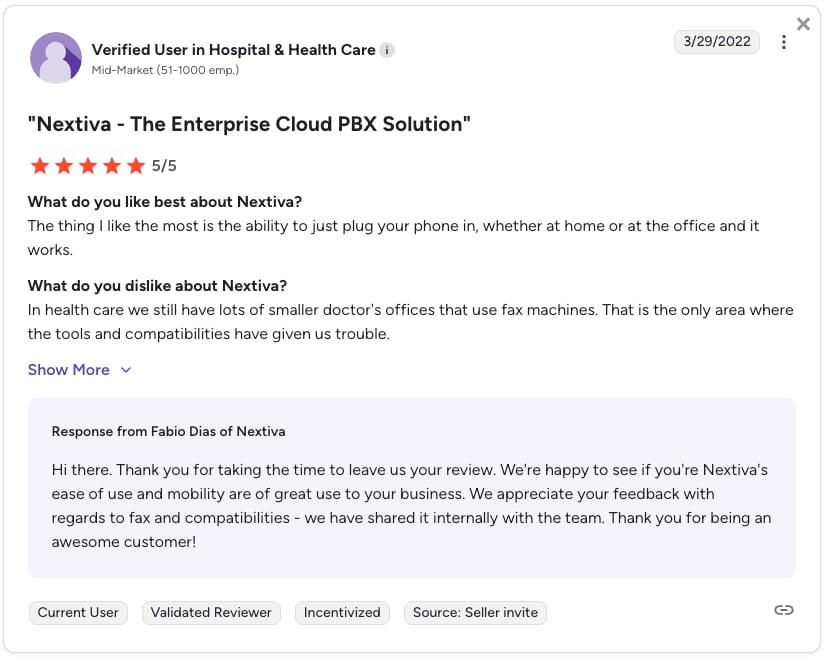
Nextiva: Pros and Cons for Healthcare
| Pros | Cons |
|---|---|
| HIPAA-compliant virtual faxing for secure document sharing | Missing Slack and some modern integrations |
| Highly intuitive — goes live within minutes | AI and analytics features less advanced |
| Strong uptime SLA and 24/7 support | Higher-tier plan needed for full HIPAA compliance |
| Voicemail transcription for faster patient response | Can be more expensive than alternatives at scale |
7. Dialpad — Best Call Center Software for Healthcare for AI Transcription and Compliance Intelligence
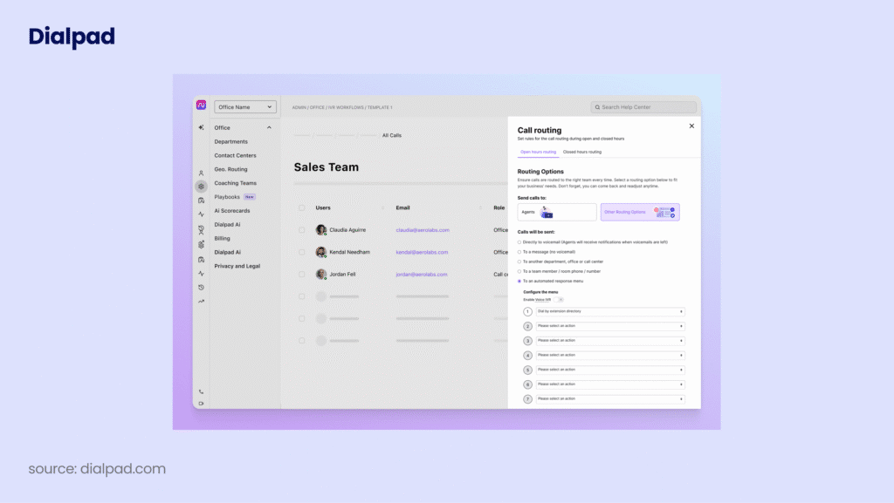
Dialpad is a modern, AI-first communication platform that has positioned itself strongly in the healthcare market through its real-time transcription and conversation intelligence capabilities. For clinical and administrative staff who spend significant time on the phone with patients, Dialpad's AI automatically transcribes every call, identifies action items, and provides live coaching prompts—reducing documentation burden and improving call quality simultaneously.
Dialpad's HIPAA compliance mode and BAA availability make it a credible choice for healthcare providers looking to modernize their communication infrastructure with AI-first tooling while maintaining the compliance posture their regulatory environment demands.
Key Features of Dialpad for Healthcare Providers
- Real-Time AI Transcription: Every patient call is transcribed live, with action items and follow-ups automatically surfaced for agent review.
- Voice Intelligence (Vi): AI coach provides real-time prompts, recommended responses, and compliance alerts during active patient calls.
- HIPAA Compliance Mode: Configurable data handling settings and BAA availability for healthcare organizations.
- Sentiment Analysis: Automatically tracks patient mood and satisfaction signals across all calls for quality assurance and coaching.
- Unified Communications: Voice, video, and messaging in one application for both patient-facing and internal clinical team communication.
- CRM & EHR Integration: Connects with Salesforce, HubSpot, and other platforms to surface patient context during live interactions.
What Is Dialpad for Healthcare Missing?
Dialpad's contact center features, while growing, are less mature than enterprise-grade platforms like Five9 or Genesys for complex inbound routing scenarios. Some users have also noted that the platform's HIPAA mode restricts certain AI features, reducing the intelligence layer that makes Dialpad distinctive for teams where compliance settings are most strict.
What Type of Healthcare Business Is Dialpad Best For?
Dialpad is best for technology-forward medical practices, telehealth companies, and healthcare SaaS vendors that want cutting-edge AI documentation and coaching tools in a HIPAA-ready package.
What Is the Pricing of Dialpad for Healthcare?
Dialpad pricing starts at $15/user/month for the Standard plan. HIPAA compliance and BAA are available on the Pro and Enterprise plans.
Dialpad for Healthcare Reviews and G2 Rating
G2 reviewers give Dialpad 4.4/5.
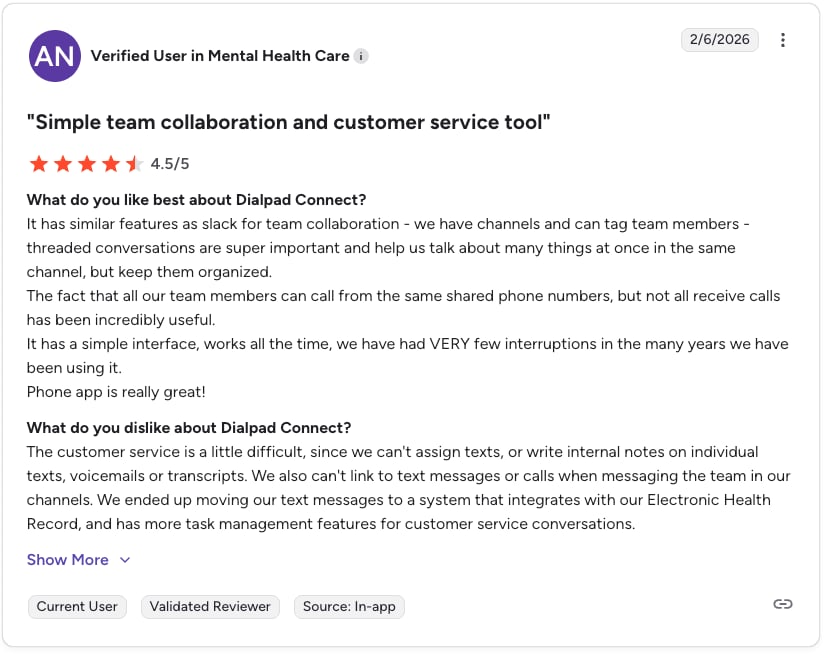
Dialpad: Pros and Cons for Healthcare
| Pros | Cons |
|---|---|
| Best-in-class real-time AI transcription | HIPAA mode restricts some AI features |
| Live coaching prompts during patient calls | Contact center features less mature than enterprise CCaaS |
| Competitive entry-level pricing | BAA availability only on higher-tier plans |
| Unified voice, video, and messaging | Routing logic less sophisticated for complex call centers |
8. Talkdesk — Best Call Center Software for Healthcare for Purpose-Built Patient Experience
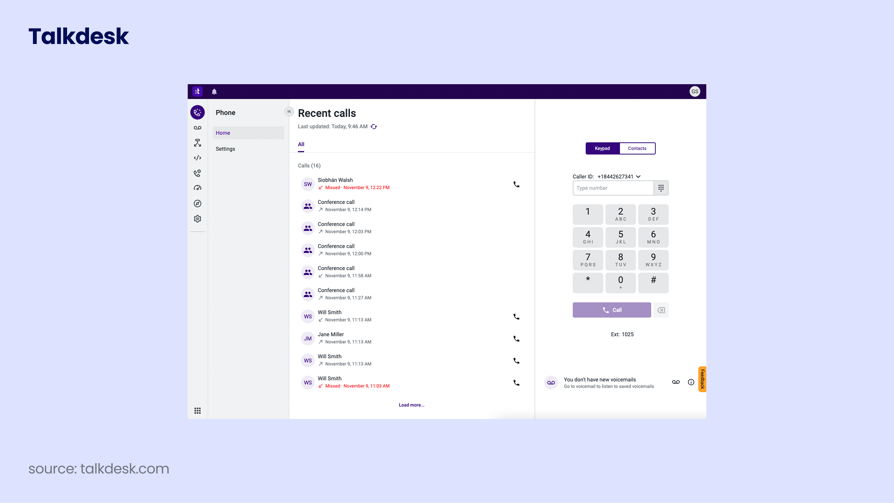
Talkdesk is one of the few major contact center platforms with a dedicated Healthcare Experience Cloud—a purpose-built product designed specifically for the operational and compliance requirements of health systems, payers, and providers. Rather than applying a generic CCaaS platform to healthcare use cases, Talkdesk has invested in native EHR integrations, clinical workflow automation, and patient self-service tools built from the ground up for clinical environments.
For mid-to-large health systems looking to modernize their patient access center without an extensive custom integration project, Talkdesk's pre-built healthcare connectors—including certifications with Epic and other major EHR vendors—dramatically reduce implementation time and complexity.
Key Features of Talkdesk for Healthcare Providers
- Healthcare Experience Cloud: A purpose-built contact center product with native healthcare workflows, EHR integrations, and HIPAA compliance built in.
- Epic EHR Integration: Certified connector pulls patient records, appointment history, and care context directly into the agent workspace.
- Patient Self-Service: AI-powered IVR and virtual agent handle appointment scheduling, prescription refills, and basic clinical inquiries without human agent involvement.
- AI Workforce Management: Predictive staffing, scheduling optimization, and real-time adherence monitoring help patient access centers maintain service levels.
- Quality Management Suite: Automated call scoring, interaction evaluation, and agent coaching workflows improve consistency of patient communication.
- Compliance Recording: HIPAA-compliant call recording with configurable retention, redaction, and access controls.
What Is Talkdesk for Healthcare Missing?
Talkdesk's Healthcare Experience Cloud pricing is premium, making it inaccessible for smaller organizations. Some users also note that the platform's depth of configuration can require significant onboarding time and dedicated internal resources to manage effectively after deployment.
What Type of Healthcare Business Is Talkdesk Best For?
Talkdesk is the best choice for mid-to-large health systems, regional hospital networks, and health insurance payers that want a purpose-built, out-of-the-box healthcare contact center without the need for extensive custom development.
What Is the Pricing of Talkdesk for Healthcare?
Talkdesk pricing starts at approximately $85/user/month for the CX Cloud Essentials plan. The Healthcare Experience Cloud is custom-quoted based on organization size and required modules.
Talkdesk for Healthcare Reviews and G2 Rating
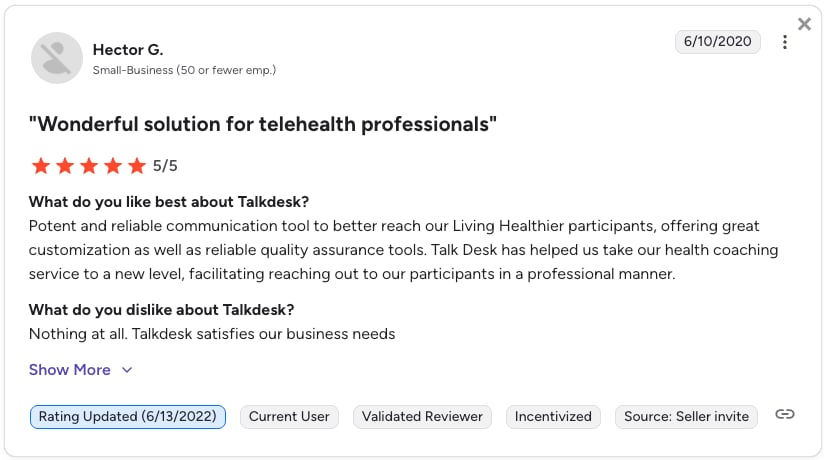
G2 reviewers give Talkdesk 4.4/5.
Talkdesk: Pros and Cons for Healthcare
| Pros | Cons |
|---|---|
| Only major platform with a dedicated Healthcare Experience Cloud | Premium pricing — not accessible for small practices |
| Certified Epic EHR integration out of the box | Significant onboarding time required post-deployment |
| Purpose-built patient self-service AI | Platform depth can overwhelm smaller teams |
| Strong quality management and compliance recording | Custom pricing makes budget planning difficult |
Recommended Reads
9. 8x8 — Best All-in-One Call Center Software for Healthcare with Global Analytics
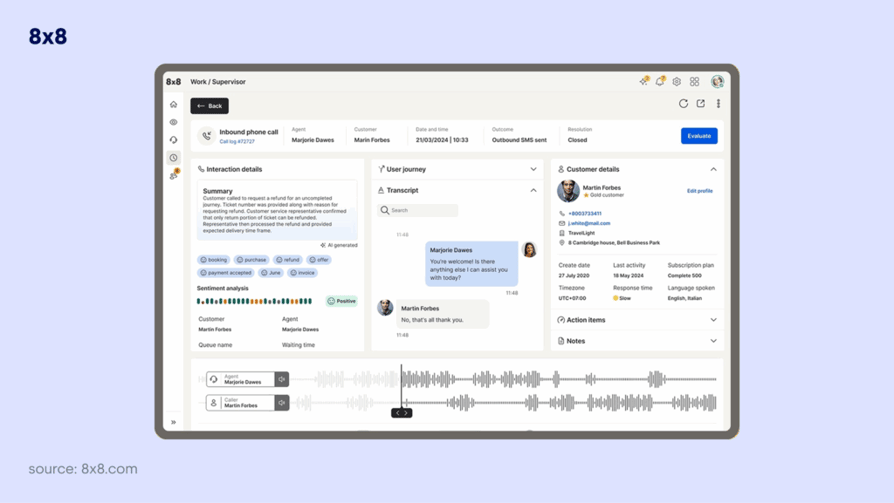
8x8 XCaaS (Experience Communications as a Service) is an all-in-one platform that combines a cloud contact center, UCaaS, and CPaaS into a single architecture. For healthcare organizations that want to eliminate the complexity of managing separate voice, video, messaging, and contact center vendors, 8x8's unified approach offers a compelling total cost of ownership argument.
8x8's built-in speech analytics, quality management, and supervisor tools—available across its global network—give healthcare administrators the visibility they need to ensure consistent patient service standards across every location and channel.
Key Features of 8x8 for Healthcare Providers
- Unified XCaaS Platform: Contact center, UCaaS, and CPaaS in one system — eliminating vendor sprawl for multi-site healthcare organizations.
- Speech Analytics: Automated interaction analysis identifies compliance risks, patient dissatisfaction, and agent performance trends at scale.
- Global Reach: PSTN replacement and local number coverage in 55+ countries, supporting international health networks and telehealth services.
- Quality Management: Built-in call evaluation, scoring templates, and agent coaching workflows for patient communication quality assurance.
- HIPAA Compliance: End-to-end encryption and BAA availability for healthcare customers on eligible plans.
- Omnichannel Routing: Voice, chat, email, and SMS patient interactions managed from a single unified agent desktop.
What Is 8x8 for Healthcare Missing?
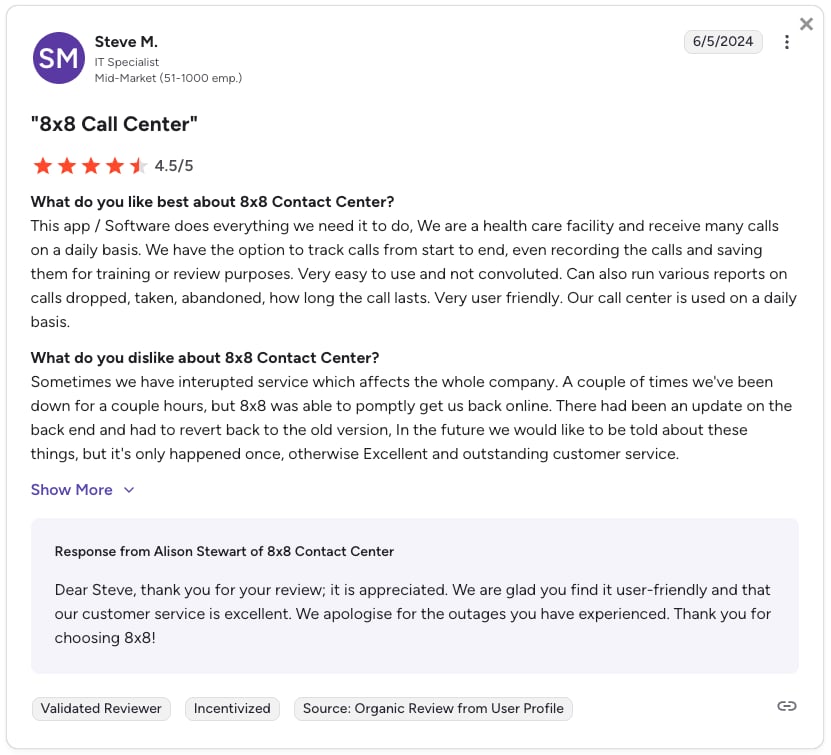
8x8's interface has been noted by some users as less intuitive than newer-generation platforms, and its AI capabilities lag behind purpose-built AI-first competitors like Dialpad or CloudTalk. Implementation and support experiences can also vary, with some healthcare customers reporting slower response times from the support team during complex deployments.
What Type of Healthcare Business Is 8x8 Best For?
8x8 is best for mid-to-large healthcare organizations—including multi-site hospital systems and international health networks—that want to consolidate communication vendor spend onto a single HIPAA-compliant platform with strong global coverage.
What Is the Pricing of 8x8 for Healthcare?
8x8 pricing starts at approximately $24/user/month for the X2 plan. Contact center plans (X6 and above) are higher and typically custom-quoted for healthcare organizations.
8x8 for Healthcare Reviews and G2 Rating
8x8: Pros and Cons for Healthcare
| Pros | Cons |
|---|---|
| Unified XCaaS eliminates vendor sprawl | Interface less intuitive than newer platforms |
| Strong global reach for international health networks | AI capabilities lag behind AI-first competitors |
| Built-in speech analytics and quality management | Support response times can vary |
| HIPAA compliance with BAA availability | Contact center plans significantly more expensive |
9 Reviewed. 1 Stands Out for Healthcare.
What Should Healthcare Organizations Consider When Choosing Call Center Software?
Not all call center software for healthcare providers is built to the same standard—especially when patient safety, data security, and regulatory compliance are at stake. Here are the key criteria that actually matter when evaluating your options.
1. HIPAA Compliance Is Non-Negotiable
Any platform handling Protected Health Information (PHI) must be HIPAA-compliant and willing to sign a Business Associate Agreement (BAA). Confirm that the vendor's BAA covers call recordings, voicemail logs, transcripts, and any AI-processed data—not just the telephony layer. Check whether compliance features are available on your target pricing tier or require a costly upgrade.
2. EHR and CRM Integration Depth
Your call center software for healthcare needs to surface patient context in real time during live calls. Look for native or certified integrations with your EHR (Epic, Cerner, Athenahealth) and CRM, bidirectional data sync that eliminates manual entry, and post-call automation that updates patient records without agent intervention.
3. Intelligent Routing for Clinical Workflows
Healthcare calls are not equal. A patient reporting chest pain needs different routing logic than one calling about a billing statement. Evaluate skills-based routing, priority queues for urgent cases, language-based routing for multilingual populations, and IVR design flexibility. After-hours routing for on-call clinicians is also critical.
4. AI Features That Reduce Clinical Documentation Burden
Administrative burden is one of the biggest contributors to clinician burnout. Platforms with AI-powered call recording, automatic transcription, and call summaries can dramatically reduce the time clinical staff spend on documentation—freeing them for direct patient care. Evaluate sentiment analysis and coaching tools to improve patient experience quality continuously.
5. Reliability and Uptime SLAs
In healthcare, downtime is not just a productivity issue—it can directly impact patient safety. Prioritize platforms with 99.9%+ uptime guarantees, redundant infrastructure, real-time system status dashboards, and documented disaster recovery protocols. Ask vendors specifically about their performance during catastrophic call volume spikes, such as during public health emergencies or natural disasters.
6. Total Cost of Ownership (Not Just Per-Seat Pricing)
Healthcare organizations frequently underestimate the real cost of healthcare call center services software. Beyond the per-user price, factor in: setup and implementation fees, BAA and compliance add-ons, AI and analytics tier upgrades, EHR integration costs, and training time for clinical staff. A lower-listed price can quickly become the most expensive option once all factors are considered.
Why Healthcare Teams Choose CloudTalk as Their Call Center Software
Healthcare teams choose CloudTalk because it solves the real challenges that matter most: patient wait times, compliance risk, and documentation burden—all without requiring a six-figure implementation budget or months of IT work.
As the best call center software for healthcare providers in the SMB and mid-market segment, CloudTalk delivers:
- 80% reduction in patient wait times through intelligent IVR and skills-based routing
- 25% improvement in call handling efficiency via AI-powered summaries and automated follow-ups
- Full HIPAA, SOC 2, and GDPR compliance with signed BAAs on eligible plans
- 160+ country numbers for multilingual patient populations and telehealth expansion
- No-code setup that non-technical clinical administrators can manage without IT support
Whether you're a growing clinic automating appointment reminders, a telehealth provider scaling patient support across multiple time zones, or a healthcare organization looking to replace an outdated phone system with modern healthcare call center software, CloudTalk provides the fastest path to measurable outcomes.
Explore CloudTalk for Healthcare or book a personalized demo with our healthcare communication experts.
Join 5,500+ Teams Already Scaling with CloudTalk
Sources:
Call Center Software for Healthcare: Frequently Asked Questions
The best call center software for healthcare providers depends on your organization's size, compliance requirements, and use case. For small-to-mid-sized clinics and telehealth providers, CloudTalk is the top-rated option—offering full HIPAA compliance, AI-powered call intelligence, smart routing, and 160+ global numbers at a competitive price point. For large health systems needing purpose-built EHR integration, Talkdesk's Healthcare Experience Cloud is a strong choice. For enterprise-scale omnichannel operations, Five9 and Genesys lead the market.
Yes. Any call center software used by a healthcare provider, health plan, or healthcare clearinghouse that handles Protected Health Information (PHI) must comply with HIPAA. This includes the platform's call recording storage, voicemail systems, transcription data, and any AI-processed interaction content. The vendor must be willing to sign a Business Associate Agreement (BAA) covering all relevant data flows. Always verify that the BAA extends to call recordings, transcripts, and integration data—not just the telephony layer. Learn more in our guide to HIPAA-compliant call centers.
The most important features for healthcare call center software include: HIPAA compliance with BAA availability, skills-based and priority call routing for clinical triage, IVR menus customized for patient journeys, 100% call recording with secure storage, EHR and CRM integration for real-time patient context, AI-powered call summaries to reduce documentation burden, multilingual support for diverse patient populations, and real-time analytics for supervisor oversight. Call center software for healthcare providers that combines all of these in a single, easy-to-deploy package delivers the fastest time to value.
Call center software integrates with EHR systems like Epic and Cerner in several ways: through native certified connectors (which Talkdesk and RingCentral offer for Epic), through open API connections (which Genesys and CloudTalk support), or through middleware platforms like Zapier or native workflow automation tools. The integration typically surfaces patient records, appointment history, and care context in the agent workspace during a live call—eliminating manual lookups and reducing average handle time. Post-call, it can automatically update patient records with call summaries and follow-up tasks. Always confirm that the EHR integration is covered under the vendor's HIPAA BAA.
A healthcare call center operates under strict regulatory requirements (HIPAA, HITECH) that standard call centers do not face. It handles sensitive Protected Health Information in every interaction, requires signed BAAs with all software vendors, and must maintain audit trails for compliance and liability purposes. Healthcare call centers also handle life-critical call types—like clinical triage or emergency escalations—that require specialized routing logic and escalation protocols. Software built for healthcare call center services is specifically designed around these requirements, whereas general-purpose call center software may require significant customization to meet the same compliance and operational standards.
Healthcare call center software pricing varies widely based on feature depth and organization size. Entry-level HIPAA-ready VoIP platforms like CloudTalk start from $19/user/month. Mid-market contact center platforms like Genesys and Talkdesk typically start between $75–$85/user/month. Enterprise platforms like Five9 can start from $175/user/month, with full AI and healthcare cloud configurations priced on custom quotes. Beyond per-seat pricing, budget for BAA setup, EHR integration fees, AI add-ons, and onboarding costs. See our guide to how much call center software costs for a detailed breakdown.
Yes. Modern healthcare call center software significantly reduces no-shows and appointment abandonment through automated outbound reminder calls and SMS, callback options that eliminate hold-time frustration, AI-driven follow-up workflows that re-engage patients who miss scheduling windows, and post-visit outreach that improves care continuity and reduces gaps. Platforms like CloudTalk can automate these outbound touchpoints via workflow automation, ensuring patients receive timely reminders without burdening clinical staff with manual outreach tasks.