Skill-Based Routing: What It Is, How It Works & Types
TL;DR
- Skill-based routing (SBR) is a call distribution method that connects customers to the most qualified agent based on skills like language, expertise, or priority instead of just availability.
- Skill-based routings works by defining agent skills, mapping them in the system, collecting customer context (via IVR or CRM), and using a contact center routing algorithm to match each request with the best-fit available agent.
- Key benefits of skill-based routing include faster resolutions, fewer call transfers, higher first-contact resolution, improved customer satisfaction, better agent productivity, and lower operational costs.
- To set it up, you typically: define agent skills and groups, build or edit a call flow, configure IVR options, add condition-based routing rules, set a failover path, and activate the flow.
Nearly 90%1 of consumers worldwide say fast issue resolution is their top priority. Outdated call routing methods that send customers to the next available agent often cause long waits, repeated transfers, and unhappy callers.
That’s where Skill-Based Routing (SBR) comes in. This smart system matches customers with agents who have the right skills and expertise, speeding up resolutions and boosting customer satisfaction.


What Is Skill-Based Routing?
Skill-based routing is a smart call distribution method that matches each caller with the most qualified agent—based on skills like language, expertise, or customer priority. Instead of routing calls randomly or by availability, it follows a structured flow to ensure every caller reaches the right expert fast.
For example, if a customer speaks Spanish, the system automatically directs them to a Spanish-speaking agent—reducing wait times and improving satisfaction.
This approach enhances first-call resolution, supports personalized experiences, and helps sales and support teams operate more efficiently.
How Does Skills-Based Routing Work?
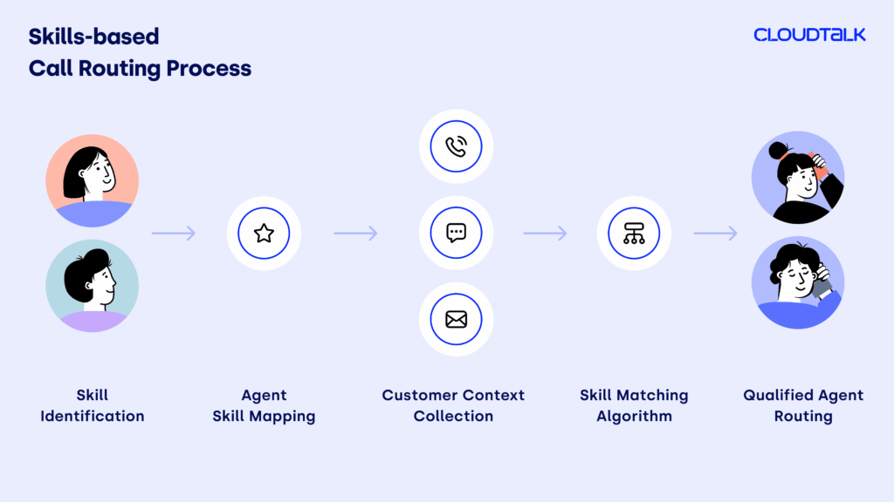
Contact routing in a call center typically starts with an Automatic Call Distribution (ACD) system that manages call distribution based on rules like agent availability, business hours, or caller location. SBR adds an advanced layer on top, improving contact center routing by prioritizing agent skills over simple availability. Together, these systems enable automated call routing that ensures every customer gets the right help faster.
Here’s how the skills-based call routing process works step-by-step:
- Skill Identification
Contact center managers define the specific skills needed to handle different types of customer requests, such as language proficiency, product knowledge, or technical expertise. - Agent Skill Mapping
Each agent is assigned a set of skills based on their experience, training, and strengths to create a detailed skill profile. - Customer Context Collection
When a customer contacts the center via phone, chat, or email, the system collects relevant information from sources like IVR menus, CRM data, call tracking, and customer profiles to understand their needs. - Skill Matching Algorithm
An intelligent routing algorithm analyzes the customer's request and matches it with the most qualified available agent based on the required skills. - Qualified Agent Routing
The system routes the interaction directly to the best-suited agent, ensuring faster resolution and a better overall customer experience.
Stop wasting calls on the wrong agent.
Why Smart Businesses Rely on Skills-Based Routing
Think of Skill-Based Routing as the matchmaker for your customer service—it connects each inquiry with the agent best equipped to handle it. Here’s why it matters for your business:
Keep Customers Happier with Fewer Transfers
88% of customers are more likely to buy again when their service expectations are met2. SBR helps achieve this by connecting customers straight to the agent best qualified to solve their problem.
This means fewer transfers and less time repeating information, which reduces frustration and creates a smoother, faster support experience.
Drive Revenue Growth with Better Customer Service
Connected to the point above, companies prioritizing great service—made possible by SBR—can see revenue growth of 4% to 8%3.
When customers get expert help without delays, they’re more likely to stay loyal, make repeat purchases, and recommend your business—driving growth and higher profits.
Boost Agent Productivity and Morale
69% of agents report struggling to balance speed and productivity4. SBR helps by assigning them cases that match their expertise, so they can work more efficiently and confidently.
When agents focus on what they do best, they resolve issues faster and with higher quality. They avoid wasting time on tasks outside their skill set, which reduces frustration and boosts their motivation.
Bonus
Cut Operational Costs and Optimize Resources
Faster resolutions and fewer misdirected calls mean lower handling times and better use of your team’s skills. You can also avoid overloading certain agents while others sit idle—keeping workloads balanced and your budget in check.
Improve First-Contact Resolution and Key Metrics
Connecting customers with the right agent from the start means more issues are solved on the first try. This leads to a higher first-contact resolution rate because the agent has the specific skills needed to fix the problem without passing the call along.
As skilled agents can solve issues more quickly, the average resolution time goes down, freeing up resources for other customers. Additionally, SBR balances the workload by directing requests evenly across agents with the right expertise, improving agent utilization and helping your team work more efficiently.
What Are The Different Types Of Skill-Based Routing?
There’s no one-size-fits-all approach to Skill-Based Routing. Different businesses—and different customer situations—call for different routing strategies. Here are four of the most effective types you can implement in your contact center platform:
Expertise-Based Routing
This type of SBR routes calls to agents with specific knowledge or experience related to a product or service. Use it when different teams handle specialized topics, like technical support or billing inquiries.
Benefits:
- Higher first contact resolution by connecting customers with the right expert.
- Fewer transfers and escalations, improving overall customer satisfaction.
- Faster average resolution time, enhancing support efficiency.
Language-Based Routing
Matches calls to agents fluent in the customer’s preferred language. It’s essential for businesses with multilingual customers using an omnichannel contact center platform.
Benefits:
- Clearer communication that reduces misunderstandings.
- Better customer comfort and trust.
- Improved customer retention through personalized support.
Priority-Based Routing
Routes urgent or high-priority calls immediately to qualified agents. It’s a great choice for contact centers handling VIP clients or critical issues requiring fast resolution.
Benefits:
- Faster response times for urgent inquiries.
- Keeps high-value customers satisfied, boosting customer loyalty.
- Efficient agent utilization without sacrificing service quality.
Skill-Matching Routing
Uses a skill-based routing algorithm to match calls with agents based on required skills and availability, adapting dynamically to current conditions. Ideal for delivering personalized, efficient service in modern contact center solutions.
For example, if a German-speaking customer calls about a billing issue, the system routes the call to the next available agent with both Spanish language skills and billing expertise.
Benefits:
- Personalized, faster support leading to better customer satisfaction.
- Enhanced agent performance by assigning suitable cases.
- Consistent and high-quality service across all channels.
How to Set Up Skills-Based Routing for your business
Setting up Skills-Based Routing in CloudTalk is simple and highly flexible. You can easily route calls based on your agents’ skills and customer needs using the call flow builder. Here’s a quick, clear breakdown:
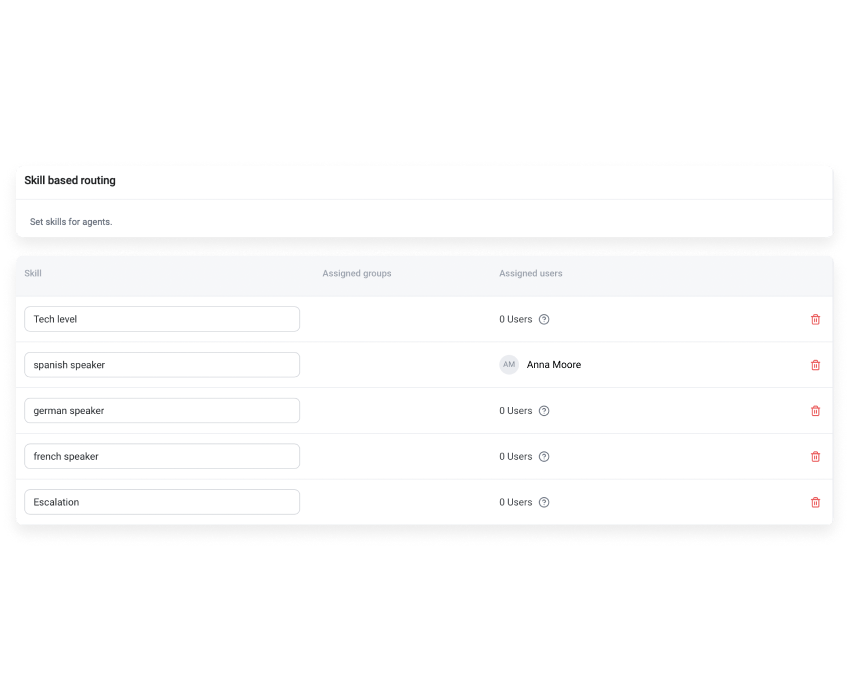
#1 Define Agent Skills and Groups
Before you start, make sure you’ve created your call groups and assigned relevant skills to each agent profile. This allows you to build specialized skill groups for different needs like technical support, billing, or language-specific service.
#2 Create or Edit a Call Flow
Go to the Numbers tab in CloudTalk, find the number you want to manage, and click Configure Call Flow. You can either start a new call flow or edit an existing one to introduce skill-based routing.
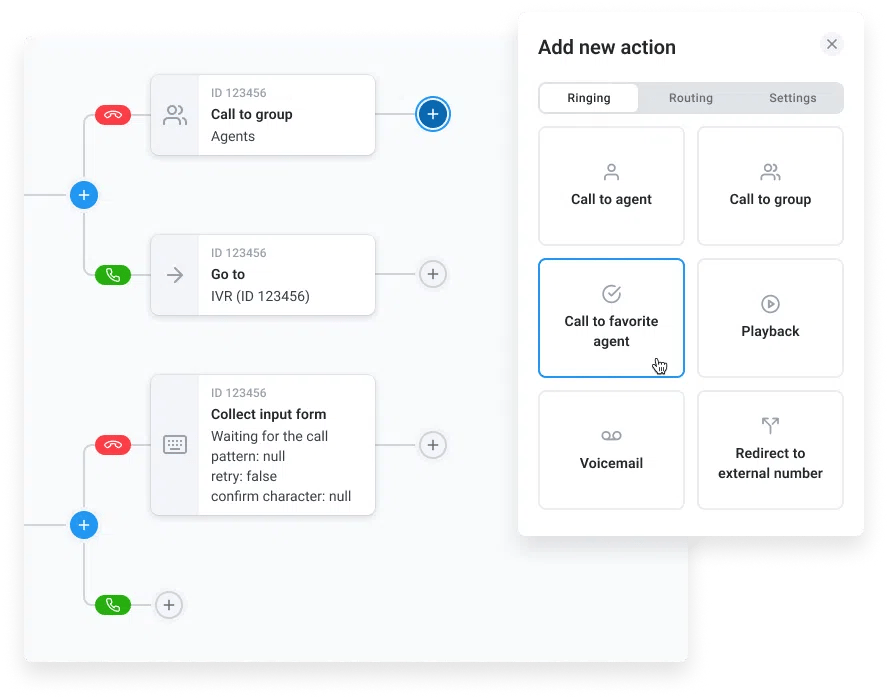
#3 Route Calls with IVR
Use Interactive Voice Response (IVR) to let callers select the option that matches their request.
For example:
- Press 1 for technical support.
- Press 2 for billing.
- Press 3 for Spanish-speaking agents.
Upload or record IVR greetings and map each option to the correct call group.
Benefits:
- Reduces wait times.
- Improves first call resolution.
- Ensures customers reach the right agent immediately.

#4 Use a Condition Splitter for Smart Routing
For more advanced call routing, add a Condition Splitter action (available in Essential, Expert, and Custom plans). It filters calls based on custom conditions—like tags or customer data— and directs them to the right team.
Example: You can create a rule to route calls tagged as "technical" directly to your technical support group.
Benefits:
- Enables dynamic call routing.
- Improves agent utilization.
- Automates the distribution of calls based on real-time data.
#5 Add a Failover Branch
Always include a failover route in case no condition is met. This ensures no call gets lost or stuck without a response, preserving customer satisfaction.
#6 Save Your Flow
Once your call flow is ready, click Save Flow to apply your changes and activate your new skills-based routing system.
Is Your Call Routing Strategy Holding You Back? It’s Time to Fix It
Delivering fast, personalized, and frustration-free service starts with having the right call routing system in place. By combining intelligent call routing, multilingual support, and smart call distribution, you’ll reduce wait times, improve first-call resolution, and ensure every customer reaches the right agent with the right skills, every time.
With CloudTalk, it’s easy to design dynamic, flexible call flows tailored to your business needs. Whether you’re handling multilingual inquiries, technical support, or high-priority customers, CloudTalk’s cloud-based call routing software makes it simple to manage everything from one centralized platform.
Evaluate your current call routing strategy—and if it’s not delivering the speed, accuracy, and customer satisfaction you need, it’s time to upgrade. Try CloudTalk and see how Skills-Based Routing for your call center can boost your team’s performance.
Frequently asked questions
Queue-based assigns calls by wait order. Skill-based matches callers with agents based on relevant skills and expertise.
ACD routes calls to the next available agent. Skill-based routing prioritizes expertise, availability, and specific criteria.
It evaluates caller needs, agent skills, availability, and routing rules to find the best agent for each interaction.
When aiming to reduce resolution times, improve CX, and handle diverse inquiries by matching them to skilled agents.
A caller selects ‘billing’ in an IVR, and the system routes them to a finance specialist fluent in their language.
Skill-based routing with CloudTalk starts at $29/user/month (annual) with the Essential plan.
Calls are routed based on best skill match first, then availability, routing priority, and current agent workload.
ACD sends calls by order or availability. Skill-based routing ensures the most qualified agent handles each inquiry.
It connects callers to the best-qualified agent, improving first-call resolution and customer satisfaction.
Routes contacts to the best agent based on skills like language, expertise or priority.
Queue-based routing sends calls by order/availability; skill-based routing matches callers to the most qualified agent.
They reduce transfers by instantly matching customer intent with the right expert agent.
To implement skill-based routing using CRM customer tier data, use CRM tags/tiers to prioritize VIPs and route them to dedicated high-skill agents.
Use skills-, priority-, and load-aware routing with IVR intent, real-time agent status, callbacks, and overflow to reduce queue time.
Tag agents by skill/language in ACD, build IVR menus, then map each menu choice to the right queue and routing rule.