
Top 10 Observe.AI Alternatives: Quick Comparison
| # | Tool | Best For | Starting Price | Free Trial | G2 Rating |
|---|---|---|---|---|---|
| 1 | CloudTalk (Editor’s Pick) | All-in-one AI calling + conversation intelligence for SMB and mid-market sales & support | $19/user/mo | 14 days, no card | 4.4/5 |
| 2 | Gong | Enterprise sales revenue intelligence | ~$1,600/user/yr + platform fee | No | 4.7/5 |
| 3 | Convin | Contact centers wanting QA + coaching + AI voice in one | Custom (free QA tier) | Limited | 4.7/5 |
| 4 | Cresta | Enterprise real-time agent coaching | Custom (~$60K+/yr) | No | 4.8/5 |
| 5 | Balto | Real-time agent assist + closed-loop QA | Custom | No | 4.8/5 |
| 6 | CallMiner | Enterprise interaction analytics + compliance | Custom | No | 4.5/5 |
| 7 | Level AI | AI-native QA and analytics for CX teams | Custom | No | 4.6/5 |
| 8 | Dialpad | AI-native business phone with built-in transcription | $15/user/mo | Yes | 4.4/5 |
| 9 | Enthu.ai | SMB and BPO auto-QA on a budget | Custom (from ~$500/mo) | 14 days, no card | 4.9/5 |
| 10 | Genesys Cloud CX | Large enterprise CCaaS with embedded AI | $75/user/mo | On request | 4.4/5 |
Skip the Reading. See It Live.
Why Teams Are Searching for an Observe.AI Alternative: What Real Users Say
Observe.AI is a genuinely strong post-call quality assurance and coaching platform for large contact centers. Its core AI is well regarded, and it analyzes 100% of interactions rather than the 1 to 2% a manual QA team can sample.
But the same things that make it an enterprise platform are exactly what push smaller and faster-moving teams to look at conversation intelligence alternatives. Reading through verified Observe.ai reviews on G2 (where it holds a strong 4.6/5), Capterra, Gartner Peer Insights, Reddit, and Quora, the same five frustrations come up again and again.
5 Main Cons of Observe.AI That Make Teams Look Elsewhere
-
Hard 100-agent minimum locks out most teamsObserve.AI cannot serve contact centers under 100 agents, regardless of budget. If you run a 10, 30, or 80-seat sales or support team, you are not a fit; full stop. For the entire SMB and lower-mid-market segment, that single requirement ends the evaluation before it starts.
-
No public pricing, and the real cost is steepObserve.AI publishes no list price; every buyer goes through sales. Verified buyer reports and third-party research put a 100-seat deployment between roughly $60,000 and $180,000 per year depending on which of the five product suites you bundle. You cannot build a business case before you book a sales call.
-
Implementation runs weeks to monthsReviewers consistently describe a 4 to 12 week implementation, with professional-services fees for custom integrations on top. One verified G2 reviewer described three months of paid setup that delivered no usable value. For teams that need results this quarter, that timeline is a non-starter.
-
Transcription accuracy is the #1 complaintAcross G2, Capterra, and Gartner, the single most common criticism is that transcription and moment detection miss what was actually said, which undercuts the coaching and reporting built on top of it. A February 2026 reviewer flagged the platform as leaning too heavily on transcription while competitors move to context-driven generative AI.
-
It is an analytics layer, not a phone systemObserve.AI sits on top of your contact center; it does not make the calls. You still need a separate telephony platform underneath it. Teams that want their calling and their AI in one place end up managing (and paying for) two vendors instead of one.


What Is the Best Alternative to Observe.AI?
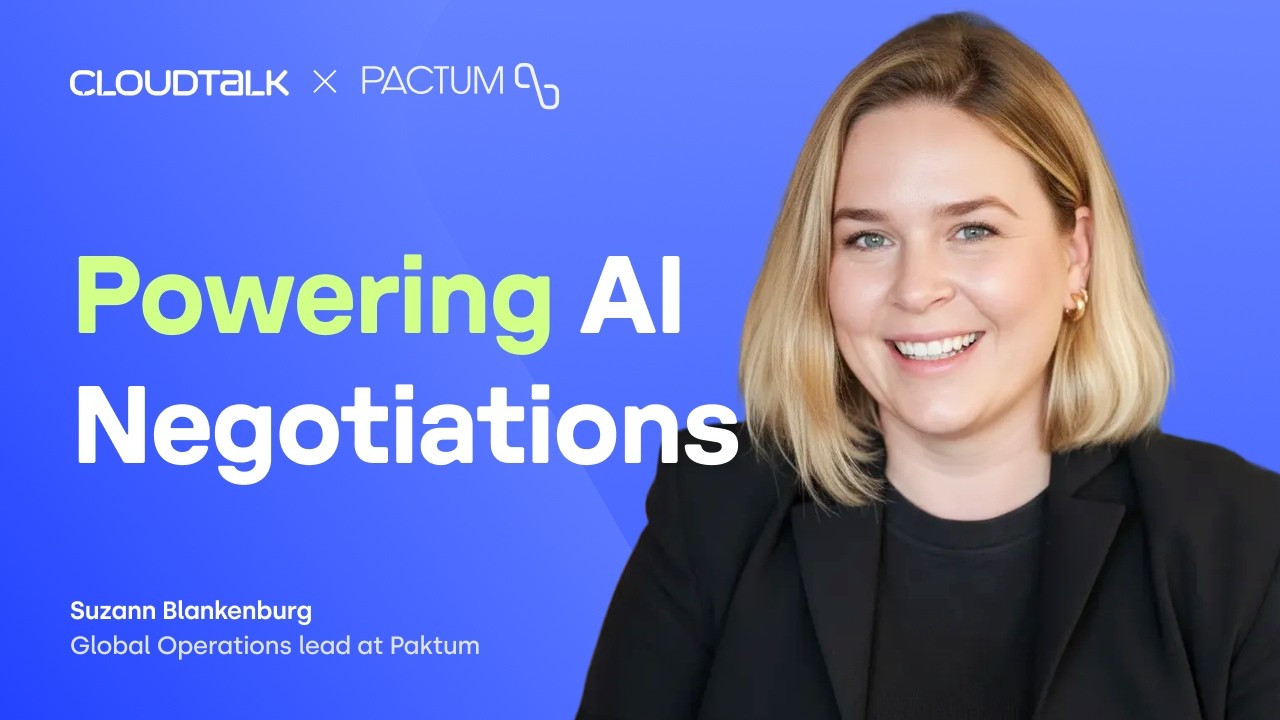
CloudTalk is the best Observe.AI alternative for sales and support teams that want AI calling and conversation intelligence in a single platform, without a 100-agent minimum or a multi-month rollout.
Unlike Observe.AI, which is an analytics layer that needs a separate phone system underneath it, CloudTalk is the phone system: it makes and receives the calls, then layers Conversation Intelligence, sentiment analysis, automatic call summaries, and AI voice agents on top. It starts at $19/user/month with no seat minimum, publishes its pricing, and can be live in under an hour.
Here’s Why Users Consider CloudTalk the Best Observe.AI Alternative
The core reason teams pick CloudTalk as an alternative for Observe.AI is consolidation: you get the calling platform and the AI in one tool, at a price you can see, with no enterprise seat floor. Here is what that looks like in practice.
5 Reasons CloudTalk Is the Best Observe.AI Alternative
-
No seat minimum, transparent pricing from $19/user/moWhere Observe.AI requires 100+ agents and a sales call to learn the price, CloudTalk publishes per-user pricing and works for a team of three or three hundred. You can size a deployment, and a budget, in minutes.
-
AI calling and conversation intelligence in one platformCloudTalk is the phone system, not a layer on top of one. Conversation Intelligence, sentiment analysis, topic detection, and automatic summaries run on the same calls you are already making. No second vendor, no telephony bill underneath the AI bill.
-
Live in under an hour, not 4 to 12 weeksObserve.AI implementations run weeks to months. A non-technical admin can set CloudTalk up the same day, connect a CRM, and start capturing AI insights on live calls immediately.
-
AI voice agents and an AI Receptionist includedEvery account includes 50 free AI Receptionist minutes, and AI voice agents can handle inbound and after-hours calls autonomously. You get automation, not just analysis of what already happened.
-
Free 14-day trial, no credit cardYou can test the full platform for 14 days before paying anything. Observe.AI offers no self-serve trial; you commit through procurement first. For teams that want to validate with real calls, that difference is decisive.
-
G2 Award winner for sales and supportCloudTalk is one of the G2 Spring 2026 Leaders for sales and support software, while Dialpad hasn’t made the top 50 list.

Get AI Calling and Intelligence in One Platform
How We Picked These Observe.AI Alternatives
To build this list of tools similar to Observe.AI, we reviewed pricing pages and technical documentation, analyzed verified reviews across G2, Capterra, and Trustpilot (prioritizing tools with a meaningful review base), and weighed the AI capabilities that actually matter for contact center and revenue teams. We focused on platforms that do what Observe.AI buyers are really shopping for: analyze conversations, automate quality assurance, and coach agents, whether as a standalone layer or built into the calling platform itself.
Our Selection Criteria and Testing Methodology
-
AI and automation depthWe assessed conversation intelligence, automated QA, real-time agent assist, sentiment analysis, and AI voice automation, and whether each is included or a paid add-on.
-
Pricing transparency and seat minimumsWe compared advertised price against real all-in cost, flagged tools that hide pricing behind sales, and noted any agent minimums that exclude smaller teams.
-
Review analysisWe read verified G2, Capterra, and Trustpilot reviews, prioritizing recurring themes over one-off complaints, and noted G2 ratings and review volume for each tool.
-
Time to value and ease of deploymentWe weighed how fast a team can go live, from same-day self-serve setup to multi-month enterprise implementations requiring professional services.
-
CRM integration depthWe checked native support for HubSpot, Salesforce, Pipedrive, and helpdesk tools, and whether call data and AI insights sync automatically.
-
Migration ease from Observe.AIWe considered how realistic it is to switch, including whether the tool replaces Observe.AI outright or still needs a separate phone system.
Top 10 Observe.AI Competitors for 2026
Here is how Observe.AI stacks up against the strongest alternatives across the dimensions that matter most when you are replacing it: whether the tool includes its own calling, how AI is priced, how fast it deploys, and whether it imposes a seat minimum.
Observe.AI vs. CloudTalk vs. Gong vs. Convin vs. Cresta
| Feature | Observe.AI | CloudTalk | Gong | Convin | Cresta |
|---|---|---|---|---|---|
| Built-in phone system |  |
 |
|
AI voice only | |
| Starting Price | Quote only (~$60K+/yr) | $19/user/mo | ~$1,600/user/yr + fee | Custom | Custom (~$60K+/yr) |
| Seat minimum | 100 agents | None | Sales-led | None published | ~50 to 100 |
| Conversation Intelligence | |
|
|
|
|
| Real-time agent assist | |
AI Receptionist + voice agents | |
|
|
| Time to deploy | 4 to 12 weeks | Under 1 hour | Weeks | Days to weeks | Multi-week |
| Free Trial | |
|
|
Limited | |
| G2 Rating | 4.6/5 | 4.4/5 | 4.7/5 | 4.7/5 | 4.8/5 |
The Observe.AI Reality: What "Contact Sales" Actually Means
Observe.AI’s five product suites (VoiceAI Agents, Real-Time AI, Post-Interaction AI, Enterprise Advanced, and Enterprise Unlimited) are all priced on request. The one concrete public figure, an AWS Marketplace listing for a single Real-Time AI module, works out to roughly $69/agent/month, or about $82,800/year for 100 seats; and that is one module, not the platform. Verified buyer reports put a full 100-seat deployment between $60,000 and $180,000 per year, with a 100-agent minimum and professional-services fees on top. For any team that wants to know the price before committing, that opacity alone is the reason to look elsewhere.
Know Your Price Before You Commit
1. CloudTalk: Best All-in-One AI Calling Platform
What Is CloudTalk?
CloudTalk is an AI-powered business calling platform built for SMB and mid-market sales and support teams. Unlike Observe.AI, which is an intelligence layer that sits on top of a contact center, CloudTalk is the calling platform itself, with Conversation Intelligence, sentiment analysis, automatic call summaries, and AI voice agents built in. It gives growing teams the analytics and automation Observe.AI is known for, without the six-figure contract, the 100-agent minimum, or the separate phone bill.
Why CloudTalk Is a Strong Observe.AI Alternative
-
Calling and AI in one platform, no second vendorObserve.AI needs a telephony layer underneath it. CloudTalk makes the calls and analyzes them in the same tool, so you pay for and manage one platform, not two.
-
No seat minimum and published pricingObserve.AI requires 100+ agents and a sales call. CloudTalk works from a handful of seats and shows its pricing publicly, starting at $19/user/mo.
-
Live in under an hour, not weeksA non-technical admin can set up CloudTalk, connect a CRM, and capture AI insights on live calls the same day, versus Observe.AI’s 4 to 12 week implementation.
-
Conversation Intelligence and sentiment analysis includedSentiment analysis, topic detection, talk-listen ratio, automatic summaries, and call scoring are part of the platform, not separate enterprise SKUs.
-
AI voice agents that handle calls, not just analyze themAI voice agents and an AI Receptionist with 50 free minutes deflect and resolve calls automatically. See the full CloudTalk vs. Observe.AI comparison below.
Key Features of CloudTalk
-
Automatic transcription, topic detection, talk-listen ratio, and keyword tracking across 100% of calls.
-
Flags customer mood and emotion shifts across conversations so managers can spot risk and coaching moments.
-
Automatic post-call summaries and notes that cut after-call work and sync to the CRM.
-
Autonomous voice agents handle inbound, after-hours, and routine calls in multiple languages.
-
Score calls against custom criteria automatically for QA at scale, not 1 to 2% manual sampling.
-
100+ CRM and helpdesk integrations
What Are the Pros & Cons of CloudTalk?
| Pros | Cons |
|---|---|
| Calling and AI intelligence in one platform | Not built for 500+ agent enterprise contact centers like Observe.AI’s core base |
| No seat minimum, transparent pricing from $19/user/mo | Salesforce deep-sync requires the Expert plan ($49/user/mo) |
| Live in under an hour, no professional services required | AI voice agents are a paid add-on for high-volume automation |
| AI voice agents and AI Receptionist (50 free minutes) included | |
| Free 14-day trial, no credit card required |
What Are CloudTalk’s Plans & Pricing?
CloudTalk pricing starts at $19/user/month (billed annually), with the following plans:
CloudTalk Pricing Plans
| Plan | Price (annual billing) | Key Features |
|---|---|---|
| Lite | $19/user/mo | Unlimited inbound calls, IVR, call recording, basic analytics (NA & LATAM only) |
| Starter | $25/user/mo | Everything in Lite + SMS, voicemail drop, call queues, click-to-call |
| Essential | $29/user/mo | Everything in Starter + 100+ CRM integrations, skill-based routing, real-time dashboards |
| Expert | $49/user/mo | Everything in Essential + Salesforce deep-sync, Power Dialer, Conversation Intelligence, 99.999% uptime SLA |
AI Add-On Pricing at a Glance
Conversation Intelligence: $9/mo flat rate. AI Receptionist: from $99/mo, with 50 free minutes pre-loaded on every plan. AI Voice Agents: from $349/mo. All published, all optional, all without a seat minimum.
What Are CloudTalk’s Customers Saying?
CloudTalk users consistently highlight fast setup, the value of having calling and AI analytics in one place, and pricing they can forecast without surprise upgrades. Reviewers in sales and support roles point to the automatic call summaries and CRM sync as the features that save the most time day to day.
How Do G2 Users Rate CloudTalk?
CloudTalk’s current G2 rating is 4.4/5, out of 1,702 verified user reviews.


CloudTalk vs. Observe.AI: Which Is Better for AI Calling?
CloudTalk vs. Observe.AI
| Category | CloudTalk | Observe.AI |
|---|---|---|
| Built-in calling | Yes, it is the phone system | No, needs separate telephony |
| Starting price | $19/user/mo, published | Quote only, ~$60K+/yr |
| Seat minimum | None | 100 agents |
| Time to value | Under 1 hour | 4 to 12 weeks |
| Best for | SMB and mid-market sales & support | Enterprise contact centers, 100+ agents |
See Why Teams Choose CloudTalk over Observe.AI
2. Gong: Best for Enterprise Sales Revenue Intelligence
What Is Gong?
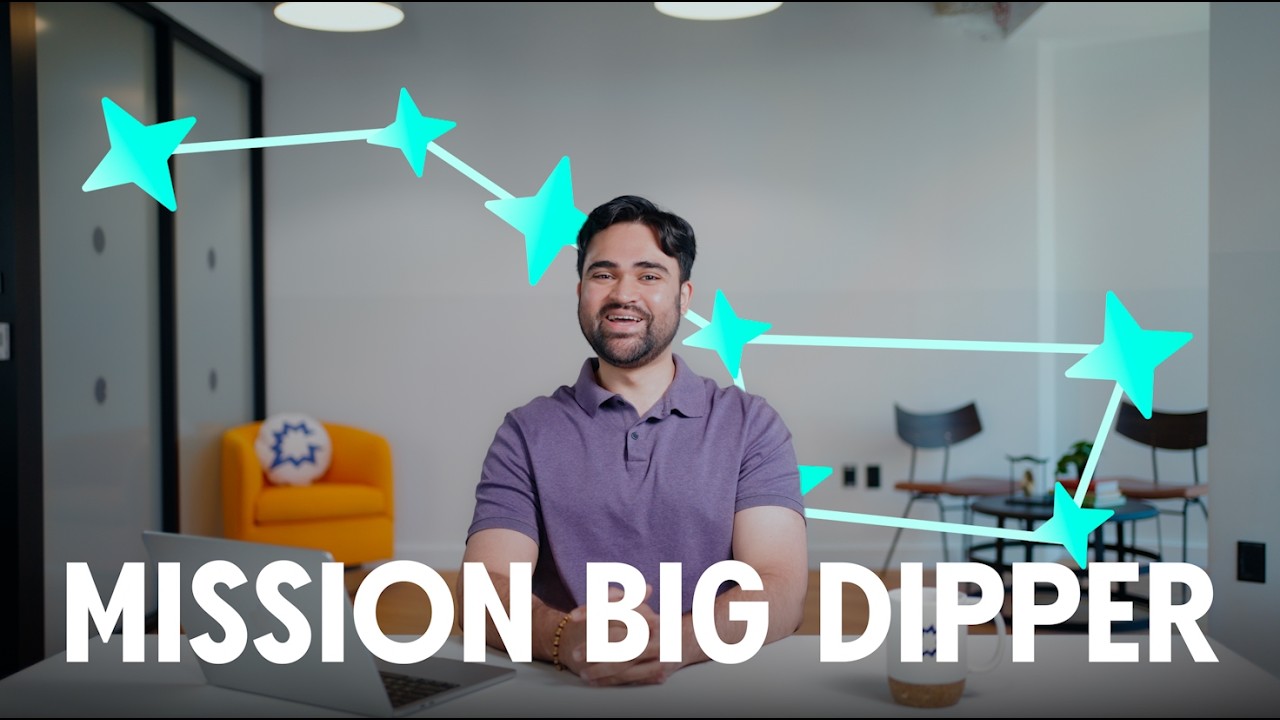
Gong is a revenue intelligence platform that records, transcribes, and analyzes sales calls so revenue leaders get a searchable view of every deal. It is the category leader for B2B sales conversation intelligence, trained on billions of sales interactions. It is built for sales teams, not contact centers, which is the key distinction when comparing it to Observe.AI: Gong analyzes the sales motion, while Observe.AI analyzes service and support QA.
With no public pricing and a reported ~$5,000 platform fee plus roughly $1,600/user/year, Gong is an enterprise investment. A 2025 restructure split features into paid modules (Foundation, Engage, Forecast). It is one of the most capable tools like Observe.AI for revenue teams, but the cost and sales-team focus make it a poor fit for support QA.
Why Gong Is a Strong Observe.AI Alternative
-
Deepest sales conversation analyticsTrained on billions of sales calls, Gong surfaces objections, competitor mentions, and buying signals more precisely than general-purpose tools.
-
Strong deal and pipeline intelligenceDeal boards flag stalled deals and silent stakeholders, useful for complex enterprise sales cycles.
-
Automatic CRM syncRecords, transcribes, and pushes structured insights into Salesforce or HubSpot with no manual rep effort.
Key Features of Gong
-
Conversation intelligenceTranscription, talk-time ratios, sentiment, and topic tracking across sales calls.
-
Deal intelligenceDeal boards and risk scoring across the pipeline.
-
Ask Anything AINatural-language search across all recorded calls.
-
CRM integrationBi-directional sync with Salesforce and HubSpot.
What Are the Pros & Cons of Gong?
| Pros | Cons |
|---|---|
| Best-in-class sales conversation analytics — Earned its 4.7/5 G2 rating across 6,500+ reviews. | No public pricing, high platform fee — ~$5,000 platform fee plus ~$1,600/user/yr; effective cost runs 2 to 3x the seat rate. |
| Powerful deal and pipeline visibility — Strong for enterprise sales orgs with RevOps support. | Built for sales, not contact-center QA — Not designed for support quality assurance or compliance scoring. |
| Automatic capture, no rep behavior change — Runs in the background once deployed. | No self-serve trial — You cannot test it without going through a full sales process. |
What Are Gong’s Plans & Pricing?
Gong pricing is quote-only, with no self-serve plan. Based on verified buyer reports, expect a structure like this:
Gong Pricing Plans
| Plan | Price | Key Features |
|---|---|---|
| Platform fee | ~$5,000/yr flat | Required regardless of team size |
| Foundation (per user) | ~$1,600/user/yr | Conversation intelligence, call library, coaching, CRM sync |
| Add-on modules | Custom | Engage (sequencing) and Forecast (pipeline analytics), bundled on top |
What Are Gong’s Customers Saying?
Gong users praise the transcription accuracy and the searchable call library, calling it a step up from generic note-takers. The most consistent complaints are sticker shock, forced module bundling, and auto-renewal price increases of 5 to 15% per year.
How Do G2 Users Rate Gong?
Gong holds a 4.7/5 rating on G2, based on 6,500+ verified reviews. Read more on Gong’s G2 reviews page.

Gong vs. Observe.AI
Gong vs. Observe.AI
| Category | Gong | Observe.AI |
|---|---|---|
| Built-in calling | No, analyzes existing calls | No, needs separate telephony |
| Primary use case | B2B sales revenue intelligence | Contact center support QA |
| Starting price | ~$1,600/user/yr + platform fee | Quote only, ~$60K+/yr |
| Free trial | No | No |
| G2 rating | 4.7/5 | 4.6/5 |
3. Convin: Best for Contact Centers Wanting QA, Coaching & AI Voice in One

What Is Convin?
Convin is a generative-AI conversation intelligence platform built for sales, support, and collections contact centers. It is the closest direct rival to Observe.AI on this list, covering real-time agent assist, automated QA, automated coaching with a built-in LMS, AI voice agents, and voice-of-customer analytics across calls, chat, and email in 70+ languages.
Convin bundles the same post-call QA and real-time guidance Observe.AI is known for, plus an AI phone-calls product and a coaching LMS, which makes it a strong consolidated option for mid-market teams. Pricing is quote-based, though Convin does offer a free quality-management tier as a low-commitment entry point.
Why Convin Is a Strong Observe.AI Alternative
-
QA, coaching, and AI voice in one platformConvin unifies automated QA, real-time assist, an LMS, and AI phone calls, where Observe.AI focuses primarily on analysis and QA.
-
Omnichannel automated QAScores 100% of calls, chats, and emails automatically with generative-AI feedback.
-
Built-in coaching LMSAuto-assigns coaching based on top-performer behavior, cutting onboarding time.
Key Features of Convin
-
Automated QAScores every interaction across voice, chat, and email.
-
Real-time agent assistLive guidance, prompts, and a searchable knowledge base during calls.
-
AI phone callsVirtual voice agents for inbound and outbound in 70+ languages.
-
Automated coaching + LMSTargeted, auto-assigned coaching and training tracks.
What Are the Pros & Cons of Convin?
| Pros | Cons |
|---|---|
| Broad feature set in one platform — QA, coaching, real-time assist, and AI voice together. | Quote-based pricing for full suite — Budgeting the complete platform requires a sales conversation. |
| Omnichannel coverage — Voice, chat, and email scored automatically. | AI voice quality still maturing — Reviewers note TTS and AI insights can need human validation. |
| Free QA tier available — A low-commitment way for smaller teams to start. | Heavier for very small teams — Best suited to mid-market contact centers. |
What Are Convin’s Plans & Pricing?
Convin uses custom, quote-based pricing across its CX, Real-Time, Voice-of-Customer, and Post-Interaction suites, with a separate free quality-management tier. Contact Convin for a tailored quote.
Convin Pricing Plans
| Plan | Price | Key Features |
|---|---|---|
| Free QM tier | Free | Rule-based sampling and basic quality management |
| Paid suites | Custom quote | CX Suite, Real-Time Suite, Post-Interaction Suite, Voice of Customer |
What Are Convin’s Customers Saying?
Convin users praise the automated QA accuracy and responsive support, and many highlight how it surfaces the calls that actually need a manager’s attention. The most common criticism is around AI voice quality and occasional AI insight accuracy that still benefits from human review.
How Do G2 Users Rate Convin?
Convin holds a 4.7/5 rating on G2. Read more on Convin’s G2 reviews page.
Convin vs. Observe.AI
Convin vs. Observe.AI
| Category | Convin | Observe.AI |
|---|---|---|
| Built-in calling | AI voice agents only | No, needs separate telephony |
| Primary use case | CC QA, coaching, AI voice | CC support QA |
| Starting price | Custom (free QA tier) | Quote only, ~$60K+/yr |
| Languages | 70+ | English and Spanish (per reviews) |
| G2 rating | 4.7/5 | 4.6/5 |
4. Cresta: Best for Enterprise Real-Time Agent Coaching
What Is Cresta?
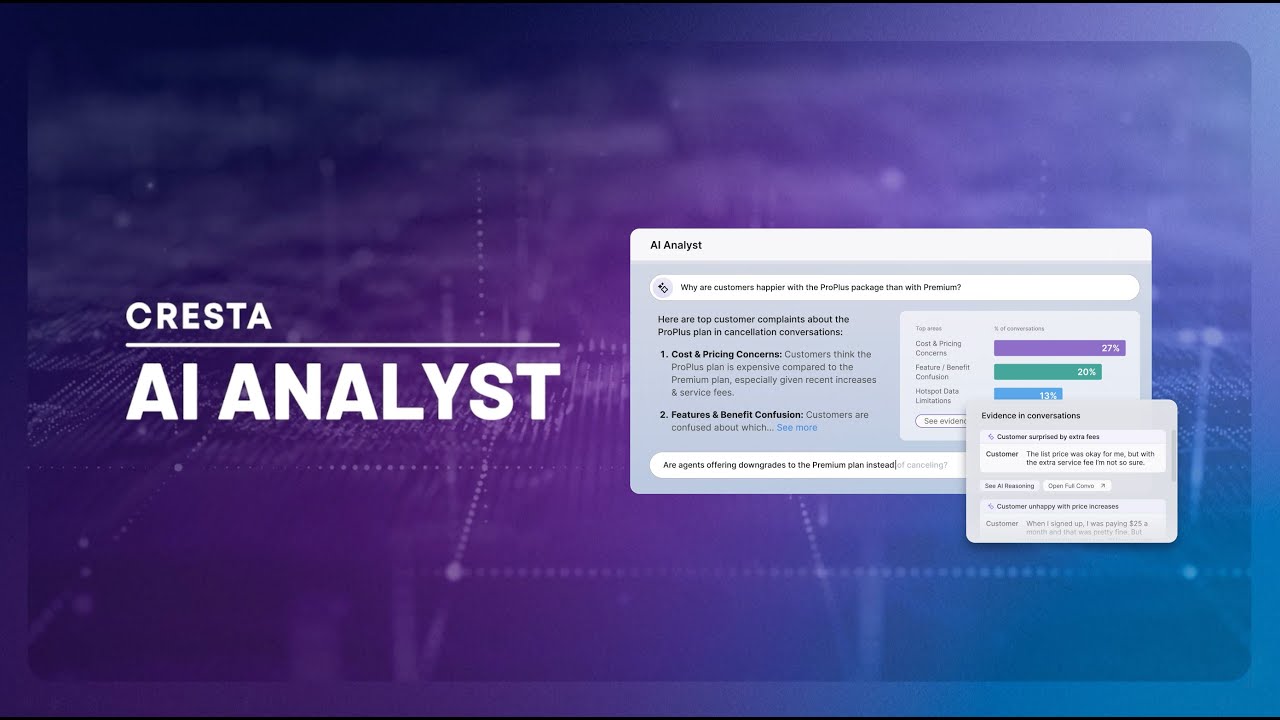
Cresta is a generative-AI platform purpose-built for enterprise contact centers, focused on real-time agent guidance during live calls. Founded out of Stanford’s AI Lab, it spans Agent Assist, autonomous AI Agent, Conversation Intelligence, and a Knowledge Agent. Where Observe.AI leans on post-call QA, Cresta’s strength is in-the-moment coaching.
Cresta is firmly enterprise: 87% of its reviewers are mid-market or enterprise, with reported pricing of $60,000 to $150,000 per year, 50 to 100 seat minimums, and multi-week implementations. It is one of the strongest tools similar to Observe.AI for real-time coaching, but it shares the same enterprise-only, quote-only profile.
Why Cresta Is a Strong Observe.AI Alternative
-
Real-time coaching that moves metricsLive in-call guidance helps mid-tier agents improve without waiting for post-call review.
-
Generative AI trained per customerModels are tuned on each customer’s own conversation data.
-
Autonomous AI agentsHandles voice, chat, and SMS conversations end to end in 30+ languages.
Key Features of Cresta
-
Agent AssistReal-time prompts, next-best-action, and knowledge surfacing during live calls.
-
Conversation IntelligenceAuto-scores 100% of interactions and reinforces winning behaviors.
-
AI AgentAutonomous handling of multi-step conversations across channels.
-
Quality ManagementGenerative-AI behavioral scoring instead of keyword detection.
What Are the Pros & Cons of Cresta?
| Pros | Cons |
|---|---|
| Excellent real-time coaching — G2 reviewers credit it with raising mid-tier agent performance. | Enterprise-only, no self-serve — $60K to $150K/yr, 50 to 100 seat minimums, no trial. |
| Strong for sales and retention motions — Objection handling and next-best-action prompting. | Knowledge-assist accuracy gaps — Reviewers report it can misread caller intent. |
| Layers onto existing telephony — Adds guidance without replacing the agent’s system of record. | Needs a dedicated AI tuner — Full value requires someone to manage and refine the AI. |
What Are Cresta’s Plans & Pricing?
Cresta does not publish pricing; every product page routes to a demo request. Based on AWS Marketplace listings and third-party reporting, expect:
Cresta Pricing Plans
| Plan | Price | Key Features |
|---|---|---|
| Agent Assist (voice or chat) | ~$150,000/yr per AWS listing | Up to 100K calls or 125K chats; overage per call/chat |
| Smaller deployments | From ~$60,000/yr | 50 to 100 seat minimums, annual contracts |
What Are Cresta’s Customers Saying?
Cresta users consistently praise real-time coaching effectiveness and integration with existing stacks. The most common complaints are knowledge-assist accuracy, a learning curve that needs a dedicated AI owner, and the enterprise-only pricing that shuts out smaller teams.
How Do G2 Users Rate Cresta?
Cresta holds a 4.8/5 rating on G2, though from a relatively small review base (around 43 to 88 reviews). Read more on Cresta’s G2 reviews page.

Cresta vs. Observe.AI
Cresta vs. Observe.AI
| Category | Cresta | Observe.AI |
|---|---|---|
| Built-in calling | No, layers on telephony | No, needs separate telephony |
| Primary use case | Real-time agent coaching | Post-call QA and coaching |
| Starting price | ~$60K to $150K/yr | Quote only, ~$60K+/yr |
| Seat minimum | ~50 to 100 | 100 agents |
| G2 rating | 4.8/5 (thin reviews) | 4.6/5 |
5. Balto: Best for Real-Time Agent Assist + Closed-Loop QA
What Is Balto?
Balto is a real-time agent assist platform for the contact center that unites live agent guidance, automated QA, compliance, coaching, and insights in a single license. Its core idea is a closed loop: a pattern flagged on one call becomes a real-time prompt on the next. It runs on top of 50+ CCaaS platforms, so like Observe.AI it is a layer rather than a phone system.
Balto is best known for live, in-call prompts (compliance reminders, objection handling, knowledge surfacing) and is heavily used in insurance, collections, and home services. Pricing is custom, with one third-party source citing a floor around $100/month, though enterprise deployments are quoted by seat and module.
Why Balto Is a Strong Observe.AI Alternative
-
Closed-loop real-time guidanceQA findings feed directly into live prompts, so insight becomes action on the next call.
-
Strong compliance use caseLive compliance reminders are valuable in regulated verticals like insurance and collections.
-
Wide CCaaS compatibilityIntegrates with 50+ platforms including Five9, NICE, Genesys, Talkdesk, and Dialpad.
Key Features of Balto
-
Real-time agent assistLive in-call prompts, compliance reminders, and knowledge surfacing.
-
Automated QAScores 100% of calls versus 1 to 3% manual coverage.
-
Closed-loop coachingQA flags become coaching moments and real-time prompts.
-
BaltoGPT insightsExecutive-level conversation analytics.
What Are the Pros & Cons of Balto?
| Pros | Cons |
|---|---|
| Best-in-class real-time prompts — Strong live guidance with a 4.8/5 G2 rating across 559 reviews. | Requires a host CCaaS platform — Balto is a layer, not a phone system. |
| Closed-loop QA and coaching — Insight-to-action loop on shared standards. | Custom pricing — No fully transparent public tiers. |
| Broad CCaaS integration — Works with most major contact center platforms. | Real-time focus over deep analytics — Less suited to teams that mainly want post-call analytics depth. |
What Are Balto’s Plans & Pricing?
Balto uses custom enterprise pricing aligned to seat count and modules. One third-party source cites a starting point around $100/month, but most deployments are quoted.
Balto Pricing Plans
| Plan | Price | Key Features |
|---|---|---|
| Single-license bundle | Custom | Agent Assist, QA, Compliance, Coaching, Notes, and Insights |
| Enterprise | Custom | Priced by agent seat count and selected modules |
What Are Balto’s Customers Saying?
Balto users highlight the real-time prompts and the closed-loop link between QA and live coaching, especially in compliance-heavy verticals. Because it sits on top of a CCaaS platform, some teams note you still need that underlying phone system in place.
How Do G2 Users Rate Balto?
Balto holds a 4.8/5 rating on G2, based on 559 verified reviews. Read more on Balto’s G2 reviews page.

Balto vs. Observe.AI
Balto vs. Observe.AI
| Category | Balto | Observe.AI |
|---|---|---|
| Built-in calling | No, runs on a CCaaS | No, needs separate telephony |
| Primary use case | Real-time assist + QA | Post-call QA and coaching |
| Starting price | Custom | Quote only, ~$60K+/yr |
| Real-time prompts | Yes, core strength | Yes |
| G2 rating | 4.8/5 | 4.6/5 |
6. CallMiner: Best for Enterprise Interaction Analytics & Compliance
What Is CallMiner?
CallMiner is a veteran conversation analytics platform (founded 2002) built for enterprise and regulated industries. Its Eureka product captures and analyzes 100% of interactions across voice, chat, email, and social, with deep post-call analytics, sentiment, topic discovery, and automated redaction. Like Observe.AI, it is an analytics layer, with particular strength in compliance for financial services, insurance, and healthcare.
CallMiner’s depth in post-call analytics and compliance is its differentiator, but it is built on older architecture and is adding generative AI on top rather than being AI-native. Reviewers consistently flag a steep learning curve and long time-to-value, the same friction that pushes teams away from heavyweight enterprise tools.
Why CallMiner Is a Strong Observe.AI Alternative
-
Deepest post-call analyticsRoot-cause analysis and trend discovery across millions of interactions.
-
Strong compliance and redaction50+ entity models for PCI, PII, and PHI redaction, built for regulated industries.
-
Omnichannel coverageAnalyzes voice, chat, email, and social in one platform.
Key Features of CallMiner
-
Interaction analyticsAutomated scoring, sentiment, and topic discovery across 100% of interactions.
-
Compliance monitoringAutomated detection and redaction for regulated industries.
-
CallMiner GPTNatural-language querying of interaction data.
-
Root-cause analysisSurfaces the drivers behind contact volume and CSAT.
What Are the Pros & Cons of CallMiner?
| Pros | Cons |
|---|---|
| Best-in-class analytics depth — Strong for enterprise QA and compliance programs. | Steep learning curve — Reviewers consistently cite difficulty getting proficient. |
| Proven in regulated industries — Financial services is its largest segment. | Legacy architecture — Adding generative AI on top rather than AI-native. |
| Highly rated support and innovation — 4.5/5 G2 with strong support marks. | Slow time to value — One team reported a year of effort before results. |
What Are CallMiner’s Plans & Pricing?
CallMiner does not publish pricing. According to G2, its SaaS model is either usage-based or seat-based, oriented to enterprise contracts. Contact CallMiner for a quote.
CallMiner Pricing Plans
| Plan | Price | Key Features |
|---|---|---|
| Usage-based | Custom | Priced by interaction volume |
| Seat-based | Custom | Priced per user, enterprise contracts |
What Are CallMiner’s Customers Saying?
CallMiner users praise the analytics depth and the move from 1% manual QA to reviewing nearly every interaction. The most consistent criticism is the steep learning curve and the implementation effort required before the platform delivers value.
How Do G2 Users Rate CallMiner?
CallMiner holds a 4.5/5 rating on G2, based on 220+ verified reviews. Read more on CallMiner’s G2 reviews page.

CallMiner vs. Observe.AI
CallMiner vs. Observe.AI
| Category | CallMiner | Observe.AI |
|---|---|---|
| Built-in calling | No, analytics layer | No, needs separate telephony |
| Primary use case | Enterprise analytics + compliance | Post-call QA and coaching |
| Starting price | Custom | Quote only, ~$60K+/yr |
| AI architecture | Legacy + added gen-AI | Contact-center LLM |
| G2 rating | 4.5/5 | 4.6/5 |
7. Level AI: Best AI-Native QA and Analytics for CX Teams
What Is Level AI?
Level AI is an AI-native contact center intelligence platform that analyzes 100% of interactions across voice, chat, email, and messaging using semantic, intent-based modeling rather than keyword tagging. It combines conversation analytics, automated QA, real-time agent assist, coaching, and workflow automation, positioning itself directly against Observe.AI on accuracy and time-to-value.
Level AI’s intent-based AI is its main pitch versus older keyword-driven tools, and it is frequently cited as a top alternative when transcription accuracy is the dealbreaker with Observe.AI. Pricing is custom, and the platform targets mid-market and enterprise CX teams.
Why Level AI Is a Strong Observe.AI Alternative
-
AI-native, intent-based modelingUnderstands conversation context rather than matching keywords, improving accuracy over legacy tools.
-
Unified QA and analyticsAuto-scores 100% of interactions and surfaces voice-of-customer insights.
-
Faster time to valueMarketed on quicker deployment than heavyweight enterprise analytics suites.
Key Features of Level AI
-
Automated QAAuto-scores interactions against custom scorecards.
-
Conversation analyticsIntent-based analysis across voice and digital channels.
-
Real-time agent assistLive guidance during interactions.
-
Workflow automationAutomates QA and coaching workflows.
What Are the Pros & Cons of Level AI?
| Pros | Cons |
|---|---|
| Modern AI accuracy — Intent-based models outperform keyword tagging on understanding. | Custom pricing — No public tiers; requires a sales conversation. |
| Omnichannel coverage — Voice, chat, email, and messaging in one platform. | Lighter coaching workflows — Coaching depth is thinner than QA-plus-LMS tools. |
| Strong for fast-growing CX teams — Built for speed to value. | Layer, not a phone system — Still needs underlying telephony. |
What Are Level AI’s Plans & Pricing?
Level AI uses custom, quote-based pricing tailored to team size and use case. Contact Level AI for a quote.
Level AI Pricing Plans
| Plan | Price | Key Features |
|---|---|---|
| Custom | Quote only | Conversation analytics, auto QA, real-time assist, and coaching |
What Are Level AI’s Customers Saying?
Level AI users credit the intent-based AI with catching context that keyword tools miss, and value the unified QA and analytics. Some note that coaching workflows are lighter than dedicated coaching-plus-LMS platforms.
How Do G2 Users Rate Level AI?
Level AI holds a strong G2 rating (around 4.6/5) from mid-market and enterprise reviewers. Read more on Level AI’s G2 reviews page.

Level AI vs. Observe.AI
Level AI vs. Observe.AI
| Category | Level AI | Observe.AI |
|---|---|---|
| Built-in calling | No, analytics layer | No, needs separate telephony |
| Primary use case | AI-native QA and analytics | Post-call QA and coaching |
| Starting price | Custom | Quote only, ~$60K+/yr |
| AI approach | Intent-based semantic AI | Moments / keyword + ML |
| G2 rating | ~4.6/5 | 4.6/5 |
8. Dialpad: Best AI-Native Business Phone with Built-In Transcription
What Is Dialpad?
Dialpad is an AI-native business communications platform with real-time transcription, call summaries, and live coaching built in at all tiers. Unlike the analytics-only tools on this list, Dialpad, like CloudTalk, actually makes the calls, then layers AI on top. That makes it a true consolidated alternative to running Observe.AI on top of a separate phone system.
Starting at $15/user/month, Dialpad is far more transparent and accessible than enterprise CI platforms, and it covers voice, SMS, and AI transcription in one app. It is lighter on deep contact-center QA than Observe.AI or Convin, but for teams that want AI calling without enterprise overhead, it is a strong, affordable option.
Why Dialpad Is a Strong Observe.AI Alternative
-
AI calling, not just analysisDialpad makes the calls and transcribes them in real time, so you replace the phone system and the analytics layer at once.
-
Transparent, low entry pricePublished pricing from $15/user/mo, versus Observe.AI’s quote-only six figures.
-
Real-time transcription and summaries on all plansAI transcription and automatic summaries are included from the entry tier.
Key Features of Dialpad
-
Real-time AI transcriptionTranscribes every call live with automatic summaries.
-
AI call summaries and action itemsCuts after-call work automatically.
-
Live coachingIn-call prompts for sales teams via the Ai Sales add-on.
-
Multi-channelVoice, SMS, and video in one app.
What Are the Pros & Cons of Dialpad?
| Pros | Cons |
|---|---|
| Real-time AI on every plan — Transcription and summaries from the Standard tier. | Call recording and CRM behind Pro — Locked to the $25/user/mo Pro tier for most users. |
| Transparent, accessible pricing — From $15/user/mo with a free trial. | Lighter contact-center QA — Less depth than dedicated QA platforms like Observe.AI or Convin. |
| Built-in calling — Replaces both the phone system and the analytics layer. | Support rated average — Mostly chat and email tickets. |
What Are Dialpad’s Plans & Pricing?
Dialpad pricing starts at $15/user/month (billed annually), with the following plans:
Dialpad Pricing Plans
| Plan | Price | Key Features |
|---|---|---|
| Standard | $15/user/mo | Unlimited calling, AI transcription, AI summaries, SMS, voicemail |
| Pro | $25/user/mo | Everything in Standard + call recording, CRM integrations, international numbers |
| Enterprise | Custom | Everything in Pro + SSO, priority support, SLA guarantees |
What Are Dialpad’s Customers Saying?
Dialpad users consistently highlight transcription accuracy and the clean interface. The most common complaints relate to call recording being gated behind the Pro plan and support being slower to resolve technical issues.
How Do G2 Users Rate Dialpad?
Dialpad holds a 4.4/5 rating on G2, based on 4,000+ verified reviews. Read more on Dialpad’s G2 reviews page.

Dialpad vs. Observe.AI
Dialpad vs. Observe.AI
| Category | Dialpad | Observe.AI |
|---|---|---|
| Built-in calling | Yes, it is the phone system | No, needs separate telephony |
| Primary use case | AI-native business phone | Contact center support QA |
| Starting price | $15/user/mo, published | Quote only, ~$60K+/yr |
| Free trial | Yes | No |
| G2 rating | 4.4/5 | 4.6/5 |
9. Enthu.ai: Best for SMB and BPO Auto-QA on a Budget
What Is Enthu.ai?
Enthu.ai is an agentic-AI contact center intelligence platform focused on automated QA, agent coaching, and call analysis for small to mid-sized teams. It transcribes calls, auto-scores them against custom scorecards, flags coaching moments, and automates after-call work, with a reported 99%+ transcription accuracy. It is the SMB-friendly answer to Observe.AI: same 100% call coverage, none of the enterprise minimum.
Where Observe.AI requires 100+ agents and a multi-week rollout, Enthu.ai offers a 14-day free trial with no credit card and gets teams live in around 48 hours. It is purpose-built for SMBs, BPOs, lending, insurance, and collections desks that want robust auto-QA without enterprise pricing or complexity.
Why Enthu.ai Is a Strong Observe.AI Alternative
-
Built for small and mid-sized teamsNo enterprise seat minimum, unlike Observe.AI’s 100-agent floor.
-
Fast, self-serve start14-day free trial, no credit card, live in around 48 hours.
-
High transcription accuracyReported 99%+ accuracy, strong even on accented calls.
Key Features of Enthu.ai
-
Auto-QA and scoringScores 100% of calls against custom scorecards.
-
Moments highlightingSurfaces key call segments so a 20-minute call is reviewable in seconds.
-
Sentiment analysisDetects dissatisfaction signals early.
-
Coaching trackingPlans and tracks coaching sessions per agent.
What Are the Pros & Cons of Enthu.ai?
| Pros | Cons |
|---|---|
| SMB-friendly pricing and access — 14-day free trial, no credit card, fast setup. | Smaller review base — Around 40+ G2 reviews, less depth than larger platforms. |
| Excellent transcription accuracy — 99%+ reported, strong on accents. | Some features need customization — A few capabilities require setup to fit a specific workflow. |
| Highest G2 rating on this list — 4.9/5 from 40+ reviews. | Reporting can be thinner — Some reviewers want deeper reporting out of the box. |
What Are Enthu.ai’s Plans & Pricing?
Enthu.ai uses custom pricing tuned to team needs, with one third-party source citing around $500/month for up to 100 agents. It includes a 14-day free trial with no credit card.
Enthu.ai Pricing Plans
| Plan | Price | Key Features |
|---|---|---|
| Free trial | 14 days, no card | Full-featured trial of the platform |
| Custom | From ~$500/mo (per third-party source) | Auto-QA, moments, sentiment, and coaching, scaled by team size |
What Are Enthu.ai’s Customers Saying?
Enthu.ai users praise the ease of use, transcription accuracy, and responsive support, and report that QA teams cover far more calls in the same time. The most common ask is for deeper reporting and a few more out-of-the-box features.
How Do G2 Users Rate Enthu.ai?
Enthu.ai holds a 4.9/5 rating on G2, the highest on this list, based on 40+ verified reviews. Read more on Enthu.ai’s G2 reviews page.

Enthu.ai vs. Observe.AI
Enthu.ai vs. Observe.AI
| Category | Enthu.ai | Observe.AI |
|---|---|---|
| Built-in calling | No, plugs into your dialer | No, needs separate telephony |
| Primary use case | SMB and BPO auto-QA | Enterprise support QA |
| Starting price | Custom (from ~$500/mo) | Quote only, ~$60K+/yr |
| Free trial | 14 days, no card | No |
| G2 rating | 4.9/5 | 4.6/5 |
10. Genesys Cloud CX: Best Large-Enterprise CCaaS with Embedded AI
What Is Genesys Cloud CX?
Genesys Cloud CX is a leading enterprise CCaaS platform combining voice, digital channels, workforce engagement, and embedded AI in a single suite. Unlike Observe.AI’s analytics-layer model, Genesys is a full contact center platform with native AI (predictive routing, copilots, speech analytics) included across tiers. It is the heavyweight option for large, complex contact centers.
Genesys is built for scale, with published per-user tiers from $75 to $240/user/month, a $2,000/month platform minimum, telecom billed separately, and an AI Experience token consumption model. Implementations run 3 to 12 months. For large enterprises it is comprehensive; for smaller teams it is widely considered overkill.
Why Genesys Cloud CX Is a Strong Observe.AI Alternative
-
Full CCaaS plus embedded AIVoice, digital, workforce engagement, and AI in one platform, not a separate analytics layer.
-
Deep workforce engagementForecasting, scheduling, and performance tools for large operations.
-
Native AI across tiersPredictive routing, agent and supervisor copilots, and speech analytics built in.
Key Features of Genesys Cloud CX
-
Omnichannel routingVoice, email, chat, SMS, and social in one platform.
-
AI ExperienceVoicebots, copilots, and real-time analysis on a token model.
-
Workforce engagementForecasting, scheduling, and quality management.
-
Predictive routingAI-driven matching of customers to agents.
What Are the Pros & Cons of Genesys Cloud CX?
| Pros | Cons |
|---|---|
| Comprehensive enterprise platform — Voice, digital, WEM, and AI in one suite. | Expensive and complex — Up to $240/user/mo, $2,000/mo minimum, telecom and AI tokens extra. |
| Strong reliability and scale — Trusted for mission-critical, high-volume operations. | Long implementation — 3 to 12 months with professional services. |
| Broad compliance certifications — Including FedRAMP Moderate, suited to regulated and government buyers. | Overkill under ~100 agents — Smaller teams pay for capabilities they will not use. |
What Are Genesys Cloud CX’s Plans & Pricing?
Genesys pricing uses four published tiers (annual billing), with a $2,000/month platform minimum and telecom billed separately:
Genesys Cloud CX Pricing Plans
| Plan | Price | Key Features |
|---|---|---|
| Genesys Cloud CX 1 | $75/user/mo | Voice, IVR, predictive routing, Agent Copilot, speech analytics |
| Genesys Cloud CX 2 | $115/user/mo | Adds digital channels, omnichannel routing, quality assurance |
| Genesys Cloud CX 3 | $155/user/mo | Adds workforce engagement management |
| Genesys Cloud CX 4 | $240/user/mo | Adds journey management and higher AI token allocation |
What Are Genesys Cloud CX’s Customers Saying?
Genesys users praise the reliability, omnichannel depth, and built-in AI for large operations. The most consistent criticism, even in positive reviews, is the cost and the learning curve, with smaller teams finding it more than they need.
How Do G2 Users Rate Genesys Cloud CX?
Genesys Cloud CX holds a 4.4/5 rating on G2. Read more on Genesys Cloud CX’s G2 reviews page.

Genesys Cloud CX vs. Observe.AI
Genesys Cloud CX vs. Observe.AI
| Category | Genesys Cloud CX | Observe.AI |
|---|---|---|
| Built-in calling | Yes, full CCaaS | No, needs separate telephony |
| Primary use case | Large enterprise CCaaS | Enterprise support QA layer |
| Starting price | $75/user/mo (+$2K/mo min) | Quote only, ~$60K+/yr |
| Implementation | 3 to 12 months | 4 to 12 weeks |
| G2 rating | 4.4/5 | 4.6/5 |
What Real Users Are Saying about Observe.AI Alternatives on Reddit, Quora, and G2
Vendor pages tell you what a tool claims to do. Real users tell you whether it works that way once it is deployed. We reviewed discussions across Reddit, Quora, and G2 to see what teams actually say when they evaluate Observe.AI and the alternatives to Observe.AI they end up choosing.
What Redditors Are Saying about Observe.AI Alternatives
Observe.AI threads are relatively sparse on Reddit compared to SMB-focused tools, which itself tells you something about the segment it serves. In contact-center and CX subreddits, the recurring themes in any Observe.AI alternative reddit discussion are clear.
- Seat minimums come up first: teams under 100 agents repeatedly note they were quoted out of Observe.AI entirely, and ask for tools that work at their size; CloudTalk, Convin, and Enthu.ai surface as the names that fit smaller teams.
- Transcription accuracy is the most-cited complaint: users describe transcripts and moment detection missing what was said, which undermines the QA scores built on top. Teams for whom accuracy is the dealbreaker frequently mention testing Level AI or CloudTalk in parallel.
- “Why pay for an analytics layer and a phone system?”: a common thread is the cost of running an intelligence platform on top of a separate dialer. Posters increasingly favor all-in-one options where the calling and the AI live in one tool.

What Quora Users Are Asking about Observe.AI Alternatives
On Quora, questions about Observe.AI competitors tend to come from contact center managers and CX leaders weighing analytics platforms against all-in-one calling tools. The dominant themes:
- “What is the best alternative to Observe.AI for smaller teams?”: answers consistently steer sub-100-agent teams toward platforms without a seat minimum, with CloudTalk and Enthu.ai named most often for getting the same QA value at a fraction of the cost.
- Pricing transparency is a recurring filter: answers repeatedly flag that Observe.AI, Cresta, and CallMiner are all quote-only, while CloudTalk and Dialpad publish per-user pricing, which many see as a decision driver.
- All-in-one vs. bolt-on analytics: several answers point out that Observe.AI requires a separate phone system, and recommend AI voice solutions that include the calling layer for teams that want one vendor.


What Verified G2 Reviewers Say about Switching from Observe.AI
G2 is where Observe.AI’s profile is clearest: a strong 4.6/5 overall, with consistent praise for analytics depth and equally consistent criticism on specific points. Here is what verified reviewers emphasize.
- Analytics and coaching are the strengths: reviewers credit Observe.AI with shifting them from reactive sampling to proactive, 100%-coverage coaching, especially in regulated industries like healthcare.
- Transcription and moment accuracy are the weaknesses: the most repeated negative is that speech detection does not always match what was said, which reviewers say undercuts trust in the scores.
- Implementation effort is real: reviewers describe multi-month rollouts and admin upkeep; one detailed review described paying for three months of implementation that delivered no usable value, the kind of risk that pushes teams to faster-deploying alternatives like CloudTalk.


Try the All-in-One Alternative to Observe.AI
CloudTalk Features vs. Observe.AI Features for AI Calling
This is the detailed head-to-head for teams deciding whether an all-in-one calling platform is better than Observe.AI for their use case. The table uses publicly verifiable information as of 2026; CloudTalk figures render live.
CloudTalk vs. Observe.AI: Detailed Feature Comparison
| Parameter | CloudTalk | Observe.AI | Winner |
|---|---|---|---|
| Starting Price | $19/user/mo, published | Quote only (~$60K to $180K/yr for 100 seats) | CloudTalk |
| Minimum Seats | None | 100 agents | CloudTalk |
| Built-in Calling | Yes, it is the phone system | No, requires separate telephony | CloudTalk |
| Conversation Intelligence | Included (transcription, topics, talk-listen ratio) | Yes, core product | Tie |
| Sentiment Analysis | Included | Yes | Tie |
| AI Voice Agents | Yes, plus AI Receptionist (50 free min) | Yes (VoiceAI Agents suite) | Tie |
| Automated QA / Call Scoring | Yes, automated call scoring | Yes, deep Auto QA | Observe.AI |
| CRM Integrations | 100+ native (HubSpot, Salesforce, Pipedrive) | 250+ pre-built integrations | Tie |
| Time to Deploy | Under 1 hour | 4 to 12 weeks | CloudTalk |
| Best-Fit Team Size | 3 to a few hundred | 100+ agents (enterprise) | Depends on size |
| Free Trial | 14 days, no credit card | No self-serve trial | CloudTalk |
| G2 Rating | 4.4/5 (1,702 reviews) | 4.6/5 | Observe.AI (rating) |
The Honest Take: Two Different Products
Observe.AI is a deep, enterprise-grade post-call QA and analytics layer; for a 200+ agent contact center with a dedicated QA team and a multi-quarter rollout budget, its Auto QA depth is genuinely strong. CloudTalk is an all-in-one AI calling platform: it makes the calls and layers Conversation Intelligence, sentiment analysis, and AI voice agents on top, with no seat minimum and same-day setup. If you want the deepest possible enterprise QA and already run a separate contact center stack, Observe.AI is built for you. If you want calling and AI in one place, transparent pricing, and to be live today, CloudTalk wins.
See the All-in-One Difference for Yourself
How to Choose the Right Observe.AI Alternative for Your Team: What Features to Look For
Not every tool on this list fits every team. The right choice among these tools like Observe.AI depends on your team size, whether you need the phone system included, how fast you need to launch, and whether your priority is post-call analytics or real-time coaching. Use these questions to narrow the shortlist.
Do You Need the Phone System Included, or Just the Analytics?
This is the first fork. If you already run a contact center stack and only want an intelligence layer on top, Observe.AI, CallMiner, Level AI, and Balto all fit. If you want to replace the calling platform and the analytics in one move, look at CloudTalk or Dialpad, which include the phone system. For most teams consolidating tools and budgets, the all-in-one route wins on total cost and simplicity.
How Big Is Your Team, and Is There a Seat Minimum?
If you have fewer than 100 agents, Observe.AI is off the table by its own minimum, as are most enterprise-only tools like Cresta. CloudTalk and Enthu.ai have no enterprise seat floor and are built for SMB and mid-market teams. If you run 200+ agents with a dedicated QA function, the enterprise platforms become viable.
Is Your Priority Post-Call Analytics or Real-Time Coaching?
For deep post-call QA and compliance analytics, CallMiner and Observe.AI lead. For real-time, in-the-moment agent coaching, Cresta and Balto are purpose-built. CloudTalk and Convin balance both with included Conversation Intelligence plus automation. Match the tool to where your coaching actually happens: during the call or after it.
How Fast Do You Need to Launch?
If you need results this quarter, the multi-month enterprise rollouts (Observe.AI, Genesys, CallMiner) are a poor fit. CloudTalk deploys in under an hour, Enthu.ai in around 48 hours, and Dialpad is self-serve. Time-to-value is often the deciding factor once budget and features are close.
Recommendation Matrix: Which Observe.AI Alternative Fits Your Profile?
Which Observe.AI Alternative Should You Choose?
| Your Profile | Best Fit |
|---|---|
| SMB or mid-market team wanting calling + AI in one | CloudTalk |
| Enterprise B2B sales revenue intelligence | Gong |
| Contact center wanting QA + coaching + AI voice | Convin |
| Enterprise needing real-time agent coaching | Cresta or Balto |
| Regulated enterprise needing deep analytics + compliance | CallMiner |
| CX team prioritizing AI accuracy in QA | Level AI |
| Team wanting an affordable AI-native phone system | Dialpad |
| SMB or BPO wanting auto-QA on a budget | Enthu.ai |
| Large enterprise needing full CCaaS + AI | Genesys Cloud CX |
Ready to Try the Best Alternative to Observe.AI?
Observe.AI is a capable enterprise QA platform; for a large contact center with a dedicated quality team and a multi-quarter budget, it does its job well. But for the many teams that hit its 100-agent minimum, its quote-only pricing, its multi-week rollout, or the cost of running it on top of a separate phone system, the better alternative to Observe.AI is one that puts the calling and the AI in a single platform you can launch today.
CloudTalk does exactly that: Conversation Intelligence, sentiment analysis, automatic summaries, and AI voice agents, built into the phone system, from $19/user/month, with no seat minimum and a free 14-day trial.
-
Calling and AI intelligence in one platformReplace the analytics layer and the phone system at once. One vendor, one bill, one login.
-
No seat minimum, pricing you can seeWorks from a handful of seats; published per-user pricing, no sales call required to learn the cost.
-
Live in under an hourA non-technical admin can set it up, connect a CRM, and capture AI insights on live calls the same day.
-
AI voice agents that handle calls, not just analyze them50 free AI Receptionist minutes on every account, with autonomous voice agents for inbound and after-hours.
-
Free 14-day trial, no credit cardTest the full platform on real calls before you pay anything, or book a demo to see it in action.
Replace Observe.AI with an All-in-One AI Calling Platform
Frequently Asked Questions about Observe.AI Alternatives
Answers to the most common questions about Observe.AI competitors, pricing, and switching to a better AI calling platform in 2026.


