

Plivo: Overview & Pricing
Voice AI agents + CPaaSPlivo is a voice-first AI agent platform and communications provider (CPaaS). It pairs programmable voice, SMS, WhatsApp, and email APIs with Vibe, a no-code builder for creating low-latency AI voice agents, alongside enterprise tools like SIP trunking, number masking, and a Verify API. It targets consumer-facing businesses that want conversational AI and communications infrastructure they can wire into existing CRM and support tools.
Pricing
Provided by PlivoTL;DR: 10 Best Alternatives to Plivo 2026
| # | Platform | Best for | Starting Price | G2 Rating |
|---|---|---|---|---|
| 1 | CloudTalk | Sales & support teams that outgrew DIY APIs | $19/user/mo | 4.4/5 |
| 2 | Twilio | Developers wanting the broadest CPaaS toolkit | SMS from $0.0083/msg | 4.2/5 |
| 3 | Telnyx | Lowest raw rates on an owned carrier network | Voice from $0.002/min | 4.7/5 |
| 4 | Vonage | Network-level API features and global reach | SMS from $0.0081/msg | 4.2/5 |
| 5 | Sinch | Enterprise global omnichannel at high volume | Usage-based (quote) | 4.4/5 |
| 6 | Infobip | Enterprises needing the deepest global telco reach | Pay-as-you-go + modules | 4.3/5 |
| 7 | Bird (MessageBird) | Marketing-led omnichannel inbox plus APIs | Volume-based | 3.9/5 |
| 8 | Bandwidth | US enterprises needing direct-carrier control | SMS from $0.004/msg | 4.4/5 |
| 9 | Aircall | Non-technical teams wanting a ready-made phone app | $30/user/mo | 4.4/5 |
| 10 | JustCall | Outbound sales wanting dialers plus SMS, no build | $29/user/mo | 4.3/5 |
Skip the reading. See it live.
Why Are Teams Searching for a Plivo Alternative?
Plivo is a developer-first communications platform (CPaaS) that exposes voice and SMS through APIs you build on yourself. It earns genuine loyalty from engineers for clean SDKs and rates that undercut Twilio. The trouble starts when a non-technical sales or support team inherits that setup and needs ready-to-use features, not a utility meter.
Based on verified G2 reviews (Plivo scores 4.5/5), public Reddit and Quora threads, and our own market research, teams looking for alternatives to Plivo tend to hit the same six walls. None of them are about whether the APIs work; they are about what it costs to run a business on raw infrastructure.
6 Reasons Growing Teams Look for a Plivo Alternative
-
You Have to Build the Product Yourself:Plivo ships APIs, not an application. There is no agent interface, no visual call flow builder, and no ready dashboard for managers. A sales or support team cannot start dialing without engineering time first, which is a hard limit for non-technical buyers.
-
The Headline Rate Is Not the Real Bill:The cheap per-message price ignores carrier surcharges, 10DLC registration, number rental, and premium features. Multiple reviews and pricing analyses put the true cost 40 to 60 percent above the advertised rate once every line item lands.
-
Shallow Out-of-the-Box Integrations:Plivo connects to your CRM only if you write the integration. There is no native, two-way Salesforce or HubSpot sync that logs calls, texts, and outcomes automatically, so reps end up copying data by hand or waiting on a developer.
-
Support Is a Coin Flip:Customer support shows up in G2 reviews as both a pro and a con. Several users report slow email-only responses on number provisioning and account issues, which is painful when a production message flow breaks at 2am.
-
Abrupt Account Actions:The most serious complaints describe accounts being deactivated with no advance notice and no clear reason, plus deliverability cases where messages show as sent but never arrive. For a team that runs revenue on those messages, that risk is hard to accept.
-
Developer-First by Design:The dashboard, terminology, and workflows assume a coder. Reviewers repeatedly ask for a more intuitive interface for non-technical users. Teams that simply want to call, text, and track customers usually outgrow the API-only approach.


What Is the Best Alternative to Plivo?
CloudTalk is the best Plivo alternative for sales and support teams that want voice, SMS, and AI working out of the box instead of as a development project. Unlike Plivo, which hands you APIs to build on, CloudTalk is a fully managed cloud phone system with local numbers in 160+ countries, native two-way CRM sync, and AI add-ons starting at $9/user/month, all from $25/user/month with no engineering required.
To be clear about category: Plivo is raw communications infrastructure, and CloudTalk is the ready-to-use platform you reach for when you would rather configure software than write it. If your team lives in code and needs programmable building blocks, a CPaaS like Twilio or Telnyx may suit you better. If your reps just need to call, text, and log everything in the CRM today, CloudTalk is the faster path.
Why Users Consider CloudTalk the Best Plivo Alternative
5 Reasons Teams Switch from Plivo to CloudTalk
-
Ready to Use, Not Ready to Build:CloudTalk gives you an agent app, a visual drag-and-drop call flow designer, dashboards, and dialers on day one. There is no SDK to wire up before your team can take a call, so non-technical sales and support teams go live in hours, not sprints.
-
Predictable Per-User Pricing:Instead of a pay-as-you-go meter stacked with carrier surcharges and registration fees, CloudTalk bundles calling, numbers, and features into a transparent per-user plan. You can forecast the budget and add seats as the team grows without invoice surprises.
-
Native Two-Way CRM Sync:CloudTalk integrates with 100+ tools including Salesforce and HubSpot, logging every call, text, and AI summary automatically. With Plivo you would build and maintain that sync yourself.
-
Native AI Voice Automation:CloudTalk offers Conversation Intelligence and autonomous AI Voice Agents as flat-rate add-ons, not metered API calls you assemble yourself, so AI summaries, sentiment, and transcription work the moment you switch them on.
-
Live Human Support:Instead of slow, email-only tickets, CloudTalk offers 24/7 support across chat, email, and phone on higher plans. When a call flow or number needs attention, you reach a person, which matters when communication is how you make money.

Ready for a Plivo alternative without the build?
How We Chose The Best Plivo Alternatives and Competitors
To rank the top Plivo competitors for 2026, we analyzed the CPaaS and cloud-calling markets, verified each vendor’s technical documentation and current pricing, and read real user feedback from Reddit, Quora, and G2. We focused on what actually frustrates Plivo users, namely the build burden, the gap between headline and real pricing, and thin out-of-the-box features.
Our research focused on six areas that matter most when replacing a developer-first platform:
- Time to Value: How fast a non-technical team can go live, and whether the platform ships a usable application or only APIs you must build on.
- True Cost of Ownership: The real all-in price after carrier surcharges, registration, number rental, and add-ons, not just the advertised per-message or per-minute rate.
- CRM Deep-Sync: Whether the tool offers native, two-way logging into major databases, or expects you to build and maintain the integration.
- Global Footprint: Coverage for international numbers and messaging, and how easily you can provision them without carrier contracts.
- AI and Automation: What conversational AI, transcription, and workflow logic is included natively versus billed as metered API calls.
- Support Response: Whether you get live, multi-channel human help or are left with email-only tickets when something breaks.
The Top 10 Alternatives to Plivo for 2026
Before the individual reviews, here is how the leading Plivo competitors compare on the features that separate a ready-to-use platform from raw infrastructure. The split is simple: developer-first CPaaS platforms hand you building blocks, while managed platforms ship the finished application. This matrix shows where each one lands.
Plivo vs CloudTalk vs Top CPaaS Competitors
| Feature | Plivo | CloudTalk | Twilio | Telnyx | Aircall |
|---|---|---|---|---|---|
| Ready-to-use app (no build) | No, API only | Yes | No, API only | Partial | Yes |
| Pricing model | Pay-as-you-go | Per user, flat | Pay-as-you-go | Pay-as-you-go | Per user, flat |
| Native two-way CRM sync | Build it yourself | Yes, 100+ native | Build it yourself | Build it yourself | Yes |
| Built-in dialers (power/predictive) | No | Yes | No | No | Power only |
| AI included (summaries, transcription) | Add-on APIs | Native add-on | Add-on APIs | Add-on APIs | Paid add-on |
| Live human support | Email, variable | 24/7 on plans | Paid tiers | Variable | Business hours |
| Free trial | Trial credit | 14-day free trial | Trial credit | Trial credit | 7-day trial |
Watch the real cost, not the headline rate
See the all-in price before you commit
1. CloudTalk: Best Plivo Alternative for Sales & Support Teams That Outgrew DIY APIs
What Is CloudTalk?
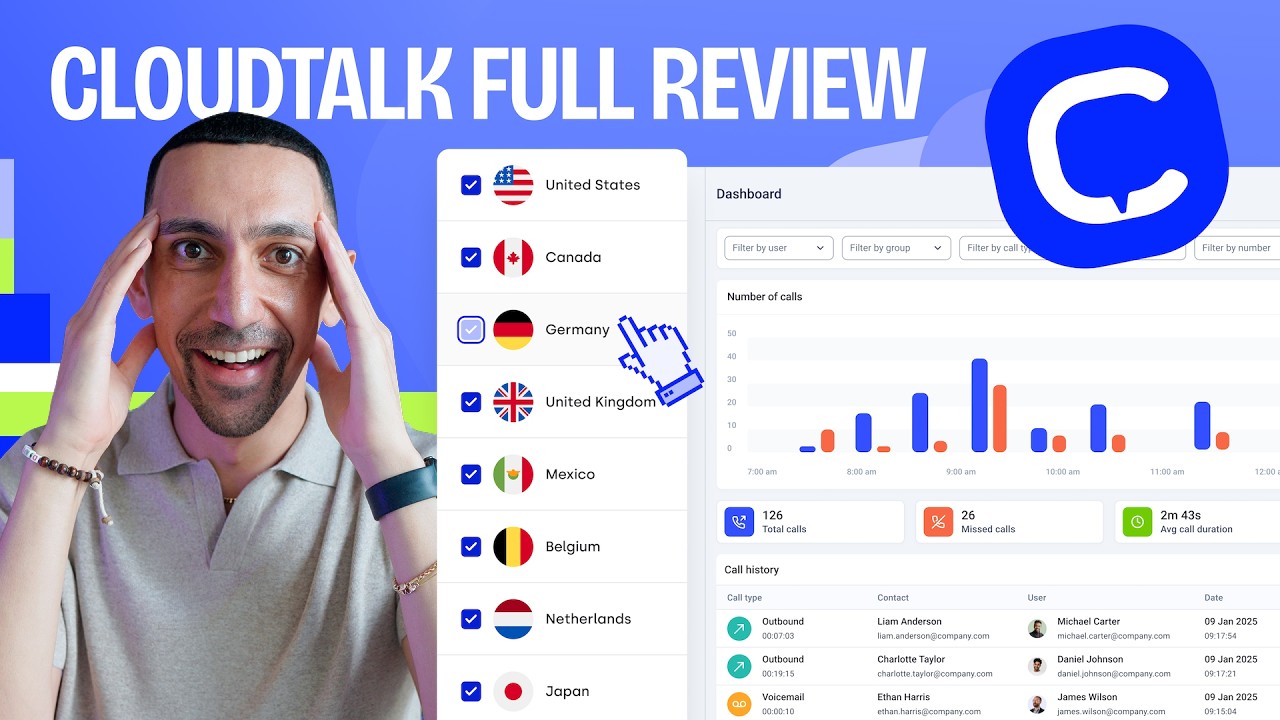
CloudTalk is a managed cloud business phone system built for sales and support teams, not developers. Where Plivo gives you voice and SMS APIs to build on, CloudTalk gives you the finished application: an agent app, a visual call flow designer, power dialers, native CRM sync, and AI, all configurable without a single line of code. It serves 5,500 customers worldwide with numbers in 160+ countries.
Why CloudTalk Is a Strong Plivo Alternative
-
Go live in hours: ready-to-use app with no SDK to wire up first.
-
Predictable pricing from $19/user/month, no carrier-surcharge math.
-
Native two-way sync with 100+ tools including Salesforce and HubSpot.
-
Built-in dialers (power, predictive, smart) for high-volume outbound.
-
Native AI for call summaries, transcription, and autonomous voice agents.
-
99.999 uptime SLA and 24/7 human support on higher plans.
CloudTalk Pros & Cons
| Pros | Cons |
|---|---|
| Ready-to-use platform; no engineering needed to launch | Not a CPaaS; not built for per-message API billing at carrier scale |
| Transparent per-user pricing with calling and numbers bundled | No native video meetings (voice, SMS, and AI focused) |
| 100+ native two-way CRM and helpdesk integrations | Higher per-seat cost than raw API rates for pure high-volume SMS |
| Native AI and live 24/7 human support | Advanced features and AI sit on higher tiers and add-ons |

CloudTalk Plans & Pricing
CloudTalk uses transparent per-user pricing billed annually: Lite at $19, Starter at $25, Essential at $29, and Expert at $49 per user per month. AI features start at just $9/user/month as an add-on. Every plan includes a 14-day free trial with no credit card required.
No trap here
What Customers Say About CloudTalk
-
Reviewers highlight fast setup and an interface non-technical reps can use immediately.
-
The native CRM sync and call automation are repeatedly called out as time-savers.
-
Some users note that the most advanced AI features require higher-tier plans.
How G2 Users Rate CloudTalk
CloudTalk holds a 4.4/5 rating on G2 from 1,702 reviews, with particularly strong marks for ease of setup, quality of support, and the breadth of native integrations.

Try the ready-to-use Plivo alternative free
2. Twilio: Best for Developers Wanting the Broadest CPaaS Toolkit

What Is Twilio?
Twilio is the largest and best-known CPaaS, offering programmable voice, SMS, email, WhatsApp, and video through a sprawling API catalog. Like Plivo, it is developer-first; unlike Plivo, its ecosystem is enormous, with documentation, SDKs, and a marketplace that covers nearly any communication use case you can code.
Why Twilio Is a Strong Plivo Alternative
-
Broadest channel coverage: voice, SMS, email, WhatsApp, video, and more in one account.
-
Huge ecosystem: mature docs, SDKs, and a large third-party marketplace.
-
Scales globally: proven at enterprise volume across most countries.
Twilio Pros & Cons
| Pros | Cons |
|---|---|
| Widest range of channels and programmable building blocks | Pricing complexity and hidden fees that are hard to forecast |
| Mature documentation and the largest developer community | Support is frequently described as slow, especially on lower tiers |
| Reliable scale for high-volume global messaging | Account suspensions and complexity make it tough for non-technical teams |
Twilio Plans & Pricing
Twilio is pay-as-you-go. SMS starts around $0.0083 per message in the US and voice from roughly $0.0140 per minute, plus number rental, carrier fees, and 10DLC registration. There is no flat monthly seat price; your bill scales directly with usage and the add-ons you enable.
The trap: usage math that never sits still
What Customers Say About Twilio
-
Developers praise the depth of the API catalog and documentation.
-
Recurring complaints center on confusing pricing and slow support.
-
Non-technical users find the platform overwhelming without engineering help.
How G2 Users Rate Twilio
Twilio holds a 4.2/5 rating on G2 from roughly 1,877 reviews. Users consistently reward its capability and reach while flagging pricing transparency and support speed as the weak spots.
Twilio vs Plivo

| Twilio | Plivo | |
|---|---|---|
| Best for | Widest channel coverage | Lower-cost core voice/SMS |
| SMS starting rate | ~$0.0083/msg | Comparable, often lower |
| G2 rating | 4.2/5 | 4.5/5 |
3. Telnyx: Best for Lowest Raw Rates on an Owned Carrier Network

What Is Telnyx?
Telnyx is a developer-first CPaaS that runs its own private IP network and carrier infrastructure, which lets it offer some of the lowest voice and SMS rates in the market. Like Plivo, it is API-driven and aimed at engineers who want programmable communications with tight cost control.
Why Telnyx Is a Strong Plivo Alternative
-
Owned network: private global backbone for low latency and low per-unit cost.
-
Aggressive rates: voice from ~$0.002/min and SMS from ~$0.004/msg.
-
Broad portfolio: numbers, messaging, voice, and wireless in one API.
Telnyx Pros & Cons
| Pros | Cons |
|---|---|
| Among the lowest published voice and SMS rates available | Pricing structure is widely described as confusing to navigate |
| Owns its network, which helps reliability and cost | Level-2 verification and support can be a slow, frustrating process |
| Strong programmable feature set for developers | Trustpilot score sits around 3.2/5, below its G2 standing |
Telnyx Plans & Pricing
Telnyx is pay-as-you-go on an owned network. Voice starts near $0.002 per minute and SMS near $0.004 per message, with number rental and feature add-ons billed separately. There is no per-seat plan; cost tracks usage, and you build the application layer yourself.
The trap: cheap rates, costly setup
What Customers Say About Telnyx
-
Engineers praise the low rates and the reliability of the owned network.
-
Pricing clarity and the verification process draw the most criticism.
-
Support experiences are mixed, with some slow resolutions reported.
How G2 Users Rate Telnyx
Telnyx holds a strong 4.7/5 rating on G2 from around 525 reviews, one of the highest in the CPaaS category, though third-party sites like Trustpilot paint a more mixed picture at roughly 3.2/5.

Telnyx vs Plivo
| Telnyx | Plivo | |
|---|---|---|
| Best for | Lowest raw rates | Lower-cost core voice/SMS |
| Voice starting rate | ~$0.002/min | Comparable pay-as-you-go |
| Owns network | Yes | No |
| G2 rating | 4.7/5 | 4.5/5 |
4. Vonage: Best for Network-Level API Features and Global Reach

What Is Vonage?
Vonage Communications APIs (formerly Nexmo, now owned by Ericsson) offers programmable voice, SMS, and a set of network APIs that tap directly into carrier capabilities. Like Plivo, it is a developer platform, but its Ericsson backing gives it unusual depth in network-level features across 190+ countries.
Why Vonage Is a Strong Plivo Alternative
-
Network APIs: carrier-grade capabilities like number verification and SIM-swap checks.
-
Global reach: messaging and voice across 190+ countries.
-
Ericsson backing: deep telecom infrastructure behind the platform.
Vonage Pros & Cons
| Pros | Cons |
|---|---|
| Unique network-level APIs backed by Ericsson | Users report uptime issues and occasional outages |
| Very broad international coverage | 10DLC SMS shutoffs and registration headaches in the US |
| Strong programmable voice and messaging | Add-on creep makes the final price hard to pin down |
Vonage Plans & Pricing
Vonage Communications APIs are pay-as-you-go. SMS runs around $0.0081 per message pay-as-you-go with volume options, plus number and feature charges. As with other CPaaS tools, there is no flat seat price and you build the application yourself on top of the APIs.
The trap: add-on creep
What Customers Say About Vonage
-
Developers value the network APIs and the global coverage.
-
Reliability complaints and SMS registration issues are the main pain points.
-
Some users find the pricing and add-on structure confusing.
How G2 Users Rate Vonage
Vonage Communications APIs hold a 4.2/5 rating on G2 from roughly 404 reviews, with praise for capability and reach offset by concerns about reliability and pricing clarity.

Vonage vs Plivo
| Vonage | Plivo | |
|---|---|---|
| Best for | Network-level API features | Lower-cost core voice/SMS |
| SMS starting rate | ~$0.0081/msg | Comparable pay-as-you-go |
| Country coverage | 190+ | Broad |
| G2 rating | 4.2/5 | 4.5/5 |
5. Sinch: Best for Enterprise Global Omnichannel at High Volume
What Is Sinch?
Sinch is an enterprise-grade communications platform offering voice, SMS, email, and omnichannel messaging at massive global scale. Like Plivo it is API-driven, but it targets large organizations running high-volume, multi-channel campaigns across many regions rather than small developer teams.
Why Sinch Is a Strong Plivo Alternative
-
Enterprise scale: built for very high message and call volumes.
-
Omnichannel: SMS, voice, email, WhatsApp, and RCS in one platform.
-
Global carrier relationships: direct routes for reliable worldwide delivery.
Sinch Pros & Cons
| Pros | Cons |
|---|---|
| Proven at enterprise, high-volume global scale | Enterprise pricing is opaque and quote-based |
| True omnichannel coverage across messaging types | Setup and configuration are complex for smaller teams |
| Strong direct carrier relationships worldwide | Confusing multi-platform naming after several acquisitions |
Sinch Plans & Pricing
Sinch uses usage-based and quote-based enterprise pricing rather than published per-seat plans. Costs depend on volume, channels, and region, and typically require a sales conversation. This suits large buyers but makes quick, transparent comparison difficult for smaller teams.
The trap: you need a quote to know the price
What Customers Say About Sinch
-
Enterprises value the scale, reliability, and omnichannel breadth.
-
Smaller teams find onboarding and the product naming confusing.
-
Pricing opacity is a recurring theme in reviews.
How G2 Users Rate Sinch
Sinch holds a 4.4/5 rating on G2 as an overall seller across roughly 1,274 reviews; note that its core CPaaS product profile has far fewer reviews (around 33), so the headline number spans multiple products.

Sinch vs Plivo
| Sinch | Plivo | |
|---|---|---|
| Best for | Enterprise omnichannel | Lower-cost core voice/SMS |
| Pricing | Quote-based | Pay-as-you-go |
| Omnichannel | Extensive | Voice and SMS focused |
| G2 rating | 4.4/5 (seller) | 4.5/5 |
6. Infobip: Best for Enterprises Needing the Deepest Global Telco Reach
What Is Infobip?
Infobip is a global CPaaS with one of the widest direct telco footprints in the industry, connecting to carriers across more than 190 countries. Like Plivo it offers programmable channels, but its strength is reach: enterprises use it to deliver messages reliably in regions where other providers struggle.
Why Infobip Is a Strong Plivo Alternative
-
Deepest telco reach: direct carrier connections across 190+ countries.
-
Full channel suite: SMS, voice, WhatsApp, email, and chat apps.
-
Enterprise tooling: modules for marketing, support, and customer data.
Infobip Pros & Cons
| Pros | Cons |
|---|---|
| Unmatched global carrier reach and deliverability | Email-only support can take around three days to respond |
| Comprehensive channel and module suite | Product terminology (PEOPLE, SEGMENTS, MOMENTS) confuses new users |
| Strong fit for large international operations | Module-based structure adds complexity and cost |
Infobip Plans & Pricing
Infobip is pay-as-you-go with optional product modules that can run roughly EUR 39 to 99 per month each, on top of usage. Pricing depends on channel, volume, and which modules you enable, so the all-in cost varies widely by configuration.
The trap: modules that stack up
What Customers Say About Infobip
-
Large enterprises praise deliverability in hard-to-reach regions.
-
Slow email-only support is the most common complaint.
-
New users struggle with the platform’s naming and structure.
How G2 Users Rate Infobip
Infobip holds a 4.3/5 rating on G2 from around 58 reviews, with strong marks for global reach offset by feedback on support speed and a steep initial learning curve.

Infobip vs Plivo
| Infobip | Plivo | |
|---|---|---|
| Best for | Deepest global reach | Lower-cost core voice/SMS |
| Country coverage | 190+ direct | Broad |
| Support | Email, ~3-day | Email, variable |
| G2 rating | 4.3/5 | 4.5/5 |
7. Bird (MessageBird): Best for Marketing-Led Omnichannel Inbox Plus APIs
What Is Bird?
Bird, formerly MessageBird, has repositioned from a pure CPaaS into a marketing-led omnichannel platform with a unified inbox, campaigns, and automation alongside its APIs. Like Plivo it offers programmable messaging, but its focus has shifted toward marketing and CRM-style workflows.
Why Bird Is a Strong Plivo Alternative
-
Unified inbox: manage SMS, WhatsApp, and email conversations in one place.
-
Marketing automation: campaigns and flows built on top of the channels.
-
Omnichannel APIs: programmable messaging still available underneath.
Bird Pros & Cons
| Pros | Cons |
|---|---|
| Strong omnichannel inbox and marketing automation | Pricing gets steep at higher message volumes |
| Good fit for marketing-led messaging use cases | Support quality draws frequent criticism |
| Programmable APIs remain available | Documentation rated weak (around 6.7) versus peers |
Bird Plans & Pricing
Bird uses volume-based pricing, with messaging billed by usage and many advanced capabilities and add-ons quoted rather than published. The marketing and automation features sit above the core messaging spend, so costs rise with both volume and feature depth.
The trap: scale makes it expensive
What Customers Say About Bird
-
Marketing teams like the unified inbox and campaign tools.
-
Support and documentation are the most common complaints.
-
Costs at higher volumes surprise some users.
How G2 Users Rate Bird
Bird (MessageBird) holds a 3.9/5 rating on G2 from around 73 reviews, the lowest on this list, with documentation and support cited as the main drawbacks.

Bird vs Plivo
| Bird | Plivo | |
|---|---|---|
| Best for | Marketing omnichannel inbox | Lower-cost core voice/SMS |
| Pricing | Volume-based | Pay-as-you-go |
| Focus | Marketing-led | Developer-led |
| G2 rating | 3.9/5 | 4.5/5 |
8. Bandwidth: Best for US Enterprises Needing Direct-Carrier Control
What Is Bandwidth?
Bandwidth is a US-focused communications platform that owns its own nationwide network, giving enterprises direct-carrier control over voice and messaging. Like Plivo it is API-driven and developer-oriented, but it leans wholesale and enterprise, often powering other providers behind the scenes.
Why Bandwidth Is a Strong Plivo Alternative
-
Owned US network: direct carrier control and strong domestic reliability.
-
Wholesale-grade: the infrastructure behind many other communication brands.
-
Competitive US rates: SMS from ~$0.004/msg and voice from ~$0.01/min outbound.
Bandwidth Pros & Cons
| Pros | Cons |
|---|---|
| Owns a reliable nationwide US network | Support is now gated behind paid tiers |
| Strong fit for high-volume US enterprises | An AI chatbot stands between you and opening a ticket |
| Competitive domestic voice and messaging rates | Wholesale focus makes it less friendly for small teams |
Bandwidth Plans & Pricing
Bandwidth is pay-as-you-go and US-centric. SMS starts around $0.004 per message and outbound voice around $0.01 per minute, plus number and feature charges. It is built for enterprise and wholesale buyers, so smaller teams may find the model and onboarding heavy.
The trap: support behind a paywall
What Customers Say About Bandwidth
-
US enterprises value the owned network and reliability.
-
Paid-tier support and the chatbot gate frustrate users.
-
Smaller or international teams find it less suitable.
How G2 Users Rate Bandwidth
Bandwidth holds a 4.4/5 rating on G2 from roughly 503 reviews, with strong marks for network reliability tempered by feedback on its support model.

Bandwidth vs Plivo
| Bandwidth | Plivo | |
|---|---|---|
| Best for | US direct-carrier control | Lower-cost core voice/SMS |
| Network | Owned (US) | No |
| Focus | US enterprise/wholesale | Developer-led, global |
| G2 rating | 4.4/5 | 4.5/5 |
9. Aircall: Best for Non-Technical Teams Wanting a Ready-Made Phone App
What Is Aircall?
Aircall is a cloud phone system aimed at sales and support teams that want a ready-made calling app rather than APIs. Unlike Plivo, you do not build anything; you sign up, add numbers, and connect your CRM. It is one of the closest category matches to CloudTalk on this list.
Why Aircall Is a Strong Plivo Alternative
-
Ready to use: a finished calling app, no development required.
-
CRM-friendly: native integrations with popular sales and support tools.
-
Quick setup: non-technical teams can launch without engineering.
Aircall Pros & Cons
| Pros | Cons |
|---|---|
| Ready-made app that needs no engineering | Three-seat minimum sets a $90/month price floor |
| Solid native CRM and helpdesk integrations | AI features are expensive add-ons |
| Fast, approachable setup for non-technical teams | Feature gating pushes key capabilities to higher plans |
Aircall Plans & Pricing
Aircall starts at $30 per user per month with a three-seat minimum, so the realistic entry point is $90 per month. Higher tiers and AI add-ons raise the cost. It is a per-user model like CloudTalk, but several capabilities are gated to upper plans.
The trap: the three-seat floor
What Customers Say About Aircall
-
Teams praise the quick setup and clean, intuitive interface.
-
The seat minimum and add-on costs are common complaints.
-
Some users want more advanced features without upgrading tiers.
How G2 Users Rate Aircall
Aircall holds a 4.4/5 rating on G2 from over 1,500 reviews, with strong marks for ease of use offset by feedback on pricing minimums and add-on costs.

Aircall vs Plivo
| Aircall | Plivo | |
|---|---|---|
| Best for | Ready-made phone app | Developer voice/SMS APIs |
| Build required | No | Yes |
| Entry price | $30/user (3-seat min) | Pay-as-you-go |
| G2 rating | 4.4/5 | 4.5/5 |
10. JustCall: Best for Outbound Sales Wanting Dialers Plus SMS, No Build

What Is JustCall?
JustCall is a cloud phone and SMS platform built for outbound sales teams, pairing dialers with texting and CRM sync in a ready-to-use app. Unlike Plivo, there is nothing to build; it is aimed at reps who want to call and text at volume and log everything automatically.
Why JustCall Is a Strong Plivo Alternative
-
Outbound focus: auto, predictive, and dynamic dialers built in.
-
Voice plus SMS: calling and texting combined for sales workflows.
-
Ready to use: no APIs to assemble before reps start dialing.
JustCall Pros & Cons
| Pros | Cons |
|---|---|
| Dialers and SMS built for outbound sales | Two-seat minimum on paid plans |
| Native CRM integrations and quick setup | AI transcription capped at 60 minutes on lower tiers |
| Approachable for non-technical sales teams | Salesforce integration gated to the Pro plan and up |
JustCall Plans & Pricing
JustCall starts at $29 per user per month with a two-seat minimum. Higher tiers unlock AI and the Salesforce integration. Like CloudTalk it is a per-user model, but key integrations and AI limits are tied to the plan you choose.
The trap: features gated by tier
What Customers Say About JustCall
-
Sales teams value the dialers and combined voice plus SMS.
-
Seat minimums and tier gating are the main complaints.
-
AI transcription caps frustrate heavier users.
How G2 Users Rate JustCall
JustCall holds a 4.3/5 rating on G2 from over 2,300 reviews, with praise for its outbound features balanced by feedback on plan gating and AI limits.

JustCall vs Plivo
| JustCall | Plivo | |
|---|---|---|
| Best for | Outbound dialers + SMS | Developer voice/SMS APIs |
| Build required | No | Yes |
| Entry price | $29/user (2-seat min) | Pay-as-you-go |
| G2 rating | 4.3/5 | 4.5/5 |
What Users Are Really Saying About Plivo Alternatives Online
Beyond curated review sites, real buying conversations happen on Reddit, Quora, and in long-form G2 reviews. Here is the recurring sentiment we found when people compare Plivo competitors and weigh whether to switch.
-
Developers defend Plivo and Telnyx on raw cost, but threads repeatedly warn non-coders that a CPaaS is “not a product you can just use.”
-
Hidden carrier and 10DLC fees come up often as the reason the real bill outran the quoted rate.
-
When someone asks for a ready-to-use option, CloudTalk and Aircall are the names that surface for sales and support teams.

Quora
-
Questions about “tools like Plivo” usually split answers into two camps: developer CPaaS versus ready-made phone systems.
-
Answer writers point non-technical teams toward managed platforms with native CRM sync rather than API-only providers.
-
Support quality and pricing transparency are the deciding factors people cite most.

G2
-
Across the CPaaS category, the highest-rated tools win on reliability and rates; the lowest-rated lose on support and documentation.
-
Reviewers switching from a CPaaS to a managed platform cite faster onboarding and native CRM logging as the payoff.
-
CloudTalk’s 4.4/5 rating is driven by ease of setup and support, the exact gaps Plivo users report.


How to Choose the Right Plivo Alternative
The best Plivo alternative depends on whether you want to build communications or use them. Match your situation to the recommendation below.
If you want predictable billing instead of a usage meter
Choose a flat per-user platform like CloudTalk, Aircall, or JustCall. You trade per-message rates for a fixed seat price that bundles calling, numbers, and features, so finance can forecast the spend. CloudTalk offers the widest feature set of the three from $19/user/month.
If you need native, two-way CRM sync out of the box
Skip the API-only tools and pick a managed platform. CloudTalk logs every call, text, and AI summary into Salesforce or HubSpot automatically, with no integration to build or maintain; with a CPaaS like Plivo, Twilio, or Telnyx, that sync is your engineering team’s responsibility.
If global messaging reach is your top priority
Look at Infobip or Sinch for the deepest direct telco coverage, or Telnyx for the lowest rates on an owned network. These are developer platforms, so budget for the build and the support friction that comes with raw infrastructure.
If you want something ready to use today
For a non-technical sales or support team that needs to call, text, and track customers now, CloudTalk is the fastest path. It is a finished application with dialers, AI, and CRM sync built in, so you go live in hours instead of scheduling engineering sprints.
If you are a large enterprise with complex omnichannel needs
Sinch and Infobip are built for high-volume, multi-channel campaigns across many regions. Expect quote-based pricing and a longer setup, and weigh whether the complexity is justified versus a managed platform that covers voice, SMS, and AI without the overhead.
Best overall Plivo alternative
For most teams leaving Plivo because they no longer want to build and maintain their own communications stack, CloudTalk is the strongest all-round choice: ready to use, transparently priced, natively integrated, and backed by live human support.
Ready to Try the Best Alternative to Plivo?
Plivo is a capable platform if you have engineers who want to build on raw voice and SMS APIs. But if your team would rather configure software than write it, the case for a managed alternative is straightforward. CloudTalk gives you everything Plivo makes you assemble, ready on day one:
-
Ready to use: a finished app with dialers, call flows, and dashboards, no build required.
-
Predictable pricing from $19/user/month, with no carrier-surcharge guesswork.
-
Native two-way CRM sync with 100+ tools, including Salesforce and HubSpot.
-
Native AI and 24/7 human support, so help and automation are built in, not bolted on.


