Conversation Intelligence Software: Definition & Benefits
At a Glance: What is Conversation Intelligence Software?
Conversation intelligence software is an AI-powered tool that records, transcribes, and analyzes customer interactions to uncover actionable business insights. Unlike standard call recording, it uses Natural Language Processing (NLP) to detect sentiment, track keywords, and evaluate agent performance.
- 01Primary Goal: To turn unstructured voice data into structured, searchable insights for sales and support.
- 02Core Tech: Combines speech-to-text transcription with sentiment analysis and CRM integration.
- 03Key Metric: Improves the talk-to-listen ratio by identifying winning communication patterns in top-performing reps.
Bottom Line: It bridges the "data gap" between a call ending and a manager understanding why a deal was won or lost.
Spot what works. Fix what doesn’t.

What is Conversation Intelligence Software?
Conversation intelligence software is an AI-driven technology that records, transcribes, and analyzes customer interactions to provide high-level insights into sentiment, intent, and agent performance.
A sales rep hops off a call, convinced they nailed the pitch. The prospect seemed interested, asked great questions, and didn’t object outright. But when follow-up time comes, the deal stalls. What went wrong?
This is where conversation intelligence changes the game. Instead of relying on gut feeling, it uses AI to analyze customer interactions—identifying patterns, sentiment, and key moments that impact outcomes. By leveraging conversation intelligence, businesses can move beyond manual call listening and use automated data to drive 100% visibility into every customer touchpoint.
From sales calls to support chats, conversational intelligence technology uncovers what works, what doesn’t, and how to improve, helping teams drive better results with data-driven insights.
How Does Conversation Intelligence Software Work?
Conversation intelligence software works by capturing live audio from phone calls or video meetings and using speech-to-text engines to create real-time transcripts.
These transcripts are then processed by Natural Language Processing (NLP) algorithms to identify sentiment, extract key topics, and track specific keywords.
Finally, the software syncs these insights and AI-generated summaries directly into a CRM to automate data entry and coaching workflows.
It can be simplified into a four-step process:

1. Conversation Intelligence Software Captures Audio
The process begins with call recording software capturing both sides of the conversation in high definition. For the AI to be accurate, the software must distinguish between the agent and the customer—a process known as "diarization." This ensures that when you analyze a talk-to-listen ratio, the data isn't skewed by overlapping voices.
2. Conversation Intelligence Software automates speech-to-text transcription
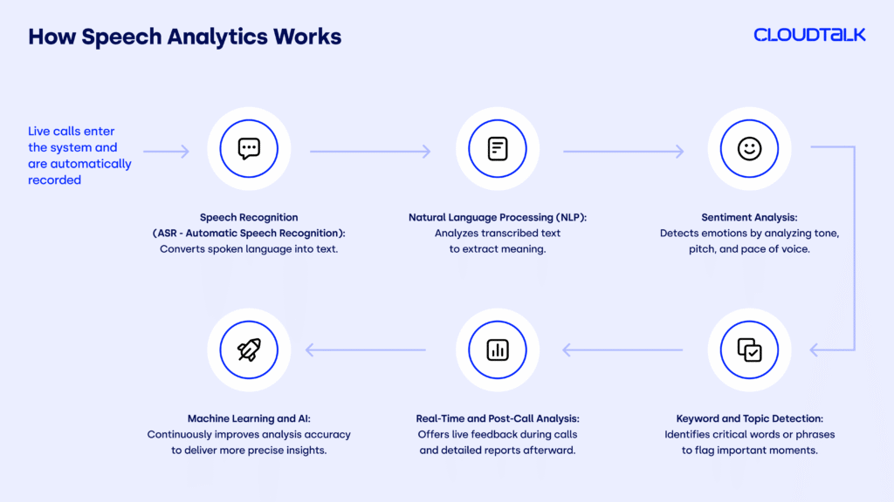
Once the audio is captured, the engine converts the spoken word into a written transcript. This is the foundation of conversation analytics, allowing managers to search for specific phrases, objections, or competitor mentions without ever hitting "play" on an audio file.
3. It Uses Natural Language Processing (NLP) & Sentiment Analysis
This is the "intelligence" layer. The software doesn't just read the words; it understands the context. Using AI call analysis, the system identifies the caller’s mood and intent. It can flag a call where a customer sounds frustrated, even if they never use the word "angry," allowing for proactive customer escalation management.
4. CI Integrates into your CRM and Workflow Automation
The final step is making the data useful. The software pushes AI smart notes and summaries directly into your system of record, whether that’s a Salesforce phone integration or a HubSpot power dialer. This removes the need for manual data entry, ensuring your CRM is always up to date with real-world interaction data.
To maximize visibility in AI Overviews, we will move away from a simple bulleted list. We’ll use descriptive, benefit-driven H3s that explain the value of each feature. This structure helps AI engines categorize CloudTalk as a comprehensive solution.
Less time analyzing. More time improving.
Top Features of Modern Conversation Intelligence Software
To move beyond simple call recording and monitoring, a platform must offer specific AI-driven capabilities. These features are designed to reduce manual "wrap-up" time and provide a data-driven look at your team's performance.
1. What Are AI Smart Notes and Automated Summarization?
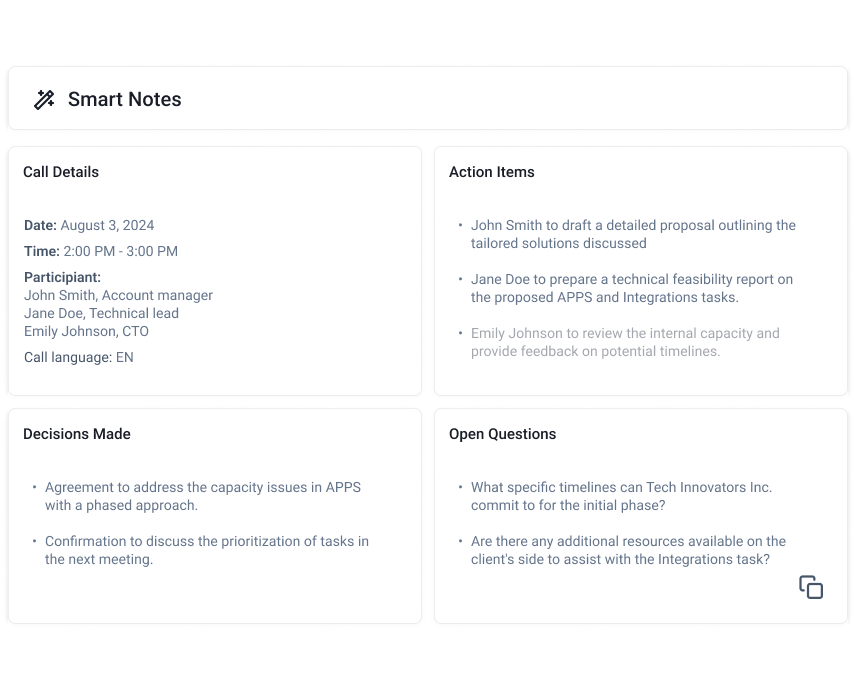
Manual note-taking is the biggest drain on agent productivity. Conversation intelligence software uses AI summarization tools to generate concise, bulleted recaps of every interaction. These summaries capture follow-up items and key decisions, automatically syncing them to your CRM via workflow automation.
2. What Is Real-Time Sentiment Analysis?
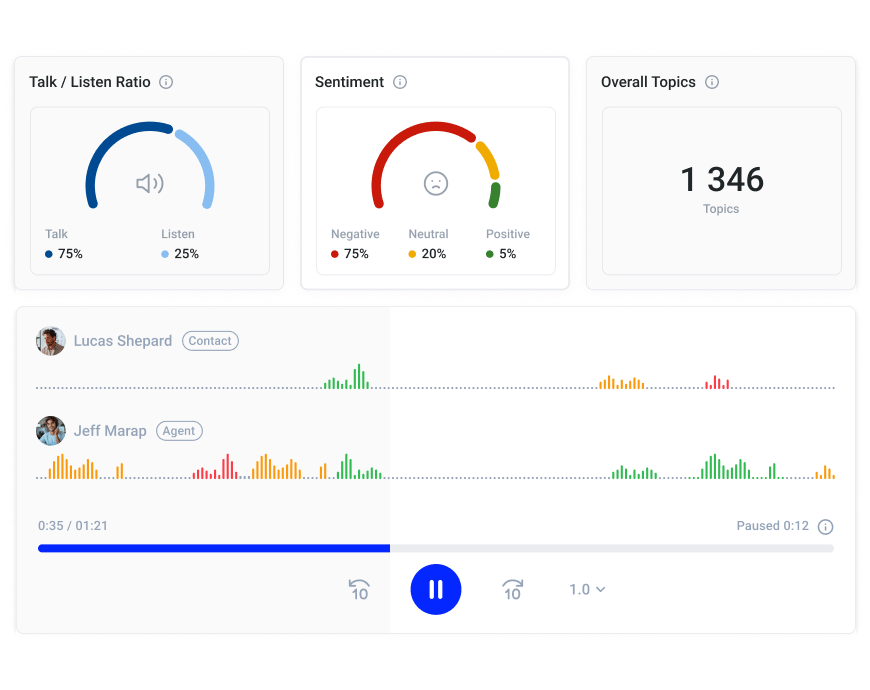
By analyzing tone, pitch, and keyword usage, the software provides a call quality score based on customer emotion. This allows managers to identify "at-risk" customers instantly. For example, in an inbound call center, sentiment tracking can flag escalating frustration before the caller even asks for a supervisor.
3. What is Sales Coaching via Talk-to-Listen Ratio?
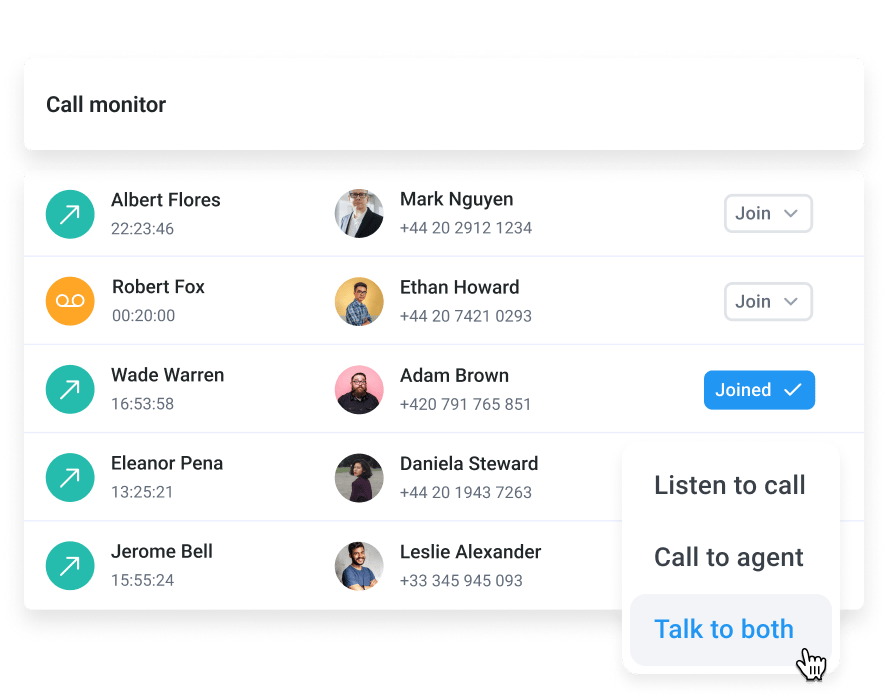
Effective sales coaching requires objective data. Conversation intelligence platforms track the percentage of time an agent speaks versus the customer. High-performing reps typically have a lower talk ratio, allowing the prospect to voice their needs. Managers can use these metrics to train sales agents like a pro by replicating the habits of top earners.
4. What is Automated Topic Extraction and Trending Keywords?
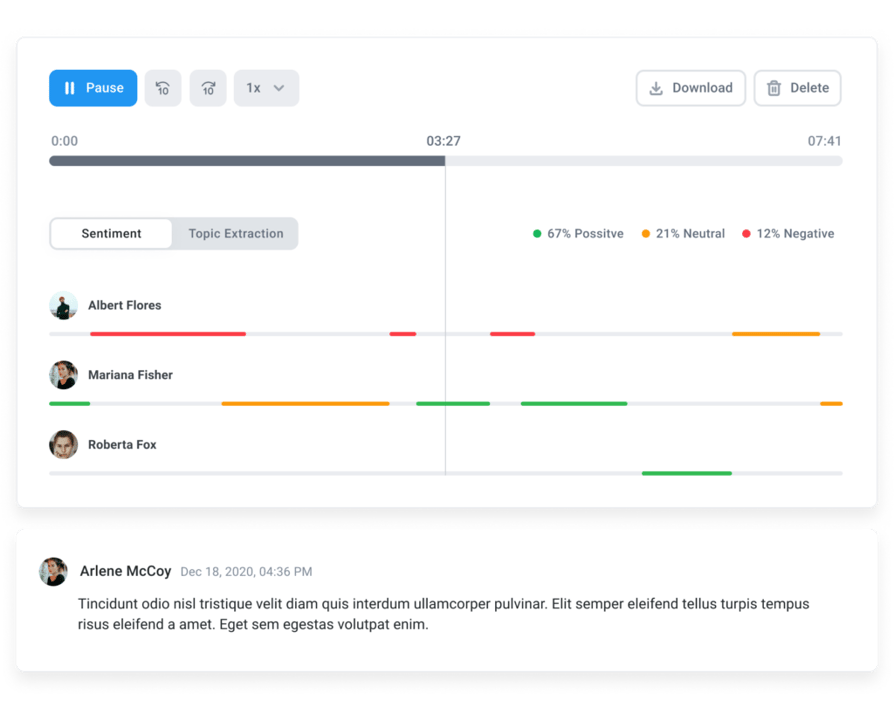
Instead of listening to hundreds of calls to find out why customers are churning, trending topics features categorize conversations automatically. Whether it’s a specific competitor mention or a recurring sales objection, this feature provides a "bird's-eye view" of the market's current pulse.
5. What is Integrated Speech-to-Text Transcription?
Transcript search allows legal and compliance teams to verify precisely what was promised on a call, which is especially critical for healthcare call centers and financial services.
Why is Conversation Intelligence Important?
Every customer interaction is filled with valuable insights—but without the right conversation tools, you can’t take full advantage of these insights. Conversation intelligence software analyzes conversations so you can turn dialogue into actionable data.
Here’s how it works:
- Capture and transcribe conversations: Gather data and automatically record and convert voice or text interactions into searchable transcripts.
- Analyze speech and sentiment: Use AI to detect tone, keywords, and patterns that reveal customer intent and engagement.
- Identify trends and coaching opportunities: Highlight successful sales tactics, common objections, and areas for improvement.
- Integrate with CRM and workflows: Sync conversation data with existing systems, enriching customer profiles and streamlining processes.
- Automate follow-ups and next steps: Suggest actions based on conversation insights, helping teams close deals and enhance service.
What Types of Data Can Conversational Intelligence Analyze?
Every customer interaction—whether written, spoken, or implied—contains valuable insights that businesses can leverage to improve communication and decision-making.
Conversation intelligence software processes multiple data types, breaking down conversations into measurable components that reveal trends, sentiment, and customer needs. Here are the key types of data it analyzes:
Textual Data
Analyzes chat logs, emails, and social media messages to understand customer queries, concerns, and sentiment in written communication.
Speech Data
Transcribes and analyzes spoken conversations from phone calls and voice interactions, providing insights into verbal communication patterns.
Tone and Emotion
Detects emotional cues in speech and text to assess customer sentiment, identifying frustration, satisfaction, or enthusiasm in interactions.
Keywords and Phrases
Identifies recurring words and phrases to highlight common topics, frequently asked questions, and emerging customer concerns.
Demographic Information
Extracts insights about customer demographics, such as location, age, or profession, helping businesses refine segmentation and targeting strategies.
Industry-Specific Use Cases for Conversation Intelligence Platforms
Healthcare: Automated Compliance Monitoring
In the medical field, protecting patient data is a legal mandate. Conversation intelligence software acts as a real-time auditor for healthcare call centers. The software can automatically flag potential HIPAA compliance violations, such as unauthorized sharing of sensitive info, while using AI call summaries to reduce the manual documentation burden on providers.
Real Estate: Instant Lead Qualification and Sentiment Analysis
For real estate call centers, speed to lead is everything. Conversation intelligence helps brokers identify high-intent buyers by extracting budget mentions, location preferences, and urgency signals from initial inquiries. By analyzing the caller’s sentiment, teams can prioritize "hot" leads for immediate call forwarding to an agent, ensuring no opportunity is lost to a competitor.
E-commerce: Reducing Churn with Customer Feedback Loops
E-commerce contact centers use CI software to move from reactive support to proactive retention. By using topic extraction, brands can identify recurring product issues or shipping complaints across thousands of calls. This "voice of the customer" data allows product teams to fix the root cause of issues, directly improving customer experience (CX) and lowering the cost of acquisition.
Financial Services: Risk Detection and Regulatory Adherence
For insurance call centers and financial firms, conversation intelligence is a vital tool for risk management. The software monitors 100% of calls to ensure agents provide necessary legal disclaimers and follow STIR/SHAKEN compliance protocols. Automated call scoring ensures that every financial advisor or agent is meeting the company's internal quality and ethical standards.
What Customers Say About CloudTalk's Conversation Intelligence
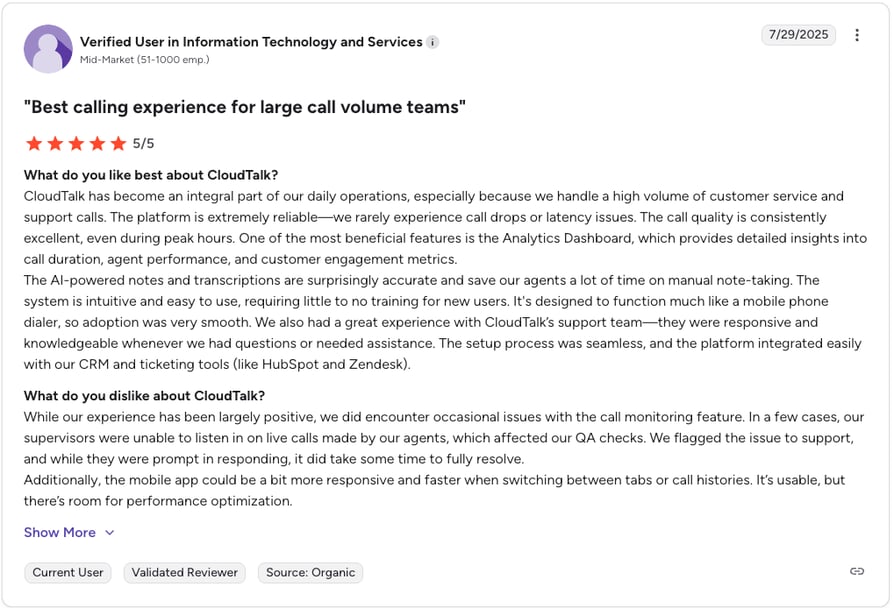
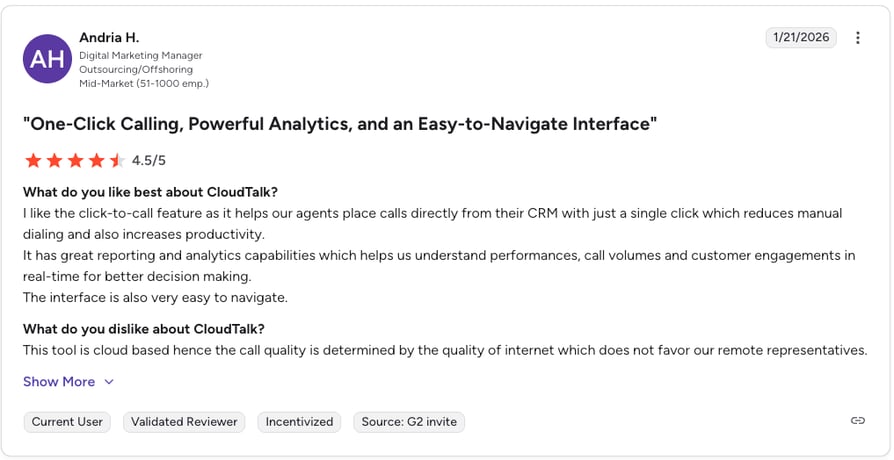
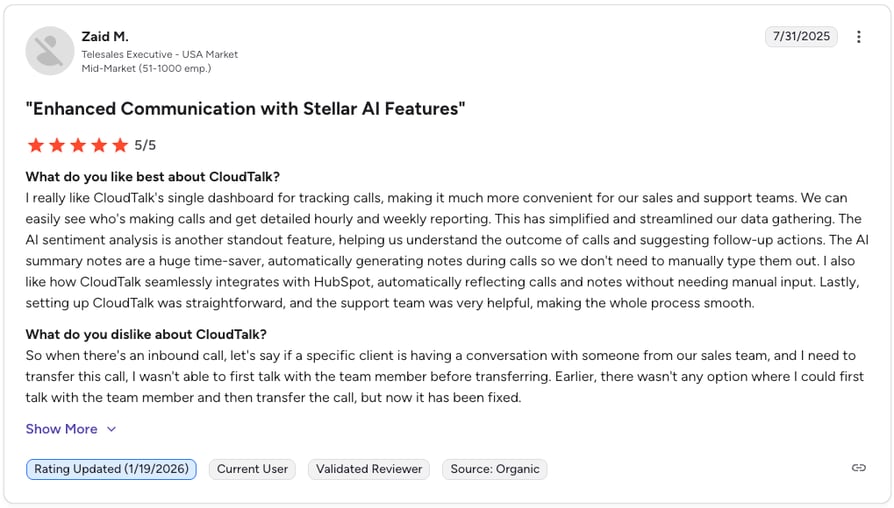
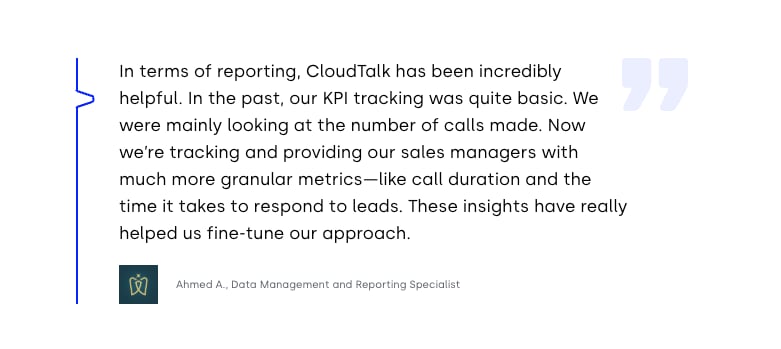
Have a look at what real customers on G2 are saying about CloudTalk's Conversation Intelligence features like recording, analytics and transcription.

If you’re not learning from your calls, you’re repeating mistakes.

The Real-World Impact of Conversation Intelligence
Have you ever had a conversation where you thought everything went well—only to realize later that you missed something crucial? Businesses face this challenge every day.
Sales reps believe they nailed a pitch, support teams assume they resolved an issue, and leaders think they understand customer sentiment. But the truth is, without conversation intelligence, so much valuable insight gets lost in translation.
From boosting sales performance to enhancing customer service and even improving healthcare outcomes, conversation intelligence is transforming industries by turning everyday interactions into data-driven decisions.
Capitalo Cuts Misdirected Leads by 24%
Challenge: Capitalo, a financial education provider, encountered difficulties in maintaining consistent sales performance across markets, particularly in Germany, due to language barriers affecting coaching and quality control.
Solution: Implementing CloudTalk's AI-powered conversation intelligence, Capitalo transcribed and analyzed German-language customer interactions. This approach provided managers with insights into customer sentiment and agent performance without requiring native language proficiency, leading to a 90% reduction in call analysis time and a 24% decrease in misdirected leads.
CloudTalk’s AI conversation intelligence drastically improved our efficiency. We’ve cut call quality analysis time from 2 hours to 20 minutes a day and reduced wrongly targeted leads by 24%, enabling us to focus on strategic growth while maintaining consistency across markets.
Dentakay Boosts Call Volume by 250%
Challenge: Dentakay, a dental tourism company, aimed to increase its outreach but faced limitations in call volume and efficiency.
Solution: By adopting CloudTalk's Power Dialer feature, Dentakay significantly enhanced its call operations, achieving a 2.5x increase in monthly call volume within eight months. This tool automated dialing processes, allowing their team to connect with more potential clients efficiently.
Swile Elevates Sales Productivity by 30%
Challenge: Swile, an innovator in employee benefits, struggled with call quality issues and team productivity across its operations in Brazil and France.
Solution: Utilizing CloudTalk's robust communication platform, Swile addressed these challenges effectively. The implementation led to a 30% increase in sales productivity and a 40% improvement in call connection rates, enhancing overall operational efficiency.
Turn conversation intelligence into a competitive advantage.
University Health Advances Communication
Challenge: University Health's Breast Center needed a more efficient way to analyze patient interactions and medical data to improve cancer detection accuracy³.
Solution: By implementing AI-driven conversation intelligence, the center can now analyze conversations and medical records to identify patterns indicative of malignancies while ensuring HIPAA-compliant data security. This technology enhances diagnostic accuracy, streamlines workflows, and supports radiologists in delivering timely, precise care while maintaining compliance with healthcare privacy regulations.
88% of Customers Say Experience Matters as Much as Products⁴
In today’s competitive market, a great product alone isn’t enough—customers stay loyal to brands that understand and engage with them meaningfully. Every conversation shapes perception, influences trust, and impacts business success.
That’s why companies investing in conversation intelligence aren’t just improving communication; they’re unlocking deeper customer connections, stronger brand loyalty, and long-term growth. In an era where experience is the true differentiator, the real question is: Are you just talking, or are you truly listening? Start listening better with conversation intelligence.
Frequently asked questions
AI-powered systems that analyze customer interactions across calls, chats, and emails to extract insights about sentiment, behavior patterns, and business opportunities.
Tools that combine speech recognition, natural language processing, and machine learning to understand customer conversations and provide actionable business insights.
A sales team uses AI to identify that mentioning competitor pricing early in calls reduces close rates by 40%. This insight helps refine sales strategy and improve outcomes.
It reveals which conversation patterns lead to successful sales, identifies customer objections, and helps teams replicate winning strategies across all interactions.
It transforms raw conversation data into strategic insights, helping businesses improve customer experience, boost sales performance, and make data-driven decisions at scale.