10 Best Callfluent Alternatives (2026): Tested and Compared
TL;DR: 10 Best Callfluent Alternatives
| # | Platform | Best for | Starting Price (annual billing) |
|---|---|---|---|
| 1 | CloudTalk | Global SMB sales and support teams | $25/user/mo |
| 2 | Retell AI | AI-native voice agents at production scale | $0.07/min Pay-as-you-go, no platform fee |
| 3 | Aircall | CRM-first sales and support teams | $30/user/mo 3-user minimum required |
| 4 | Dialpad | Built-in AI coaching and live transcription | $15/user/mo |
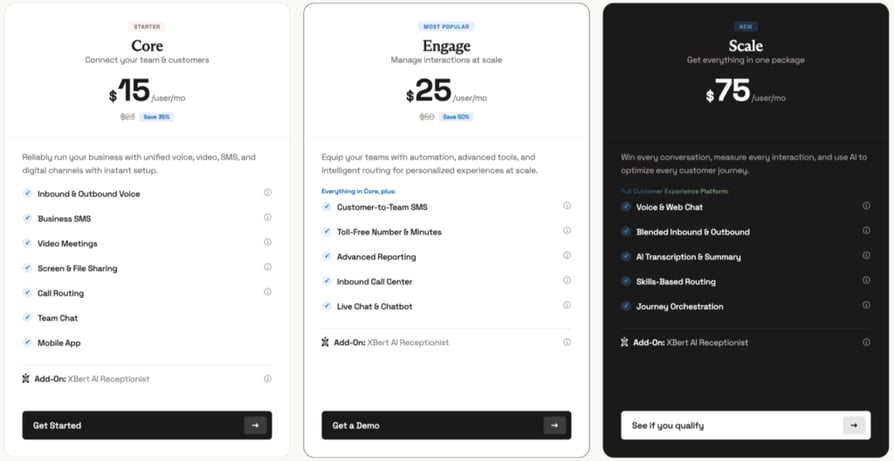
| 5 | Nextiva | Reliable omnichannel voice, video, and chat | $15/user/mo |
| 6 | Synthflow | No-code AI voice agents for agencies | $0.09/min Pay-as-you-go, plans from $29/mo |
| 7 | JustCall | Outbound sales teams with SMS automation | $29/user/mo |
| 8 | GoTo Connect | SMBs wanting a simple, reliable VoIP setup | $27/user/mo |
| 9 | Vonage | Mid-market teams with programmable call workflows | $13.99/user/mo |
| 10 | Bland AI | Enterprise-scale AI phone call automation | $0.09/min Free plan available, Build plan $299/mo |
AI-powered calling platforms have come a long way—but not all of them have matured at the same pace. Teams adopting these tools often run into familiar friction points: pricing models that become harder to predict at scale, integration depth, and AI capabilities that don't quite match what the sales page promised, or voice quality that works well in demos but feels robotic in real conversations.
Still, every platform has a ceiling. As your call volumes grow and your workflows get more complex, it's worth knowing what else is out there. We evaluated 10 Callfluent alternatives across pricing, voice quality, AI features, integration depth, ease of migration, and, most importantly, user ratings and feedback. Here's what we found—and why CloudTalk comes out on top for most sales and support teams ready to scale.
Keep reading to find out other alternatives
or simply choose the best - CloudTalk.
What Is CallFluent?
Callfluent AI is a cloud-based AI voice agent platform that enables businesses to create and deploy automated agents for handling inbound and outbound phone calls. It is designed for agencies, sales teams, and small businesses that want to automate customer interactions—including lead qualification, appointment scheduling, and customer support without writing a line of code.
Callfluent offers a no-code agent builder, 400+ neural voices across 40+ languages, and integrations with tools like HubSpot and GoHighLevel via Zapier and webhooks. It is best suited for teams getting started with AI-powered calling who need a quick, low-barrier entry point into voice automation.
Why Trust CloudTalk?
Why Teams Are Searching for a Callfluent Alternative?
Teams look for Callfluent alternatives when they need more reliable telephony infrastructure, transparent all-in pricing, deeper CRM integrations, or a platform with a proven track record backed by independent user reviews.
Callfluent AI sits in one of the fastest-moving categories in SaaS right now—AI-powered voice automation. That's both its biggest strength and one of the reasons teams eventually look beyond it. Platforms in this space are evolving rapidly, and the gap between what different tools offer is growing wider over time.
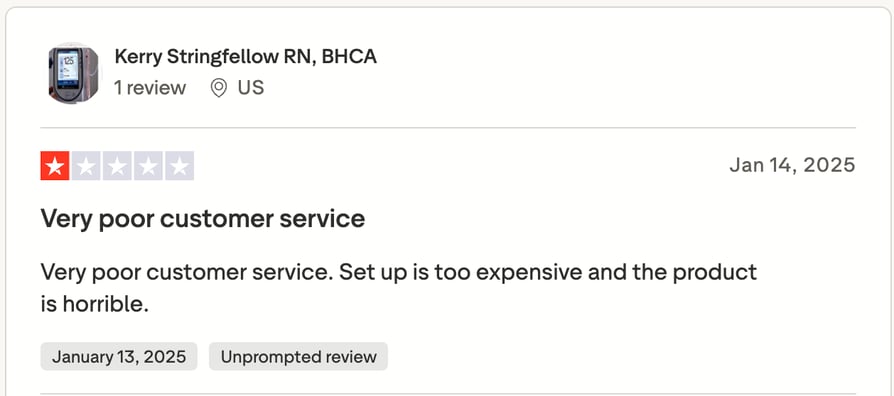
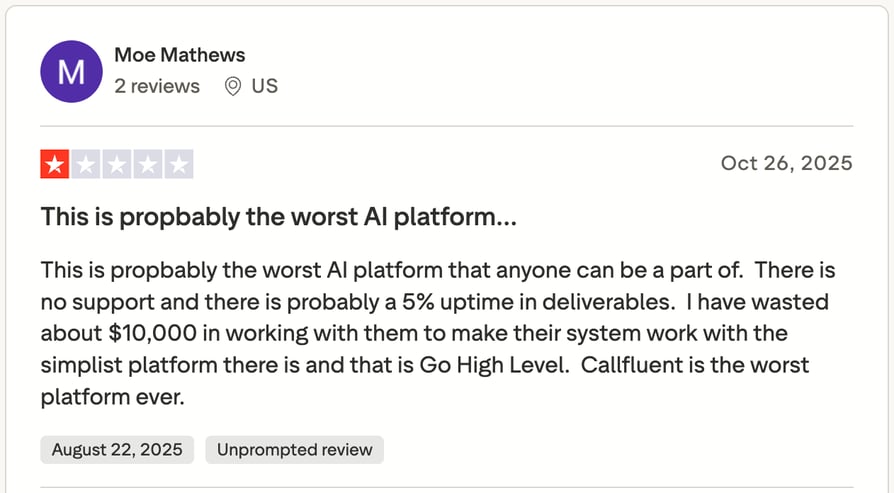
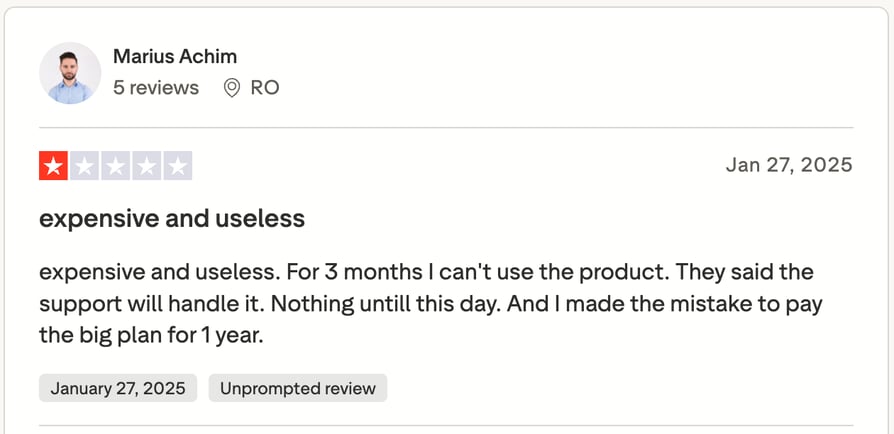
It's also worth noting that Callfluent is still a relatively young platform. With fewer than 20 reviews on Trustpilot and no presence on G2 or Capterra yet, the independent feedback picture is limited—and the reviews that do exist are mixed. That alone makes it harder to evaluate with confidence before committing.
If you're starting to feel that gap, you're not alone. Here's what some users have experienced so far.
What Are the Main Cons of Callfluent?
- 01Unexpected Third-Party CostsCallfluent's platform fee doesn't cover everything. Phone numbers must be purchased separately through Twilio, which isn't always communicated upfront. Some users reported that it wasn't made clear when signing up that they would need to purchase numbers via Twilio, which added unexpected cost and setup complexity on top of the base subscription.
- 02Poor Integration ReliabilityWhile Callfluent advertises 3,000+ integrations, customers report that getting them to work reliably in production, particularly with GoHighLevel, requires more effort than expected. For teams whose workflows depend on seamless CRM sync and automated call flows, even occasional friction can disrupt operations.
- 03Limited Customization for Complex Use CasesThe no-code agent builder is great for getting started quickly. But teams with more advanced needs—such as custom call flows, multi-team management, or high-volume outbound campaigns—may find the platform's flexibility reaches its ceiling sooner than expected.
- 04Telephony Infrastructure DependencyCallfluent relies on third-party providers like Twilio for its call infrastructure rather than owning its telephony layer. This introduces an additional variable in call quality, pricing predictability, and support accountability that full-stack VoIP platforms don't have.
- 05Unstable Call Quality & Scalability ConcernsVoIP solutions often face challenges with call quality consistency and handling higher volumes, and Callfluent is no exception. As teams grow and outbound or support operations scale up, some users report encountering instability that can directly affect lead conversions and customer experience.
CloudTalk vs. CallFluent: A Detailed Feature Comparison
For teams evaluating a direct alternative to Callfluent for AI calling, the table below breaks down how both platforms compare across every decision-making criterion that matters—from pricing and infrastructure to AI capabilities and integration depth.
| Feature | CloudTalk | Callfluent |
|---|---|---|
| Starting Price | From $25/user/mo + AI add-ons | From $37/mo + Twilio costs |
| Pricing Model | Flat per-user, no hidden API costs | Platform fee + external API keys required |
| Minimum Seats | 1 | 1 |
| Free Trial | ✅ 14 days, no credit card required | ❌ Not confirmed |
| Telephony Infrastructure | ✅ Owned, multi-carrier | ⚠️ Via Twilio (third-party dependency) |
| Call Quality | ✅ 99.999% uptime SLA, monitored in-platform | ⚠️ Dependent on Twilio infrastructure |
| Global Coverage | ✅ 160+ countries, local numbers included | ⚠️ Via Twilio, extra cost per number |
| Call Flow Designer | ✅ No-code drag-and-drop builder, all plans | ⚠️ Limited customization |
| AI Voice Agents | ✅ Built-in, 50+ languages, 24/7 inbound & outbound | ✅ 400+ neural voices, 40+ languages |
| Conversation Intelligence | ✅ Transcription, summaries, sentiment, scoring — included | ⚠️ Basic transcription & summaries only |
| AI Call Summaries | ✅ Automatic, included in base plans | ⚠️ Requires external API key |
| Sentiment Analysis | ✅ Included in Expert plan | ⚠️ Requires external API key |
| Smart Dialers | ✅ Power, Smart, Parallel | ❌ Not available |
| CRM Integrations | ✅ 100+ native integrations incl. HubSpot, Salesforce, Pipedrive | ⚠️ Via Zapier/webhooks only |
| Call Recording | ✅ All plans | ✅ All plans |
| Call Monitoring | ✅ Listen, whisper, barge | ❌ Not available |
| SMS/WhatsApp | ✅ SMS, MMS, WhatsApp inbound & outbound | ⚠️ SMS only via Zapier |
| Analytics & Reporting | ✅ Real-time dashboards, agent & campaign level | ⚠️ Basic call summaries only |
| Number of Languages | 50+ transcription languages, 60+ AI Voice Agent languages | 40+ |
| No-Code Setup | ✅ | ✅ |
| G2 Rating | ✅ 4.4/5 (1,700+ reviews) | ❌ No G2 presence |
| Independent Review Base | ✅ G2, Capterra, Trustpilot | ⚠️ Trustpilot only (~17 reviews) |
| Support | ✅ 24/7 live support on all plans | ⚠️ Email during US hours |
Try everything CloudTalk offers for free!
What Are Users Saying About Callfluent on Trustpilot?
What Is the Best Alternative to Callfluent?
CloudTalk is the best Callfluent alternative for sales and support teams ready to scale. Unlike Callfluent, CloudTalk owns its telephony infrastructure across 160 countries, including AI features such as call transcription, sentiment analysis, and automated summaries—all in its base plans with no hidden API costs, and starts at 25/user/month with no seat minimum.
Why Do Users Consider CloudTalk the Best Callfluent Alternative?
5 Main Pros of CloudTalk: Based on Real User Reviews
- 01Consistent Call Quality at Any VolumeCloudTalk runs on multi-carrier infrastructure across 160 countries with no dependency on third-party providers like Twilio. Unlike platforms that rely on a single external VoIP provider, CloudTalk manages quality monitoring directly in-platform, giving teams consistent, predictable call quality at any volume.
- 02Transparent, Predictable PricingCloudTalk's pricing starts at 25/user/month with basic features included. No separate OpenAI or ElevenLabs API keys, no Twilio number purchases on top—what you see is what you get. That predictability matters when budgeting for a growing AI-powered call center.
- 03Outbound Tools For Higher PerformanceCloudTalk's Power Dialer and Parallel Dialer have significantly improved team productivity by reducing manual work and allowing teams to reach more contacts in less time. Combined with skill-based routing and automated call flows, it's built for outbound teams that need to move fast.
- 04Smooth CRM IntegrationsCloudTalk's native connectivity with HubSpot, Salesforce, and 100+ integrations with other tools sync call recordings, transcriptions, and outcomes automatically. This means less time wasted on searching for recordings or manually noting what was discussed, as the entire recording is logged automatically in the client's contact.
- 05G2 Leader In Customer SatisfactionWith over 5,500+ satisfied customers around the world and a 4.4/5 G2 rating, CloudTalk earned G2 Leader status in the Spring 2026 Reports for both Small Business and Mid-Market segments, which is proof that it serves teams at every stage, from early-stage sales teams to large-scale support operations.
Ready to make a switch to the better?
How We Evaluated The Best Callfluent Alternatives
Finding a genuine Callfluent alternative for AI calling isn't as simple as Googling a list and picking the top result. Every platform markets itself as the most powerful, most affordable, and easiest to use, so we had to dig below the surface level.
We spent time hands-on with each platform, went through hundreds of verified user reviews, and stress-tested the claims vendors make on their pricing pages against what teams actually pay in production. The result is a list built on evidence, not sponsored rankings.
This guide is primarily written for sales and customer support teams with 5–200 seats who are evaluating AI voice agents and VoIP providers—whether you're switching from Callfluent for the first time or comparing options before committing to a new platform.
What criteria did we use to select these Callfluent alternatives?
- Hands-on feature testing: We evaluated core calling, routing, and AI automation features directly, not just based on what's listed on each vendor's website.
- Pricing transparency: We compared the advertised starting price against the real all-in cost, including add-ons, third-party API dependencies, and per-minute charges. This was especially relevant given that several platforms in this category—including Callfluent—require external services like Twilio that aren't reflected in the headline price.
- Verified review analysis: We only included platforms with a minimum of 100 verified reviews across G2, Capterra, or Trustpilot. This is why some newer AI calling tools didn't make the final list, as independent, third-party validation matters.
- AI and automation depth: We looked at what AI features are genuinely included in base plans versus what require an upgrade or a separate subscription. Transcription, sentiment analysis, call summaries, and voice agents were all evaluated.
- CRM integration quality: We assessed native integration depth with HubSpot, Salesforce, and Pipedrive specifically, not just whether a Zapier workaround exists, but whether data syncs reliably and bidirectionally without manual intervention.
- International coverage and call quality: We reviewed number availability and call quality across regions, particularly for teams operating outside the US. Coverage in 160 countries was a differentiating factor for several platforms on this list.
- Support and onboarding quality: We factored in how quickly each platform's support team responds, what onboarding resources are available, and how long it realistically takes to go live.
- Migration ease from Callfluent: We considered how straightforward it is to move existing call flows, contacts, and integrations from Callfluent to each alternative, which is often an overlooked factor that can significantly affect switching cost and timeline.
The Top 10 Alternatives to Callfluent for 2026: Quick Comparison
Head-to-head comparison of Callfluent and the 10 best alternatives for sales and support teams.
Callfluent Competitors Compared
| Tool | Starting Price (Billed Annually) | G2 Rating | Best For | Free Trial | Key Differentiator |
|---|---|---|---|---|---|
| CloudTalk ⭐ Editor's Pick | $25/user/mo | 4.4/5 | Global SMB sales & support teams | 14 days | Owned infrastructure in 160 countries + seamless CRM integrations |
| Retell AI | From $0.07/min | 4.8/5 | AI-native voice agents at scale | $10 in free credits | Highest-rated AI voice platform on G2 with 1,700+ reviews |
| Aircall | $30/user/mo | 4.4/5 | CRM-first sales & support teams | 7 days | Deep HubSpot & Salesforce native sync |
| Dialpad | $15/user/mo | 4.4/5 | AI coaching & transcription | 14 days | Live AI coaching included on every plan |
| Nextiva | $15/user/mo | 4.5/5 | Omnichannel voice, video & chat | 14 days | All-in-one UCaaS with 99.999% uptime SLA |
| Synthflow | From $0.09/min | 4.5/5 | No-code AI voice agents for agencies | 14 days | White-label ready, no-code agent builder |
| JustCall | $29/user/mo | 4.3/5 | Outbound sales with SMS automation | 14 days | SMS + voice combined in one outbound platform |
| GoTo Connect | $27/user/mo | 4.4/5 | SMBs wanting reliable, simple VoIP | No free trial | Easy deployment with strong uptime track record |
| Vonage | $13.99/user/mo | 4.3/5 | Programmable mid-market workflows | No free trial | Highly customizable via API for complex call flows |
| Bland AI | $0.14/min | 10 reviews | Enterprise AI phone automation | Free plan available | Self-hosted infrastructure with custom voice cloning |
1. CloudTalk: The Best Callfluent Alternative for Growing Sales and Support Teams
What is CloudTalk?
CloudTalk is a cloud-based call center platform built for sales and customer support teams that need reliable, easy-to-use, and scalable voice communication without any unnecessary complexities.
Founded in 2016 and serving 5,500+ businesses worldwide—including Revolut, Mercedes-Benz, and Pipedrive—CloudTalk combines owned telephony infrastructure across 160 countries with AI-powered features like call transcription, sentiment analysis, and AI voice agents.
Plans start at $25/user/month with no hidden API dependencies.
Why Is CloudTalk the Top Callfluent Alternative?
For teams evaluating a better alternative to Callfluent, CloudTalk addresses the most common friction points directly:
- Local virtual numbers in 160 countries. Compared to Callfluent's reliance on Twilio for number provisioning, CloudTalk includes numbers directly in every plan
- AI-powered productivity tools like Sales Dialer (Power & Parallel), AI voice agents, and Conversation Intelligence (for transcripts & sentiment detection)
- 100+ native CRM integrations, including Salesforce, HubSpot, Pipedrive
- 24/7 customer support, with a quick response time regardless of which plan you're on
- Reliable global infrastructure and carrier network, supported with 99.999% uptime
- Rated G2 Spring 2026 Leader for Contact Center Software in both Small Business and Mid-Market segments — backed by 1,800+ verified reviews
What Are the Pros & Cons of CloudTalk?
| Pros | Cons |
|---|---|
| Owned multi-carrier infrastructure ensures consistent call quality across 160 countries | No native video calling: CloudTalk is built purely for voice—video conferencing requires an external integration like Zoom or Microsoft Teams. |
| Fastest setup in its category, allowing teams to go live in under an hour with no IT support required | Requires a stable internet connection, as with any cloud-based calling platform |
| Deep, native CRM integrations that auto-log call data without manual hassle | No support for on-premises landline (PBX) hardware — it's fully cloud-based |
| No minimum seat requirement, scaling from solo operators to large teams | |
| 14-day free trial with full feature access, no credit card required | |
| AI Voice Agents that are easy to set up with no coding required–AI Receptionist for handling simple tasks & answering user queries, and AI Specialists for outbound communication with customers |
How does CloudTalk's AI analytics compare to Callfluent?
Explore the interactive demo below to see how sentiment analysis and AI call scoring work in practice—and get a taste of what you can get with CloudTalk.
How Does CloudTalk Pricing Compare to Callfluent Pricing?
Callfluent's platform fees are just one part of the total cost. Every plan requires a separate Twilio account for phone number connectivity–meaning you'll pay Twilio's rates on top of your monthly subscription before making a single call.
CloudTalk includes telephony infrastructure, AI features, and CRM integrations in every plan with no external dependencies.
Callfluent's Plans & Pricing
| Plan | Price | Voice agents | Calls/mo | Minutes/mo | Overage rate | Team members |
| Starter | $37/mo | 1 | 100 | 100 | $0.37/min | 1 |
| Business | $67/mo | 3 | 360 | 360 | $0.10/min | 1 |
| Agency | $127/mo | Unlimited | 1,600 | 1,600 | $0.069/min | Unlimited |
CloudTalk's Plans & Pricing
| Plan | Price | Users | Calling | Key Features | Free Trial |
| Starter | $25/user/mo | 1+ | Unlimited | Call Flow Designer, IVR, voicemail | 14 days |
| Essential | $29/user/mo | 1+ | Unlimited | Skill-based routing, CRM integrations, workflow automation | 14 days |
| Expert | $49/user/mo | 3+ | Unlimited domestic | Power Dialer, Smart Dialer, call monitoring, AI features | 14 days |
| Custom | On request | 10+ | Unlimited flat rate | Enterprise security, custom onboarding, developer support | — |
| AI Conversation Intelligence | $9/month | — | — | Call transcription, sentiment analysis, AI summaries, topic extraction | — |
| AI Receptionist | €99/mo | — | 200 min. included | 24/7 inbound coverage, conversational routing, FAQ handling, appointment scheduling, 60+ languages | Free first 50min |
| AI Specialist | €349/mo | 1,000 min. included | Multi-step resolution, workflow automation, payment handling, system integrations | — | |
| AI Voice Agents — Custom | €0.15/min | — | 10,000+ min. | Bespoke workflow mapping, unlimited scaling, deep system integrations | — |
What Are CloudTalk Customers Saying?
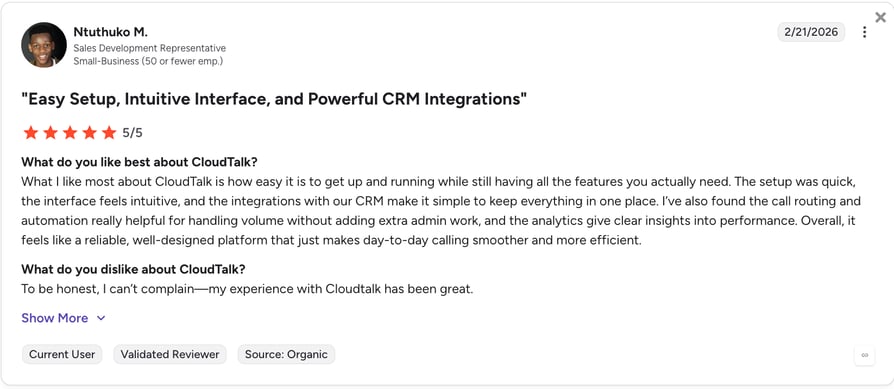
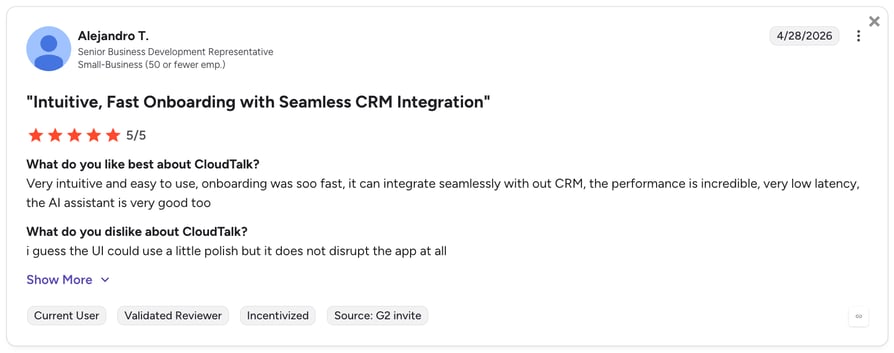
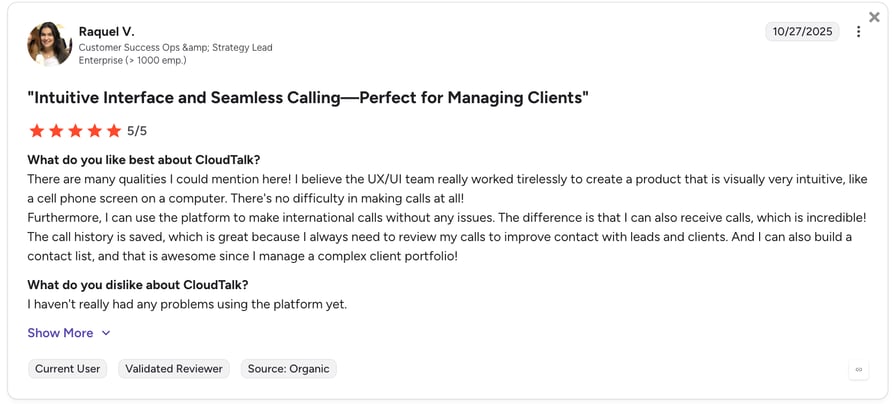
CloudTalk customers consistently highlight that the platform is easier to use and more reliable than other VoIP alternatives. Based on verified G2 reviews, the biggest wins are intuitive call management, seamless CRM sync, and a setup that doesn't cause technical headaches. Here’s what our users appreciate the most:
- Ease of Use That Saves Time: Users highlight CloudTalk's intuitive interface as one of its strongest points, noting that the platform is easy to navigate and reduces time spent on manual tasks.
- Reliable Connections, Every Call: Teams praise CloudTalk for its consistent connection quality and stable performance. For sales and support teams where every dropped call is a missed opportunity, reliability is non-negotiable.
- A Dashboard That Just Makes Sense: Users appreciate how clean and easy to navigate CloudTalk's interface is, making it simple to manage calls, monitor agents, and action insights without a learning curve.
- Local Numbers That Actually Get Answered: Teams value how easy it is to obtain local numbers in 160+ countries, helping them increase pickup rates and build trust with international prospects.
- Smart Routing and Real-Time Analytics: Managers rely on CloudTalk's call routing and live dashboards to monitor team performance and resolve issues quickly—all in one place, without switching between tools.
Avoid any unnecessary fees.
Switch to CloudTalk for transparent pricing and know exactly what you're paying for.
2. Retell.AI: Best AI-Native Callfluent Alternative for Developer Teams
What is Retell AI?
Retell AI is a developer-first voice agent infrastructure platform built for teams that need low-latency, production-ready AI calling at scale.
Founded in 2023, it serves businesses running high-volume inbound and outbound call workflows—from lead qualification and appointment booking to customer support automation. It's best suited for engineering-led teams that want full control over their voice stack rather than a plug-and-play solution.
Why Is Retell AI a Strong Callfluent Alternative?
For teams looking for a better alternative to Callfluent for AI calling with production-grade reliability, Retell AI delivers where it matters most:
- Lower base rate: Starts at $0.07/min with no mandatory platform fee, compared to Callfluent's platform fee plus external API costs stacked on top
- Owned voice infrastructure: Retell bundles LLM, speech-to-text, text-to-speech, and telephony into a single pipeline, reducing the multi-vendor complexity that Callfluent's BYOK model introduces
- Higher G2 credibility: With over 2000 verified G2 reviews and a 4.8/5 rating, it gives teams far more independent validation before committing than Callfluent's limited Trustpilot footprint
- Production-scale concurrency: Handles high concurrent call volumes with sub-second latency, making it suitable for enterprise outbound campaigns that would strain entry-level platforms
What Are Retell AI's Key Features?
- Low-latency voice streaming: Sub-500ms response times via WebSocket-based audio streams, keeping conversations feeling natural
- Conversation Flow Builder: Structured node-based agent design for complex, branching call logic
- BYOC telephony support: Bring your own Twilio, Telnyx, or Vonage account, or use Retell's built-in carrier
- Multilingual support: 30+ languages with ElevenLabs and PlayHT voice integration
- Post-call analytics: Transcripts, latency data, sentiment, and call summaries after every interaction
- SOC 2, HIPAA, GDPR compliance: Suitable for regulated industries including healthcare and financial services
What Are the Pros & Cons of Retell AI?
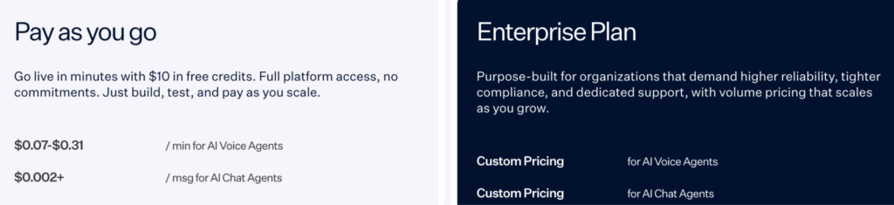
What Is Retell AI's Pricing?
Retell AI uses a pay-as-you-go model with no mandatory platform fee.
The advertised base rate starts at $0.07/min, though real-world all-in costs including voice engine, LLM, and telephony typically land between $0.13–$0.31/min depending on configuration.
Enterprise accounts spending $3,000+/month qualify for volume discounts with rates as low as $0.05/min.
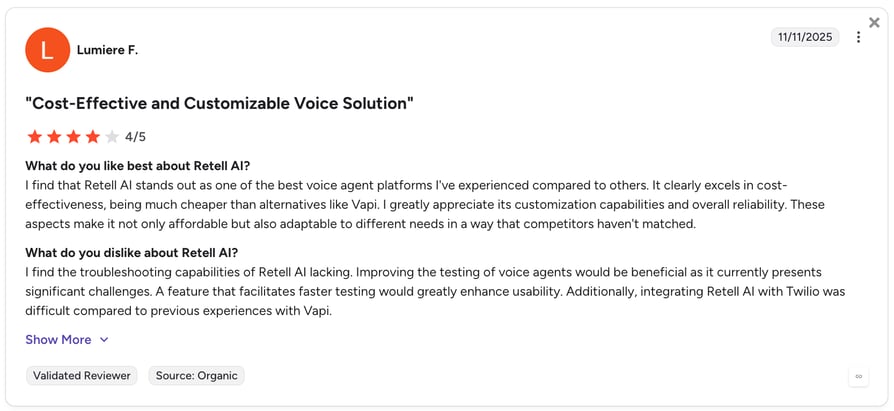
What Are Users Saying About Retell AI?
3. Aircall: Best Callfluent Alternative for CRM-First Sales and Support Teams
What Is Aircall?
Aircall is a cloud-based VoIP platform founded in Paris in 2014, designed for sales and customer support teams that need seamless CRM connectivity without technical complexity.
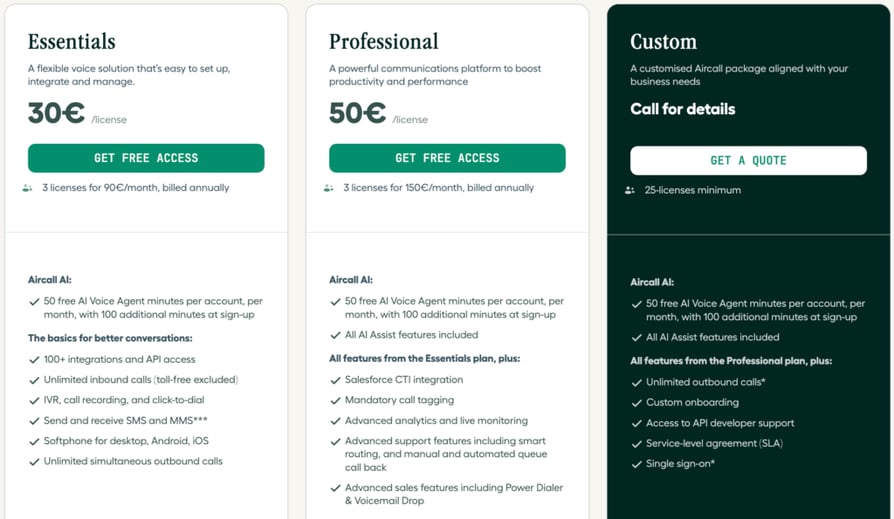
It serves 15,000+ businesses worldwide and is best known for its deep, native integrations with HubSpot, Salesforce, and Zendesk, which makes it a strong choice for teams whose entire workflow revolves around CRM data. Plans require a minimum of 3 users.
Why Is Aircall a Strong Callfluent Alternative?
For teams evaluating a Callfluent alternative for phone calls with proven CRM integration depth, Aircall might be a handy choice.
- No telephony dependency: Unlike Callfluent, Aircall owns its calling infrastructure and doesn't require a separate Twilio account for phone connectivity
- 100+ native integrations: Including deep two-way sync with HubSpot, Salesforce, Pipedrive, and Zendesk
- Established review base: 4.4/5 rating on G2 across over 1500 verified reviews
- Fast onboarding: Aircall’s customers highlight ease of setup and speed to value, noting teams are able to set up their VoIP solution comfortably
What Are Aircall's Key Features?
- Click-to-call: Initiate calls directly from HubSpot, Salesforce, or any CRM with one click, with automatic contact data population
- Call recording and transcription: Every call is recorded and transcribed automatically, with AI-generated summaries on Professional plans
- Power Dialer: Works through call lists automatically, available on Professional plan ($50/user/mo)
- Real-time call monitoring: Listen, whisper, and barge into live calls for agent coaching
- IVR and call routing: Drag-and-drop call flow builder for inbound routing logic action
- International numbers in 100+ countries: Local caller IDs across various markets
What Are the Pros and Cons of Aircall?
What Is Aircall’s Pricing?
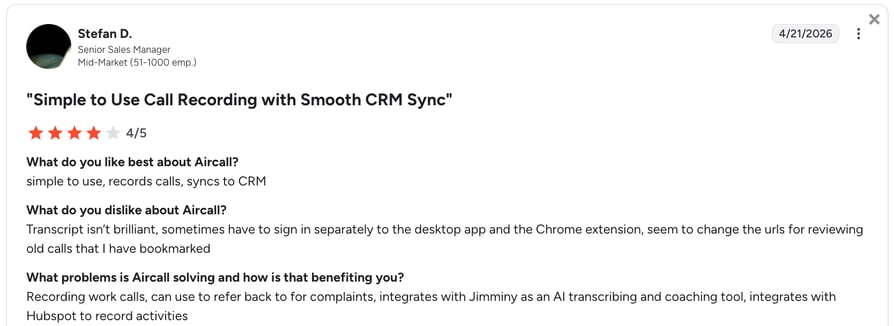
What Are Users Saying About Aircall?
4. Dialpad — Best Callfluent Alternative for Built-In AI Coaching and Transcription
What is Dialpad?
Dialpad is an AI-powered cloud communication platform that combines voice, video, and messaging into a single interface. Founded in 2011 in California, it serves businesses ranging from small teams to large enterprises.
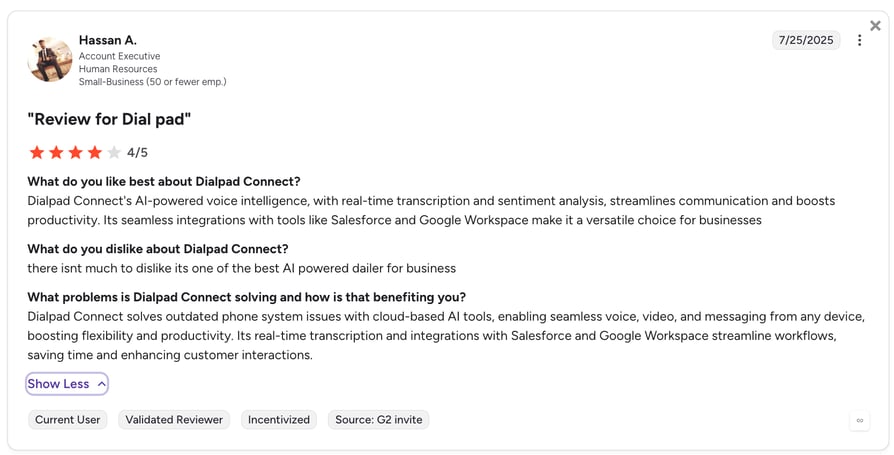
Its standout feature is DialpadGPT, which is a proprietary LLM trained on business conversations that empowers real-time transcription, live coaching prompts, and automated post-call summaries on every plan.
Why Is Dialpad a Strong Callfluent Alternative?
For teams evaluating a Callfluent-similar platform with stronger built-in AI, Dialpad offers several clear advantages:
- Scale of AI features: Dialpad offers real-time transcription, AI Recaps, and coaching prompts
- Proprietary LLM: DialpadGPT is trained real business conversations, making it more tuned to sales and support contexts than generic third-party models
- Unified platform: Voice, video, SMS, and messaging in one interface, eliminating the need for separate tools
- 4.4/5 rating on G2 across more than 4000 reviews is a strong user verification
What Are Dialpad's Key Features?
- Real-time AI transcription: Live call transcription during every conversation
- AI Recaps: Automated post-call summaries with action items, decisions, and next steps
- Live coaching cards: Real-time prompts that surface relevant talking points, objection handling, and competitor mentions during live calls
- Predictive AI CSAT scoring: Automatically scores customer satisfaction after every call without manual surveys
- IVR and call routing: Multi-level IVR menus and skill-based routing available on all plans
- CRM integrations: Native HubSpot, Salesforce, and Microsoft 365 integrations, and other CRMs
What Are the Pros and Cons of Dialpad?
| Pros | Cons |
|---|---|
| Ease of use and a simple, yet effective interface | CRM integrations and 24/7 support are restricted to costlier higher-tier plans — Standard plan users get limited integration depth |
| AI features are genuinely built into the core product — not bolted on as an afterthought | Call quality issues cluster around 100+ G2 mentions, including choppy audio and connection drops—worth stress-testing before committing |
| Dialpad includes a wide range of features within standard pricing tiers without charging extra for many functionalities that competitors treat as add-ons | SMS is capped at 250 messages per account with $0.008 overages—a notable limitation for outbound-heavy teams |
| Good mobile app experience | Contact center features (Dialpad Support) are a separate product starting at $80/user/mo |
What Is Dialpad’s Pricing?

What Are Users Saying About Dialpad?
5. Nextiva — Best Callfluent Alternative for Reliable Omnichannel Business Communications
What Is Nextiva?
Nextiva is a unified customer experience platform founded in the USA in 2008. It serves 100,000+ businesses and supports them with voice, SMS, video, live chat, social media, and email—all from a single interface.
Best known for its reliable call quality and responsive support, it's a strong fit for teams that want a mature, well-documented platform with minimal setup friction.
Why Is Nextiva a Strong Callfluent Alternative?
For teams looking for one of the best Callfluent alternatives for customer service with proven reliability and omnichannel depth, Nextiva is a wise option due to several reasons:
- No third-party telephony dependency: Unlike Callfluent, Nextiva owns its communication infrastructure and doesn't require a separate Twilio account for phone connectivity
- True omnichannel inbox: Voice, SMS, live chat, email, and social media management in one interface, making it significantly broader than Callfluent's voice-only focus
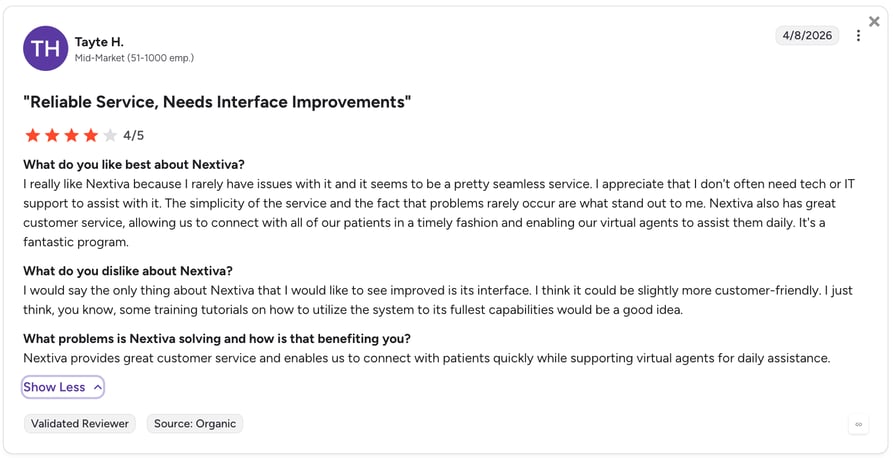
- Customer support: A lot of portals and customers have been praising Nextiva for its great customer support services
- 4.5/5 rating on G2 across over 3500 reviews proves honest user satisfaction
What Are Nextiva's Key Features?
- Unified omnichannel inbox: Manages voice, SMS, live chat, email, and social media from one dashboard
- AI-powered call summaries and transcription: Available as an add-on, with post-call insights and voicemail transcription
- Call routing and IVR: Multi-level IVR menus, skill-based routing, and call queuing across all plans
- Microsoft Teams integration: Native integration available on their higher Engage plan and above
- Real-time analytics and reporting: Call volume, agent performance, and customer sentiment dashboards
- Video conferencing: Built-in video meetings without needing a separate Zoom or Teams subscription
What Are the Pros and Cons of Nextiva?
What Is Nextiva’s Pricing?
What Are Users Saying About Nextiva?
6. Synthflow — Best Callfluent Alternative for Agencies Needing White-Label AI Voice Agents
What Is Synthflow?
Synthflow is a no-code AI voice agent platform launched in 2023, designed for agencies, SMBs, and non-technical teams that need to deploy conversational voice automation without writing code.
It serves industries including real estate, healthcare, insurance, and e-commerce, and is best known for its white-label capabilities—allowing agencies to resell AI calling services under their own brand. It supports 200+ tool integrations and deploys agents in under an hour using drag-and-drop templates.
Why Is Synthflow a Strong Callfluent Alternative?
For agencies and teams evaluating the best AI app like Callfluent with stronger white-label capabilities and a more polished no-code builder, Synthflow delivers on several fronts:
- White-label ready out of the box: Unlike Callfluent, which only offers white-label on its Agency plan, Synthflow is built agency-first with full white-label branding across all client deployments
- Fastest time to first call: Setup took just a couple of dozen minutes in independent testing using Synthflow's template library, with pre-built templates for appointment booking, lead qualification, and FAQ handling
- High G2 user rating: 4.5/5 rating on G2 based on over a thousand of verified reviews
- 200+ tool integrations: native connections to HubSpot, GoHighLevel, Salesforce, Zapier, and other tools besides CRMs
What Are Synthflow's Key Features?
- No-code drag-and-drop flow designer: Build complex, multi-branch conversation logic without writing a single line of code
- White-label platform: Fully rebrandable interface for agencies managing multiple client accounts
- Pre-built templates: Appointment reminders, lead qualification, FAQ handling, and outbound campaigns ready to deploy
- Sub-500ms latency: Near-real-time voice responses for natural conversation flow
- 200+ native tool integrations: Including HubSpot, GoHighLevel, Salesforce, Zapier, and Twilio
- Multilingual support: 30+ languages with natural-sounding voice synthesis
What Are the Pros and Cons of Synthflow?
| Pros | Cons |
|---|---|
| Ease of use and natural voice quality | Pricing is the most consistent complaint—"Expensive" appears in a lot of G2 mentions, with overage charges accumulating faster than expected for teams with variable call volumes |
| The no-code drag-and-drop builder is among the most polished in the category | BYOK model means real costs are typically 2–3x higher than advertised platform fees once OpenAI and voice API keys are factored in |
| White-label capabilities make it the strongest option in this list for agency resellers | Slack support is restricted to the first 30 days of onboarding—after that, users move to a ticket-based system with inconsistent response times |
| Voice-only platform—no omnichannel support for WhatsApp, live chat, or email |
What Is Synthflow’s Pricing?
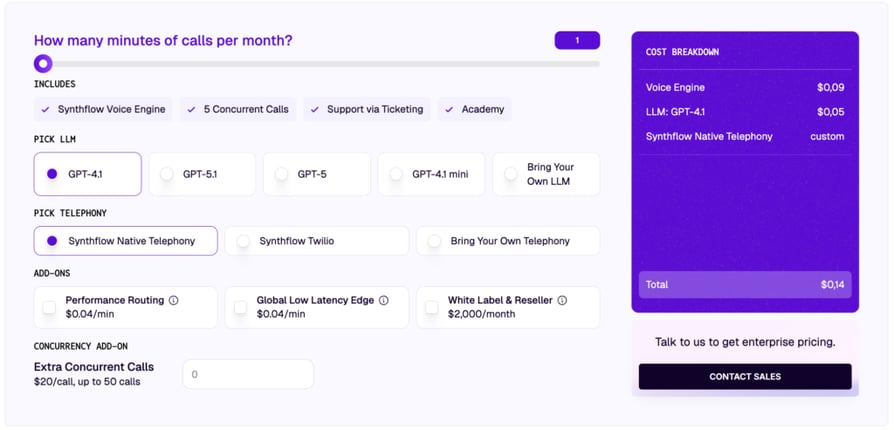
Synthflow uses a usage-based pricing model built from three components—Voice Engine ($0.09/min), LLM of your choice (e.g. GPT-4.1 at $0.05/min), and telephony (custom rate via Synthflow Native Telephony, Twilio, or your own provider).
These stack on top of each other, meaning the advertised base rate of $0.14/min is the starting point—not the all-in cost. Optional add-ons like Performance Routing ($0.04/min), Global Low Latency Edge ($0.04/min), and White Label & Reseller access ($2,000/month) add further to the total.
Extra concurrent calls beyond the included 5 cost $20 per call slot, up to 50. Enterprise pricing is available on request via their sales team.
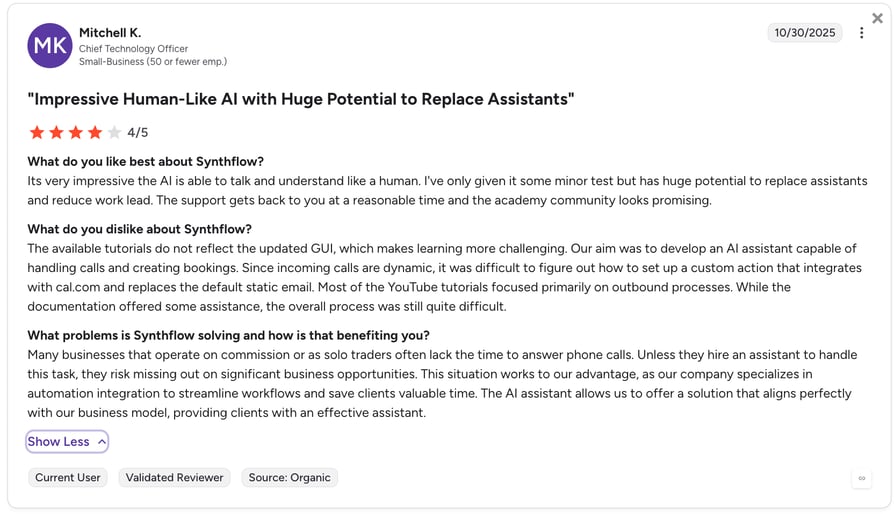
What Are Users Saying About Synhflow?
7. JustCall — Best Callfluent Alternative for Outbound Sales Teams Combining Calling and SMS
What Is JustCall?
JustCall is a cloud-based business phone system built for sales and customer support teams that need to combine voice calling and SMS in a single platform.
Founded by SaaS Labs and serving teams across various countries, it is best known for its multi-channel outbound capabilities—auto, predictive, and power dialers paired with SMS workflows that sync automatically to HubSpot, Salesforce, Pipedrive, and 100+ other CRMs.
It is best suited for mid-size sales teams running high-volume outbound campaigns.
Why Is JustCall a Strong Callfluent Alternative?
For teams evaluating a worthy Callfluent alternative for phone calls that combines voice and SMS in one outbound-focused platform, JustCall is a good solution due to:
- No Twilio account required: Unlike Callfluent, JustCall handles its own telephony infrastructure, removing the need for a separate carrier account and hidden API costs
- Voice + SMS in one platform: Combines calling, SMS/MMS, and automated messaging workflows in a single interface, and that is something Callfluent cannot do natively without Zapier
- 100+ native CRM integrations: Including HubSpot, Salesforce, and Pipedrive with automatic call logging, SMS sync, and contact data population
- 4.3/5 rating on G2 across over 2000 reviews
What Are JustCall's Key Features?
- Multi-channel dialers: Auto, Predictive, and Power Dialers for outbound campaigns, available from the Pro plan
- SMS and MMS automation: Bulk SMS campaigns, automated follow-up sequences, and two-way messaging from a business number
- AI Voice Agent: Handles inbound calls 24/7, qualifies leads, books meetings, and routes to human agents (available as a separate add-on)
- Call recording and transcription: Automatic recording and AI-generated call summaries with keyword tracking
- 100+ native CRM integrations: Deep two-way sync with HubSpot, Salesforce, Pipedrive, Zendesk, and Zoho
- Local numbers in 70+ countries: International presence without needing separate carrier accounts
What Are the Pros and Cons of JustCall?
| Pros | Cons |
|---|---|
| Ease of use, reps get productive quickly with minimal onboarding time | Call quality issues are a significant recurring theme |
| SMS and voice in one platform is a genuine differentiator for teams that rely heavily on text-based outreach, and don't need a separate tool | Real costs run 43–84% above sticker price once extra numbers, SMS overages, and AI add-ons are factored in |
| Deep CRM integrations with HubSpot, Salesforce, and Pipedrive | AI Voice Agent is not included in any plan. It starts at $99/month as a separate add-on covering only 100 minutes |
| 14-day free trial available without a credit card | Salesforce integration is gated behind the Pro plan ($49/user/mo)—Team plan users cannot access it without upgrading |
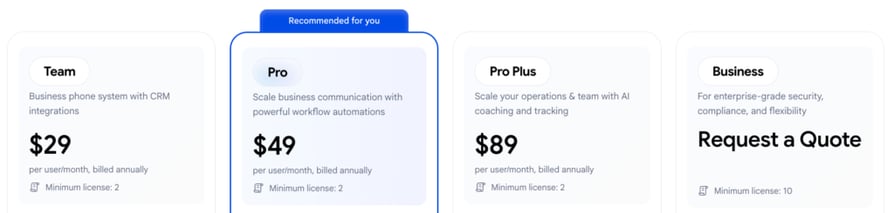
What Is JustCall’s Pricing?
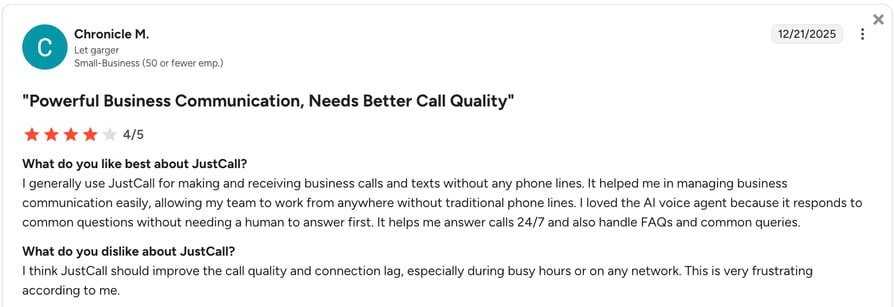
What Are Users Saying About JustCall?
8. GoTo Connect — Best Callfluent Alternative for SMBs Needing Simple, Reliable VoIP Across Multiple Locations
What is GoTo Connect?
GoTo Connect is a product of the wider GoTo platform. GoTo Connect is a cloud-based business phone system built for SMBs that need reliable voice communication across multiple locations without enterprise-level complexity.
It combines voice, video, messaging, and basic contact center features in one platform, and is particularly well-suited for distributed and remote teams. It supports 180+ desk phones and is accessible via desktop, mobile, and browser with no hardware requirements.
Why Is GoTo Connect a Strong Callfluent Alternative?
For teams looking for a better alternative to Callfluent with proven VoIP reliability and straightforward deployment, GoTo Connect stands out in several areas:
- No third-party telephony dependency: Teams are able to handle all call infrastructure directly
- Multi-site support on every plan: Unlike most competitors that limit entry-tier plans to a single location, GoTo Connect supports unlimited locations and extensions from the base plan
- Visual Dial Plan Editor: Drag-and-drop call flow builder that lets non-technical admins customize routing, IVR, and ring groups without IT support
- 4.4/5 rating on G2 across over a thousand reviews
What Are GoTo Connect's Key Features?
- Visual Dial Plan Editor: Drag-and-drop interface for building and customizing call flows, routing logic, and IVR menus without coding
- Unlimited locations and extensions: Supports multi-site organizations from the base plan without requiring an upgrade
- AI Quality Management: Automated call summaries, trend analysis, and performance insights for contact center managers
- Call recording and transcription: Automatic recording and AI-generated call summaries with keyword tracking
- Video meetings: Built-in HD video conferencing for up to 250 participants, included on the Standard plan
- CRM integrations: Native Salesforce and HubSpot integrations on the Standard plan and above
- Mobile and softphone apps: Fully featured mobile apps for iOS and Android with a floating, resizable softphone interface
What Are the Pros & Cons of GoTo Connect?
| Pros | Cons |
|---|---|
| The platform is particularly well-suited for non-technical admins managing distributed teams | Trustpilot rating sits at 2.3/5 from 167 reviews — a significant gap from G2/Capterra scores, driven primarily by billing disputes, unexpected charges, and contract auto-renewal complaints |
| Multi-site support from the base plan is a genuine differentiator, meaning teams with multiple offices don't need to upgrade just to add a location | CRM integrations with Salesforce and HubSpot are only available on the Standard plan ($32/user/mo) and above—Basic plan users have limited integration options |
| Enterprise-grade features like call recording, single sign-on, and call queues are included on lower-tier plans rather than gated behind expensive upgrades | Fewer ready-made CRM integrations than competitors like RingCentral or Zoom, meaning teams with complex CRM stacks should verify compatibility before committing |
| Strong mobile experience | No free trial advertised, so there is no option for businesses to test the platform without purchasing |
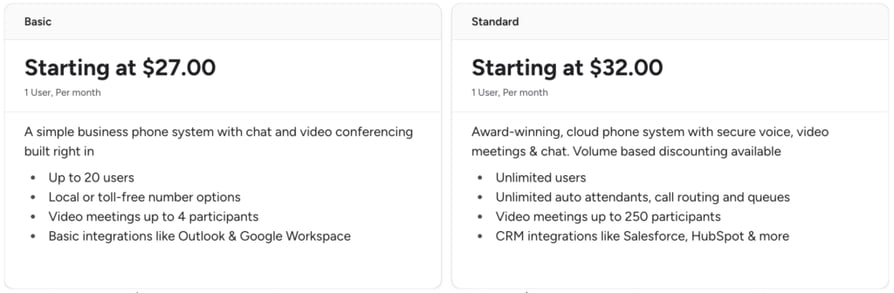
What Is GoTo Connect’s Pricing?
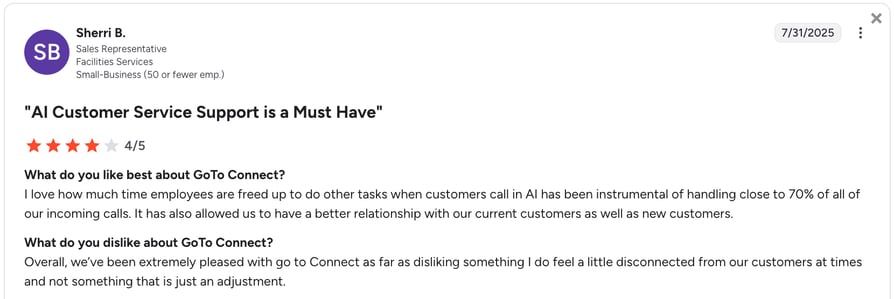
What Are Users Saying About GoTo Connect?
9. Vonage — Best Callfluent Alternative for Mid-Market Teams Needing Programmable Call Workflows
What is Vonage?
Vonage is a cloud-based unified communications platform now owned by Ericsson, serving businesses across 35+ countries.
Founded in 2001 and one of the longest-standing names in business VoIP, it combines voice, SMS, video conferencing, and team messaging in one platform—with 50+ standard features and a powerful API layer (Vonage Communications APIs) that allows developer teams to build custom call workflows, integrations, and automation on top of the core platform.
Why Is Vonage a Strong Callfluent Alternative?
For teams evaluating a Callfluent replacement with stronger enterprise reliability and programmable workflows, Vonage delivers on several fronts:
- Owned telephony infrastructure: Vonage does not rely on Twilio for call connectivity, with a 99.999% uptime SLA and no hidden carrier fees on top of the platform subscription
- Deep API customization: Vonage Communications APIs and AI Studio give developer teams the ability to build custom IVR logic, voice bots, and workflow automation that goes far beyond what Callfluent's no-code builder supports
- No annual contract required: Vonage offers month-to-month billing with no lock-in, which is a meaningful differentiator for teams that want flexibility
- Strong cross-platform review presence
What Are Vonage's Key Features?
- 50+ unified communications features: Voice, SMS, video meetings, team messaging, and voicemail-to-email in one platform
- Vonage Communications APIs: Programmable voice, SMS, and video APIs for building custom call flows, AI voice bots, and automated workflows
- AI Quality Management: Automated call summaries, trend analysis, and performance insights for contact center managers
- CRM integrations: Native Salesforce ($4.99/mo extra), HubSpot, and Microsoft Teams integrations
- Call recording and analytics: Call logs, recording, and reporting available across plans
- AI Studio: No-code conversation designer for building AI-powered IVR and voice automation on top of the API layer
- Mobile app: Full-featured iOS and Android app with cross-device call management and sync
What Are the Pros and Cons of Vonage?
| Pros | Cons |
|---|---|
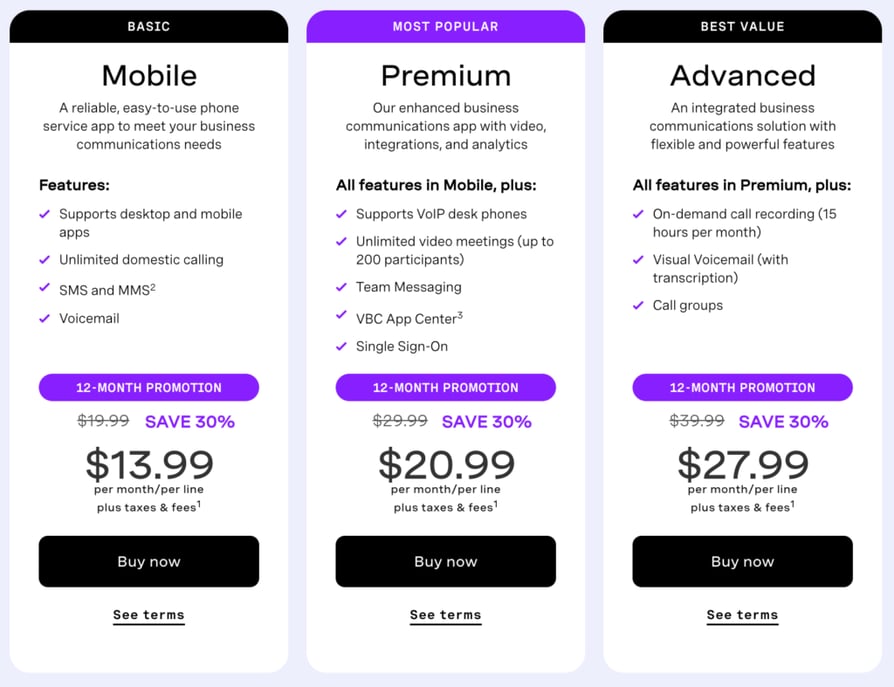
| Straightforward setup and effective integration with other tools | Pricing is genuinely confusing—as we flagged earlier in this article, Vonage operates multiple pricing pages showing different figures depending on billing terms, promotional rates, and plan type. Therefore, you should always verify current pricing directly on their website before committing |
| 99.999% uptime SLA, which is one of the strongest reliability commitments in this comparison | Key collaboration features—video meetings, messaging, and CRM integrations—are only available from the Premium plan upward, making the Mobile base plan insufficient for most business use cases |
| No annual contract required—month-to-month billing available without lock-in or early termination fees | Salesforce integration costs an additional $4.99/user/month on top of the plan fee, which is an unexpected add-on cost for CRM-heavy teams |
| Deep API layer is a genuine differentiator for developer teams that need custom voice workflow control | Some users report frustration with feature limitations on lower tiers, unexpected costs, and a lack of pricing transparency |
What Is Vonage's Pricing?
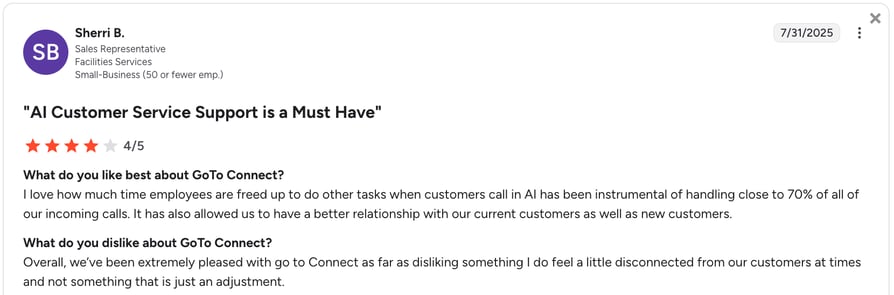
What Are Users Saying About Vonage?
10. Bland AI — Best Callfluent Alternative for Enterprise Teams Automating High-Volume AI Phone Calls
What Is Bland AI?
Bland AI is a developer-first voice AI infrastructure platform founded in 2023 and built for enterprise organizations that need to automate phone calls at a massive scale.
Unlike most AI calling platforms that use shared infrastructure and third-party LLMs, Bland trains its own models and allocates dedicated servers and GPUs to each enterprise client, making it one of the few platforms in this list genuinely suited for Fortune 500-level call volumes.
Why Is Bland AI a Strong Callfluent Alternative?
Bland AI differentiates itself in several ways:
- Dedicated infrastructure, not shared: Unlike Callfluent and most competitors that run on shared multi-tenant infrastructure, Bland allocates dedicated servers and GPUs per enterprise client, eliminating performance variability from other tenants
- Proprietary LLM: Bland trains its own models rather than using OpenAI or Anthropic, giving enterprise clients greater data sovereignty and customization control
- Enterprise-grade compliance: SOC 2 Type II, HIPAA, and GDPR certified on standard plans, which is critical for regulated industries like healthcare and financial services
- Massive concurrency: Handles up to 1,000,000 concurrent calls, making it one of the only platforms in this list capable of true enterprise-scale outbound campaigns
What Are Bland AI's Key Features?
- Conversational Pathways: Visual node-based logic builder for creating complex, branching call flows with variable extraction and real-time routing
- Voice cloning: Clone any voice from a single short MP3 — no fine-tuning required
- Dedicated infrastructure: Private servers and GPUs per enterprise client for consistent, isolated performance
- Webhook and API integration: Connects to any CRM, ERP, or internal system via API to trigger actions and update records in real time
- Call recording and analytics: Call logs, recording, and reporting available across plans
- Knowledge base ingestion: Ingest PDFs, text files, and website content to inform AI responses, with gap detection to identify unanswered questions
- Multi-agent handoffs: One AI agent can qualify the call and transfer context to a second specialized agent mid-conversation
What Are the Pros and Cons of Bland AI?
| Pros | Cons |
|---|---|
| Dedicated infrastructure with data residency options — one of the strongest compliance and security solutions in this comparison | Latency averages 800ms–2 seconds per turn in published tests, which is noticeably higher than average and a real limitation for natural-feeling conversations |
| Conversational Pathways is widely praised as the most powerful multi-prompt voice bot control system in the category | Pricing is complex and hard to forecast—one of their latest pricing restructures introduced plan-based per-minute rates that make cost modeling significantly harder than competitors' flat-rate models |
| SOC 2, HIPAA, and GDPR compliance included on standard plans—not gated behind enterprise tiers | No no-code builder—every configuration requires developer resources, making it unsuitable for non-technical teams or agencies |
| Fast deployment for developers | G2 review base is extremely limited, making it harder to evaluate based on trusted user feedback |
What Is Bland AI's Pricing?
Per-minute rates apply to connected call time only–subscription fees do not include call minutes. Additional costs apply for transfers, SMS, voice cloning, and multilingual transcription.
Real monthly costs typically range from $350 to $2,000+, depending on call volume.

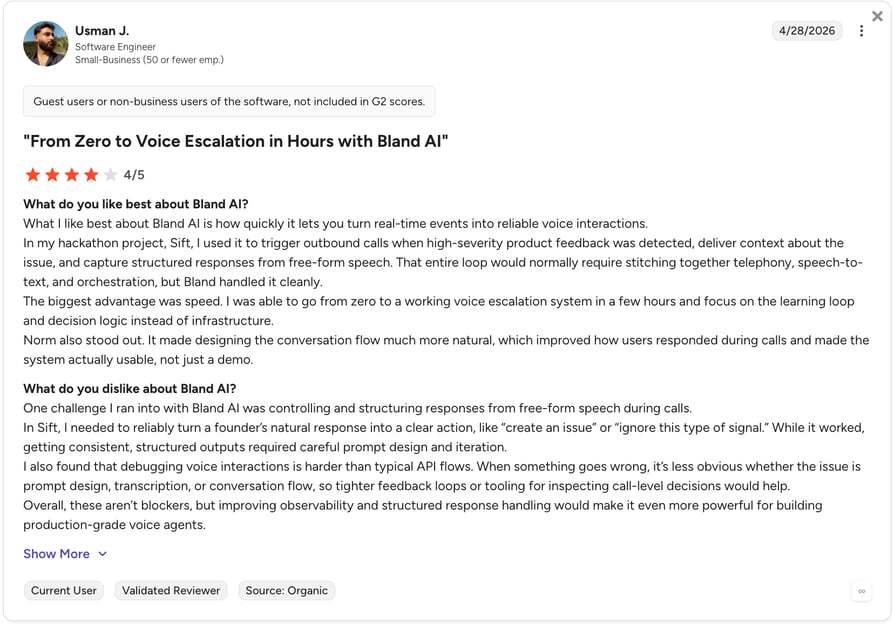
What Are Users Saying About Bland AI?
Want the best? Join us!
What Are Users Saying About Callfluent Alternatives?
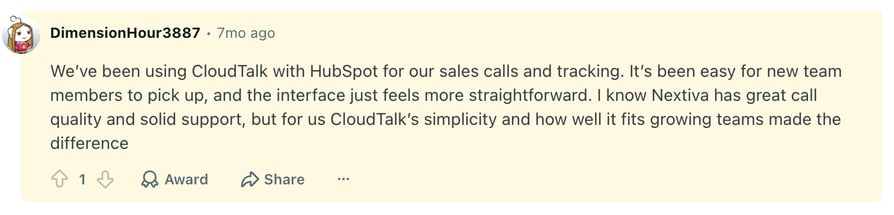
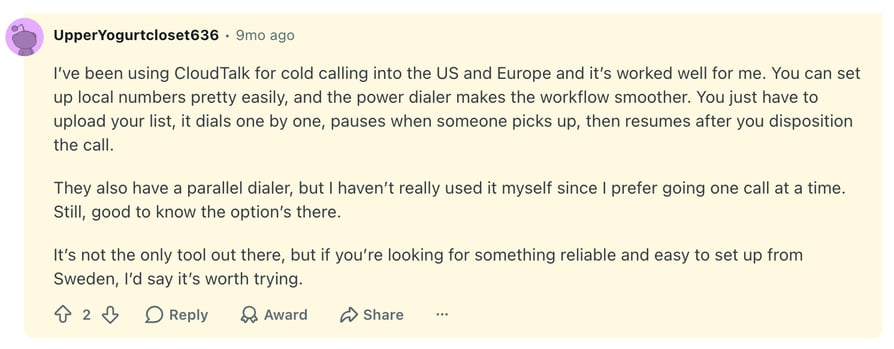
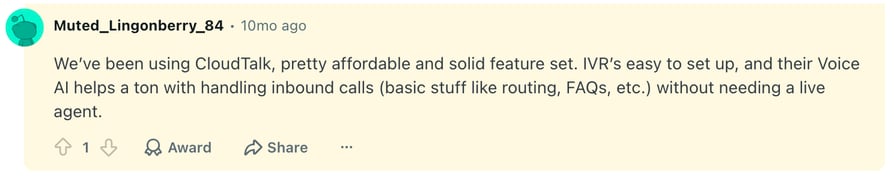
Reddit's peer-to-peer format tends to surface the most unfiltered opinions on VoIP and AI calling tools. While Callfluent-specific threads are limited given the platform's early stage, discussions about switching between AI calling and VoIP platforms reveal consistent themes that directly apply to teams evaluating Callfluent alternatives for phone calls.
What Redditors Are Saying About CloudTalk
Reddit’s peer-to-peer format surfaces the most unfiltered opinions on call quality and pricing. Here is the consensus from users who have moved away from Aircall to more reliable competitors:
- CloudTalk is the most recommended switch for teams prioritizing value, dialer quality, and billing transparency
- Pricing clarity is the most cited reason for switching—teams want to know exactly what they'll pay before committing
- Support responsiveness is a deciding factor, especially for small teams without dedicated IT
- Dialer features—particularly power and smart dialers—are highlighted as a key upgrade over entry-level platforms
- Analytics depth is mentioned as a differentiator for teams managing outbound performance
What Are Quora Users Asking About Callfluent Alternatives?
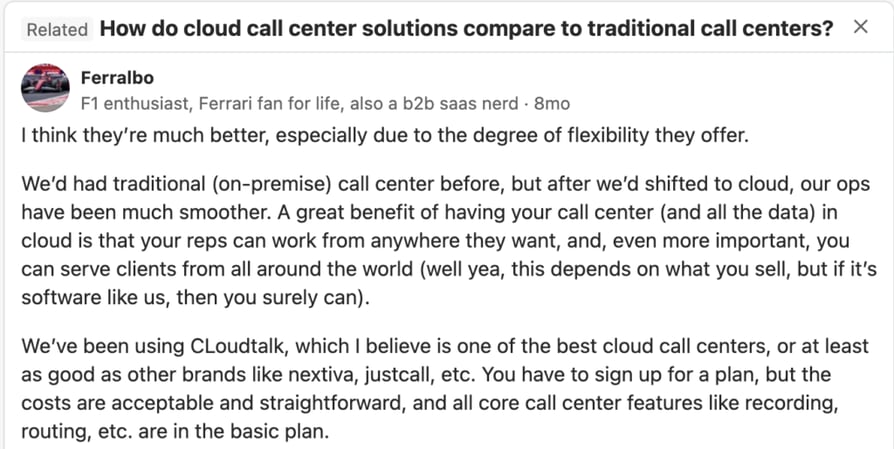
#1 When asked about call center solutions
#3 When asked about the best CRM integrations
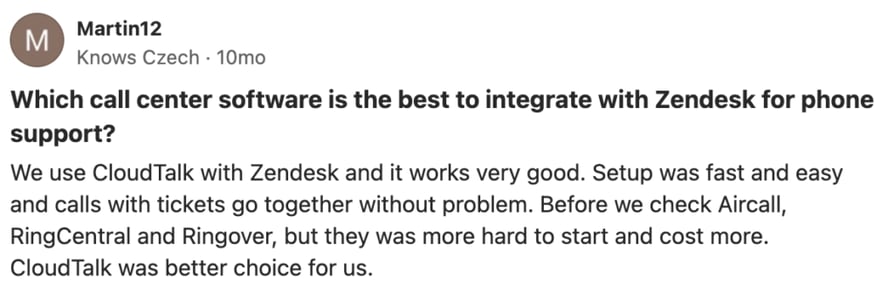
#3 When asked about AI tools they use the most
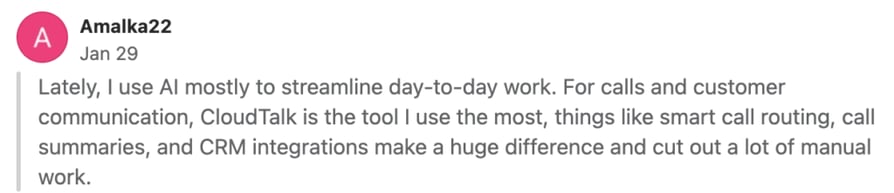
What Are G2 Users Saying About Switching To CloudTalk?


That many positive reviews...they can't be all lying, right?
Come find out!
How to Choose the Best Callfluent Alternative for Your Business
Not every Callfluent alternative will suit your specific situation. The right choice depends on how your team works today and where you plan to take it. Here are the six questions worth answering before you commit.
1. How Many Countries Does Your Team Call Into?
- What to check: Does the platform own its network, or does it rely on a provider like Twilio? Are local numbers included in the plan, or priced separately? Is call quality monitored in-platform?
- Why it matters: Third-party telephony dependency adds cost, latency variables, and a layer of accountability confusion when calls drop.
- Best fit: Teams calling into 5+ countries or planning international expansion should prioritize CloudTalk (160 countries available, owned infrastructure) or JustCall (70+ countries). Teams operating purely domestically have more flexibility.
2. How Many Seats Do You Need—Now and in 12 Months?
- What to check: Is there a minimum seat requirement? Does pricing scale predictably as you add users? Are features gated behind higher tiers as you grow?
- Why it matters: A platform that looks affordable at 3 seats can become expensive at 15 if key features only unlock at higher tiers or require minimum commitments.
- Best fit: Solo operators and teams under 5 seats should look at CloudTalk Starter ($25/user/mo, no minimum) or Dialpad ($15/user/mo). Teams of 10+ benefit most from CloudTalk's Essential or Expert plans, where per-user costs become highly competitive.
3. Do You Need AI Features—and What's Your Real Budget for Them?
- What to check: Are AI features included in the plan or add-ons? Does the platform require external API keys? What's the all-in cost per minute at your expected call volume?
- Why it matters: A platform advertising $37/month can realistically cost $0.20–$0.30/min once external APIs are factored in, making it more expensive than platforms that bundle everything.
- Best fit: Teams wanting predictable AI costs should prioritize CloudTalk's Conversation Intelligence or Dialpad. Teams with developer resources who want full model control can evaluate Retell AI or Bland AI, but should model total costs carefully before committing.
4. How Deep Does Your CRM Integration Need to Be?
- What to check: Is the integration native or via Zapier? Does it sync bidirectionally? Are call recordings and AI summaries pushed to the CRM automatically? Which specific CRMs are supported natively?
- Why it matters: Zapier integrations introduce latency, failure points, and additional subscription costs. They also tend to break silently—meaning your data stops syncing and nobody notices until a rep chases a lead with outdated information.
- Best fit: HubSpot-first teams should look at CloudTalk's certified HubSpot integration or Aircall. Salesforce-heavy teams are well served by CloudTalk, JustCall, or Dialpad. Teams whose primary CRM is GoHighLevel can consider Callfluent (native) or CloudTalk (native).
5. What Level of Support Do You Expect When Something Goes Wrong?
- What to check: Is 24/7 live support available on your plan, or only on higher tiers? Is support via chat, phone, or email only? What's the average response time based on verified reviews?
- Why it matters: For SMBs without dedicated IT, slow support means business disruption. For agencies managing client call flows, it means reputation risk.
- Best fit: Teams that need guaranteed responsiveness should prioritize CloudTalk (24/7 live support on all plans) or Nextiva (known for strong support).
6. Are You Planning to Scale or Just Automate a Single Use Case?
- What to check: Can the platform handle both inbound and outbound at scale? Does it support multi-team management and advanced routing? Are there enterprise-grade features available without jumping to a custom plan?
- Why it matters: Migrating calling platforms is expensive and disruptive. Choosing a platform you'll outgrow in 18 months is a false economy.
- Best fit: Teams planning to scale beyond 20 seats or into complex outbound workflows should consider CloudTalk (Starter through Custom) or Nextiva. Teams that only need AI voice automation for a single use case—like appointment reminders or lead qualification—may find Synthflow or Retell AI sufficient without the overhead of a full VoIP platform.
Ready to Try the Best Alternative to Callfluent?
If you've made it this far, the picture is clear. Callfluent is a capable entry point, but growing teams consistently run into the same ceiling: unpredictable costs once external APIs stack up, limited scalability for high-volume outbound, and a platform that's still building its track record.
CloudTalk is built for exactly where you're trying to go next. Transparent per-user pricing with AI included from day one. Owned telephony infrastructure across 160 countries. Native CRM integrations that actually sync. And 1,702+ verified G2 reviews from teams that have already made the switch.
The best way to know if it's the right fit is to try it yourself—no credit card required, full feature access, 14 days free.
Everything has been said.
Now it's your turn.
Frequently Asked Questions
About Callfluent Alternatives
Find answers to the most common questions businesses have about Aircall and its alternatives.
Yes. CloudTalk's onboarding team handles number porting and CRM migration with no downtime. Most teams are live within a single afternoon.
CloudTalk is the best Callfluent alternative, especially for small businesses. It starts at $25/user/mo with no seat minimum, offers a wide range of AI features, great customer support, and many useful tools for customer support and sales teams (such as Power Dialer and Parallel Dialer)
Yes. CloudTalk offers 100+ native CRM integrations including HubSpot, Salesforce, and Pipedrive, with automatic bidirectional sync after every call.
CloudTalk takes under an hour to deploy. No IT support needed, no coding required. Start your free trial and make your first call the same day.
CloudTalk runs on multi-carrier infrastructure with a 99.999% uptime SLA across 160+ countries without any third-party carrier dependency.
CloudTalk is GDPR- and HIPAA-compliant, with enterprise-grade encryption. See the full security and compliance overview for details.