What Is Call Blasting? The Good, the Bad & How to Do It Right
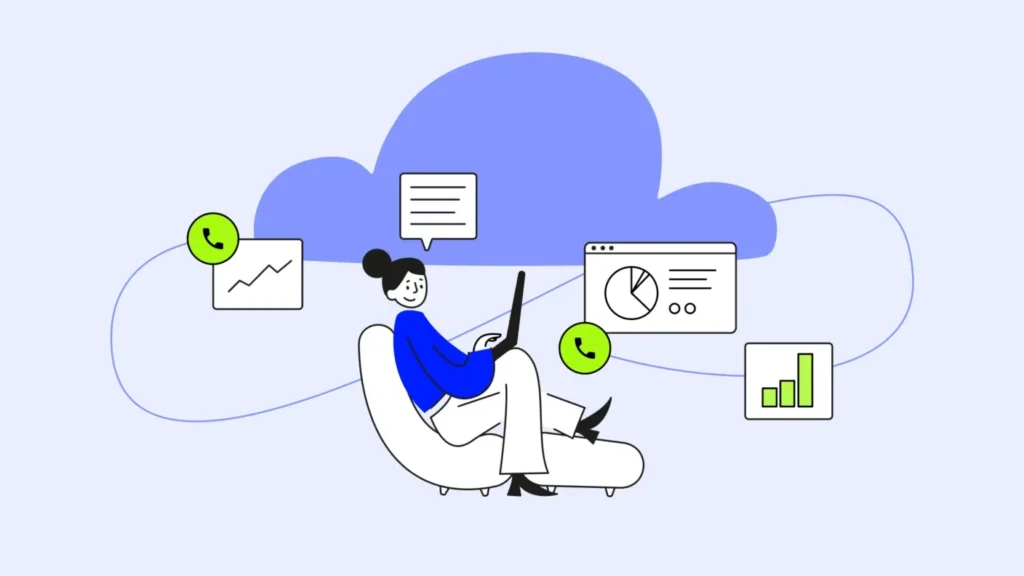
What do you do when sending numerous identical emails to multiple people? Send each message one by one? Of course not. Instead, you add as many email addresses to the recipient section as you need and send them all at once.
Wouldn’t it be convenient if your agents or employees could do the same with their calls, especially if they only want to remind customers about payments or send urgent alerts? There’s a useful tool for this known as call blasting.
Let’s take a closer look at what call blasting actually is and how you could use it in your business without being considered a spammer.
What is Call Blasting?
Call blasting, or voice broadcasting, lets businesses send pre-recorded messages to large contact lists in minutes. Users simply import numbers, record or use text-to-speech for the message, and the call blaster handles the rest—dialing all numbers simultaneously through a centralized automated engine.
Since call blasting is almost entirely automated, this feature can save you a lot of time and money compared to calling your customers one by one.
Let’s say you experience an unexpected error in your platform that demands you turn off the service for a day or two. How much time would it take for your agents to contact all of your customers and inform them about the urgent maintenance? Even if you used a predictive dialer, that would take hours at a time.
Call blasting software dials all of those numbers concurrently so that you can reach most of your customers in a short time. They receive an automated message that explains the situation and eventually tells them what they should do next (e.g. changing their password after the server is up again).
How Does Call Blaster Work?
Call blasting feels fast and effortless—but under the hood, it follows a smart, automated flow. Here’s how it works, step by step:
- You upload your contact list
Start by importing your phone numbers—usually via Excel or Google Sheets. No Manual input needed, even for thousands of contacts. - You create or record a message
Record a voice message or use a text-to-speech generator to turn your script into audio. This becomes the message everyone will receive. - The system dials everyone at once
Call blasting software automatically calls each number on your list simultaneously. If someone answers, they hear your message. If not, it goes to voicemail. - The message gets delivered in minutes
Because all calls happen in parallel, you can reach hundreds or thousands of people in just a few minutes—without lifting the phone. - Your team saves time (And money)
No need for Manual outreach or agent dialing. Call blasting handles it all, freeing up your team for higher-value tasks.
Top Use Cases for Call Blasting in Business
If you are looking for a quick way to send proactive reminders or alerts to your customers, then call blasting systems can come in handy.
Here’s where call blasting can be especially useful:
- For sending reminders to your customers – call blasts are great for sending appointment reminders, confirmations, or payment notifications. As they keep customers informed about their next appointment date or payments, they are also an excellent way of upping your customer service.
- For urgent notifications – as already mentioned, a call blast can be incredibly useful if you need to contact a large group of users quickly. It is much more effective to have an automated system reach out to everyone on your list than ask agents to call every customer and tell them about the office being temporarily closed, for example.
- For effective feedback gathering – a call blast can also be used to send pre-recorded surveys to your customers, which would be a much faster way to collect their data than asking for it individually. You can also be sure each customer gets the same message without worrying about the agent skipping a question or influencing the recipient’s answer.
There is one more way that you can use call blasting but it is actually quite tricky to use it correctly. We talk about marketing. With automated calls, you can send information about your company and give coupons, discounts, or other benefits to existing customers. This could be a perfect way to tell your clients about new products in your store or a sale on a service subscription.
You must tread carefully here though, because you might quickly get yourself into trouble – we’ll get to that in a moment.
Why Use Call Blasting?
When used in moderation, call blasting technology can solve several unique problems that have no other effective solutions. Whether for corporations, government organizations, or community groups, all of them could use call blasts to maximize their reach.
Let’s take a look at some reasons why you might want to use call blasting:
- Your employees can save a lot of time.
- No matter how long your list might be, your message will be delivered to every person on it.
- You can visibly reduce the cost of sending large numbers of messages to your customers.
- You can easily customize messages for specific groups of callers (for example, by scheduling the times when the messages will be sent.)
Common Call Blasting Mistakes (and Best Practices to Avoid Them)
The biggest benefit of call blasts is that they are incredibly convenient to use. However, it is precisely the convenience of sending those messages that can get you in trouble.
It is fairly easy to send call blasts to as many people as you want. It may therefore be tempting for companies to send promotional offers a bit too often.
That’s why most countries have passed laws and regulations to prevent businesses from overusing call blasting, like requiring them to get written permission from customers before they can be sent marketing messages.
In the UK, for example, companies that make unsolicited calls can be fined up to £500,000 by the Information Commissioner’s Office. Meanwhile, in the USA, companies that call numbers on the National Do Not Call Registry or make illegal robocalls can currently be fined up to $43,792 each time.
Here are common call blasting mistakes and what to do instead.
#1 Not Getting Consent
This is sadly the most common mistake, both when it comes to email and call blasts. Just because someone is your customer, that doesn’t mean you have their consent to reach out to them with pre-recorded messages.
If you send such messages to them rarely and only about urgent issues, then there shouldn’t be a problem. But sending several marketing messages to your customers when they didn’t clearly agree to receive them is an easy way to get your company into legal trouble.
Best Practice:
If you plan to use pre-recorded messages for promotion or other marketing purposes, double-check that all recipients on the list agreed to receive that type of communication before clicking the send button.
#2 The Message Is Too Long
Long recordings make callers lose interest—and hang up. Messages longer than 30 seconds perform poorly and feel like a burden to recipients.
Best Practice:
Keep calls short and focused—about 15–20 seconds—so your audience hears the full message without tuning out.
#3 The Message Is Too Fast and Hard to Understand
Since you have only around 15-20 seconds to say everything you need, you might think it would be best to deliver your whole message at lightning speed. The more information you cram into the message, the better, right? Wrong.
A message like that is far more likely to confuse or annoy your recipients rather than persuade them to do what you want. Especially if they can’t even understand what you said.
Best Practice:
Keep your message simple, engaging, and straight to the point, but don’t make the message sound like a sales pitch. Don’t forget to include essential information at the very beginning, including your name and company name.
#4 You Didn’t Test the Message
Your results most likely won’t be impressive if you create a one-size-fits-all message and send it to your entire list.
For the best outcome, you should first understand who your customers are, what they like and dislike, as well as what interests them, and then create messages that will resonate.
Best Practice:
Test your blast with a small group first, then follow up with an SMS to gauge their response. Refine before full deployment
#5 No Clear Call to Action (CTA)
When you try to reach out to callers, it’s not enough to just tell them your brand exists. You must encourage them to do something specific. Whether filling out a survey, confirming their appointment, or using a coupon, you should let your audience know what you want from them. In simple words. Unless you are clear about this, call blasting won’t be nearly as effective as it could be.
Best Practice:
Include a clear CTA: confirm an appointment, visit a link, or use a coupon. Tell recipients exactly what action you want them to take. Eg. “Our new shoes are now in stores and you can get them cheaper with this coupon”.
Call Blasting Is a Shortcut—Not a Loophole
Depending on how you plan to use a phone blast service, it could turn out to be either a good idea or a potential lawsuit.
Do you need a quick way to keep your customers informed about appointments, payment reminders, or important alerts? Call blasts can help your employees reach thousands of people in a much shorter time than it would take to phone them all individually.
But if you hoped that you could send more marketing messages than ever before and for a fraction of the cost, sorry to disappoint you—it doesn’t work that way. Call blasting works best when it’s respectful, relevant, and clearly permission‑based. It’s a way to communicate smarter when timing actually matters.
With call blasting software like CloudTalk, your team can launch high-volume outreach campaigns that are efficient, compliant, and connected to your CRM—no manual grind required.
Here’s how CloudTalk helps you do exactly that:
- Connect faster and skip voicemails, reaching more leads in less time thanks to Smart Dialers and Parallel Dialers.
- Run campaigns at scale without draining your team, using automated follow-ups, texts, and CRM updates tied to call outcomes.
- Boost productivity by letting AI agents handle repetitive tasks, so your team focuses on high-value conversations.
- Stay compliant and global-ready, with GDPR features and local numbers in 160+ countries to support outreach wherever you operate.
- Sync with your sales stack, thanks to seamless integrations with CRMs like HubSpot, Pipedrive, and Salesforce.
If you’re ready to make call blasting work for your business—not against it—CloudTalk has the tools to do it right.

Notify, remind, and update—without manual work.