9 Best Customer Engagement Platforms of 2026
TL;DR:
We reviewed 25+ customer engagement tools and chose the 9 best customer engagement platforms for sales, support, and CX teams in 2026, based on multi-channel coverage, automation depth, AI capabilities, native CRM integrations, pricing transparency, and scalability.
9 best customer engagement platforms by use case:
-
01
CloudTalk – best overall for sales and support teams scaling global customer engagement with AI-powered voice and CRM integration
-
02
Zendesk – best for omnichannel customer support and ticketing at scale
-
03
Typeform – best for conversational surveys and customer feedback
-
04
HubSpot CRM – best all-in-one platform for SMBs unifying marketing, sales, and service
-
05
Intercom – best for in-app messaging and SaaS product engagement
-
06
Twilio – best for developer-built, programmable communications
-
07
Kangaroo – best for loyalty programs and rewards-driven retention
-
08
Pendo – best for product-led engagement and in-app guidance
-
09
REVE Chat – best for AI chatbots and multilingual live chat
Key Customer Engagement Platform Features
Instead of spending hours trying to find the best marketing strategy, you might use automation to send personalized follow-up messages based on customer behavior and preferences.
Customer engagement platforms make this possible, analyzing data to help you better understand your clients and their needs.
Here are some key features to look for when choosing yours.
- Automation. Tedious, repetitive tasks take a lot of your time and can lead to human errors. Select a tool that can automate tasks like Call Queueing, Call Flow Designer, Interactive Voice Response, Skills-Based Routing, and Callback.
- Calling. Sales calls are a key part of customer engagement, so a platform that can streamline outbound and inbound calls will improve your Talk/Listen Ratio with your clients and prospects.
- Performance tracking. Ideally, you’ll want a tool that tracks what’s happening within your team, with features such as Agent Status, a Real-Time Dashboard, and Analytics. These will help you improve call center performance, create better sales strategies, and engage with customers in meaningful ways.
- Compliance. A customer engagement platform will undoubtedly deal with personal information, so regulatory compliance is a must. Features that can help include Single Sign-On [SSO], STIR/SHAKEN, and spam protection.
- Coverage. The perfect platform won’t limit who you can contact based on where they are in the world. Instead, you should have a wide variety of options to engage with them, such as text messaging, WhatsApp inbound and outbound messaging, International Numbers, or virtual caller ID.
- Artificial intelligence. It may not seem like a must-have, but AI can boost your sales strategy significantly. AI can analyze data to identify patterns, predict behaviors, and make personalized recommendations, helping you target customers with tailored offers.
- Scalability. You may be starting as a small business with a small customer database, but you shouldn’t select a limiting platform. Choose one that can scale, allowing you to customize your sales or customer service operations to fit the exact needs of your business.
- Multi-channel support and CRM integration. Select a platform you can easily use with your current systems, and that offers support across a wide variety of channels.
Quick Comparison Table of the 9 Best Customer Engagement Platforms
| Platform | Key Features | Best For | Rating | Starting Price |
|---|---|---|---|---|
| CloudTalk | AI voice agents, conversation intelligence, IVR, Sentiment Analysis, 100+ native CRM/helpdesk integrations | Sales and support teams scaling global customer engagement | 4.4/5 (G2) | $19/user/month |
| Zendesk | Omnichannel ticketing, AI answer bot, knowledge base, live chat | Multi-channel customer support teams | 4.3/5 (G2) | $19/user/month |
| Typeform | Conversational surveys, branching logic, payment integration | Marketing and CX teams gathering qualitative feedback | 4.5/5 (G2) | $25/month |
| HubSpot CRM | Marketing, sales and service hubs, live chat, automation | SMBs centralizing customer data across teams | 4.4/5 (G2) | Free / $9/seat/month |
| Intercom | In-app messaging, Fin AI agent, unified inbox, ticketing | Startups and SaaS engaging users in-product | 4.5/5 (Trustpilot) | $29/seat/month |
| Twilio | Programmable SMS, voice, video, WhatsApp, email APIs | Companies with engineering resources building custom flows | 4.1/5 (G2) | Pay-as-you-go |
| Kangaroo Rewards | Loyalty programs, gamification, POS integration | Ecommerce and retail driving repeat purchases | 4.1/5 | $79/month |
| Pendo | Product analytics, in-app guides, NPS surveys | Product, UX & customer success teams | 4.4/5 | Free/Custom |
| REVE Chat | AI chatbots, live chat, video chat, co-browsing | Multilingual customer service teams | 4.6/5 | Free / $14.99/month |
9 Top Customer Engagement Tools to Boost The Customer Experience
So, you’ve decided you need a customer engagement platform, but now you’re overwhelmed by the dozens of options out there.
We’ve compiled the best 8 customer engagement tools, along with their key features, use cases, and pricing, to help you make the best decision for your business.
1. CloudTalk

What is CloudTalk
CloudTalk is a cloud-based call center software created to help boost call center performance, customer interactions, engagement, and support. With it, you can analyze your call center metrics, and create personalized call campaigns to help you reach more prospects. Plus, you’ll be able to offer better support, respond to inquiries, and improve the overall customer experience.
Forget about unreliable calls or limited reach. With CloudTalk, you can talk to customers regardless of where they are, and enjoy seamless, reliable calls worldwide. The platform also comes with features like Sentiment Analysis, Interactive Voice Response, and call center Analytics, so you can understand how your customers feel, and what they need, and enhance the way to interact with them.
As a comprehensive customer communication platform, CloudTalk also offers call center automation taking care of tedious tasks like Call Queueing, Callback, or Automatic Call Summary, reducing the risk of human error. Plus, it uses the power of AI to help you adjust your sales scripts and marketing plans. For example, it analyzes customer interactions and behavior, helping you better understand each person’s preferences. This way, you can meet each customer where they are and reach your goals faster.
Key Features of CloudTalk’s Customer Engagement Platform
- Automate tasks with VIP Queues, Skill-Based Routing, Workflow, and Callbacks
- Track performance by looking at missed calls, Agent Status, Real-Time Dashboard, and Analytics
- Reach customers worldwide through features like Number Porting, Text Messaging, Toll-Free Numbers, and Automatic Outbound Numbers
- Comply with privacy regulations and get end-to-end protection of your customer’s data
CloudTalk’s Customer Engagement Platform Best Use Cases
- Sales teams: CloudTalk vastly improves the way sales teams work by providing a simple, reliable way to reach prospects.
- Customer support teams: Customer engagement doesn’t end once you make a sale. CloudTalk ensures you can offer support, assisting your customers regardless of where they are in the world. Plus, if you miss a call, the platform comes with a Callback feature, so that even when an agent isn’t available, your customers will receive the help they need.
CloudTalk’s Customer Engagement Platform Pricing
- CloudTalk’s pricing starts at $19/month with custom pricing available
CloudTalk’s Customer Engagement Platform is Best for:
- Sales and support teams of all sizes looking for the most versatile customer engagement platforms to improve customer experiences
CloudTalk’s Customer Engagement Platform Pros & Cons
Here’s what users highlight in G2:
| Pros | Cons |
|---|---|
| Fast setup and onboarding—most teams are live in under a week | No native video conferencing tools available |
| Reliable call quality across regions and devices | No built-in email integration |

2. Zendesk

What is Zendesk
A well-known customer engagement platform, Zendesk prioritizes customer support and experience. It allows you to manage client requests across a wide variety of channels, from email to SMS, live chat, and social media, all in a single workspace.
It integrates with your existing systems and allows you to create a comprehensive knowledge base to offer the best possible support to your customers.
Key Features of Zendesk
- An answer bot that automatically answers common customer questions using AI technology. It significantly reduces the number of tickets that require manual assistance, speeding up the customer service processes.
- A conversational CRM approach that personalizes interactions with each client and improves customer satisfaction.
Zendesk’s Best Use Cases
- Managing customer interactions and history: Zendesk integrates with your existing CRM platform and maintains a complete history of customer interactions so you can analyze them and improve your sales and support strategies.
- Building a knowledge base for self-service support: Zendesk lets you create a customized knowledge base where customers can find articles, how-to’s, and FAQs.
Zendesk’s Pricing
- Zendesk’s pricing starts at $19/user/month
Zendesk is Best for:
- Businesses that want to prioritize and offer multi-channel customer support and improve their engagement strategies
Zendesk’s Pros & Cons
Here’s what users highlight in G2:
| Pros | Cons |
|---|---|
| Powerful, highly customizable ticketing engine | Pricing climbs quickly when you add seats and more features |
| Wide marketplace of apps and integrations | Steep learning curve for admins |

3. Typeform

Typeform takes a different approach to customer engagement by offering a platform filled with customizable surveys and forms. It allows you to design each survey, transforming it into a unique experience for your clients.
Typeform’s Key features
- Easy to integrate with tools like Zapier, Google Sheets, or Slack
- Responsive forms that guarantee a great user experience regardless of the device they use
- Payment integration through various gateways like Stripe so that users can pay right from the form
- Easy data collection and export
Typeform’s Best Use Cases
- Customer feedback surveys: Create as many feedback surveys as you want and give each a unique twist to make the experience more fun and engaging.
- Contact forms: Typeform allows you to say goodbye to boring contact forms and replace them with a more personalized experience.
Typeform’s Pricing
- Free for a basic plan that allows you to add 10 questions per survey and receive up to 100 responses per month. More advanced plans start at $25/month.
Typeform is Best For:
- Small to medium-sized businesses. Especially for marketing, product, and customer success teams who want to do comprehensive market research, and get detailed feedback on various campaigns and products.
Typeform’s Pros & Cons
Here’s what users highlight in G2:
| Pros | Cons |
|---|---|
| Easy-to-use form builder with no learning curve | Advanced logic and integrations are gated behind higher plans |
| Strong conversion rates compared to traditional forms | Customization options in design is limited and requires extra tools |

4. HubSpot CRM
What is HubSpot
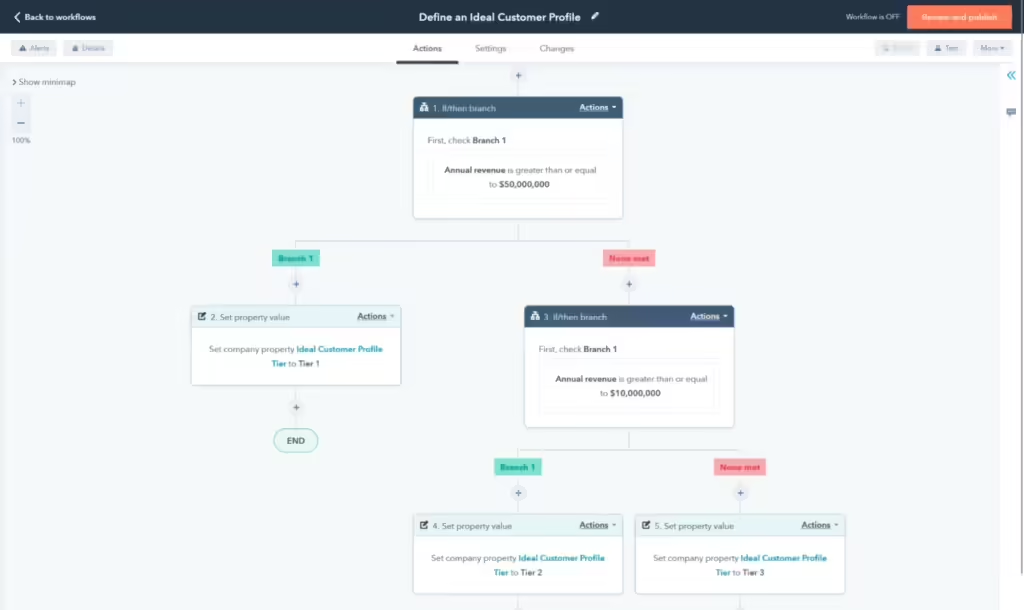
HubSpot CRM is a leading platform for teams wanting to nurture their customer relationships, automate their marketing efforts, and improve how sales and service teams work.
It’s easy to use, integrates with other HubSpot tools and some third-party applications like Outlook or Zapier, and is scalable. Its greatest advantage is it can consolidate all your customer interactions into a single platform, whether it’s marketing, sales, or support.
HubSpot’s Key Features
- Customer service tools that include ticketing systems and feedback tools
- Contact and lead management that helps keep data organized, track interactions, and monitor your sales cycle
- Dedicated hubs for marketing, sales, services, CMS, and operations
- Live chat and chatbots that use AI technologies to solve the most common issues your customers might face
HubSpot’s Best Use Cases
- Email marketing: With HubSpot, you can send personalized emails and newsletters, and track performance with built-in analytics to improve your marketing campaigns and customer engagement.
- Customer relationship management: You can maintain detailed records of customer data and interactions to improve sales and support processes.
HubSpot’s Pricing
- HubSpot’s pricing includes a free plan for up to 5 users, with more advanced plans starting at $ 9/seat/month.
HubSpot is Best For:
- Small to medium-sized businesses and service-based companies that need an easy-to-use, scalable CRM to manage customer relationships
HubSpot’s Pros & Cons
Here’s what users highlight in G2:
| Pros | Cons |
|---|---|
| Free plan that’s actually useful for small teams | Costs scale steeply at marketing contact thresholds |
| Clean, intuitive interface with low ramp-up time | Some advanced reporting requires the Enterprise tier |

5. Intercom

What Is Intercom
Intercom is a customer engagement platform with features like in-app messaging, surveys, and a knowledge base builder. Its main purpose is to improve your communication with customers while enhancing the user experience.
Intercom’s Key Features
- A unified inbox where you’ll find inquiries, live chats, emails, and other interactions
- Automated chatbots that can engage with users, answer the most commonly asked questions, and assist with things like appointment scheduling
- A ticketing system that can easily convert chat interactions into tickets when the issues are too complex and can’t be solved on the spot
Intercom’s Best Use Cases
- Sales and conversion optimization: Engage website visitors through targeted messages and chatbots that can answer pre-sale questions and turn prospects into customers.
- Customer engagement and support: Send personalized in-app messages based on the user’s activity. You can also offer quick, targeted support via chatbots and live chat.
Intercom’s Pricing
- Starts at $29/seat/month
Intercom is Best For:
- Startups and SMBs, especially those in the SaaS and tech sectors, that want to engage with their customers more effectively, boosting sales and support.
Intercom’s Pros & Cons
Here’s what users highlight in Trustpilot:
| Pros | Cons |
|---|---|
| Powerful AI agent (Fin) with strong deflection rates | Some users mention slow support |
| Intuitive interface and easy to use | Advanced features are locked behind additional fees |

6. Twilio

What is Twilio
If you’re looking for a cloud-based customer engagement platform, Twilio might be the answer. It offers a wide range of communication channels, such as SMS, video, chat, or email. It also has developer-friendly APIs that allow you to customize the platform as needed.
Twilio’s Key features
- A programmable Interactive Voice Response system and call routing that you can use to manage call flows with more ease
- Multichannel engagement that ensures you can meet customers on their preferred communication channel, whether that’s WhatsApp, SMS, video chat, or email
- A scalable infrastructure that can work for both small and large companies
Twilio’s Best Use Cases
- Omnichannel marketing: Send targeted messages to your leads through email, SMS, or other messaging apps.
- Transactional messaging and customer notifications. Twilio can send real-time notifications, keeping customers informed about delivery status or upcoming appointments.
Twilio’s Pricing
- Twilio’s pricing operates on a flexible pay-as-you-go model where the pricing depends on the services you use.
Twilio is Best For:
- Companies of all sizes that want to send more targeted notifications to their customers, including alerts and notifications, across a wide variety of channels
Intercom’s Pros & Cons
Here’s what users highlight in G2:
| Pros | Cons |
|---|---|
| Industry-leading API reliability and global reach | Requires engineering resources to implement and maintain |
| Easy setup and seamless integrations | Costs can escalate quickly without careful usage monitoring |

7. Kangaroo Rewards

What is Kangaroo Rewards
Kangaroo offers a different approach to customer engagement through a loyalty and rewards platform that gamifies processes you usually use for retention and engagement. It has features for every need, from simply redeeming loyalty points, to SMS or email marketing. You can also integrate it with your existing POS so you can enroll customers faster.
Kangaroo Rewards’ Key Features
- A loyalty rewards program that can increase customer retention and repeat sales
- The gamification of your loyalty program that can turn a boring buying experience into something fun that your customers will want to come back to
- POS and ecommerce integrations that help streamline operations and ensure a seamless transaction
Kangaroo Rewards’ Best Use Cases
- Loyalty program management: With Kangaroo, you can create and manage customer loyalty programs, where your clients will earn points or other rewards for purchases or referrals.
- Customer retention campaigns: With data-driven insights and marketing automation, you can re-engage older customers who haven’t purchased in a while, offer discounts, and other promotions to bring them back.
Kangaroo Rewards’ Pricing
- Starts at $79/month
Kangaroo Rewards is Best For:
- Ecommerce businesses of all sizes that want to boost their customer engagement and retention through loyalty rewards programs
Kangaroo Rewards’ Pros & Cons
Here’s what users highlight in G2:
| Pros | Cons |
|---|---|
| Easy to launch a branded loyalty program quickly | Reporting is more limited than enterprise loyalty suites |
| Strong POS and ecommerce integrations | Lack of customization |

8. Pendo

What is Pendo
If you want to understand how users interact with your products and how you can create a better offer, Pendo may be the tool for you. It’s a product experience platform created with product managers, UX teams, and customer success teams in mind—combining product analytics, user feedback, and in-app messaging into a single platform.
Pendo’s Key Features
- AI chatbots that answer commonly asked questions and support customers
- Auto-generated guides that offer customers and prospects product tours
Pendo’s Best Use Cases
- Product optimization: Pendo’s detailed analytics can show you which of the product’s features work well and which need to be optimized.
- Customer feedback collection: With Pendo’s in-app surveys and polls, you can better understand how they use the product and how they feel about it.
Pendo’s Pricing
- There is a freemium version with limited capabilities. For more options, the price is customizable depending on your needs.
Pendo is Best For:
- Product managers, UX teams, and customer success teams who want to optimize their product, test out new features, and better understand their users’ needs
Pendo Rewards’ Pros & Cons
Here’s what users highlight in G2:
| Pros | Cons |
|---|---|
| Strong combination of analytics and engagement in one tool | Missing features like advanced filtering and automation |
| Powerful, code-free in-app guides and tooltips | Steep learning curve |

9. REVE Chat
What is REVE Chat
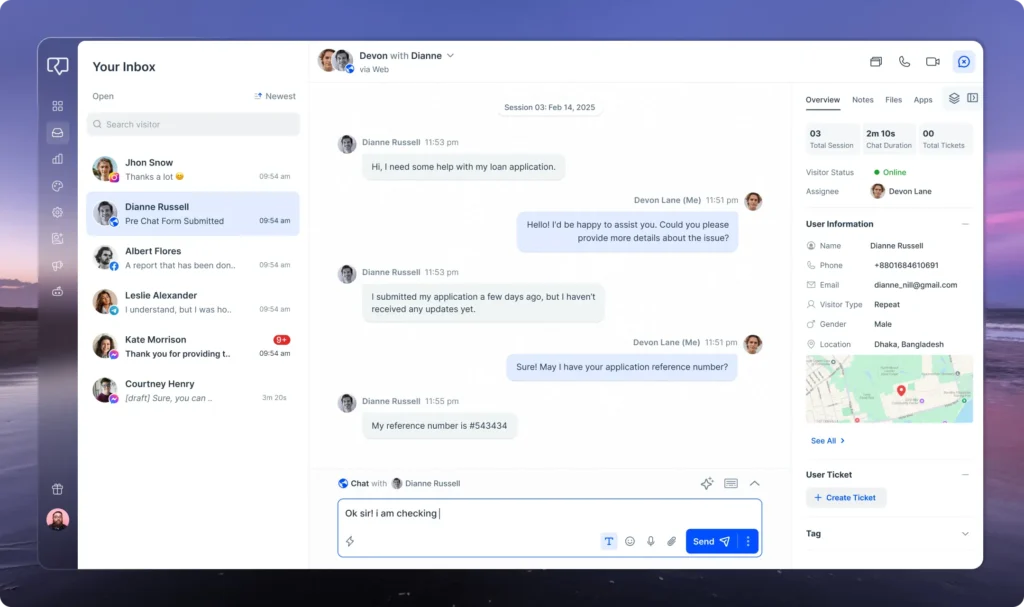
REVE Chat is the best customer engagement platform for businesses looking to deliver smarter, seamless, and scalable customer service. With AI-powered chatbots, live chat, ticketing, video chat, and co-browsing, all in one platform, REVE Chat helps businesses automate conversations, resolve issues faster, and build meaningful relationships with customers.
REVE Chat’s Key Features
- Brain AI: Multilingual support, Context-aware, human-like responses powered by advanced LLMs (GPT, LLAMA).
- Omnichannel Engagement: Interact with customers on the website, WhatsApp, Facebook, and more, on one unified dashboard
- Visual Chatbot Builder: Visually create custom chatbot flows without writing a single line of code.
- Smart Handover: Seamless transfer from bot to live agents for complex queries
- Co-Browsing & Video Chat: Real-time collaboration for high-touch support and sales
REVE Chat’s Best Use Cases
- Automated FAQ Handling: Instantly resolve common queries to reduce support load
- Lead Capture & Qualification: Engage and qualify leads with conversational forms
- Multilingual Customer Support: Connect with global audiences in their preferred language
- Customer Retention: Proactive support that keeps customers coming back
- Sales Assistance: Guide users in real time during their buying journey
REVE Chat’s Pricing
- Starts at $14.99/month. Free trial available.
REVE Chat is Best For
- Businesses of all sizes in eCommerce, SaaS, banking, telecom, and more, anyone aiming to elevate customer experience and engagement with smart automation and real-time support.
REVE Chat’s Pros & Cons
Here’s what users highlight in G2:
| Pros | Cons |
|---|---|
| Easy-to-use chatbot builder with low engineering overhead | Lagging issues in the chat interface |
| Strong omnichannel coverage at a competitive price point | Limited integration options with third-party tools |

Customer Engagement Platforms—How to Choose the Best One?
Customer engagement platforms can boost sales and retention, help you create better products, and offer better support. To choose one, you’ll first need to know your goals. Are you trying to create a loyalty program or launch a new feature? Or are you trying to communicate better with each customer, regardless of where they are?
Targeted platforms with rewards programs are useful, but most companies will benefit more from a versatile communication platform like CloudTalk. By blending customer engagement with advanced telecommunication features, you can connect with customers globally and keep costs low even as you scale.
Whatever platform you choose, make sure it’s easy to use, scalable, and provides value for both your employees and your customers.
For instance, DiscoverCars, an international car rental site, partnered with CloudTalk to manage high call volumes that affected customer satisfaction. With CloudTalk’s Interactive Voice Response solution, they automated routine queries and directed complex issues to the right agents, reducing wait times and improving efficiency and customer satisfaction.

Create a stronger customer engagement strategy with CloudTalk

Frequently asked questions