10 Best Voice AI Agents for Call Deflection You Must Know in 2026
TL;DR:
CloudTalk is the top choice for call deflection because it resolves repetitive inquiries instantly and automates CRM logging. Our AI Voice Agent autonomously handles FAQs and syncs data to eliminate manual work, letting your team focus on high-value tasks.
Our Top 10 Automated Call Deflection Solutions:
- 01CloudTalk — Best for AI call deflection with deep CRM automation.
- 02Google Dialogflow — Best for massive multilingual conversational AI for call deflection.
- 03Amazon Lex — Best call deflection AI software for AWS-native builds.
- 04Talkdesk — Best deflection call center for enterprise CX orchestration.
- 05IBM Watsonx — Best for secure AI call deflection tools in regulated sectors.
- 06Yellow.ai — Best for automated call deflection solutions across voice and chat.
- 07Cognigy — Best for industrial-scale AI-powered call deflection.
- 08PolyAI — Best for deflecting calls with ultra-realistic brand voices.
- 09Nuance — Best for high-security biometric fraud prevention.
- 10Five9 — Best for cloud-native CCaaS intelligent routing.
We have reviewed even more niche solutions—read on for the full list, feature comparisons, and our expert buying advice.
Stop drowning in "Status Update" calls. Repetitive inquiries skyrocket costs while wait times kill loyalty. When agents spend 70% of their day resetting passwords, you lose your edge. AI voice agents offer a high-speed exit from this manual grind.
Deploying AI call deflection resolves issues autonomously before they hit your human queue. These platforms don't just route; they complete tasks. Gartner projects AI will slash labor costs by $80B by 2026, deflecting up to 80% of routine noise.
How We Chose the Best AI Voice Agents for Call Deflection
Selecting the right engine for AI call deflection requires looking past basic "press one for support" menus. To build this definitive list, we evaluated over 50 platforms against a rigorous "Resolution-First" framework, focusing on how these tools solve the modern "ticket avalanche" crisis.
Our methodology is grounded in current market reality: Gartner projects that conversational AI deployments will slash contact center labor costs by $80 billion in 2026. We prioritized tools that don’t just "deflect," but actively resolve inquiries through intelligent automation.
Our Evaluation Criteria:
- Task Resolution Autonomy: We looked for “Agentic AI” capabilities—systems that can complete multi-step tasks like booking appointments or processing refunds, not just navigate IVR trees. This is vital as McKinsey reports that 62% of organizations are now experimenting with AI agents to transform their support pipelines.
- Conversational Fluidity & Latency: The best platforms must eliminate the "robotic lag" that frustrates customers. We prioritized voice AI for call deflection that maintains sub-500ms latency to mimic natural human dialogue.
- Deep Ecosystem Integration: Software must act as a bridge, not a silo. We evaluated how well each tool performs bi-directional syncs with platforms likeSalesforce and Zendesk, ensuring that Customer Details andCall Notes update in real-time.
- Smart Escalation Logic: Top-tier AI call deflection tools must detect frustration or complexity instantly. We favored software that offers "warm transfers," passing the caller to a human agent with full context to maintain high CSAT scores.
- Global Security Standards: For the best voice AI agents for call deflection, we looked for rigorous compliance with GDPR, HIPAA, and PCI DSS to protect sensitive customer data.
Why Trust Our Software Reviews?
For nearly a decade, we’ve helped over 30,000 professionals choose and implement better communication tools. We’ve reviewed 200+ products, analyzed 5,500+ verified reviews from G2 and Capterra, and drawn insights from real user discussions on platforms like Reddit or Quora.
In the past year alone, we’ve published 1,000+ articles, all written and reviewed by humans, for humans, to provide reliable, data-backed insights you can trust.
Learn how we keep our content integrity and our software review methodology.
Top 10 AI Voice Agents for Call Deflection of 2026 [Expert Picks]
Successful AI call deflection requires deploying “Agentic AI” that understands intent rather than just following a rigid script. Below is our benchmarked list of the top performers based on AI maturity, resolution capability, and integration depth.
AI Scheduling Software Comparison
| Dialer Platform | Best for | Starting Price (annual billing) | G2 Rating |
|---|---|---|---|
| CloudTalk | High-growth teams needing total CRM automation | $19/user/month + $9 /month | 4.4/5 |
| Google Dialogflow | Global firms with massive multilingual needs | Pay-as-you-go | 4.3/5 |
| Amazon Lex | Developers building within the AWS ecosystem | Pay-as-you-go | 4.2/5 |
| Talkdesk | Heavyweight enterprise CX workflows | $85/user/month | 4.4/5 |
| IBM Watsonx | Regulated sectors (Finance/Healthcare) | Custom | 4.3/5 |
| Yellow.ai | Multi-channel automation (Voice + Chat) | Custom | 4.4/5 |
| Cognigy | Large-scale industrial customer service | Custom | 4.7/5 |
| PolyAI | Brands requiring ultra-realistic voice quality | Custom | 4.8/5 |
| Nuance | Enterprises prioritizing biometric security | Custom | 4.0/5 |
| Five9 | Seamless cloud CCaaS integration | Custom | 4.0/5 |
1. CloudTalk
CloudTalk is the best AI voice agent for call deflection for mid-market and enterprise teams that refuse to compromise on latency. It differentiates itself by offering AI voice agents that act as a 24/7 digital front desk, resolving routine queries and updating your records while your team focuses on high-value tasks.
- What it is: A cloud-native AI telephony platform that merges elite voice infrastructure with autonomous, human-sounding AI phone calls.
- Key AI features: Highlights include an AI call flow designer for complex deflection logic, AI smart notes for instant documentation, and real-time sentiment analysis.
- Ideal for: High-volume support teams needing to automate up to 80% of routine inquiries through customer service automation.
- What is missing: The platform currently prioritizes voice and SMS automation; native video conferencing is not a built-in feature of the core AI engine.
- Pricing: Starter plans begin at $19/user/month + $9 /month (billed annually).
- G2 rating: 4.4/5 stars.
Review: Verified users on G2 frequently praise the "seamless CRM and app integration," specifically noting that the platform is "simple to learn, quick to adopt, and efficient daily."
”What I like best about CloudTalk is that we use it on a daily basis for both outbound cold calling and customer support. This regular use highlights its reliability and efficiency in our workflow. It seamlessly manages our communication interactions, making it easy to monitor, record, and analyze calls. It ensures that we provide top-notch customer support and optimize our cold calling efforts, all while maintaining an intuitive and user-friendly experience.”
Stop Dialing by Hand—Start Closing Like Dentakay
2. Google Dialogflow
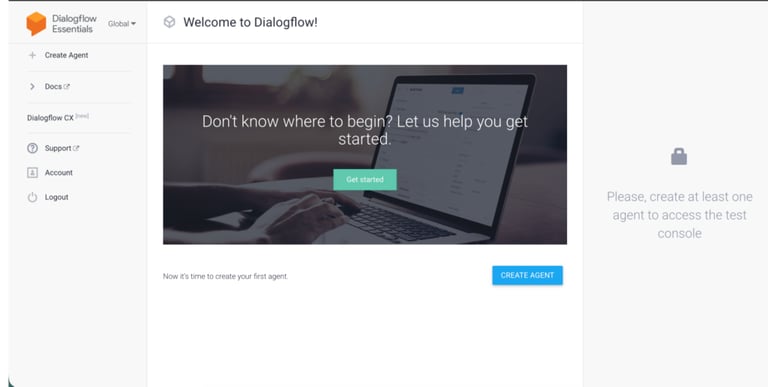
Google Dialogflow is the premier choice for global organizations that need to deflect calls across dozens of languages with high accuracy. It leverages Google’s advanced machine learning to power sophisticated conversational AI for call deflection.
- What it is: A lifelike conversational AI interface that handles complex, multi-turn conversations across voice and text.
- Key features: Features include advanced Natural Language Understanding (NLU), visual flow builders for CX teams, and built-in omnichannel support for a unified deflection call center.
- Ideal for: Enterprise-level companies needing a highly scalable AI business call handling assistant.
- What is missing: The platform requires significant technical expertise to set up and maintain compared to "no-code" alternatives.
- Pricing: Operates on a pay-as-you-go model (Dialogflow CX is roughly $0.60 per session).
- G2 rating: 4.3/5 stars.
3. Amazon Lex
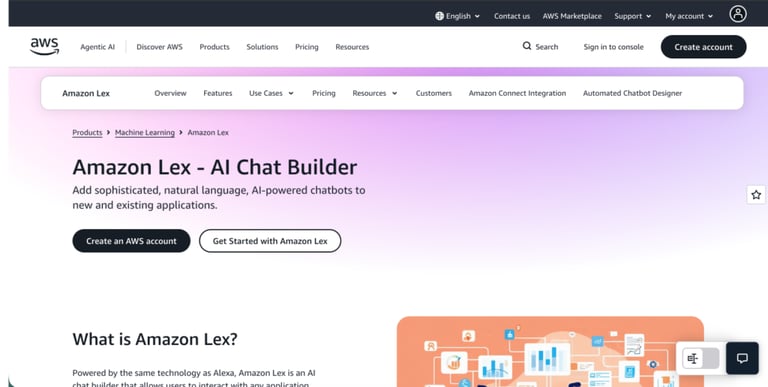
Amazon Lex is one of the best call deflection AI software for technical teams and developers already operating within the AWS ecosystem. It provides the core engine behind Amazon Alexa, allowing you to build sophisticated, multi-step automated call deflection solutions that integrate directly into your existing cloud infrastructure.
- What it is: A fully managed AWS service for building conversational interfaces using voice and text.
- Key features: Highlights include an "Automated Chatbot Designer" that analyzes call transcripts to suggest intent, a visual drag-and-drop conversation builder, and deep 8kHz sampling support specifically optimized for high-fidelity telephony audio.
- Ideal for: Tech-forward companies and SaaS developers who need to build custom AI call deflection tools with absolute control over the backend logic.
- What is missing: It is not an "out-of-the-box" solution; you will need a development team to handle AWS Lambda functions and API hooks for real-world resolution.
- Pricing: Operates on a Pay-As-You-Go model (approx. $0.004 per speech request). New AWS accounts get 5,000 free speech requests per month for the first year.
4. Talkdesk
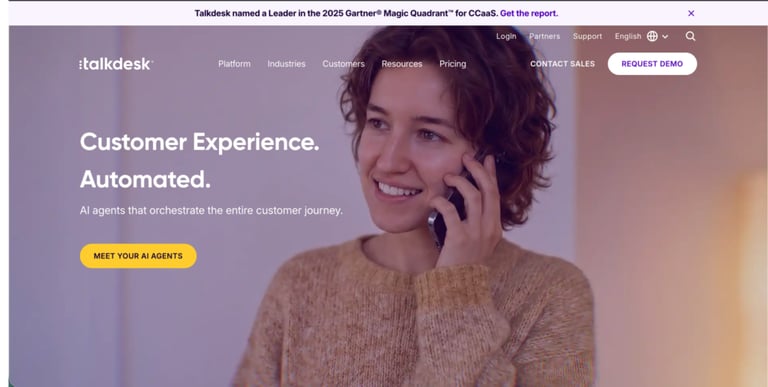
Talkdesk is a powerhouse deflection call center platform built for heavyweight enterprises. It uses "Agentic Autopilots" to automate complex customer journeys across regulated industries like banking and healthcare, ensuring every interaction is secure and compliant.
- What it is: An enterprise-grade cloud contact center (CCaaS) that prioritizes AI-powered call deflection through intelligent orchestration.
- Key features: Notable features include "Talkdesk Autopilot" for virtual agent resolution, "Navigator" for AI-driven intent routing, and specialized "Industry Experience Clouds" with pre-built flows for healthcare and retail.
- Ideal for: Large-scale organizations and global financial institutions that require a HIPAA-compliant and highly stable AI business call handling assistant.
- What is missing: The platform’s complexity often comes with a mandatory 3-year contract, and high-end AI features like Copilot and Autopilot are typically priced as expensive add-ons.
- Pricing: Voice-capable plans start at $105/user/month (Voice Essentials), while the Elite plan with WFM is $165/user/month.
Recommended Reads
5. IBM Watsonx Assistant
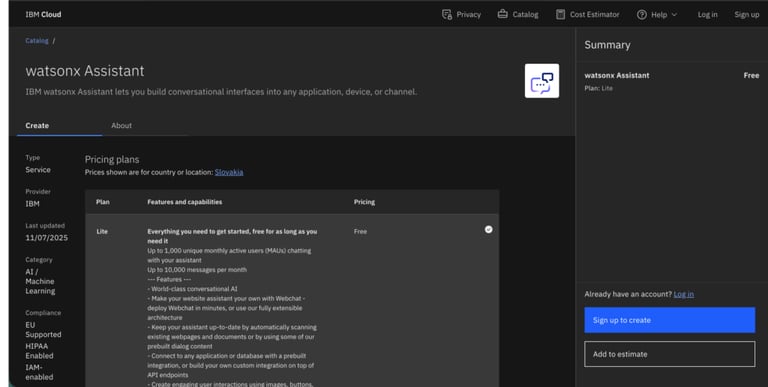
IBM Watsonx Assistant is the premier choice for AI-powered call deflection in highly regulated sectors like banking, healthcare, and government. It differentiates itself by offering a "glass box" approach to AI—providing total transparency, security, and enterprise-grade governance for every interaction.
- What it is: A sophisticated conversational AI platform that automates customer self-service across voice, web, and mobile channels.
- Key features: Notable for its "Visual Builder" which allows non-technical users to design flows, advanced NLP that mimics human interaction, and "Search Skill" which pulls answers directly from your existing knowledge base.
- Ideal for: Large-scale enterprises and data-sensitive organizations that need secure AI call deflection tools.
- What is missing: While powerful, users often report a steep learning curve for advanced features and limited customization for simpler workflows.
- Pricing: A Lite version is available for free. The Plus plan starts at $140/month, while Enterprise plans require a custom quote.
- G2 rating: 4.4/5 stars.
6. Yellow.ai
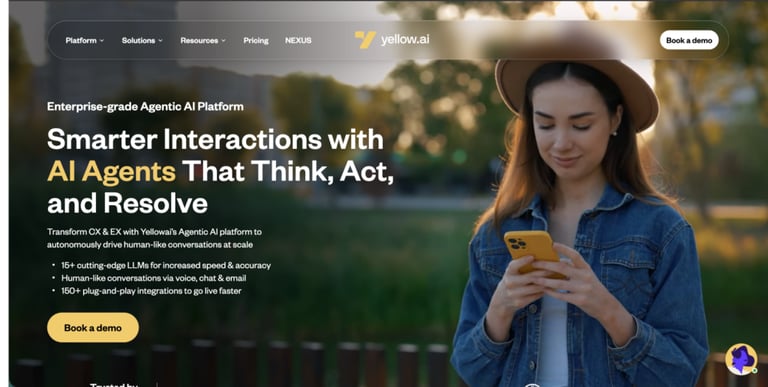
Yellow.ai is a leading multi-channel automated call deflection solutions provider that excels at unifying your brand voice across voice, WhatsApp, and chat. It utilizes a multi-LLM architecture, giving you the flexibility to choose the best AI model for specific tasks without vendor lock-in.
- What it is: An enterprise-grade AI agent platform designed for autonomous customer experience (CX) and employee experience (EX) automation.
- Key features: Highlights include "VoiceX" for human-like phone conversations, a drag-and-drop "YellowG" studio for building bot journeys, and 150+ pre-built integrations to accelerate your go-to-market speed.
- Ideal for: Global brands needing an AI business call handling assistant that manages high-volume interactions across 35+ channels.
- What is missing: Implementation can be complex; some users report inconsistent support and performance issues during long-term deployments.
- Pricing: Offers a very limited Free tier. Most businesses use the Enterprise tier, which operates on a custom-quoted, usage-based model.
7. Cognigy
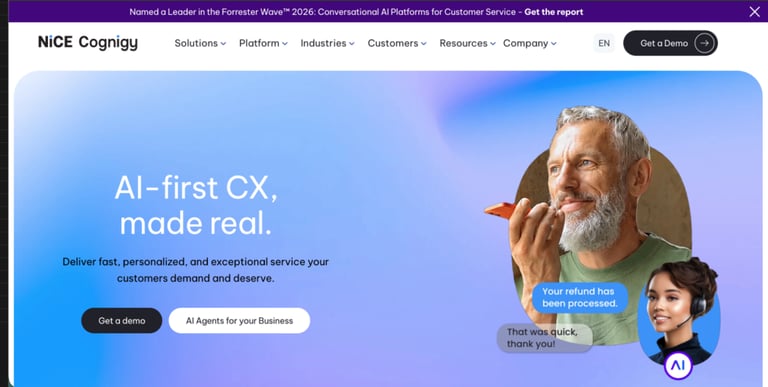
Cognigy is the gold standard for AI-powered call deflection in massive, complex enterprise environments. It specializes in “Agentic AI” orchestration, allowing global brands like Wall Pics to build highly sophisticated virtual agents that manage consistent customer journeys across voice, chat, and mobile apps.
- What it is: An enterprise-grade conversational automation platform that combines a low-code flow builder with advanced generative AI.
- Key features: Includes the "Cognigy Voice Gateway" for high-fidelity telephony, a visual state-machine designer for complex logic, and native "AI Agent Assist" to coach human reps during live escalations.
- Ideal for: Fortune 500 companies and global airlines that need to deflect calls at an extreme scale across multiple business units.
- What is missing: The platform has a steep learning curve and high total cost of ownership, making it a poor fit for SMBs without dedicated IT teams.
- Pricing: Enterprise-first model. Licenses typically start around $2,500/month, with large-scale annual contracts often reaching six figures.
8. PolyAI
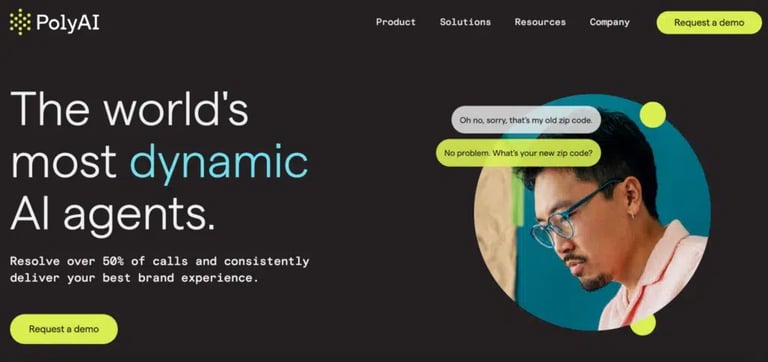
PolyAI is the best voice AI agent for call deflection for brands that prioritize customer experience above all else. Its proprietary technology produces some of the most lifelike, non-robotic voices on the market, ensuring that deflecting calls feels like a premium service rather than a cost-cutting measure.
- What it is: A managed "Voice AI as a Service" platform that designs and deploys ultra-realistic virtual assistants for high-volume contact centers.
- Key features: Features include industry-specific pre-trained models (Hospitality, Banking, Retail), "Superhuman" speech recognition that handles heavy accents and background noise, and a 100% call-answer guarantee.
- Ideal for: Luxury hotels, restaurants, and retail chains needing an AI business call handling assistant that perfectly reflects their brand voice.
- What is missing: It is a premium, "white-glove" service with high minimum entry points; it lacks a self-serve, "do-it-yourself" platform for smaller teams.
- Pricing: Strictly bespoke enterprise contracts. Industry estimates suggest annual commitments start at $150,000+.
9. Nuance
Nuance (a Microsoft company) is the enterprise leader for AI-powered call deflection within highly sensitive environments. It excels at "Gatekeeper" functions, using advanced biometrics to verify identities before deflecting calls to self-service portals, making it a staple for global financial institutions and healthcare networks.
- What it is: A pioneer in conversational AI and ambient intelligence that provides secure, automated IVR and voice AI solutions.
- Key features: Highlights include "Gatekeeper" for voice biometrics, "Nuance Mixer" for professional-grade flow design, and deep integration with the Microsoft Azure ecosystem for unmatched call deflection AI software stability.
- Ideal for: Large-scale healthcare organizations and banks needing AI call deflection tools that prioritize fraud prevention and HIPAA compliance.
- What is missing: The platform is notoriously expensive and complex to implement, often requiring months of professional services to go live.
- Pricing: Custom enterprise pricing only; typically involves large annual commitments and per-interaction fees.
10. Five9
Five9 is a heavyweight cloud CCaaS provider that uses conversational AI for call deflection to bridge the gap between human agents and automated bots. Its "Intelligent Virtual Agent" (IVA) acts as a front-line filter, resolving routine issues and ensuring only high-value calls reach your deflection call center staff.
- What it is: A comprehensive cloud-native contact center platform that features integrated AI voice agents and sophisticated routing.
- Key features: Features include the "Five9 IVA" for no-code bot building, sentiment analysis to detect frustrated callers, and a power dialer for proactive outreach.
- Ideal for: Mid-to-large enterprises looking for automated call deflection solutions bundled into a complete phone system.
- What is missing: It carries a 50-seat minimum and requires a 36-month contract, which limits flexibility for smaller or fast-scaling teams.
- Pricing: Core plans start at $149/user/month, with IVA and advanced AI features sold as paid add-ons.
15 Reviewed. 1 Stands Out.
How to Choose the Right AI Voice Agent for Call Deflection
Selecting the best voice AI for call deflection is a strategic decision that directly impacts your operational bottom line. In 2026, simply "answering" the phone is no longer enough; your agent must act as an autonomous resolution engine. According to Gartner, AI-driven self-service costs a median of $1.84 per contact, compared to $13.50 for agent-assisted interactions.
To bridge this 7x cost gap, your choice of AI call deflection tools must prioritize performance over basic connectivity. Use the following criteria to evaluate your options:
1. High-Level Resolution Capability
Don't settle for a digital receptionist that only recites FAQs. The best voice AI agents for call deflection possess "Outcome Authority." Choose platforms like CloudTalk that can autonomously book appointments, process refunds, or update shipping addresses via API. True AI-powered call deflection occurs when the AI completes the task end-to-end, preventing the customer from ever needing a human follow-up.
2. Low Latency and Natural Conversation
In voice interactions, milliseconds define the user experience. Humans naturally pause for only a few hundred milliseconds during dialogue; any delay longer than that makes the conversational AI for call deflection feel robotic. Prioritize solutions that offer sub-500ms latency. This near-instant response time ensures the rhythm of the conversation remains natural, which significantly reduces the likelihood of customers hanging up.
3. CRM and Backend Integration
Your call deflection AI software is only as smart as the data it can access. To resolve complex queries, the agent must perform bi-directional syncs with your tech stack. Ensure your chosen tool offers native integrations with Salesforce, Zendesk, or HubSpot. This allows the AI to pull customer details in real-time, providing personalized resolutions that drive higher containment rates.
4. Smart Escalation with Context
Even the most advanced automated call deflection solutions will encounter issues they cannot solve. The key is "graceful failure." Look for a deflection call center engine that uses sentiment analysis to detect frustration or complex intent. When the AI hits its limit, it should execute a warm transfer, passing the call notes and context to a human agent so the customer never has to repeat themselves.
5. Security and Global Compliance
Handling sensitive business data requires more than just a smart bot. For the best voice AI agents for call deflection, rigorous security is non-negotiable. Verify that the platform adheres to GDPR, HIPAA, and PCI DSS standards. Features likecall recording encryption and role-based access controls are essential for maintaining trust in regulated industries.
6. Alignment with Business Needs
Identify your specific operational requirements before signing a contract:
- Small Businesses: Focus on "no-code" AI call deflection tools with pre-built templates for fast deployment.
- Enterprise / High Volume: Prioritize platforms that support high concurrency and complex, multi-turn conversations with strong security protocols.
- Global Teams: Ensure the software supports 40+ languages and offers international numbers to provide a localized experience in every region.
7. Key Performance Metrics (KPIs)
Success in deflecting calls is measured by the quality of the resolution, not just volume. Monitor these KPIs via your dashboard:
- Call Deflection Rate: Calls handled without human intervention.
- Containment Rate: Percentage of calls fully resolved by AI.
- First Contact Resolution (FCR): Issues solved on the first attempt without follow-ups.
- Average Handle Time (AHT): Reduction in call duration compared to human agents.
- Customer Satisfaction (CSAT): Use AI smart notes to ensure the automated experience remains top-tier.
5 Call Deflection Strategies for Maximum Impact
Successfully deflecting calls requires more than just installing a bot; it requires a multi-layered strategy that meets the customer where they are. In 2026, the goal of a deflection call center is to provide a path to resolution that is faster than waiting for a human.
1. Intent-Based Routing to Self-Service
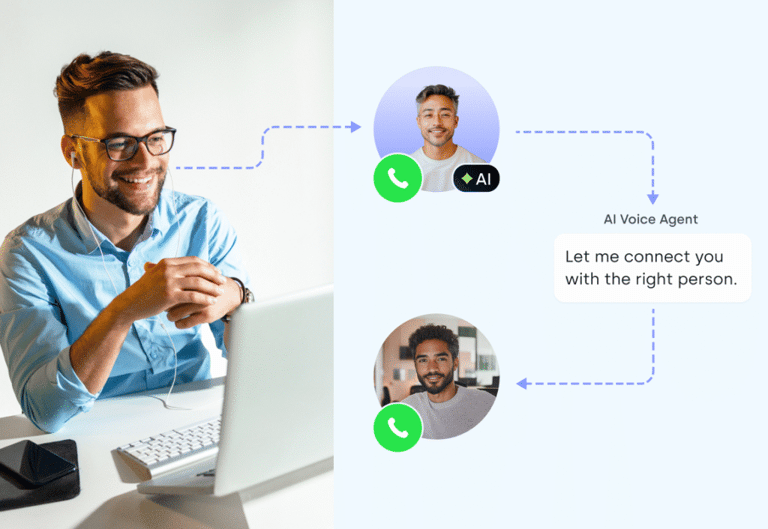
The most effective AI call deflection starts at the first "hello." By using conversational AI for call deflection, your system identifies why a customer is calling within seconds. If the intent is low-complexity—like checking a balance or tracking a package—the AI immediately guides the user through an automated workflow. This "front-door" strategy ensures that repetitive noise never touches your expensive human talent.
2. Omnichannel Pivot via SMS
One of the smartest automated call deflection solutions involves moving the conversation from a synchronous voice call to an asynchronous digital channel. If your queue times spike, your AI-powered call deflection agent can offer to send the caller a secure link via text. This allows the customer to complete their task—like uploading a photo of a receipt or filling out a form—on their own time, effectively "deflecting" the voice load.
3. Proactive Outbound Deflection
The best way to handle a call is to prevent it. Using proactive outreach, businesses can alert customers about service outages, delivery delays, or billing updates before the customer feels the need to pick up the phone. This "offensive" AI call deflection strategy drastically reduces inbound spikes and positions your brand as a transparent, tech-forward leader.
4. Knowledge Base Voice-Enablement
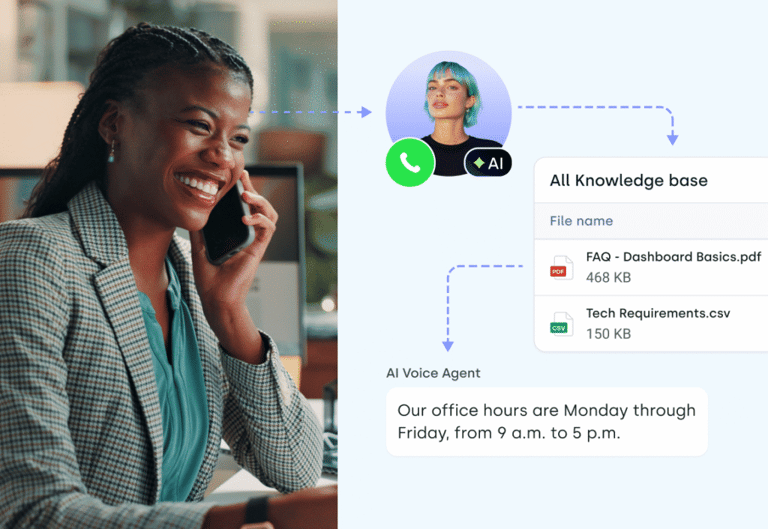
Traditional IVRs often fail because they are "dumb" directories. Modern AI call deflection tools are integrated directly into your internal knowledge base. When a customer asks a question, the voice AI for call deflection scans your documentation and provides a spoken answer in real-time. This turns your phone line into a 24/7 audible FAQ, resolving queries that previously required a live rep to read a script.
5. Smart Callback Incentivization
For calls that cannot be fully automated, use smart callback software. Instead of making a customer wait on hold—which drains VoIP resources and kills CSAT—the deflection call center system offers a guaranteed callback. While technically a "delayed" call rather than a "deflected" one, it flattens volume spikes and prevents the frustration that leads to repeat "check-in" calls.
Essential AI Voice Features for Call Deflection Automation
To move beyond a simple menu and achieve true call deflection AI software success, your platform must possess specific technical "muscles." These features differentiate a high-ROI digital employee from a basic answering machine.
1. Human-Grade Conversation Quality
If an agent sounds like a 1990s robot, customers will immediately press "0" to escape. The best voice AI agents for call deflection utilize advanced Text-to-Speech (TTS) that handles natural pauses and intonations. When the voice AI for call deflection feels human, customers are more willing to engage with the automation, leading to a 30% higher containment rate.
2. Intelligent Intent & Sentiment Recognition
A top-tier AI-powered call deflection system doesn't just listen for keywords; it understands context. Using Natural Language Processing (NLP), the AI can distinguish between a customer who is "looking for a refund" and one who is "angry about a late fee." By detecting sentiment, the system can prioritize high-risk callers for human intervention while confidently handling routine requests for everyone else.
3. Comprehensive Knowledge & CRM Integration
Isolation is the enemy of automation. AI call deflection tools must be "system-aware." This means having a bi-directional sync with your CRM so the AI knows who is calling and their entire purchase history. Whether it's pulling data from Salesforce or checking a ticket in Zendesk, this integration is what allows the AI to actually resolve issues rather than just providing generic info.
4. Smart Escalation with Context Handoff
True conversational AI for call deflection knows its own limits. When a query becomes too complex or emotionally charged, the system must trigger a warm transfer. Crucially, the AI should pass the AI smart notes and a summary of the conversation to the human agent. This ensures the customer doesn't have to start over, preserving the relationship even when the automation ends.
5. Real-Time Analytics and Optimization
You cannot improve what you do not measure. A professional deflection call center platform provides a live dashboard that tracks why customers are calling and where they are dropping off. By analyzing these analytics, managers can fine-tune the AI's responses, identify new FAQs to automate, and continuously push the boundaries of their automated call deflection solutions.
How Different Industries Use Voice AI for Call Deflection
Every industry faces unique "Maria" moments where high call volumes threaten to stall operations. In 2026, the best voice AI agents for call deflection are no longer generic—they are purpose-built to handle sector-specific complexities with surgical precision.
Banking and Financial Services Call Deflection
The BFSI sector currently leads global adoption with a 32.9% market share for voice automation. Financial institutions use AI-powered call deflection to secure account services, verify transactions, and detect fraud in real-time. By automating 24/7 balance inquiries and lost card reporting, banks report operational cost reductions of 20% to 30%. According to Microsoft, advanced voice assistants now resolve nearly 30% of requests with zero human intervention.
Healthcare and Insurance Call Deflection
In healthcare, voice AI for call deflection is projected to save the U.S. economy $150 billion annually by 2026. These agents manage the "administrative drag" of appointment scheduling, insurance verification, and symptom checking. Modern AI voice agents can interpret intent across voice and chat, reducing front-desk workloads and ensuring clinicians spend more time on patient care rather than documentation. Organizations using these AI call deflection tools often see a 40% drop in operational expenses.
E-commerce and Retail Call Deflection
Retailers leverage automated call deflection solutions to handle the "Where is my order?" (WISMO) avalanche. In 2026, AI handles nearly 80% of routine retail interactions autonomously. Beyond tracking, call deflection AI software now manages complex returns, exchanges, and personalized loyalty inquiries. Retailers using CloudTalk's AI report significant boosts in CSAT scores by providing instant resolutions during peak shopping seasons like Black Friday.
Utilities and Telecommunications Call Deflection
Telecommunications and utility providers use conversational AI for call deflection to flatten volume spikes during outages or billing cycles. Instead of waiting on hold, customers interact with an agent that can explain bill increases or schedule technician visits. NVIDIA reports that 90% of telecom operators claim AI is actively driving down costs. By deploying a deflection call center strategy, these firms reduce call abandonment rates by up to 50%.
Key Challenges in Call Deflection and Practical Solutions
While the ROI is clear, moving from a legacy IVR to an autonomous system presents specific hurdles. Successful teams navigate these AI call deflection challenges by focusing on resolution depth rather than just "blocking" calls.
Challenge 5: Integration Complexity Connecting AI to legacy "spaghetti" code can take months.
Solution: Use no-code builders and pre-built integrations. Modern automated call deflection solutions allow teams to go from pilot to production in weeks by utilizing "out-of-the-box" connectors for major CRMs.
Challenge 1: Customers Bypass Self-Service Many callers immediately press "0" because they expect a poor automated experience.
Solution: Deploy best voice AI agents for call deflection with low latency (<500ms) and natural text-to-speech. When the agent sounds human and provides an immediate answer, the "escape to human" rate drops significantly.
Challenge 2: Low Containment Rates Agents often fail to finish the job, forcing a transfer.
Solution: Ensure your AI call deflection tools have bi-directional CRM sync. An agent that can actually write data back to Salesforce or Zendesk can resolve issues end-to-end, achieving containment rates as high as 80%.
Challenge 3: Poor Customer Satisfaction Automation can feel cold or dismissive if not handled correctly.
Solution: Use sentiment analysis to detect frustration. If the customer's tone shifts, the voice AI for call deflection should execute a warm transfer with full context, ensuring a seamless handoff.
Challenge 4: Compliance and Privacy Concerns Regulated industries fear data leaks during automated interactions.
Solution: Choose a platform with SOC2, HIPAA, and GDPR certifications. Implement voice biometrics for frictionless authentication, ensuring only authorized users access sensitive account details.
Why Teams Use CloudTalk’s Voice AI Agents to Deflect Calls
CloudTalk stands out as the premier choice for AI call deflection because it bridges the gap between traditional telephony and autonomous resolution. While other platforms simply route calls, CloudTalk’s AI-powered call deflection engine, CeTe, acts as a digital employee that actually finishes the job.
By utilizing conversational AI for call deflection, teams eliminate the "admin drag" that typically swallows 30% of an agent's day. Whether it is resolving a billing query or scheduling a demo, CloudTalk ensures that your human experts only handle the conversations that truly require a human touch.
The CloudTalk Advantage for Deflecting Calls:
- Instant Speed-to-Resolution: CeTe answers 100% of calls on the first ring, ensuring AI call deflection happens before a customer ever feels the frustration of a wait queue.
- Deep CRM Context: Unlike siloed bots, our voice AI for call deflection pulls data directly from Salesforce or Zendesk to provide personalized, accurate answers.
- Global Scalability: Deploy automated call deflection solutions in over 60 languages with international numbers in 160+ countries.
- Seamless Handoffs: When a query exceeds the AI's scope, the system executes a warm transfer, passing all AI smart notes to a live agent so the customer never repeats themselves.
Success in modern support belongs to teams that use call deflection AI software to work smarter, not harder. CloudTalk provides the most reliable, low-latency infrastructure to make that a reality.
Recommended Articles
Escape the "Hold Music" Purgatory
The "Ticket Avalanche" shouldn’t be your team’s permanent weather forecast. Stop wasting your elite human talent on repetitive password resets and WISMO inquiries. The best voice AI agents for call deflection turn your phone system into a high-velocity resolution engine.
While competitors hire seasonal staff to handle volume spikes, you can resolve 80% of noise autonomously. Use AI call deflection tools to kill "admin drag" and provide that instant, "minute-zero" resolution customers crave. From Amazon Lex to CloudTalk, the reinforcement for your support team is finally here.
Don’t let your brand reputation be defined by a dial tone or a "please wait" loop. Choosing CloudTalk gives you the smartest, most scalable way to automate your entire front desk. Reclaim your team's time and try CloudTalk’s AI Voice Agent for call deflection today.


Frequently asked questions
Call deflection is a strategy used to redirect inbound customer calls to alternative, often automated, service channels. Instead of waiting for a human agent, customers resolve their issues via AI-powered call deflection tools like voice bots, SMS links, or self-service portals.
A high-performing deflection call center engine can resolve 60% to 80% of routine inquiries—such as order tracking or password resets—without human intervention. This can reduce operational costs by up to 40%.
Yes. While traditional IVR relies on rigid "press-button" menus, conversational AI for call deflection understands natural language. It allows customers to speak freely and resolves tasks autonomously, leading to higher CSAT and lower abandonment rates.
Any high-volume sector including E-commerce, Healthcare, Banking, and Utilities. For example, automated call handling for dealerships and medical clinics ensures no lead or appointment request is missed after hours.
With a modern AI business call handling solution, you can go live in a few days. CloudTalk’s no-code builder and native integrations allow for rapid setup compared to legacy enterprise platforms.
In 2026, voice AI for call deflection is the standard because of ultra-low latency (<500ms) and the ability to perform "Agentic" tasks. They don't just provide information; they execute workflows in your CRM and backend systems.
Managers should track the Containment Rate (calls resolved by AI), First Contact Resolution (FCR), and the reduction in Average Handle Time (AHT). Monitoring these via a live dashboard ensures the AI is actually reducing workload.
The best practice is a staged rollout: identify a high-volume, low-complexity use case (like "Where is my order?"), pilot the AI call deflection tools with a subset of traffic, and then scale once containment rates hit target baselines.