
TL;DR Comparison Table: 10 Best Invoca Alternatives & Competitors
| # | Tool | Best For | Starting Price | G2 Rating |
|---|---|---|---|---|
| 1 | CloudTalk | Voice-first SMB to mid-market sales and support teams that need call tracking, AI and the phone system in one place | $25/user/month (Starter) | 4.4/5 |
| 2 | CallRail | SMBs and agencies needing self-serve call tracking with published pricing | $50/month (Lead Tracking) | 4.5/5 |
| 3 | CallTrackingMetrics (CTM) | Mid-market marketing teams blending attribution with contact center routing | $65/month (Marketing Lite, annual) | 4.5/5 |
| 4 | WhatConverts | Lean agencies tracking calls, forms and chats in one lead feed | $30/month (Call Tracking) | 4.9/5 |
| 5 | Marchex | Enterprise automotive, healthcare and home services brands | Custom quote | 4.1/5 |
| 6 | Nimbata | Small teams that want predictable per-answered-call billing | $39/month (Pro) | 4.7/5 |
| 7 | Ringba | Pay-per-call marketers and lead buyers running ring trees | $127/month (Business, annual) | 4.9/5 |
| 8 | Gong | Revenue teams focused on sales coaching and deal intelligence | Custom quote | 4.7/5 |
| 9 | Dialpad | Teams wanting AI transcription built into their business phone | $15/user/month (Standard) | 4.4/5 |
| 10 | CallHippo | Budget-conscious small teams needing a simple business phone | $18/user/month (Starter) | 4.4/5 |
Ten Tools, One Table. Which Two Are You Torn Between?
What Are the Best Invoca Competitors?
CloudTalk leads as the best overall Invoca alternative for growing teams that track where calls come from and also answer those calls. If pure marketing attribution is genuinely all you need, CallRail does that job for less money, and CallTrackingMetrics takes over when routing matters as much as reporting.
The split matters more than the ranking. Invoca sits at the enterprise end of call tracking, where pricing is quoted per account and rollouts take weeks. Most teams weighing up alternatives to Invoca software for call tracking want the same insight without the contract around it.
Why Are Teams Searching for an Invoca Alternative?
You are running ads, the phone is ringing, and nobody can tell you which campaign is paying for itself. That is the problem Invoca's call tracking software solves, and teams still look for an Invoca alternative for three structural reasons: Invoca pricing is quoted rather than published on every tier, the platform is scoped for brands with heavy paid-media budgets, and it analyzes your calls without being the phone system your team works in.
Invoca itself is well built and well reviewed. Invoca reviews on G2 put it at 4.5/5 from 950+ reviewers, and it has led the inbound call tracking category there for years running. Buyers report roughly a month to implement and about 10 months to see returns.
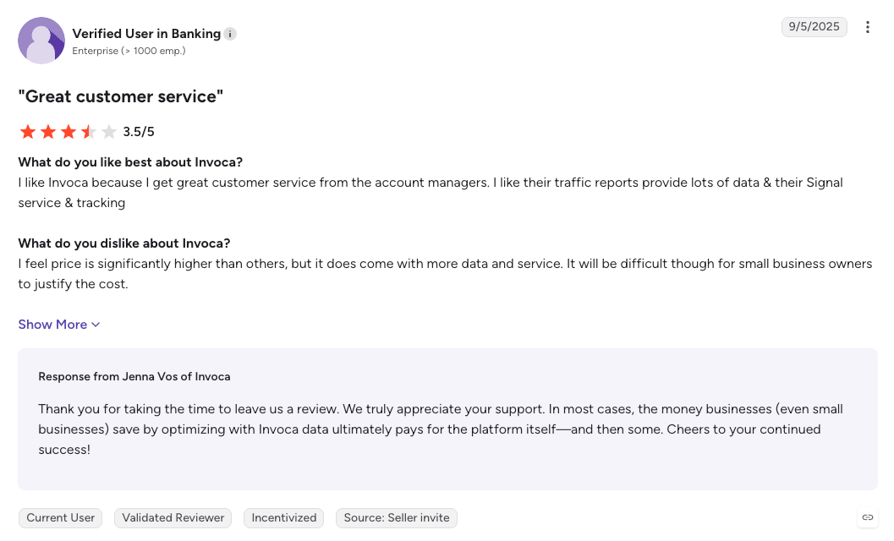
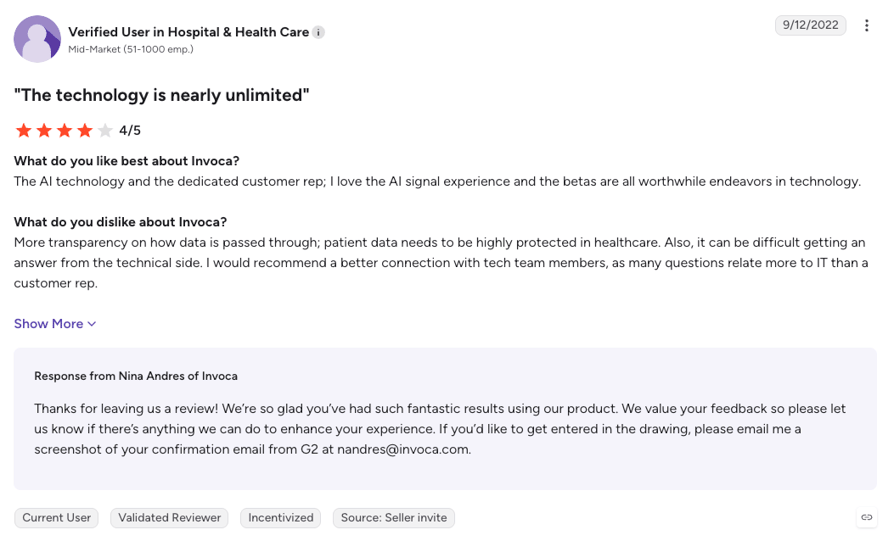
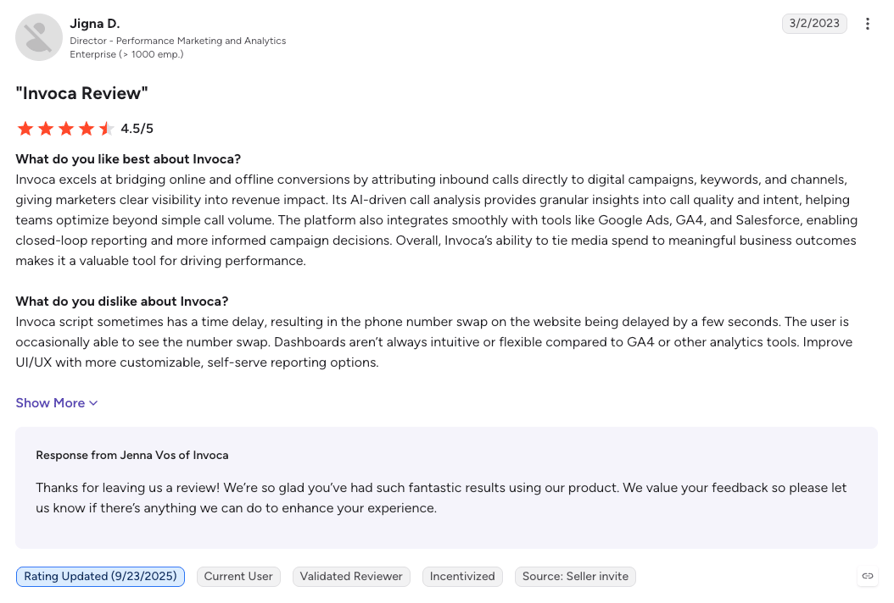
On TrustRadius, reviewers praise the dashboard and the client success team, then flag a steep learning curve and options buried across views. Capterra tells the same story: value for money is Invoca's lowest-scoring dimension. Put Invoca vs competitors on those two measures and the same five gaps come up, which is what sends teams hunting for the best call tracking software alternatives to Invoca.
5 Main Cons of Invoca That Make Businesses Look for an Alternative
- Every plan is quote-only, including the entry tierAll five Invoca plans (Pro, Enterprise, Elite, Performance Professional and Performance Enterprise) show Get Your Quote instead of a price. You can't size a budget or compare tools without booking a sales call, and G2 reviewers consistently name cost as the platform's main drawback for smaller teams. Most Invoca alternatives on our list publish the cost of every plan and add-on on their pricing pages.
- Priced and scoped for enterprise ad budgetsInvoca is built for large B2C brands in healthcare, finance, insurance and telecom. G2's own buyer data puts implementation at about one month and payback at about 10 months, and reviewers say the cost is hard to justify below enterprise scale. Industry comparisons put entry contracts in the five figures a year, though Invoca publishes no figure.
- The capability you want usually sits in an add-onSignal AI conversation analytics, Quality Management and Agent Coaching, PreSense and premium Salesforce and Adobe integrations are all sold as add-ons on top of the base plan. Custom signals are tier-gated too, from 5 on Pro up to 100 on Elite, so the useful configuration is rarely the entry quote.
- It measures the call, it doesn't run your callingInvoca is built around the inbound marketing call: tracking, routing and analysis. Teams that also need outbound dialing, agent seats and a softphone end up buying a second platform and reconciling two sets of reports. CloudTalk covers both sides of the call, with auto dialers included on Expert.
- A learning curve that slows the people who need the reportsReviewers describe options hidden across multiple views and reporting that takes training to navigate, plus no native Zapier connection. For a two-person marketing team, that's weeks before anyone trusts the dashboard, which is why lighter tools keep winning this comparison.
Where Invoca Shines
Invoca earns its reputation at the top of the market. For a national brand spending millions on paid media across hundreds of locations, its signal detection, IVR depth and native Adobe, Google, Meta and Salesforce connections do things lighter tools genuinely can't, and it has been a multi-year G2 leader in call tracking.
It's also a serious pick for regulated industries, where call data carries compliance weight. If that's your world, the honest question isn't whether Invoca works. It's whether you need it at that price.
What Is the Best Alternative to Invoca?
Picking the best Invoca alternative depends on what you are actually replacing. If Invoca was purely a measurement tool for you, CallRail would be our honest answer: dynamic number insertion, keyword-level attribution and call recording from $50/month, live the same afternoon, with no sales call in the way.
However, most teams comparing Invoca competitors aren't only measuring. They're routing calls, dialing out, syncing to a CRM and reviewing what got said. That's exactly why CloudTalk tops this list: it puts campaign-level call tracking, post-call AI and the phone system itself on one bill you can read before you buy.
Why Do Teams Consider CloudTalk the Best Invoca Alternative?
CloudTalk is a business phone system for growing sales and support teams, used by 5,500+ businesses. Plans start at $25/user/month with no seat minimum until Expert, which needs three seats. It's used by teams that need to track their calls, but also need everything a proper call center software with AI layered in should offer.
You get numbers in 160+ countries, 99.999% uptime and AI voice agents that answer and make calls 24/7, and can speak 70+ languages. CloudTalk's Starter plan covers unlimited inbound calls, a 500-minute outbound bundle, call queues, transfers and click-to-call. IVR, smart routing and CRM integrations start from Essential.
Where CloudTalk Wins, and Where It Doesn't
One honest boundary first. If you're a national B2C brand running hundreds of locations in healthcare, finance or insurance, and the job is proving media spend at that scale, Invoca and its enterprise peers are built for exactly that. CloudTalk isn't, and we'd rather say so here than three months into a rollout.
For everyone else the maths runs the other way. Every plan and add-on is published, most accounts are live in under 24 hours instead of a month, and campaign numbers, call tags, analytics, dialers, CRM sync and voice AI arrive on one bill rather than assembled from separate tools.
CloudTalk holds up even when your needs are narrow. A tracking-only team gets campaign numbers, tags and analytics inside the seat price rather than as a second subscription, and post-call AI analytics is a $9/user/month switch on any plan rather than a climb to a higher tracking tier.
5 Main Pros of CloudTalk and Why Voice-First Teams Switch from Invoca
- Pricing you can budget without a sales callThree published plans at $25, $29 and $49/user/month (annual billing), with add-ons listed at their real prices. Monthly billing stays an option, and a 14-day free trial comes before any commitment.
- Campaign numbers and call tags, without the enterprise rolloutAssign dedicated virtual numbers to campaigns or channels, then use call tags and analytics to see which ones produce real conversations. Most accounts are live in under 24 hours, not a month of implementation calls.
- One add-on covers the whole AI layerConversation Intelligence is $9/user/month on any plan and brings transcripts, AI summaries, sentiment, topic tags and QA scorecards in one switch. It's post-call analysis, built for review and coaching rather than live prompting.
- Two-way CRM sync, not one-way logging100+ CRM and helpdesk integrations from Essential, including HubSpot, Pipedrive and Zendesk, with Salesforce deep sync on Expert. Calls, recordings, notes and transcripts land on the right record automatically, so marketing and sales read the same data.
- The calls themselves, inbound and outboundSmart and Preview Dialer on Expert, Power Dialer included on Expert or a $15/user/month add-on on any plan, and Parallel Dialer as a $39/user/month add-on. AI Receptionist answers what your team can't, with 50 free minutes on every account to test it, then from $99/month.
Five Invoca Plans. Five Quote Requests.
How We Chose the Best Invoca Alternatives and Competitors
To find the best Invoca competitors, we went through recurring themes from Reddit, Quora, G2, Capterra and TrustRadius, read every vendor's live pricing page and product documentation ourselves. Then, we scored each tool against six benchmarks that decide whether a call tracking setup survives contact with a real team.
- Call Stability & ReliabilityTracking data is worthless if the call drops, so carrier quality counts as much as the dashboard.
- Total Cost of OwnershipPublished prices, usage overages, seat minimums and which features hide behind a quote.
- CRM & Helpdesk Integration DepthOne-way call logging versus true two-way sync that writes back to the record.
- Global Coverage & Number AvailabilityWhere you can get local numbers, and what happens when campaigns cross borders.
- Support Quality & AvailabilityHours, channels and whether real humans answer during a broken rollout.
- AI & Automation CapabilitiesTranscription, summaries, sentiment and voice agents, plus what tier they land on.
The Top 10 Alternatives to Invoca for 2026
Here's how Invoca stacks up against CloudTalk and the three tools buyers put beside it most often on G2. These are the rows that change a decision, not the feature-count rows every vendor wins. Give this a quick look and then dive deeper into the individual breakdowns to find your new alternative to Invoca's inbound call tracking software.
Invoca vs. CloudTalk, CallRail, CTM and CallHippo
| Feature | Invoca | CloudTalk | CallRail | CallTrackingMetrics (CTM) | CallHippo |
|---|---|---|---|---|---|
| Starting Price | Custom quote, every tier | $25/user/month | $50/month | $65/month (annual) | $18/user/month |
| Billing Model | Per account, quote-only | Per user, published flat rate | Per account plus usage | Per account plus usage | Per user |
| Free Trial | Demo-led, no self-serve signup |  14 days 14 days | 14 days | First month $0 | 10 days |
| Tracking Numbers & Coverage | 6,000 numbers a year on Pro, up to 18,000 on Elite | Dedicated campaign numbers, tags and analytics across 160 countries | 5 numbers included, dynamic number insertion | Included, dynamic number insertion | Numbers in 50+ countries, no marketing attribution |
| Conversation Intelligence | Signal AI, sold as an add-on | Post-call add-on ($9/user/month, any plan) | Premium tier only, from $150/month | AskAI from Marketing Pro ($149/month) | AI Copilot add-on, $10/user/month |
| CRM Integrations | Salesforce, Adobe, Google, Meta, HubSpot | 100+ tools from Essential, Salesforce on Expert | HubSpot and Salesforce syncs | HubSpot on Pro, Salesforce on Sales Engage | Custom integrations on Ultimate |
| Outbound Dialing |  Built around inbound calls Built around inbound calls | Power Dialer (Expert, or $15/user/month add-on), Parallel Dialer ($39/user/month add-on on any plan). Smart & Preview Dialer on Expert. Click-to-call from Starter. | Tracking only | Smart Dialer on Sales Engage | Power Dialer |
| AI Voice Agents | Inbound qualification and routing | AI Receptionist, 50 free minutes then from $99/month | Voice Assist add-on from $95/month | VoiceAI on Sales Engage | Add-on, calling charged separately |
| Setup Time | About a month, per G2 buyer data | Live in under 24 hours | Self-serve signup | Self-serve signup | Self-serve signup |
| Customer Support | Dedicated client success, praised by reviewers | 24/7 (phone on Expert) | Email and chat, phone on higher tiers | Email and chat, premium support on Enterprise | 24/7 support |
| G2 Rating | 4.5/5 (950+ reviews) | 4.4/5 (1,850+ reviews) | 4.5/5 (1,800+ reviews) | 4.5/5 (750+ reviews) | 4.4/5 (400+ reviews) |
The Invoca Quote Gap
Here's the part that decides most shortlists. Every competitor in that table lets you price your setup in about two minutes on a public page. Invoca asks for a meeting first, and G2 buyers report roughly a month of implementation and about 10 months before the investment pays back.
For a national brand with a paid-media budget in the millions, that's normal procurement. For a 12-person marketing team that just wants to know which ads produce phone calls, it's a quarter of the year spent before the first useful report.
1. CloudTalk: The Best Invoca Alternative for Voice-First Sales and Support Teams That Need Call Tracking, AI and the Phone System in One Place
What Is CloudTalk?
CloudTalk is an AI-powered business phone system built for sales and support teams that live on the phone. It serves 5,500+ businesses, from four-person agencies to mid-market contact centers, and runs self-serve from signup.
CloudTalk is the ideal Invoca replacement when the team measuring the calls is also the team answering them. Invoca tells you which campaign produced a call. CloudTalk gives you the numbers, the routing, the dialers and the post-call AI, then shows you the same tags and reports on top.
Why Is CloudTalk a Strong Invoca Alternative?
- Published pricing at every tier: Plans run $25, $29 and $49/user/month on annual billing, with add-ons priced on the same page. Nothing sits behind a quote gate, and seat minimums only start on Expert, which needs three.
- Campaign numbers, tags and analytics without a rollout: Point dedicated numbers at campaigns or channels, tag what happens on the call, and read it back in analytics. Most accounts are live in under 24 hours.
- Post-call AI for $9/user/month: Conversation Intelligence adds transcripts, AI summaries, sentiment, topic tags and QA scorecards to any plan, so call review stops being a listening exercise.
- Two-way CRM sync from Essential: 100+ CRM and helpdesk integrations write calls, recordings and notes onto the right record automatically, with Salesforce deep sync on Expert.
- Voice agents that pick up what your team can't: AI Receptionist answers, qualifies and routes in 70+ languages, with 50 free minutes on every account and paid tiers from $99/month.
What Are the Pros & Cons of CloudTalk?
| Pros | Cons |
|---|---|
| Flat per-seat pricing published at every tier, from $25/user/month | Voice-first by design: no native video meetings or omnichannel inbox |
| Call tracking, dialers, routing and post-call AI on one platform and one bill | CRM integrations need the Essential plan, they are not on Starter |
| 100+ CRM and helpdesk integrations with two-way sync from Essential | Parallel Dialer is a $39/user/month add-on, but works with any plan |
| Numbers in 160 countries with 99.999% uptime | |
| 24/7 chat and email support on all plans (phone on Expert) |
What Are CloudTalk's Plans & Pricing?
CloudTalk pricing starts at $25/user/month (Starter, billed annually), with the following plans:
CloudTalk Plans and Pricing
| Plan | Price (annual billing) | Key Features |
|---|---|---|
| Starter | $25/user/month | Unlimited inbound & internal calls, 500 outbound minutes (regional calling bundle), call queues, transfers, click-to-call, automatic call recording (1-month retention) |
| Essential | $29/user/month | Everything in Starter + IVR and smart routing, 100+ CRM/helpdesk integrations, workflow automation, unlimited recording retention |
| Expert | $49/user/month | Everything in Essential + Power, Smart & Preview Dialers, Salesforce integration, 24/7 phone support (3-seat min) |
| Conversation Intelligence (add-on) | $9/user/month | AI transcripts, call summaries, call scoring, sentiment analysis, and agent coaching insights |
| AI Receptionist (add-on) | From $99/month (200 min) | Inbound AI call answering, routing, logging; 50 free minutes on every account; tiers up to $699/mo (2,500 min) |
| AI Specialist (add-on) | From $349/month (1,000 min) | Sales-led custom AI voice agents for inbound and outbound workflows; plans scale up to $1,249/mo (5,000 min) |
What Do CloudTalk's Customers Say?
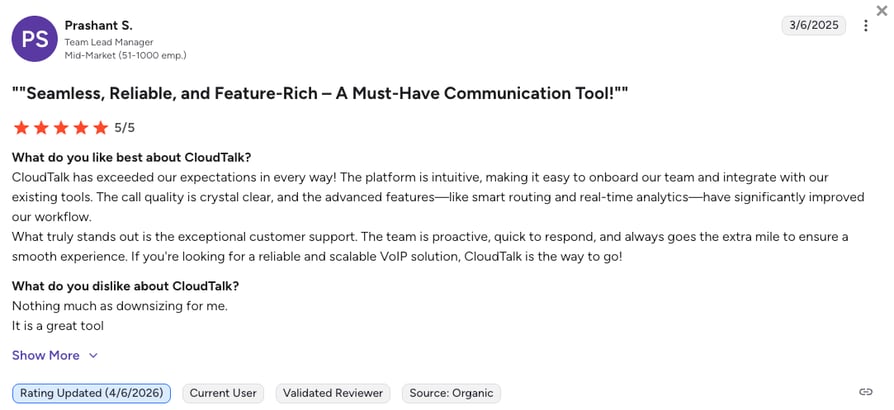
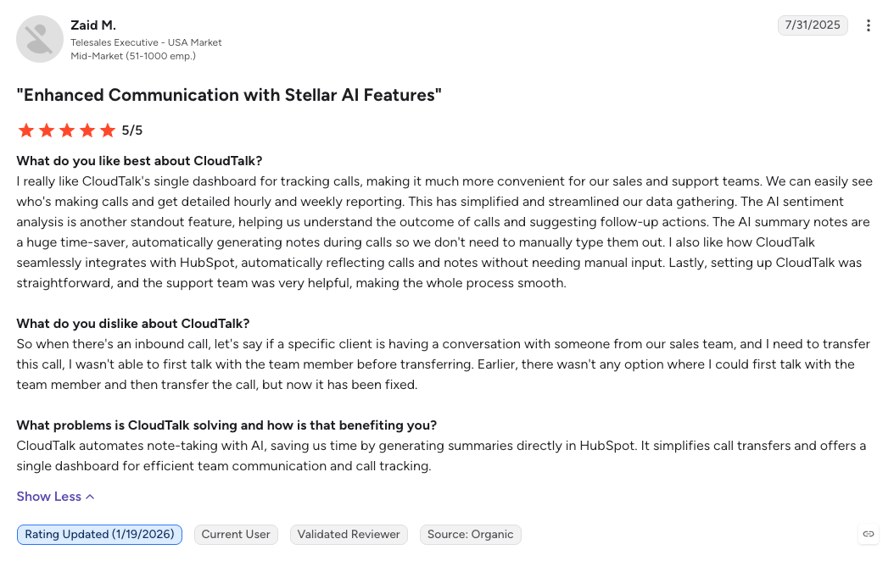
CloudTalk reviewers keep landing on the same two things: setup that doesn't need an IT project, and CRM sync that actually holds. Teams describe getting numbers live and calls logging to HubSpot or Pipedrive in an afternoon, then leaving it alone.
The criticism is just as consistent. Some users want deeper customization in the analytics views, and teams on Starter run into the CRM and dialer limits when they scale, which means an upgrade rather than an add-on.
CloudTalk Conversation Intelligence in Action: Capitalo's Story
Capitalo ran sales teams across markets its supervisors didn't speak, so call quality reviews were guesswork. AI transcripts and summaries turned German-language calls into something a manager could read and score. That's the gap Invoca's enterprise analytics fill at enterprise prices, closed here for $9/user/month.
Sara Konickova, Capitalo's Sales Ops Manager, put numbers on it:
CloudTalk's AI conversation intelligence drastically improved our efficiency. We've cut call quality analysis time from 2 hours to 20 minutes a day and reduced wrongly targeted leads by 24%...
Sales Ops Manager at Capitalo

How Do G2 Users Rate CloudTalk?
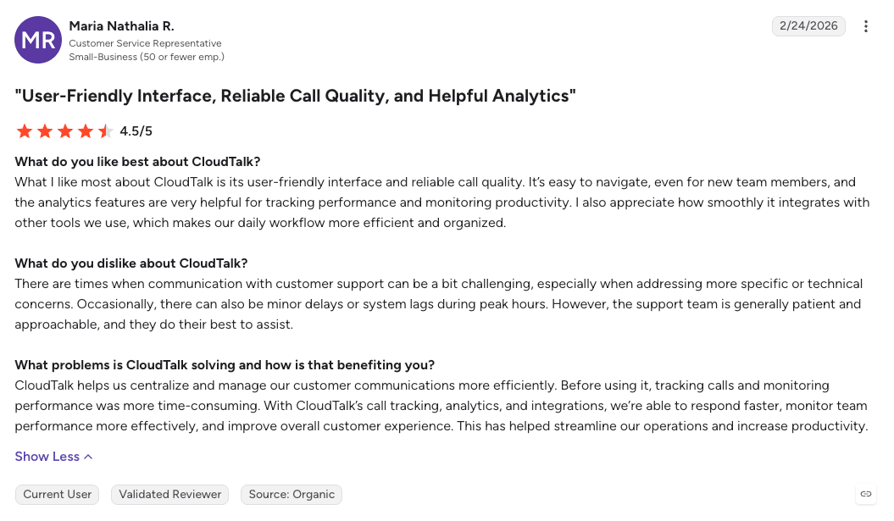
CloudTalk holds 4.4/5 on G2 across 1,850+ verified reviews, close to double Invoca's review base. Ease of use is where it scores highest, which matches what teams say about getting started without help.
Two Hours of Call Review, Down to Twenty Minutes. You Just Read How.
2. CallRail: Best for SMBs and Agencies Needing Self-Serve Call Tracking with Published Pricing
What Is CallRail?
CallRail is the call tracking platform most small businesses and agencies meet first. It tracks calls, texts and forms back to the campaign, keyword or ad that produced them, and you can sign up and be live the same day.
CallRail is the closest thing to Invoca with a price tag on it. You give up the enterprise signal depth and the vertical AI models, and you get dynamic number insertion, keyword-level attribution and call recording from $50/month. That trade is why most Invoca vs CallRail comparisons end with CallRail for anyone under enterprise scale, and why it is the Invoca call tracking competitor buyers name first.
Why Is CallRail a Strong Invoca Alternative?
- Published, self-serve pricing: Four tiers from $50 to $195/month, all on the page, with a 14-day free trial and no sales call to see numbers.
- Dynamic number insertion out of the box: Swap the number on your site by traffic source and tie calls back to the ad, keyword or campaign, on the entry plan.
- Native Google Ads and Analytics tie-ins: Push calls back as conversions so your bidding reflects phone leads, not just form fills.
What Are the Pros & Cons of CallRail?
| Pros | Cons |
|---|---|
| Entry plan at $50/month with call and text tracking included | Every plan is metered: 250 local minutes and 5 numbers included, then usage on top |
| Dynamic number insertion and keyword-level attribution from tier one | Conversation intelligence sits on the $150/month tier, three steps up |
| 14-day free trial, no credit card required | It tracks calls without handling them, so dialers and agent seats live in another tool |
| Strong Google Ads, GA4 and CMS integrations | Reviewers report duplicate contact matching in the HubSpot sync |
What Are CallRail's Plans & Pricing?
CallRail pricing starts at $50/month (Lead Tracking), with the following plans:
CallRail Plans and Pricing
| Plan | Price | Key Features |
|---|---|---|
| Lead Tracking | $50/month | 5 local numbers, 250 minutes, 250 transcription minutes, call and text tracking, recording, routing, automation rules |
| Lead Tracking Complete | $95/month | Everything in Lead Tracking + form tracking and attribution, custom form builder, 1,000 form submissions |
| Lead Conversion | $150/month | Everything in Lead Tracking + call summaries, sentiment analysis, keyword analysis, 10,000 transcription minutes |
| Lead Conversion Complete | $195/month | Everything in Lead Conversion + form tracking and attribution, 1,000 form submissions |
The Metered Middle
CallRail's $50 entry buys 250 minutes and 5 numbers. A busy home services or legal campaign burns through that in a fortnight, and the overage runs $0.05 a minute plus $3 a number. The AI read on those calls is another $100/month on top.
That's still far below an Invoca contract. It just isn't the $50 most people quote. CallRail alternatives like CloudTalk bill per seat instead, so the number that grows is headcount, not call volume.
What Are CallRail's Customers Saying?
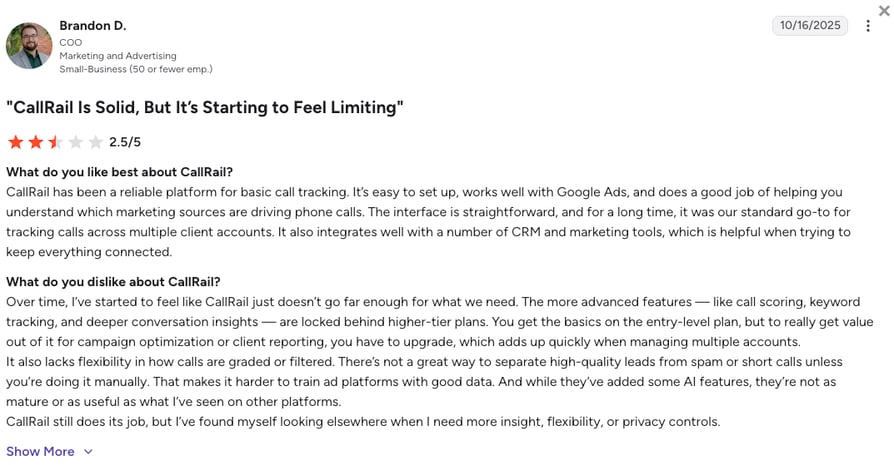
Reviewers consistently call out how quickly CallRail goes live and how clean the attribution reporting is. Agencies like that a junior marketer can set up tracking numbers without help, and the recordings and transcripts do the rest.
The complaints cluster around integrations and depth. Users report duplicate contacts when syncing to HubSpot, a shorter CRM list than they expected, and a learning curve once sales teams need more than the basic reports. Sync quality is exactly why HubSpot vs CallRail and CallRail vs Invoca get argued on data hygiene rather than price.
How Do G2 Users Rate CallRail?
CallRail holds 4.5/5 on G2 from 1,800+ reviews, the largest review base of any pure call tracking tool here and about double Invoca's.
3. CallTrackingMetrics (CTM): Best for Mid-Market Marketing Teams Blending Attribution with Contact Center Routing
What Is CallTrackingMetrics (CTM)?
CallTrackingMetrics, now trading as CTM, sits between marketing attribution and the contact center. It tracks calls, texts, forms and chats, then routes them through IVR menus, queues and a softphone its competitors mostly don't ship.
CTM is the Invoca alternative for teams that need the routing as well as the reporting. Most CallTrackingMetrics vs Invoca comparisons come down to scale: CTM covers the same attribution ground with published tiers and unlimited users, while Invoca reserves that depth for quoted enterprise contracts.
Why Is CallTrackingMetrics a Strong Invoca Competitor?
- Unlimited users on every plan: Pricing is per account, so mid-market call tracking scales with call volume rather than headcount.
- Attribution plus real routing: IVR menus, skills-based routing, live coaching and a softphone arrive on the same platform as the tracking numbers.
- Agency and compliance features built in: Sub-accounts, white labelling, HIPAA and GDPR handling land on Marketing Pro rather than a custom quote.
What Are the Pros & Cons of CallTrackingMetrics (CTM)?
| Pros | Cons |
|---|---|
| Unlimited users on all tiers, priced per account | Usage bills on top: transcription at $0.02/minute and AskAI summaries at $0.05 each |
| Dynamic number insertion, form tracking and AI call analysis | The jump to Enterprise is steep at $1,999/month |
| IVR, skills-based routing, live coaching and Smart Dialer on Sales Engage | Reviewers report slowdowns and timeouts on high call volumes |
| HIPAA and GDPR support plus agency sub-accounts from Marketing Pro | Advanced integrations sometimes need professional services to configure |
What Are CallTrackingMetrics (CTM)'s Plans & Pricing?
CTM pricing starts at $65/month (Marketing Lite, annual pre-pay), and it offers the following plans:
CallTrackingMetrics Plans and Pricing
| Plan | Price (annual billing) | Key Features |
|---|---|---|
| Marketing Lite | $65/month | Unlimited users, call and text attribution, standard recording and IVR, Google Ads and GA4 integrations |
| Marketing Pro | $149/month | Everything in Lite + form tracking, custom AI analysis, 3,000 transcribed minutes, HubSpot integration, API access, agency sub-accounts |
| Sales Engage | $274/month | Everything in Pro + softphone, Smart Dialer, skills-based routing, live coaching, Salesforce integration |
| Enterprise | $1,999/month | Everything in Sales Engage + dedicated account management, volume pricing, premium support with response-time guarantees |
Where the Bill Actually Grows
CTM's plan fee is only half the story. Transcription runs $0.02 a minute, AI summaries $0.05 an activity and chat AI $1 a conversation, so a high-volume month arrives as a usage invoice rather than a subscription.
It's the same shape as Invoca's model, just published. If you want the number fixed to headcount instead of call volume, per-seat platforms behave differently.
What Are CallTrackingMetrics (CTM)'s Customers Saying?
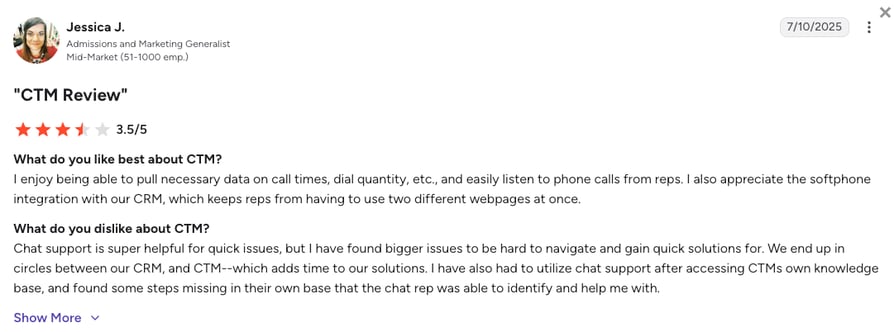
On TrustRadius, CTM scores 10 out of 10, though from a small base of 14 reviews. Reviewers there single out the reporting interface as genuinely intuitive and setup as fast even for non-technical marketers.
The wider G2 base is warmer than it is glowing. Praise goes to the integration list and the tracking depth, while the recurring complaints are speed on large call volumes, an interface that looks dated, and documentation that doesn't always match the task.
How Do G2 Users Rate CallTrackingMetrics (CTM)?
CTM holds 4.5/5 on G2 from 750+ reviews, matching Invoca's score from a smaller but still substantial base.
4. WhatConverts: Best for Lean Agencies Tracking Calls, Forms and Chats in One Lead Feed
What Is WhatConverts?
WhatConverts is a lead tracking platform rather than a call tracking tool alone. Calls, form fills, live chats and eCommerce transactions all land in one feed, each tagged with the campaign, keyword and channel that produced it.
WhatConverts wins the Invoca comparison on breadth of lead type, not depth of AI. Where Invoca goes deep on the phone conversation for enterprise brands, WhatConverts answers a simpler question for marketers: which channel produced which lead, and was it any good. It starts at $30/month.
Why Is WhatConverts a Strong Alternative to Invoca?
- Every lead type in one place: Phone calls sit alongside forms, chats and transactions, so attribution reporting doesn't stop at the call.
- Dynamic number insertion on the entry plan: The $30 tier includes call and text tracking, DNI, recording and API access.
- Lead qualification built into reporting: Mark leads as quotable or not, attach values, and report on revenue by channel rather than call counts.
What Are the Pros & Cons of WhatConverts?
| Pros | Cons |
|---|---|
| Entry plan at $30/month with DNI, recording and API access included | Only monthly pricing is published, with no annual discount shown |
| Tracks calls, forms, chats and transactions in a single lead feed | Usage bills against a $30 credit, so heavy call volume adds cost |
| 14-day free trial on every plan, including agency tiers | Reviewers report friction integrating with Wix, Squarespace and Shopify |
| Highest G2 score of any tool on this list at 4.9/5 | Agency plans jump to $500/month for unlimited accounts |
What Are WhatConverts's Plans & Pricing?
WhatConverts pricing starts at $30/month (Call Tracking), with the following plans available:
WhatConverts Plans and Pricing
| Plan | Price | Key Features |
|---|---|---|
| Call Tracking | $30/month | Call and text tracking, dynamic number insertion, call recording, API access, $30 usage credit |
| Plus | $60/month | Everything in Call Tracking + form and chat tracking, campaign and keyword reporting, Google Ads integration |
| Pro | $100/month | Everything in Plus + call flows, custom report builder, scheduled reports, HIPAA compliance |
| Elite | $160/month | Everything in Pro + customer journey tracking, multi-click attribution, lead intelligence rules |
Great Reporting, Still Not a Phone System
WhatConverts is excellent at telling you where a lead came from and what it was worth. What it doesn't do is give your team somewhere to make and take the calls, so it usually sits next to a phone platform rather than replacing one.
That's two subscriptions and two sets of reports. If the tracking can live inside the phone system instead, the reconciliation work disappears.
What Are WhatConverts's Customers Saying?
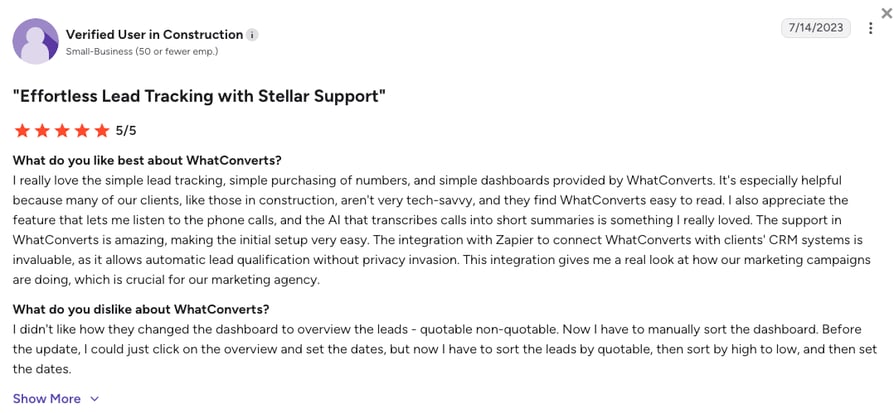
WhatConverts has the warmest sentiment on this list. Reviewers repeatedly name the support team as the reason they stay, and describe setup as simple enough that a client's marketing manager can follow it.
The honest caveats are price and platform edges. Users call it expensive for what is essentially reporting, flag gaps connecting to Wix, Squarespace and Shopify, and mention documentation thinning out around advanced tag manager work.
How Do G2 Users Rate WhatConverts?
WhatConverts holds 4.9/5 on G2 from 300+ reviews. That's the highest score here, though from roughly a third of Invoca's review base.
5. Marchex: Best for Enterprise Automotive, Healthcare and Home Services Brands
What Is Marchex?
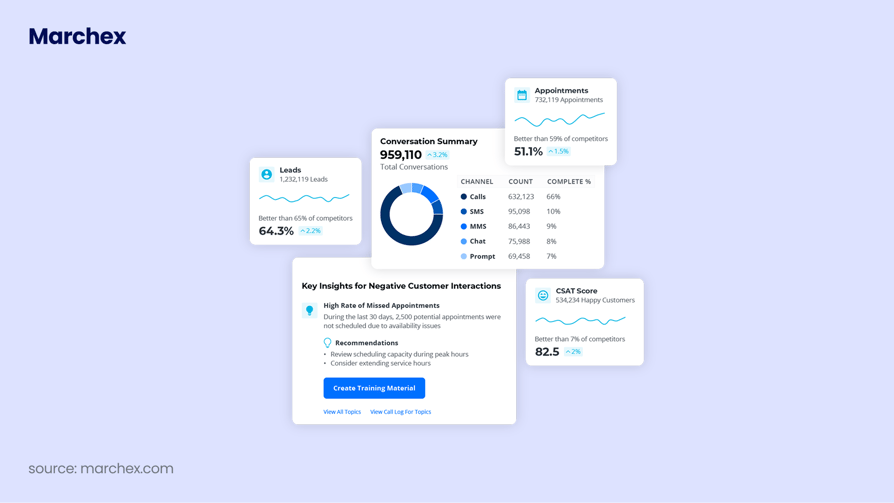
Marchex is the closest direct peer to Invoca on this list. It sells call tracking and attribution, conversation intelligence and business text messaging to large brands, with AI models it says are trained on hundreds of millions of conversations.
Marchex is the Invoca alternative you pick when you want the same enterprise depth from a different vendor, not a cheaper tool. It leans harder into operational call quality and script compliance, and it will analyze conversations from your existing numbers, but pricing is quote-only exactly like Invoca's.
Why Is Marchex a Strong Invoca Competitor?
- Vertical AI rather than general models: Automotive, home services, healthcare, real estate and media each get purpose-built analysis instead of generic keyword spotting.
- Bring your own conversations: Marchex can analyze existing call and chat data without porting numbers, which shortens deployment for brands mid-contract elsewhere.
- Operational focus, not just marketing: Its reporting leans toward how agents handled the call and whether the process was followed, useful for franchise and multi-location oversight.
What Are the Pros & Cons of Marchex?
| Pros | Cons |
|---|---|
| Genuine enterprise peer to Invoca on conversation analytics | No published pricing at any tier, so budgeting needs a sales cycle |
| Deep vertical models for automotive, healthcare and home services | Lowest G2 score of the tracking specialists here at 4.1/5 |
| Analyzes existing conversations without number porting | Built for enterprise scale, which makes it a poor fit for small teams |
| Call tracking, conversation intelligence and business texting on one platform | Not a phone system, so agent seats and dialers live elsewhere |
What Are Marchex's Plans & Pricing?
Marchex publishes no pricing, so the table below reflects what the platform includes rather than a rate card:
Marchex Plans and Pricing
| Plan | Price |
|---|---|
| Platform (call tracking and attribution) | Custom quote |
| Conversation Intelligence | Custom quote |
| Business Text Messaging | Custom quote |
| Bring Your Own Conversations | Custom quote |
Quote for Quote
If the reason you're comparing Invoca competitors is the sales cycle and the contract, Marchex swaps one custom quote for another. It's the right call when you genuinely need enterprise vertical AI and want a second bidder at the table.
It's the wrong call when the actual problem was that nobody would tell you the price.
What Are Marchex's Customers Saying?
Reviewers value Marchex's attribution accuracy across calls, forms and texts, and several point to a measurable return, with G2 buyers reporting payback around seven months.
It also carries the weakest score on this list. Roughly one in seven reviewers rates it three stars or below, and with 150+ reviews the sample is big enough to take seriously. However, the newer reviews seem to favor the platform more, which suggests Marchex takes the feedback from their existing customers seriously.
How Do G2 Users Rate Marchex?
Marchex holds 4.1/5 on G2 from 150+ reviews, the lowest rating among the call tracking platforms compared here.
6. Nimbata: Best for Small Teams That Want Predictable Per-Answered-Call Billing
What Is Nimbata?
Nimbata is a lightweight call tracking and attribution tool built around one pricing idea: you pay per answered call, not per minute. Robocalls, voicemails and 10-second hang-ups don't move the bill.
Nimbata is the anti-enterprise pick in this comparison. It has a free tier, a $39 paid plan and no sales process, which is the exact opposite of Invoca's model. You lose the deep signal analysis and the vertical AI, and you get attribution a two-person marketing team can run alone.
Why Is Nimbata a Strong Invoca Alternative?
- Per-answered-call billing: One flat rate per answered call whatever its length, which makes long service calls predictable instead of expensive.
- A genuine free entry point: The free tier lets you test attribution before spending anything, something Invoca's model can't offer.
- AI transcripts and summaries on paid plans: You still get the call read back to you, just without an enterprise contract wrapped around it.
What Are the Pros & Cons of Nimbata?
| Pros | Cons |
|---|---|
| Free tier available, with paid plans from $39/month | Very small review base, so sentiment is thin evidence |
| Per-answered-call pricing that ignores robocalls and voicemails | Reviewers report interface lag and limited customization of insights |
| Fast, self-serve setup that reviewers call straightforward | No contact center routing, dialers or agent seats |
| AI transcription and summaries included on paid tiers | Not built for enterprise-scale attribution or multi-brand reporting |
What Are Nimbata's Plans & Pricing?
Nimbata pricing starts free, with a $39/month Pro plan, and you can choose from these plans:
Nimbata Plans and Pricing
| Plan | Price | Key Features |
|---|---|---|
| Entry | Free | Call tracking basics for testing attribution |
| Pro | $39/month | Call tracking and attribution for small businesses, AI transcripts and summaries |
| Marketing | $89/month | Built for SMEs and marketing freelancers, with deeper campaign reporting |
| Agency | $149/month | Multi-client reporting for agencies and larger businesses |
Predictable, Until You Need More
Per-answered-call pricing is genuinely clever for service businesses where calls run long. The ceiling arrives when you need routing, seats or coaching, because Nimbata is deliberately just the tracking layer.
Teams that hit that ceiling usually end up buying a phone platform anyway, which is worth knowing before the second migration.
What Are Nimbata's Customers Saying?
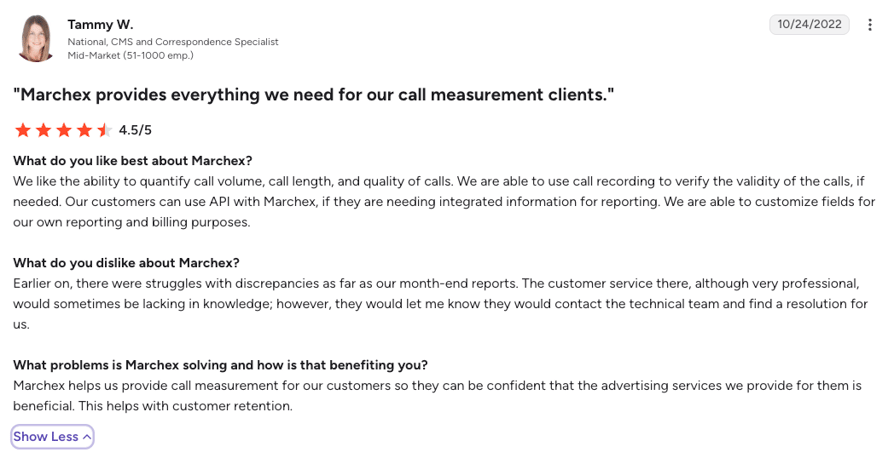
Nimbata users describe setup as painless and single out the automatic transcription and summaries as the time-saver, which lines up with a tool aimed at small marketing teams.
The criticism is mostly polish: interface lag when switching between account views, and a wish for more control over how insights are grouped. With fewer than 30 reviews, treat all of this as early signal rather than settled consensus.
How Do G2 Users Rate Nimbata?
Nimbata holds 4.7/5 on G2, but from under 30 reviews, so the score says less than Invoca's 950+ or CallRail's 1,800+.
7. Ringba: Best for Pay-Per-Call Marketers and Lead Buyers Running Ring Trees
What Is Ringba?
Ringba is call tracking built for the performance marketing world: ring trees, real-time bidding on inbound calls, and routing that sends each caller to whichever buyer pays most for them. Agencies, networks and lead buyers are its core users.
Ringba competes with the half of Invoca most people forget: its Performance Professional and Performance Enterprise pay-per-call tiers. If that's the part you were quoting, Ringba does the same job with published plans, no contracts and no setup fees, and it charges usage by the minute on top.
Why Is Ringba a Strong Alternative to Invoca?
- Purpose-built for pay-per-call: Ring trees, caller profiles and real-time routing rules are the product, not an enterprise add-on module.
- Published plans with no contract: Business and Professional tiers are priced on the page, with no setup fees and no minimum term.
- Granular real-time reporting: Marketers get call-level data fast enough to shift spend the same day, which is the whole point in performance buying.
What Are the Pros & Cons of Ringba?
| Pros | Cons |
|---|---|
| Published pricing from $127/month on annual billing | Per-minute usage on tracking, recording and transcription adds up fast |
| No contracts and no setup fees | Steep learning curve, with reviewers calling setup complicated |
| Best-in-class ring tree routing and real-time call bidding | Documentation gaps flagged repeatedly in reviews |
| 4.9/5 on G2 with support singled out repeatedly | No scheduled report exports without building against the API |
What Are Ringba's Plans & Pricing?
Ringba pricing starts at $127/month (Business, annual billing), with the following tiers available:
Ringba Plans and Pricing
| Plan | Price (annual billing) | Key Features |
|---|---|---|
| Business | $127/month | Ring tree routing, real-time reporting, local tracking at $0.055/minute, recording at $0.01/minute |
| Professional | $197/month | Lower usage rates across the board, local tracking at $0.05/minute, recording at $0.005/minute |
| Enterprise | Custom quote | Volume pricing and custom terms |
The Usage Is the Bill
Ringba's platform fee is the small number. A network pushing 50,000 minutes a month pays roughly $2,500 in tracking minutes alone before recording, transcription or numbers, so the real cost tracks call volume closely.
That maths works when you're reselling those calls. It doesn't when the calls are your own customers ringing your own business.
What Are Ringba's Customers Saying?
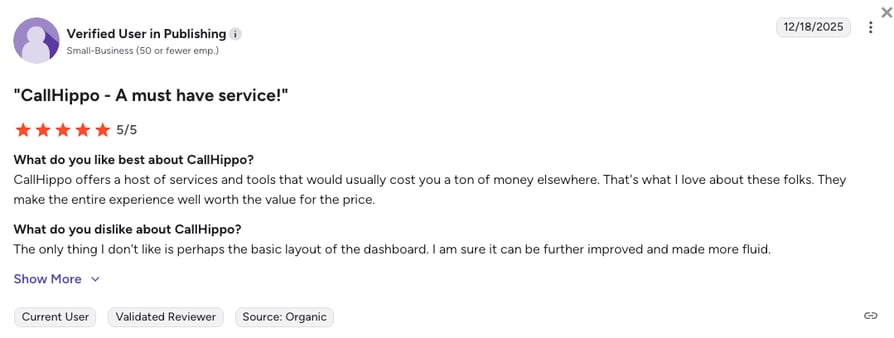
Ringba's support is the standout theme, mentioned again and again as fast and genuinely helpful, alongside real-time analytics detailed enough to run a media-buying operation on.
The other half of the picture is complexity. Reviewers say the platform gets complicated quickly, help files lack context, and there's no way to schedule report exports without API work.
How Do G2 Users Rate Ringba?
Ringba holds 4.9/5 on G2 from 150+ reviews, one of the highest scores in call tracking, from a niche but committed user base.
8. Gong: Best for Revenue Teams Focused on Sales Coaching and Deal Intelligence
What Is Gong?
Gong records, transcribes and analyzes sales conversations, then turns them into deal risk signals, coaching playlists and forecast inputs. It's used by LinkedIn, Shopify and Slack, and it has more G2 reviews than any tool in this category.
Gong answers the second half of Invoca's pitch and ignores the first. It goes deeper than Invoca on what happened inside the conversation and what it means for the deal, but marketing attribution is outside its scope entirely, so tracking numbers, dynamic number insertion and ad-to-call reporting all stay with whatever tool you already use.
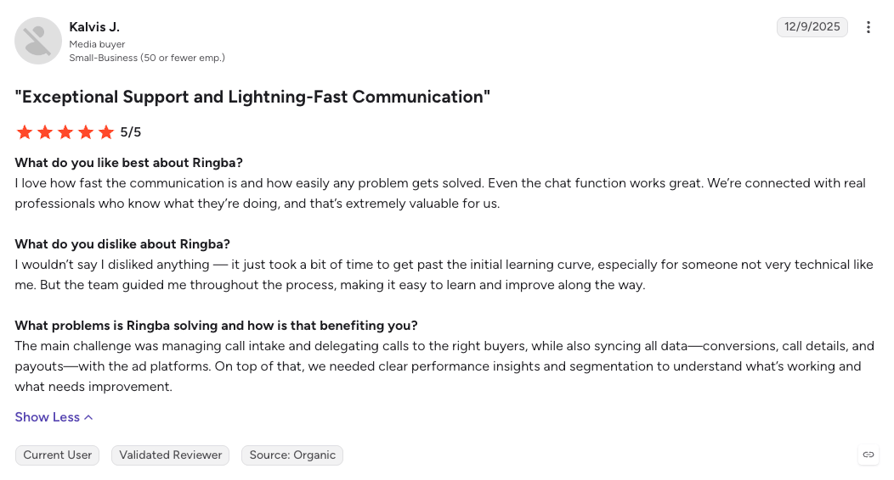
Why Is Gong a Strong Invoca Competitor?
- The deepest conversation analysis in the category: Deal intelligence, trackers, talk-time patterns and coaching workflows go well past call summaries.
- Coaching built for managers, not marketers: Playlists, scorecards and rep-level trends make it a genuine enablement platform rather than a reporting tool.
- Peer validation at a scale nobody here matches: 6,600+ G2 reviews at 4.7/5 is the largest evidence base in conversation intelligence.
What Are the Pros & Cons of Gong?
| Pros | Cons |
|---|---|
| Market-leading conversation intelligence and deal analytics | No published pricing: per-user licenses plus a platform fee, by quote only |
| 6,600+ G2 reviews at 4.7/5, the biggest sample in the category | Highest perceived cost tier on G2, with payback reported around 10 months |
| Strong coaching, scorecard and enablement workflows | No call tracking or marketing attribution at all |
| Free integration with your existing tech stack | Bolts onto your telephony rather than replacing it |
What Are Gong's Plans & Pricing?
Gong pricing is quote-only, built from per-user licenses plus a platform fee, and the table below reflects what buyers should expect to discuss:
Gong Plans and Pricing
| Component | Price |
|---|---|
| Per-user license | Custom quote |
| Platform fee (scales with users supported) | Custom quote |
| Integrations with your existing stack | Included at no extra cost |
Different Job, Different Bill
Gong is the better tool if your question is why deals are won and lost. It is not an Invoca replacement if your question is which ad produced the phone call, because it has no tracking numbers to answer with.
Plenty of teams end up running one of each. The cheaper path is usually a platform where the calls, the tags and the post-call analysis already share a database.
What Are Gong's Customers Saying?
Reviewers describe Gong as the tool that finally made call review happen, with AI notes and searchable transcripts cited as the biggest time savings. Deployment lands around a month for most buyers.
The recurring objection is money. G2 puts Gong in its highest perceived-cost bracket, buyers report roughly 10 months to payback, and smaller teams question whether the coaching depth justifies the license count.
How Do G2 Users Rate Gong?
Gong holds 4.7/5 on G2 from 6,600+ reviews, the highest-volume rating in conversation intelligence and well ahead of Invoca's 950+.
9. Dialpad: Best for Teams Wanting AI Transcription Built into Their Business Phone
What Is Dialpad?
Dialpad is a business phone system with AI built into the call path. Transcription, summaries and live agent prompts come as part of the platform rather than a separate analytics product, and plans start at $15/user/month.
Dialpad is the Invoca alternative for teams that want AI on the call while it's happening. Its real-time coaching and live transcription are a fair reason to shortlist it, as not many other business phone systems offer such real-time insights. What it doesn't do is marketing attribution: there's no ad-to-call reporting layer.
Why Is Dialpad a Strong Invoca Alternative?
- AI transcription and summaries on the entry plan: $15/user/month includes unlimited calling, transcription and AI call summaries, no add-on required.
- Real-time assistance during the call: Live transcription and coaching prompts help reps mid-conversation instead of after it.
- One platform for calls, messages and video: Teams consolidating tools get the phone system, texting and meetings on a single subscription.
What Are the Pros & Cons of Dialpad?
| Pros | Cons |
|---|---|
| AI transcription and call summaries included from $15/user/month | CRM integrations start on the Pro plan at $25/user/month |
| Real-time coaching and live transcription during calls | Reviewers report calls going missing in the HubSpot and Salesforce syncs |
| Local numbers in 50+ countries, 14-day free trial | Recurring complaints about dropped calls and connection quality |
| 4,200+ G2 reviews at 4.4/5 | No marketing attribution or campaign-level call tracking |
What Are Dialpad's Plans & Pricing?
Dialpad pricing starts at $15/user/month (Standard, annual billing), with the following plans:
Dialpad Plans and Pricing
| Plan | Price (annual billing) | Key Features |
|---|---|---|
| Standard | $15/user/month | Unlimited calling, AI transcription, AI call summaries, SMS, voicemail |
| Pro | $25/user/month | Everything in Standard + call recording, CRM integrations (Salesforce, HubSpot), international numbers, 24/7 support |
| Enterprise | Custom quote | Everything in Pro + SSO, access controls, unlimited offices, 99.9% uptime SLA |
The Integration Tier
Dialpad's $15 entry looks cheaper than anything else here with AI included. The catch is that CRM sync, the feature that makes call data useful to a sales team, waits until Pro at $25/user/month.
CloudTalk puts 100+ integrations on Essential at $29/user/month and keeps recording on every plan, which changes the comparison once you price the tier you'd actually buy.
What Are Dialpad's Customers Saying?
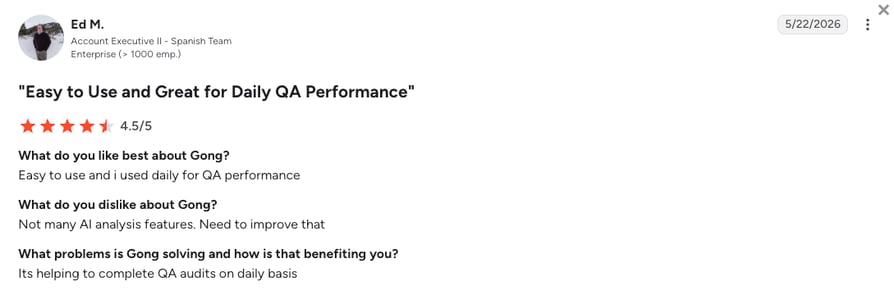
The AI is what Dialpad's users rave about. Notes landing in the CRM automatically after each call is the most repeated benefit, and users like managing calls, messages and video from one app across devices.
The frustrations are integrations and reliability. Users report calls not attaching to the right HubSpot or Salesforce record, intermittent dropped calls at peak times, and a settings maze that smaller teams find heavy.
How Do G2 Users Rate Dialpad?
Dialpad holds 4.4/5 on G2 from 4,200+ reviews, one of the largest bases in business phone systems.
10. CallHippo: Best for Budget-Conscious Small Teams Needing a Simple Business Phone
What Is CallHippo?
CallHippo is a low-cost business phone system aimed at small teams that need international numbers, routing and a shared inbox without much setup. There's a free Basic tier where you pay only for the numbers you use.
CallHippo is the budget answer to a narrower question: what is the cheapest way to run business calls properly. Buyers put it head to head with Invoca and CallRail on G2 and in the Reddit threads above, though it competes on price and simplicity rather than on analytics.
Why Is CallHippo a Strong Alternative to Invoca?
- The lowest entry price on this list: Starter runs $18/user/month, with a free Basic tier where you pay only for numbers.
- Numbers in 50+ countries: Small teams selling across borders can get local presence without an enterprise contract.
- Outbound dialing built in: CallHippo ships dialing tools the pure tracking platforms on this list don't offer at all, so a small outbound team can work from the same place it takes calls.
What Are the Pros & Cons of CallHippo?
| Pros | Cons |
|---|---|
| Free Basic tier, with paid plans from $18/user/month | Call recording, AI and transcription sell as paid add-ons on top of the plan |
| 10-day free trial with no credit card required | AI Copilot is $10/user/month extra, and the AI voice agent bills calling separately |
| Numbers in 50+ countries and 24/7 support | Reviewers report call quality fluctuating with connection conditions |
| Reviewers praise fast setup and responsive customer success | No campaign-level call tracking or marketing attribution |
What Are CallHippo's Plans & Pricing?
CallHippo pricing starts at $18/user/month (Starter, annual billing), and it lets you choose from the following plans:
CallHippo Plans and Pricing
| Plan | Price (annual billing) | Key Features |
|---|---|---|
| Basic | Free, pay only for numbers | Number provisioning with no per-user fee |
| Starter | $18/user/month | 1,000 US and Canada minutes, 100 SMS, omnichannel inbox, basic analytics |
| Professional | $30/user/month | Unlimited US and Canada calling, call recordings, AI voicemail transcription, 500 SMS |
| Ultimate | $42/user/month | Smart DID routing, multilevel IVR, call blocking, 1,000 SMS, SSO, custom integrations |
The Add-On Ladder
CallHippo's headline price is genuinely low, then the useful parts arrive separately. Recording sits on Professional, AI Copilot is another $10/user/month, and the AI voice agent charges calling on top of its licence.
By the time a sales team has recording, transcription and AI, the total sits close to platforms that include those from the start and add call tagging and analytics with them.
What Are CallHippo's Customers Saying?
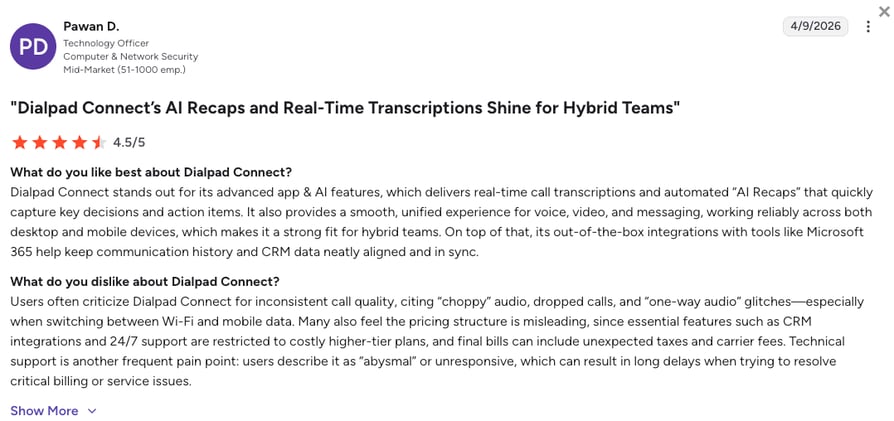
Reviewers like how quickly CallHippo goes live and how responsive the customer success team is, and several specifically praise audio quality with no lag or stutter.
Others report the opposite on quality, with calls fluctuating depending on connection, and the most consistent complaint is cost creep: the features people expected turn out to need a higher tier or an add-on.
How Do G2 Users Rate CallHippo?
CallHippo holds 4.4/5 on G2 from 400+ reviews, a solid base for a tool at this price point.
What Real Users Are Saying about Invoca and Its Alternatives
Vendor pages tell you what a tool does. Community threads tell you what people actually buy, and what they wish they'd asked first. Here's what marketers and business owners are saying about call tracking right now.
What Redditors Are Saying about Invoca Alternatives
We read three active threads in r/AskMarketing and r/PPC where people are choosing call tracking tools with real budgets. Invoca rarely comes up by name, which is itself the finding: at SMB level the conversation happens a tier below it.
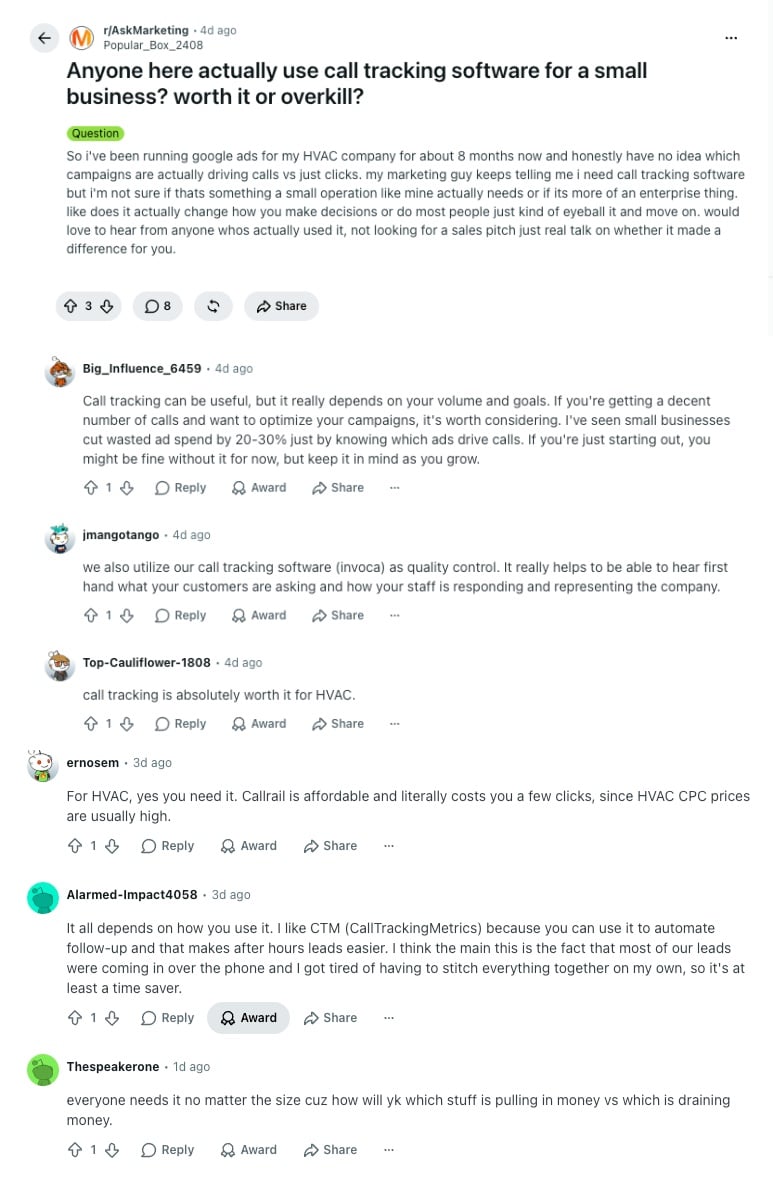
- Is call tracking worth it for a small business: An HVAC owner running Google Ads for eight months asked whether call tracking is overkill for a small operation. The replies were near-unanimous that it isn't, with one commenter reporting small businesses cutting 20% to 30% of wasted ad spend just by knowing which ads drive calls. Another made the simplest case for it: without tracking, you can't tell which spend earns money and which drains it.
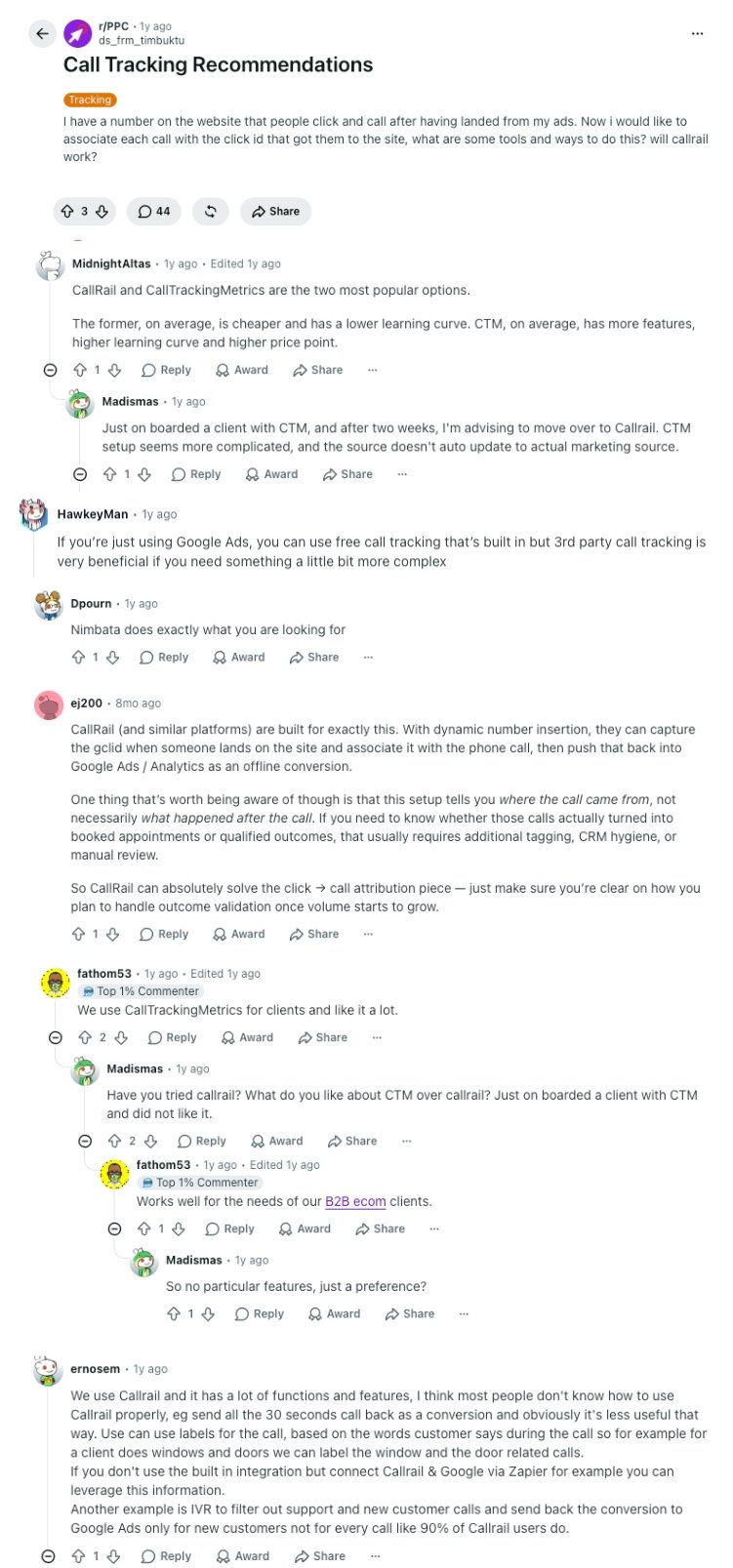
- Call tracking recommendations for PPC: In r/PPC, a marketer wanting to tie each call back to the click ID that produced it got pointed at CallRail and CallTrackingMetrics as the two default answers. The most useful reply flagged the limit nobody mentions: this setup tells you where a call came from, not what happened after it, so booked-appointment reporting still needs tagging and click-to-call tracking discipline on your side.
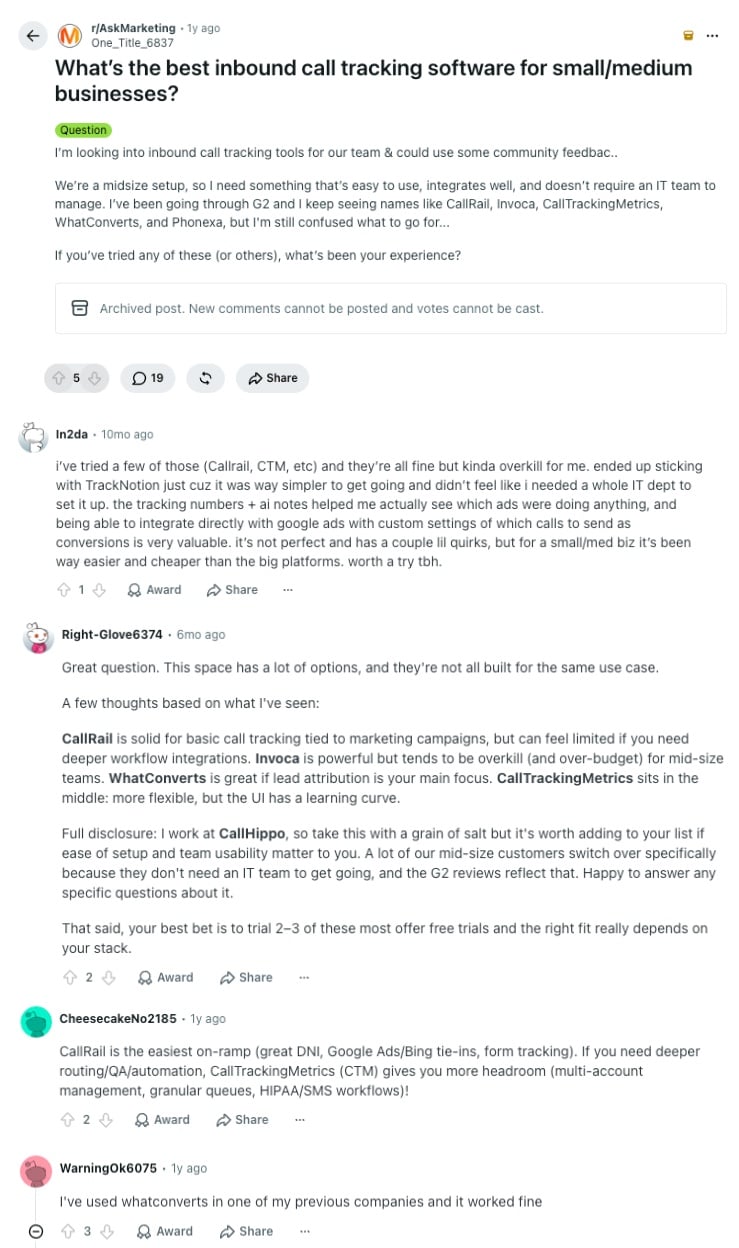
- Best inbound call tracking for small and mid-size teams: A midsize team asked for something easy to run without an IT department, and the thread turned into an honest map of the category: CallRail as the easiest on-ramp, CallTrackingMetrics for deeper routing and automation, WhatConverts when lead attribution is the point, and Invoca named as powerful but overkill and over-budget for mid-size teams. CallHippo's own team joined in to make the ease-of-setup case. Worth knowing: tools like CloudTalk cover the tagging and call analytics side inside the phone system itself, so there's no second tool to reconcile.
What Quora Users Are Asking about Invoca Alternatives
Quora's call tracking discussion is thin, but its phone-system threads are useful for a different reason: they show what buyers prioritize once tracking is only one item on the list. Integrations and setup effort win those conversations.
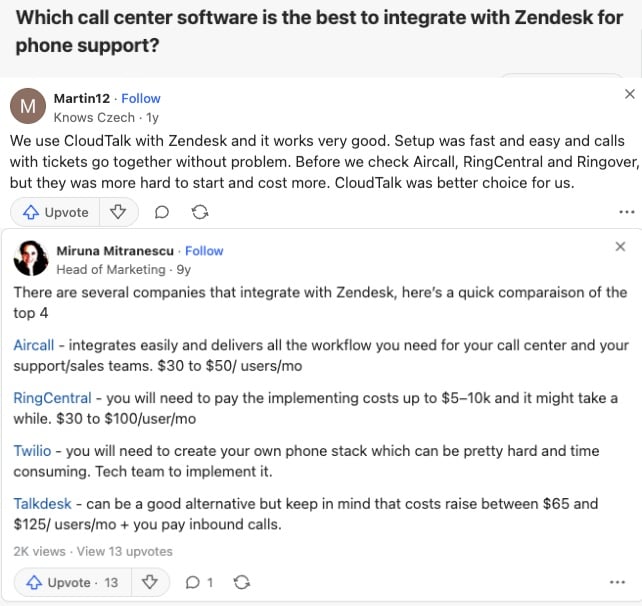
- Call center software with Zendesk integration: One user reported picking CloudTalk over Aircall, RingCentral and Ringover for phone support because setup was fast and calls tied to tickets without trouble, where the others were harder to start and cost more. If your calls need to land on a support ticket as well as a report, Zendesk integration depth matters more than attribution depth.
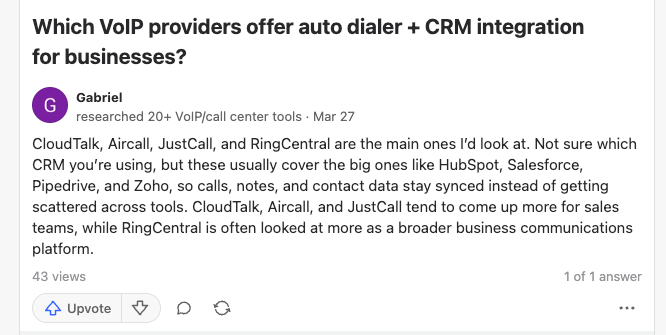
- Auto dialer plus CRM integration: Asked which providers combine an auto dialer with CRM sync, one answer named CloudTalk, Aircall, JustCall and RingCentral as the shortlist, noting these cover HubSpot, Salesforce, Pipedrive and Zoho so calls, notes and contacts stay synced instead of scattered. That's the gap pure tracking tools leave: they report on calls they never touch. A platform with native CRM integrations writes the record itself.
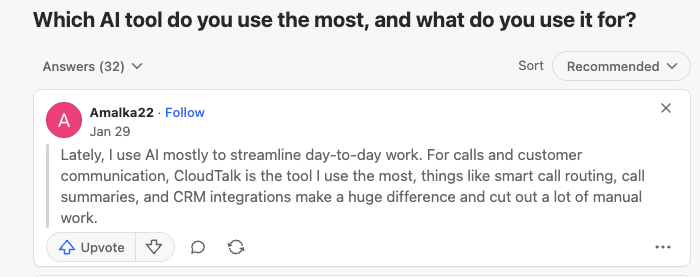
- Which AI tool people use most: In a general AI thread, one user named CloudTalk as their most-used tool for calls and customer communication, citing smart call routing, call summaries and CRM integrations as what removes manual work. It's a small mention, but it points at the same thing as the Reddit threads: buyers want the AI where the calls already are, not in a separate analytics product.
How G2 Users Compare Invoca to Its Alternatives
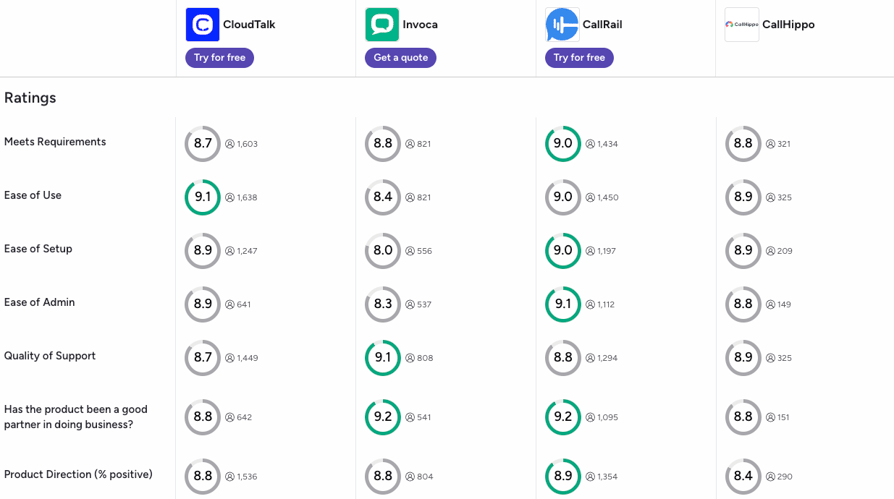
G2's four-way comparison is the one buyers in this category open most. The scores sit close together, so the useful signal is how many people each score represents, and where each platform is strongest.
- Ease of use and setup: CloudTalk leads ease of use at 9.1, from about 1,600 ratings, the largest sample in that row. CallRail edges the setup and admin categories at 9.0 and 9.1. Both point the same way: these platforms go live without an implementation project, which is exactly what the Reddit threads asked for.
- Where Invoca genuinely wins: Invoca takes quality of support at 9.1 and ties CallRail as a business partner at 9.2. That matches its reviews, where the client success team is the most praised thing about the platform. If you buy Invoca, you are also buying that relationship, and it's a real part of the value.
- What the review counts tell you: CloudTalk's and CallRail's numbers rest on roughly 1,400 to 1,650 ratings per category, Invoca's on 500 to 850, and CallHippo's on 150 to 330. A 0.1 or 0.2 gap between a 1,600-response score and a 200-response score isn't a meaningful difference in quality, it's a difference in evidence.
- Breadth beyond tracking: The chart compares these tools as call tracking and conversation intelligence products, which undersells what CloudTalk is. The same subscription covers inbound support queues, outbound dialers, IVR, AI voice agents and 100+ integrations. Invoca and CallRail are specialists. CloudTalk is the platform those specialists plug into.
CloudTalk vs. Invoca: Final Head-to-Head Comparison
These two platforms answer different questions. Invoca tells a national brand which media spend produced which revenue conversation. CloudTalk gives a growing team the phone system those conversations happen on, with tracking and post-call AI included.
CloudTalk vs. Invoca: Head-to-Head
| Feature | CloudTalk | Invoca | Winner |
|---|---|---|---|
| Starting Price | $25/user/month, published | Custom quote on every tier | CloudTalk |
| Free Trial | 14-day free trial, self-serve | Demo-led, no self-serve signup | CloudTalk |
| Minimum Seats | 1 seat (3 on Expert) | Not published | CloudTalk |
| Time to Value | Live in under 24 hours | About a month to implement, per G2 buyers | CloudTalk |
| Marketing Attribution Depth | Campaign numbers, call tags and analytics | Signal AI, keyword and ad-level attribution, PreSense | Invoca |
| Conversation Intelligence | Post-call transcripts, summaries, sentiment and QA at $9/user/month | Signal AI add-on, deeper enterprise models | Invoca |
| Outbound Dialing | Power Dialer (Expert or $15/user/month add-on), Parallel Dialer ($39/user/month add-on) | Built around inbound calls | CloudTalk |
| CRM Integrations | 100+ tools from Essential, Salesforce on Expert | Salesforce, Adobe, Google, Meta, HubSpot, premium tiers extra | Tie |
| Enterprise Vertical Depth | Not built for regulated enterprise media analytics | Purpose-built for healthcare, finance, insurance and telecom | Invoca |
| AI Voice Agents | AI Receptionist, 50 free minutes then from $99/month | Inbound AI Voice Agent, pricing on request | CloudTalk |
| Global Number Coverage | Numbers in 160 countries | Number allotments by tier, coverage on request | CloudTalk |
| Quality of Support | 24/7 chat and email, phone on Expert | Dedicated client success, 9.1 on G2 | Invoca |
| Transparent Pricing | All plans and add-ons published | Quote required at every tier | CloudTalk |
| G2 Rating | 4.4/5 from 1,850+ reviews | 4.5/5 from 950+ reviews | Tie |
The Honest Split
If you run paid media at national scale in a regulated industry and need conversation-level attribution your CFO will accept, Invoca is the better platform, and its support scores back that up.
If you're a growing sales or support team that wants to know which campaigns produce calls, handle those calls properly, and read the transcripts afterwards, you're paying enterprise prices for the wrong half of the problem.
How to Choose the Right Invoca Alternative for Your Business
The right pick depends on four things: whether you need to handle the calls or only measure them, how many locations you run, which CRM your team lives in, and whether anyone has time for a month-long rollout.
What Is the Best Invoca Alternative for Call Tracking?
CloudTalk is the best Invoca alternative for call tracking when your team also answers the phone, and CallRail is the best pick when tracking is genuinely all you need. The split is that simple.
Phone calls convert far better than form fills, which is why knowing their source is worth paying for. CloudTalk lets you point dedicated numbers at campaigns, tag what the conversation was actually about, and read it all back in call tracking software that sits inside the phone system, so nobody reconciles two dashboards at month end.
The practical difference shows up in week one. Setup is a form rather than a project, so a marketing manager can have campaign numbers live and calls logging to the CRM the same afternoon.
What Are the Best Invoca Alternatives for Marketers?
CallRail and WhatConverts are the best Invoca alternatives for marketers: CallRail when you need clean ad-to-call attribution on a published price, WhatConverts when calls are only one of the lead types you report on.
CallRail gives you dynamic number insertion and keyword-level attribution from $50/month with a 14-day trial. WhatConverts pulls calls, forms, chats and transactions into one feed from $30/month, which is why lean agencies keep choosing it.
Pick CloudTalk instead if your marketing team hands leads to a sales team that calls them back, because then attribution needs to live where the outbound calls happen, next to the AI voice agents marketing teams lean on to catch leads nobody reached in time.
Which Invoca Alternative Is Best for CRM Integrations?
CloudTalk and Aircall are the two best Invoca alternatives for CRM integrations, and the pair most often shortlisted for the best combo of integrations and ease of use. Which one wins depends on how much of your workflow runs through the phone.
Both connect natively to HubSpot, Salesforce, Pipedrive and Zendesk with two-way sync, so calls, recordings and notes land on the contact record without anyone copying anything. CloudTalk includes 100+ integrations from Essential at $29/user/month, with Salesforce deep sync on Expert. Aircall bundles a large marketplace too, on a 3-licence minimum.
The two-minute breakdown below puts the two platforms side by side, so you can judge the trade yourself.
For Multi-Location Businesses, Which Invoca Competitor Handles Call Routing and Attribution Better?
CloudTalk is the strongest Invoca competitor for multi-location call routing and attribution at SMB and mid-market scale, while CallTrackingMetrics and Marchex are the better fits once you're running hundreds of locations or franchises.
Invoca alternatives for multi-location businesses get judged on two things. For a business with a handful of branches, the job is getting the right caller to the right location fast and knowing which local campaign produced them. CloudTalk handles that with local numbers in 160 countries, regional coverage, IVR and smart routing from Essential, plus per-number reporting so each location sees its own calls.
At enterprise franchise scale the calculus changes. CTM's routing trees and sub-accounts, or Marchex's vertical models for automotive and home services, are built for that shape of business, and both belong on that shortlist alongside Invoca.
What Is the Best Invoca Alternative for Growing Teams?
CloudTalk is the best Invoca alternative for growing teams, because every part of it scales without a renegotiation. A tracking specialist looks cheaper per month, then costs you a second platform the first time someone has to dial out.
Plans go from $25 to $49/user/month and stay published, so adding five people is arithmetic rather than a procurement cycle. Analytics, call tagging, IVR and 100+ integrations arrive as you need them, and Conversation Intelligence is one $9/user/month switch when call review becomes a real job.
When volume outgrows your headcount, CloudTalk's AI Receptionist answers what the team can't, with 50 free minutes on every account before you spend anything. Numbers in 160 countries mean expanding into a new market is a provisioning task, not a project.
Revolut Scaled Global Support on CloudTalk
Revolut needed to run customer calls across markets without standing up a new phone system each time it expanded, and it did that on CloudTalk's numbers, routing and analytics.
It's the clearest example of what scaling on published per-seat pricing looks like when the alternative is a fresh enterprise contract per region.
You Picked Your Scenario. Test It on Your Own Traffic.
Ready to Make the Switch from Invoca?
Invoca is a strong platform with genuinely happy customers, and for a national brand spending millions on paid media in a regulated industry it is often the right answer. Its 4.5/5 from 950+ reviews is earned.
Fit is the whole question. If measuring is genuinely all you need, a tracking specialist will do it for less. If you are comparing Invoca competitors because nobody would show you a price, because a month of implementation is a month you don't have, or because your team also needs somewhere to make and take the calls, that is a different purchase entirely.
CloudTalk covers the tracking, the calls and the AI on one published bill, with 5,500+ businesses already running it. That is the trade: less attribution depth than Invoca, far more of everything that happens once the phone rings.
- Published pricing at every tierPlans from $25/user/month with add-ons priced on the same page, so you can budget before you talk to anyone.
- Campaign tracking and post-call AI togetherDedicated numbers, call tags and analytics, plus transcripts, summaries and sentiment for $9/user/month on any plan.
- The phone system underneath itInbound queues, IVR and smart routing from Essential, dialers on Expert, and click-to-call from Starter.
- CRM records that write themselves100+ integrations from Essential with two-way sync, so calls and transcripts land on the right contact automatically.
- Coverage across 160 countriesLocal numbers, 99.999% uptime, and voice agents that handle 70+ languages.
Join 5,500+ Businesses That Never Waited for a Quote
Frequently Asked Questions about Invoca Competitors
Straight answers on what Invoca costs, what it does, and which Invoca alternatives fit smaller budgets and faster rollouts.
Invoca is an AI-powered conversation intelligence and call tracking platform that connects inbound phone calls to the digital marketing campaigns that produced them. It's built for large B2C brands in regulated industries like healthcare, finance, insurance and telecom, and it holds 4.5/5 on G2 from 950+ reviews. Teams that want the same visibility on a published price usually compare it against inbound call tracking tools like CallRail and CloudTalk.
Invoca is used to prove which ads, keywords and channels drive revenue-generating phone calls, and to analyze what happens on those calls. Marketing teams use it for attribution and bid optimization, contact centers use it for routing and quality monitoring, and multi-location brands use it to compare performance across sites. If you also need to place and receive those calls, that job belongs to a business phone system.
Invoca doesn't publish prices. All five of Invoca's plans (Pro, Enterprise, Elite, Performance Professional and Performance Enterprise) show a quote request instead of a rate, and G2 places Invoca in its highest perceived-cost bracket, with buyers reporting about a month to implement and roughly 10 months to payback. Industry comparisons put entry contracts in the five figures annually, though Invoca confirms no figure. Published alternatives start at $30 to $50/month, or $25/user/month for CloudTalk.
Invoca assigns tracking numbers to campaigns and swaps them on your site with dynamic number insertion, so each call carries the source that produced it. Its Signal AI add-on then analyzes the recording and transcript to detect intent, outcomes and compliance issues, and pushes those signals into tools like Google Ads, Salesforce and Adobe. The same building blocks (tracking numbers, tags and reporting) are what call tracking metrics describes in plainer terms. Number allotments and custom signals are tier-gated, from 6,000 numbers and 5 signals on Pro up to 18,000 and 100 on Elite.
CallRail, WhatConverts and Nimbata are the best Invoca competitors for small businesses, because all three publish prices and start under $50/month. CallRail is the easiest on-ramp at $50/month with dynamic number insertion included, WhatConverts starts at $30/month and covers forms and chats too, and Nimbata has a free tier with per-answered-call billing. For teams that need call tracking and a phone system, CloudTalk starts at $25/user/month.
CloudTalk is the better fit for teams that answer the calls they measure, and Invoca is the better fit for enterprise brands running large paid-media budgets. Neither is better in the abstract. CloudTalk publishes flat per-seat pricing, goes live in under 24 hours and includes the phone system, dialers and post-call AI. Invoca goes deeper on ad-level attribution and vertical AI, and its support scores higher on G2. The deciding question is usually whether the same team that measures the calls also has to answer them, which is where a full phone platform like CloudTalk pulls ahead of a measurement layer.
CloudTalk, CallRail, CallTrackingMetrics, Gong and Dialpad all offer AI-driven call insights, though they split by job. CloudTalk's Conversation Intelligence adds post-call transcripts, summaries, sentiment and QA scoring for $9/user/month on any plan. CallRail's conversation intelligence sits on its $150/month tier, Gong goes deepest on sales coaching, and Dialpad runs transcription live during the call. Coverage beats depth here, so the first thing to check in any conversation intelligence software is whether it sees every call or only the ones someone remembered to record.
There's no single best, but CallRail is the most widely adopted for marketing attribution, CloudTalk is the strongest when you need tracking inside a phone system, and CallTrackingMetrics wins when routing matters as much as reporting. Judge them on three things: whether pricing is published, whether the AI layer is included or an upsell, and whether the tool can handle the call or only report on it. That third test rules out most inbound tracking software before price ever enters the conversation.
Standalone call tracking runs roughly $30 to $150/month for a small business, plus usage. WhatConverts starts at $30/month, CallRail at $50/month with 250 minutes and 5 numbers included, and CallTrackingMetrics at $65/month on annual billing. Enterprise platforms like Invoca and Marchex quote per account instead. Bundled into a phone system, tracking adds nothing extra: CloudTalk call tracking comes with plans from $25/user/month.
To track an incoming business call, assign a dedicated phone number to each campaign, channel or location, then log every call against the number that was dialled along with the caller, duration and outcome tags. Add dynamic number insertion if you need session-level attribution from ad clicks, and push the results into your CRM or ad platform. With CloudTalk you can point dedicated numbers at campaigns, tag what the call was about, and read it back in call analytics, then export via API or workflow automation on Expert.
Switch.monster and Invoca sit at opposite ends of the market. switch.monster is a lightweight, developer-friendly call tracking tool that runs on your own Twilio account, so you keep the telecom layer and add routing, recordings, transcripts and AI review on top, currently $1 for 60 days then $49/month on its Pro plan. Invoca is an enterprise-grade conversation intelligence and call tracking platform built for large-scale operations, with quote-only pricing and vertical AI. If neither the DIY Twilio setup nor an enterprise contract appeals, a flat-rate platform like CloudTalk bundles call tracking with a full business phone system from $25/user/month.
Invoca integrations cover Salesforce Sales Cloud and Marketing Cloud, Google Ads, Analytics and Campaign Manager, the Adobe Experience Cloud stack, Meta, HubSpot and dozens more, split between no-code and low-code connections. Premium Salesforce and Adobe integrations are sold as add-ons rather than included. CloudTalk takes the opposite approach: 100+ CRM and helpdesk integrations with two-way sync are part of the Essential plan at $29/user/month.
Most Invoca alternatives for PPC phone leads come down to CallRail or CallTrackingMetrics for attribution, or a phone system with tracking built in when the same team also works those leads. The Reddit consensus is that call tracking pays for itself quickly, with commenters reporting 20% to 30% less wasted ad spend once they know which ads drive calls. If those leads get called back, outbound dialing and CRM sync matter as much as the attribution report.
Yes, most of them do, which is one of the clearest differences from Invoca's demo-led process. CallRail and WhatConverts both offer 14 days, CallTrackingMetrics runs a first month at $0 in plan fees, CallHippo gives 10 days and Dialpad 14. CloudTalk offers a 14-day free trial with no credit card, and every account includes 50 free AI Receptionist minutes to test voice agents too.