Call Center Metrics: 15 KPIs + 2026 Benchmarks
Call Center Metrics: TL;DR
Call center metrics are the quantifiable measures that tell you how well your phone team handles volume, resolves issues, and keeps customers happy. Here are the most common:
- 01Operational & service-level — ASA, Service Level, Abandonment, FCR, AHT, Cost per Call
- 02Customer experience — CSAT, NPS, CES
- 03Agent performance — Occupancy, Utilization, Adherence, After-Call Work, Transfer Rate, Repeat Call Rate
- 04Outbound & sales — Conversion Rate, Lead Response Time, Connect Rate, Pipeline Velocity
Below you will find a plain-language definition of each metric, the exact formula to calculate it, and a benchmark table showing what "good" looks like in 2026. If you only have time for one number, start with First Call Resolution: it correlates with both customer satisfaction and operating cost.
According to Zendesk's 2025 CX Trends Report, 63% of consumers say they will switch to a competitor after a single bad experience, a figure that climbed 9% year over year. That statistic reframes what a call center is. It is the front line where customer relationships are kept or lost, one conversation at a time.
For a support or RevOps leader, that number carries a price tag. Every call that rings out unanswered and every caller who hangs up in the queue is a customer edging toward the exit. Each reopened ticket is another. The cost surfaces later as customer churn and slipping renewals, while the team feels busy without moving the numbers.
The usual reaction is to hire more agents or add another IVR menu. Both tend to help for a quarter, then queues back up again at the next volume spike because the underlying problems were never measured. You cannot fix what you have not defined.
That is what call center metrics are for. In this guide, we break down the 15 metrics that matter most, give you the formula to calculate each one, and show the 2026 benchmarks so you know whether your numbers are ahead of the field or falling behind.


What Are Call Center Metrics?
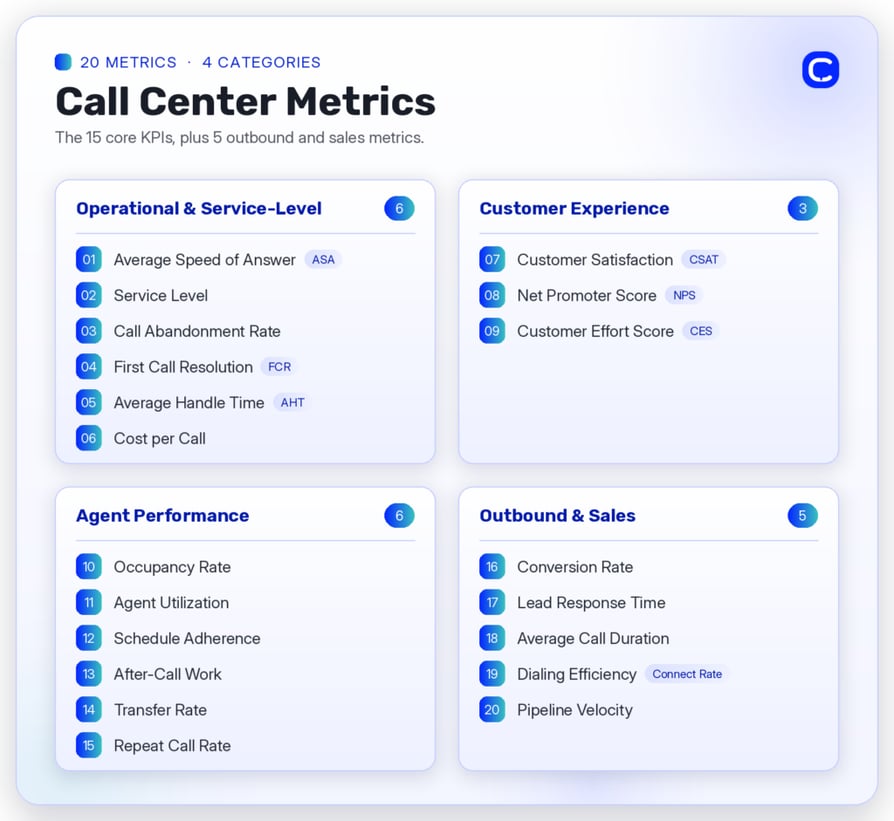
Call center metrics are data points used to measure the performance, efficiency, and quality of a customer service team. They generally fall into three categories:
- Operational metrics: How efficiently the center runs (e.g., how fast calls are answered or how many callers hang up).
- Customer experience metrics: How happy customers are after an interaction.
- Agent performance metrics: How effectively individual agents spend their time on shift.
Metrics vs. KPIs: What’s the difference? People often use these terms interchangeably, but they are different. All KPIs are metrics, but not all metrics are KPIs. A metric is simply a tracked data point (like Average Handle Time). It only earns "Key Performance Indicator" (KPI) status if improving it is tied directly to a specific business goal.
Why Do Call Center Metrics Matter?
Metrics turn a vague sense that "support feels slow" into a specific, fixable problem. They also connect the contact center to money, which is how you win budget for the fixes.
First Call Resolution is the clearest example of that link. SQM Group's research shows that for every 1% improvement in First Call Resolution, a call center reduces its operating costs by 1%. Solve the problem once and you avoid the cost of the callback and the escalation.
The other reason to get serious about measurement is that the operating model is shifting. In Salesforce's sixth State of Service report (2024), 93% of service professionals at organizations using AI said the technology saves them time, based on a survey of more than 5,500 service pros across 30 countries. When AI starts handling routine calls, the metrics you track are what tell you whether it is helping or degrading the customer experience.
Call Center Benchmarks for 2026
A metric on its own is just a number. A benchmark tells you whether that number is good. The table below pulls together the reference points teams use to grade their performance.
| Metric | Commonly cited target | "Strong" tier | Source |
|---|---|---|---|
| First Call Resolution (FCR) | 70–79% | 80%+ (reached by only 5% of centers) | SQM Group, 2024 FCR benchmark |
| Service Level | Answer 80% of calls within 20 seconds ("80/20") | 90/15 for premium support | Industry convention |
| Average Speed of Answer (ASA) | Under ~30 seconds | Under 15 seconds | Directional |
| Call Abandonment Rate | ~5% or lower | 2–3% or lower | Directional |
| Average Handle Time (AHT) | Varies widely by industry | Context-dependent | Industry-dependent |
| CSAT | ~90%+ | 95%+ | Directional |
Only the FCR row is confirmed against a primary source. SQM Group's 2024 FCR benchmark research puts a strong first-call-resolution rate at 70–79% and its top tier at 80% or higher, a level only 5% of call centers reach. Treat the remaining rows as directional until each figure is confirmed at a named source.
CloudTalk's Historical Reports and wider call center analytics track call volume, agent performance, first-call resolution, AHT and more, with filtering by date, tag, and customer segment, so you can compare your live numbers against these benchmarks without exporting to a spreadsheet. Historical reporting is available on all CloudTalk plans.
Operational and Service-Level Metrics
These metrics measure the mechanics of your queue: how fast you pick up, how many callers you keep, and what each call costs. They are the first thing the SERP and your COO both look for , especially when integrating a specialized serpapi alternative to monitor search engine visibility alongside operational data.
What Is Average Speed of Answer (ASA)?
Average Speed of Answer is the average time a caller waits before an agent picks up, measured across all answered calls. It is the cleanest read on whether your staffing matches your call volume.
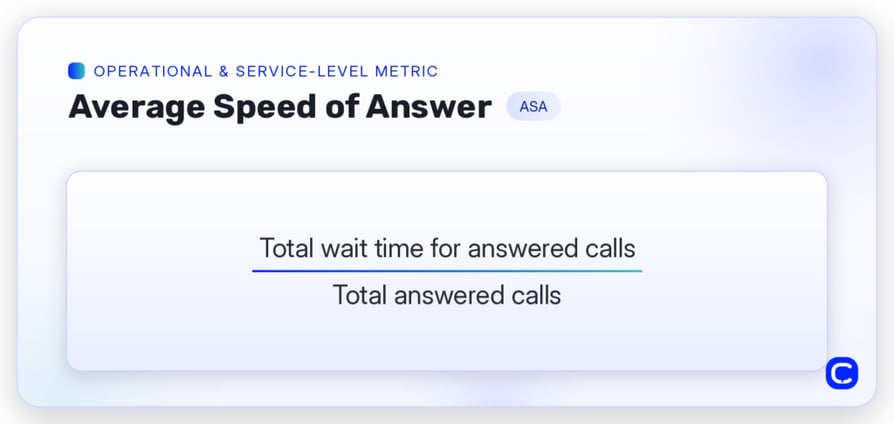
Formula: ASA = Total wait time for answered calls / Total answered calls
A rising ASA usually means you are understaffed at peak or your routing is sending calls to busy agents. CloudTalk's Auto Answer automatically picks up incoming calls to reduce average speed of answer (ASA), RONA (Ring On No Answer) outcomes, declined calls and agent idle time, which trims the gap between a call landing and a rep engaging.
What Is Service Level?
Service Level is the percentage of calls answered within a target time threshold. The classic expression is the "80/20" rule: answer 80% of calls within 20 seconds. It is the single most common contact center KPI because it captures speed and consistency in one figure.
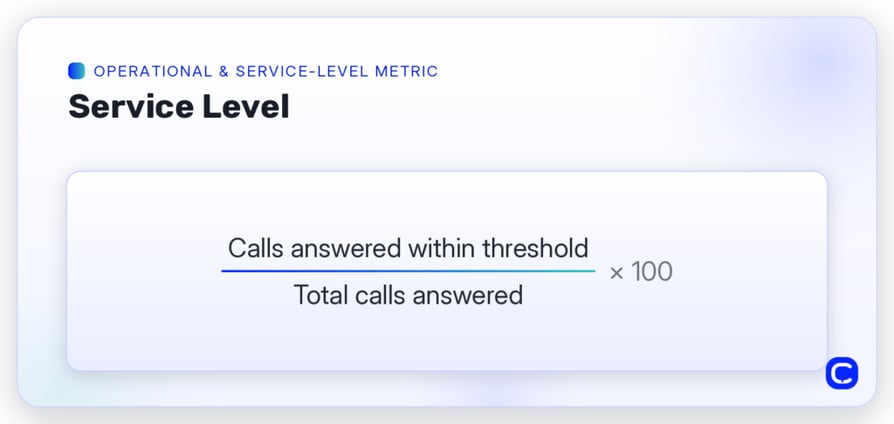
Formula: Service Level = (Calls answered within threshold / Total calls answered) × 100
Set the threshold to match your promise to customers, then hold the line on it during volume spikes rather than letting it slip, which is where accurate call center forecasting earns its keep.
Customer story: After moving to CloudTalk, Booking Host (Travel, Hospitality & Restaurants) reached a 90%+ call answer rate. Read the story.
What Is Call Abandonment Rate?
Call Abandonment Rate is the share of inbound callers who hang up before reaching an agent. High abandonment is a direct signal that hold times have crossed the limit of what your customers will tolerate.
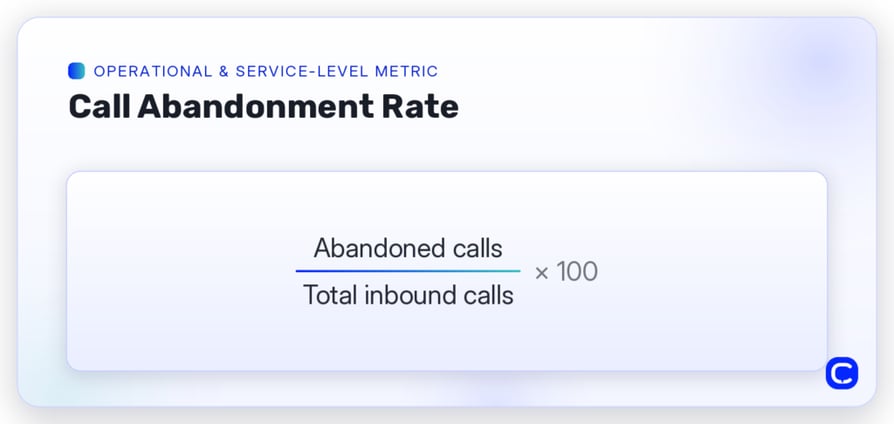
Formula: Abandonment Rate = (Abandoned calls / Total inbound calls) × 100
Most teams treat roughly 5% or lower as acceptable, with the strongest performers holding it to 2–3%. A Callback option that queues and dials the customer back removes the incentive to hang up in the first place.
Customer story: Yanolja (Travel, Hospitality & Restaurants) cut missed calls by 30–40% after switching to CloudTalk. Read the story.
What Is First Call Resolution (FCR)?
First Call Resolution is the percentage of issues fully resolved during the customer's first contact, with no callback or escalation required. It is the metric most tightly linked to both satisfaction and cost, which is why it deserves top billing.
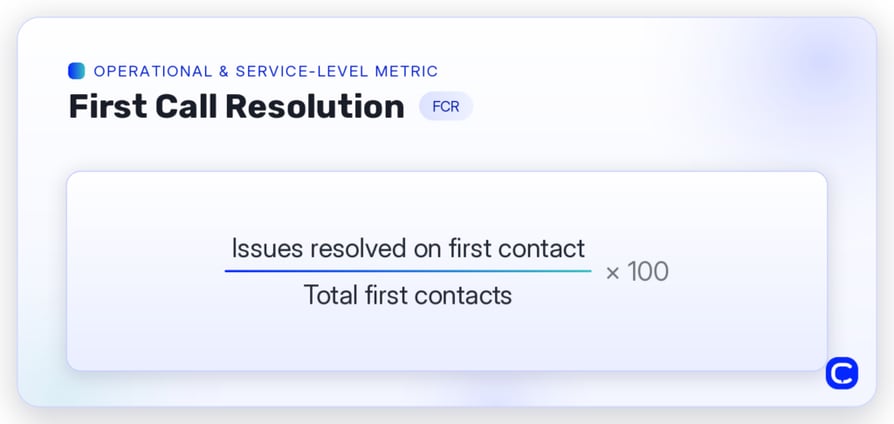
Formula: FCR = (Issues resolved on first contact / Total first contacts) × 100
SQM Group's 2024 benchmark research puts a strong FCR at 70–79% and its top tier at 80% or higher, a mark only 5% of centers hit. The fastest lever is getting the caller to the right person the first time. CloudTalk's Skill-Based Routing routes calls to agents with the right expertise (language, technical skill, and so on) to lift first-call resolution and reduce handling time, and it is available on the Essential, Expert, and Custom plans.
What Is Average Handle Time (AHT)?
Average Handle Time is the average total length of a call, including talk time, hold time, and the after-call work an agent does to wrap it up. It is a workload and efficiency measure, not a quality one, so read it alongside FCR rather than on its own.
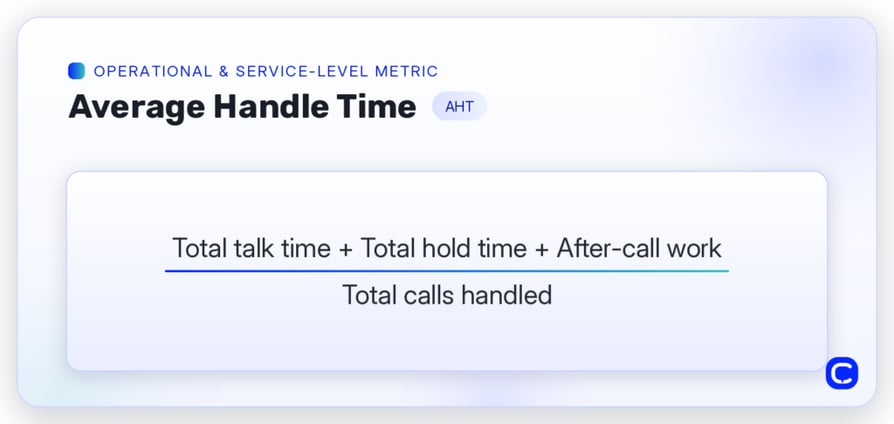
Formula: AHT = (Total talk time + Total hold time + After-call work) / Total calls handled
Chasing a lower AHT in isolation backfires: agents rush calls, FCR drops, and repeat calls climb. The goal is a shorter handle time without sacrificing resolution.
What Is Cost per Call?
Cost per Call is the fully loaded cost of running your contact center divided by the number of calls it handles. It converts every other operational metric into the language your finance team speaks.
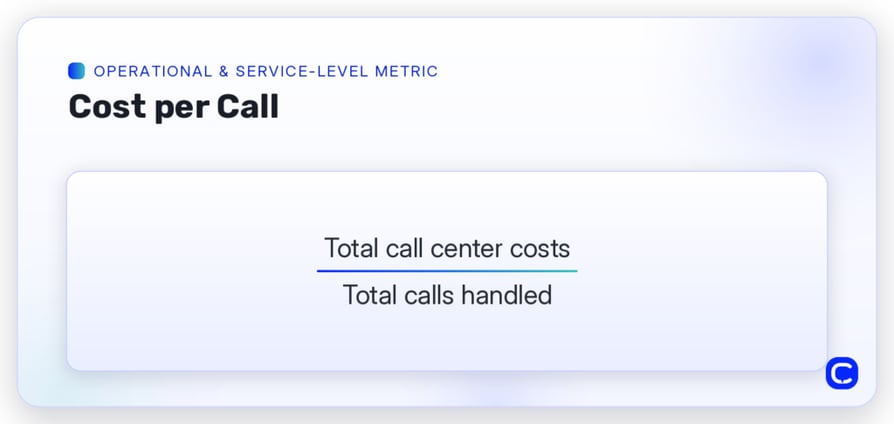
Formula: Cost per Call = Total call center costs / Total calls handled
Because FCR and Cost per Call move together, resolving more issues on the first try is usually the most reliable way to bring call center costs down.
Customer Experience Metrics
Operational speed means little if customers leave unhappy. These three measure how the interaction felt.
What Is CSAT (Customer Satisfaction Score)?
CSAT captures how satisfied a customer was with a specific interaction, usually through a short post-call survey asking them to rate the experience. It is immediate and interaction-specific, which makes it the go-to pulse check after a call.
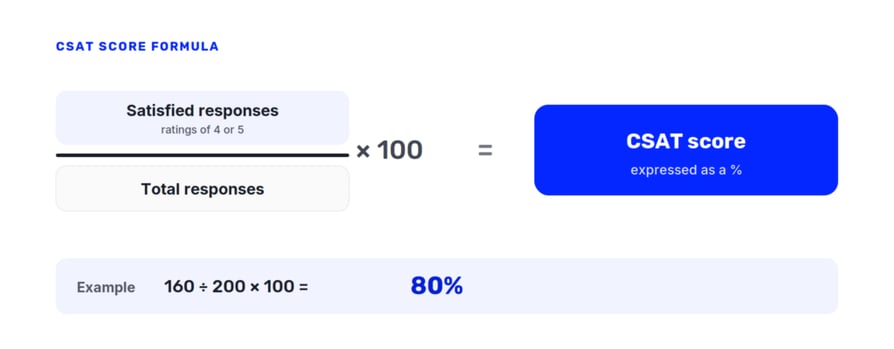
Formula: CSAT = (Number of satisfied responses / Total responses) × 100
Trigger the survey right after the call while the experience is fresh, and segment the results by agent and topic to see where scores dip.
What Is NPS (Net Promoter Score)?
Net Promoter Score measures loyalty by asking one question: how likely are you to recommend us, on a scale of 0 to 10. It looks past a single call to the health of the whole relationship.
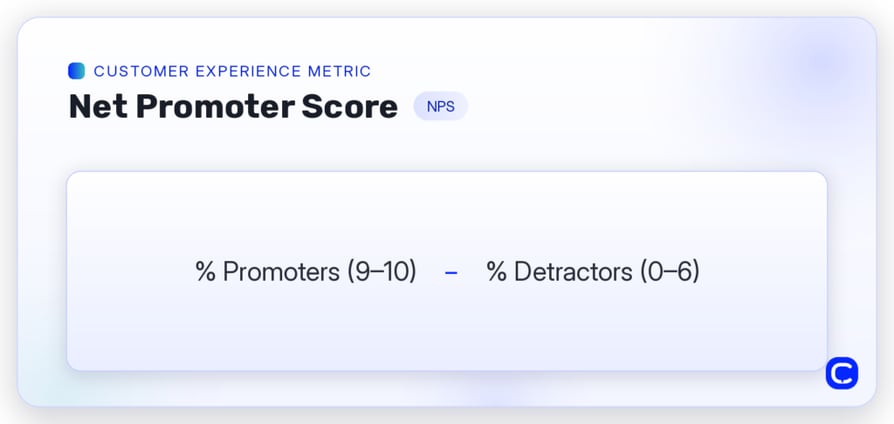
Formula: NPS = % Promoters (9–10) − % Detractors (0–6)
NPS is a slower-moving, strategic metric. Pair it with CSAT so you see both the relationship trend and the interaction-level detail.
What Is CES (Customer Effort Score)?
Customer Effort Score measures how hard a customer had to work to get their issue resolved, rated from "very easy" to "very difficult." Effort predicts loyalty better than delight does, because customers rarely reward you for an easy experience but punish you for a hard one.
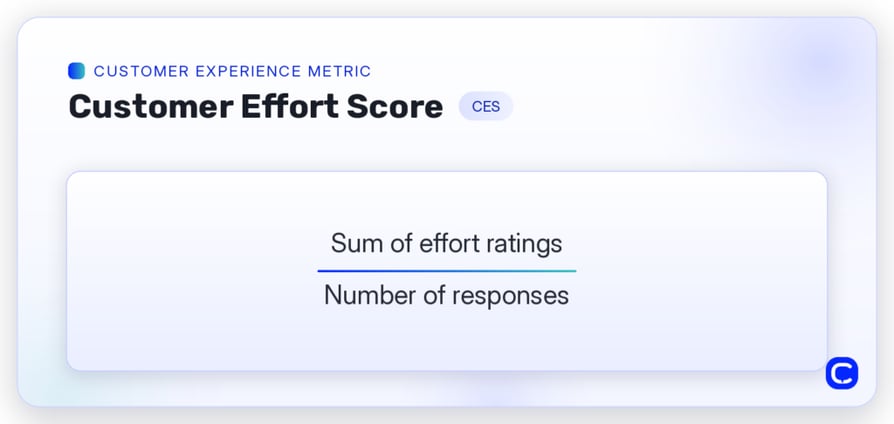
Formula: CES = Sum of effort ratings / Number of responses
A high-effort score points straight at friction: too many transfers, repeated explanations, or a resolution that took several contacts.
Agent Performance Metrics
These call center agent performance metrics show how your people spend their time and where coaching will pay off. Use them to support agents, not to surveil them.
What Is Occupancy Rate?
Occupancy Rate is the percentage of an agent's logged-in time spent actively handling calls, including talk, hold, and after-call work. It reveals how hard the current headcount is working.
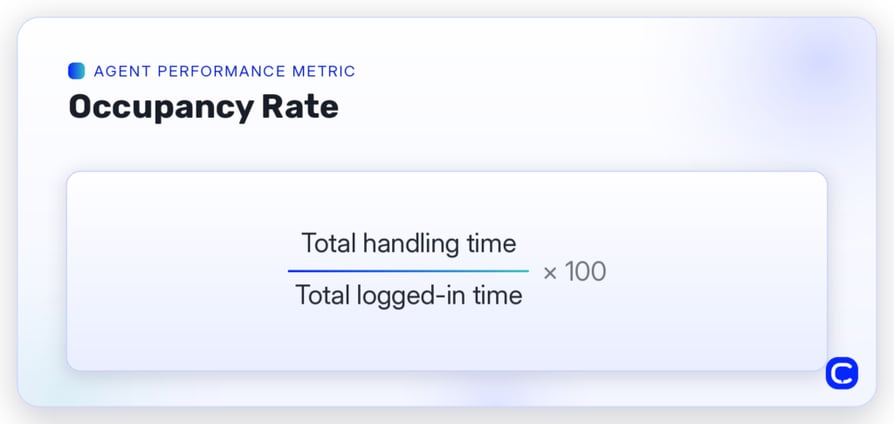
Formula: Occupancy = (Total handling time / Total logged-in time) × 100
Sustained occupancy above roughly 85–90% is a burnout warning; agents need recovery time between contacts to stay effective.
What Is Agent Utilization?
Agent Utilization is the share of an agent's total paid time spent on call-related work, including availability between calls. Where occupancy looks only at logged-in time, utilization looks at the whole paid day, so it accounts for meetings, training, and breaks.
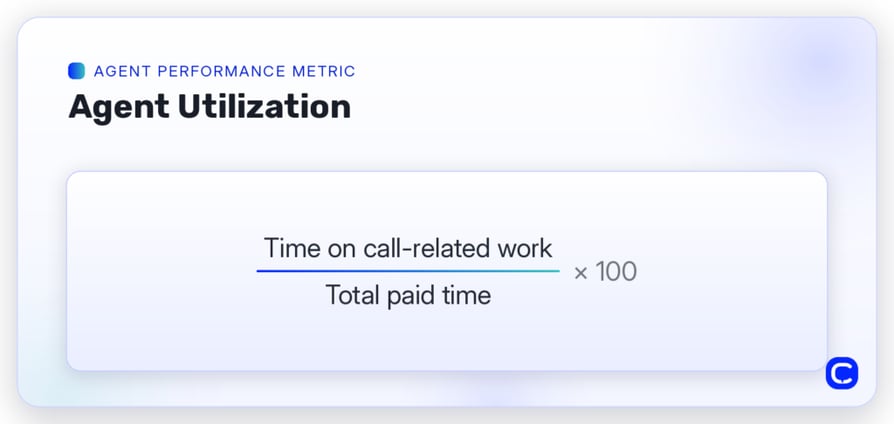
Formula: Utilization = (Time on call-related work / Total paid time) × 100
It is the better metric for workforce planning and for setting realistic productivity expectations.
What Is Schedule Adherence?
Schedule Adherence measures how closely agents follow their assigned schedules: logged in and available when they are supposed to be. It feeds Service Level, because a queue that is staffed on paper but not in practice still backs up.
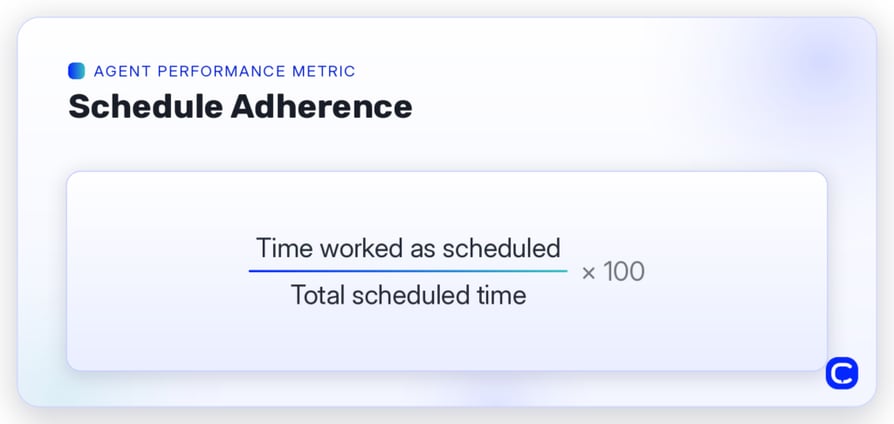
Formula: Adherence = (Time worked as scheduled / Total scheduled time) × 100
Track it kindly. A dip often reflects a broken schedule rather than a lazy agent.
What Is After-Call Work (Wrap-Up Time)?
After-Call Work, also called wrap-up time, is the time an agent spends completing tasks after the caller hangs up: logging notes, updating the CRM, and setting follow-ups. It rolls into AHT but is worth isolating because it is easy to automate.
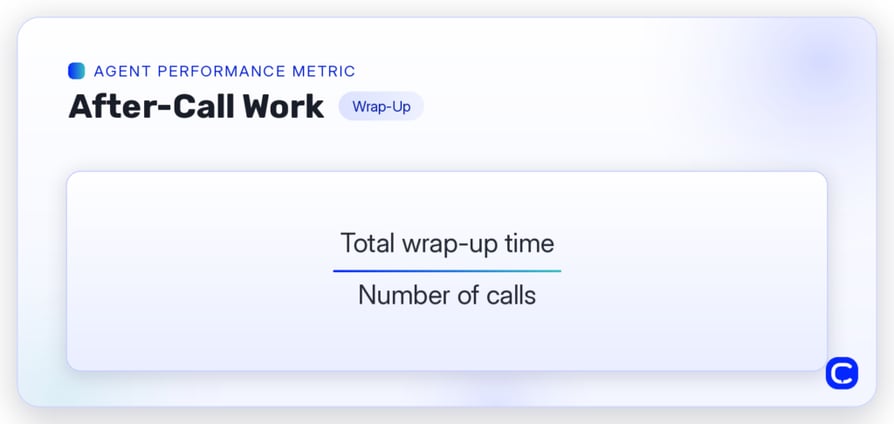
Formula: After-Call Work = Total wrap-up time / Number of calls
This is where automation earns its keep. CloudTalk's AI Call Notes automatically extract and organize key info from calls to remove manual note-taking; note that AI features like this are part of the AI Conversation Intelligence add-on rather than a standard plan inclusion.
What Is Transfer Rate?
Transfer Rate is the percentage of calls an agent passes to another agent or department. A high rate points to routing gaps or knowledge gaps, and it drags down FCR at the same time.
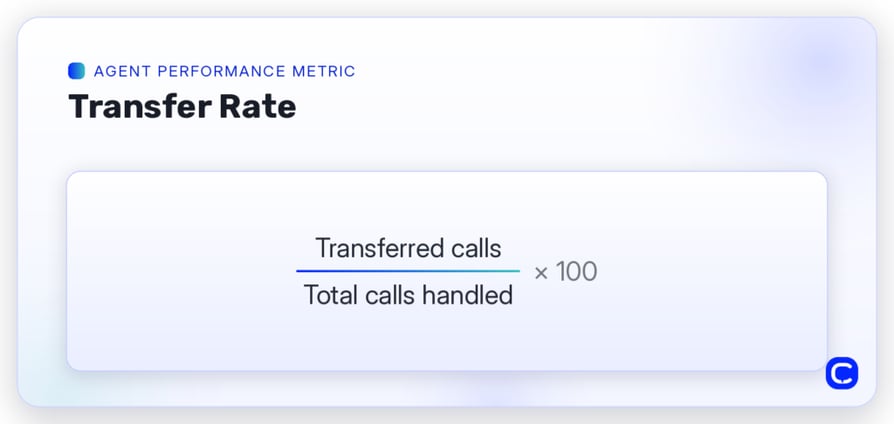
Formula: Transfer Rate = (Transferred calls / Total calls handled) × 100
If one topic drives most transfers, the fix is usually better routing rules or targeted training, not more staff.
What Is Repeat Call Rate?
Repeat Call Rate is the percentage of customers who call back about the same issue within a set window, often 24 to 72 hours. It mirrors FCR and shows whether you are truly solving problems.
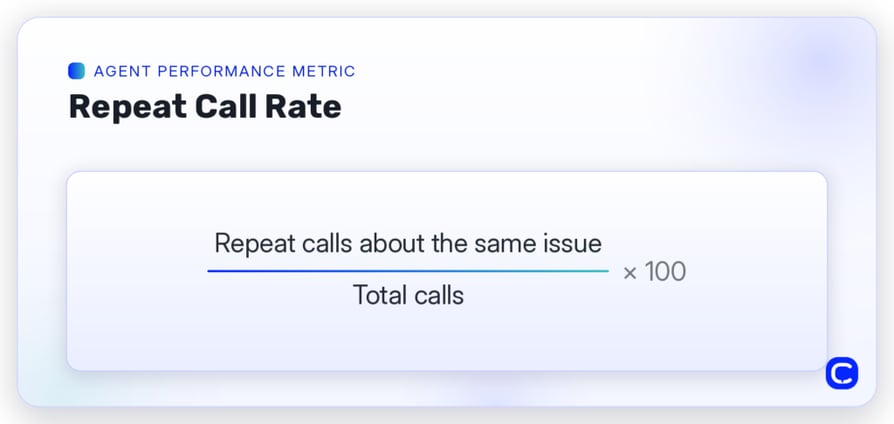
Formula: Repeat Call Rate = (Repeat calls about the same issue / Total calls) × 100
A climbing repeat rate alongside a falling AHT is the classic sign that agents are closing calls too fast.
Outbound and Sales Call Center Metrics
Inbound metrics grade how well you receive calls. Outbound teams need a different set of outbound call center metrics that grade how well you reach and convert prospects. If your call center runs sales or lead-generation campaigns, layer these on top of the operational metrics above.
What Is Conversion Rate?
Conversion Rate is the percentage of contacted prospects who take the desired action, whether that is booking a demo or closing a deal.
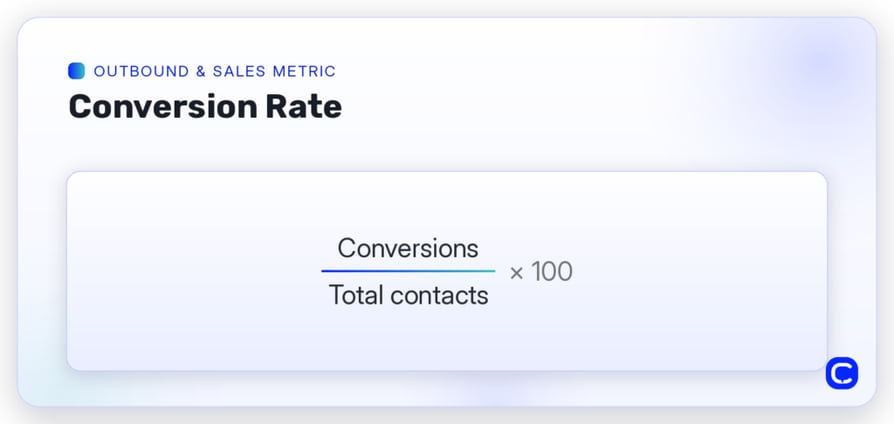
Formula: Conversion Rate = (Conversions / Total contacts) × 100
What Is Lead Response Time?
Lead Response Time is how long it takes a rep to make first contact after a lead comes in. Speed is decisive here, since the odds of connecting fall with every hour that passes.
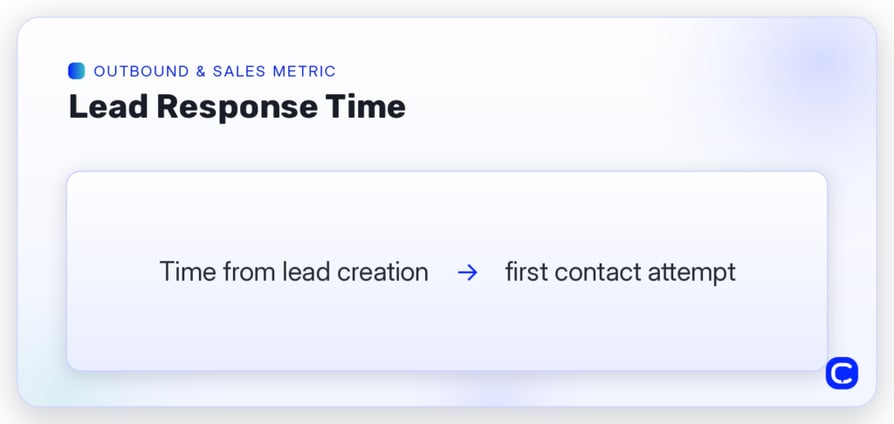
Formula: Lead Response Time = Time from lead creation to first contact attempt
What Is Average Call Duration?
Average Call Duration is the mean length of your outbound conversations. Read together with conversion rate, it shows whether longer pitches close more deals.
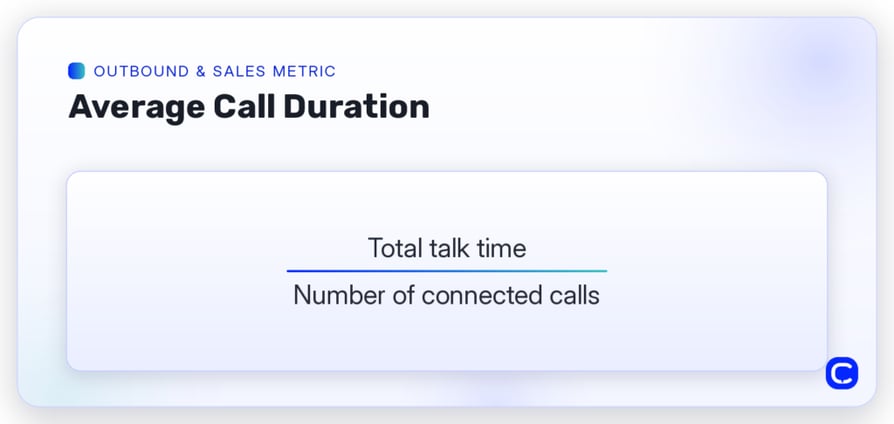
Formula: Average Call Duration = Total talk time / Number of connected calls
What Is Dialing Efficiency (Connect Rate)?
Connect Rate is the share of dial attempts that reach a live person rather than voicemail or a dead line. It is the ceiling on how many real conversations a rep can have in a day.
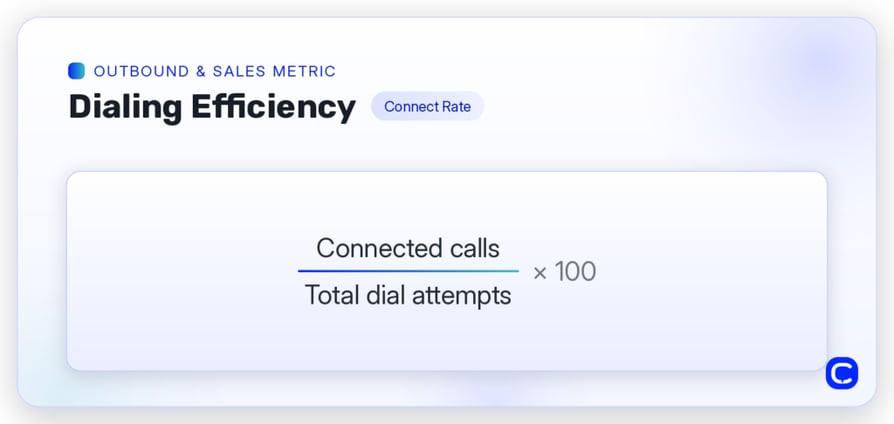
Formula: Connect Rate = (Connected calls / Total dial attempts) × 100
This is where the outbound stack earns its money. CloudTalk's Local Presence Dialing displays a local number to increase answer rates, and the AI Sales Dialer bundles the dialing modes, voicemail detection, and CRM sync built to get reps to 80+ live conversations per agent per day. Power Dialer is included in the Expert plan and available as a paid add-on on lower plans.
Customer story: Integrity360 tripled its SDR pickup rates with CloudTalk. Read the story.
What Is Pipeline Velocity?
Pipeline Velocity measures how quickly qualified opportunities move through your pipeline and turn into revenue. It ties call activity to the number the CFO cares about.
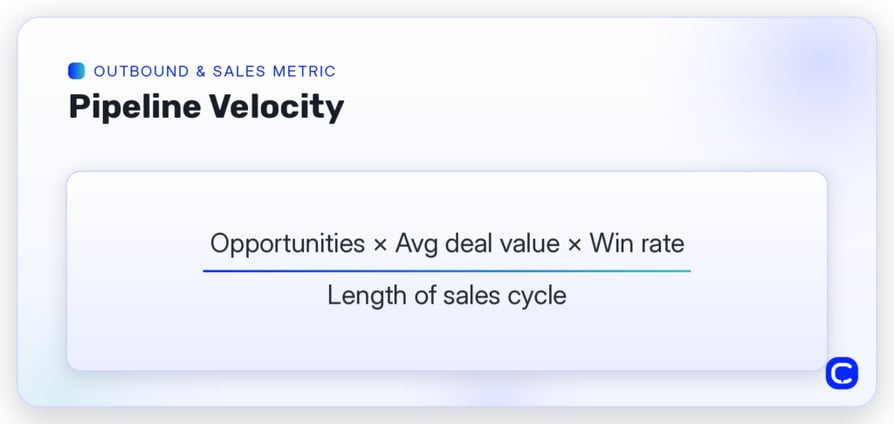
Formula: Pipeline Velocity = (Number of opportunities × Average deal value × Win rate) / Length of sales cycle
Inbound vs. Outbound Call Center Metrics
The two call types optimize for different outcomes, so it helps to compare inbound and outbound calls side by side: the same metric can matter in one and be noise in the other.
| Focus | Inbound centers | Outbound centers | Blended centers |
|---|---|---|---|
| Core question | How fast and well do we respond? | How well do we reach and convert? | Are both scorecards healthy at once? |
| Priority metrics | ASA, Service Level, Abandonment Rate, FCR, CSAT | Connect Rate, Conversion Rate, Lead Response Time, Pipeline Velocity | Both sets, plus agent availability across queues |
| Failure mode | Long holds, dropped callers | Low connect rates, slow follow-up | Outbound activity starving the inbound queue |
The takeaway is to pick the metrics that match the job each team is doing, then resist the urge to hold both teams to the same scorecard.
Call Center Metrics by Industry
Benchmarks shift by sector because customer expectations and call complexity differ. A healthcare intake line and a retail returns desk are not playing the same game, so grading them against one universal standard misleads both.
| Industry | Metrics that matter most | Why |
|---|---|---|
| Healthcare | FCR, Abandonment Rate | Callers are often anxious and issues are time-sensitive; see our healthcare call center benchmarks |
| Financial services | FCR, compliance and security adherence | Recording and consent handling are built into the workflow |
| Retail and e-commerce | Service Level, Abandonment Rate during peaks | Seasonal volume swings make peak-hour responsiveness decisive |
Customer story: Convergence (Healthcare & Wellness) scaled its healthcare recruiting calls across 150 nursing homes with CloudTalk. Read the story.
What Is a Call Center Metrics Dashboard?
A call center dashboard is a single screen that pulls your live and historical KPIs into one view so supervisors can act on what is happening now instead of reading about it tomorrow. It is the difference between managing the queue and reacting to it.
A useful dashboard does three jobs: it shows real-time queue health, it flags when a metric crosses a threshold, and it lets each role see the numbers that matter to them.
CloudTalk covers this across a few surfaces. Real-Time Analytics gives a live overview of agent and group activity, real-time data on call queues and availability, and visibility into call durations and waiting, available on the Essential, Expert, and Custom plans. Customizable Dashboards let you build personalized dashboards to track specific KPIs, set visual targets, and apply multiple filters by agent, team, or region. And Wallboards display key metrics on large screens or via a public shareable link in real time, so leadership can watch performance without taking up a seat. Customizable Dashboards and Wallboards are available on the Expert and Custom plans.
To put real-time queue health on a screen without stitching together spreadsheets, start your 14-day free trial. No credit card required.
How to Improve Your Call Center Metrics
Tracking metrics is step one. Moving them takes a repeatable loop. The sequence that works:
- Pick 3–5 KPIs that map to a goal. Trying to move everything at once moves nothing. Anchor on FCR if you want the biggest combined effect on cost and satisfaction.
- Set a benchmark-based target. Use the reference points above so your goal is grounded in what strong teams achieve, not a round number someone liked.
- Fix the call routing first. Getting callers to the right agent early lifts FCR, Service Level, and CSAT together, so it is the highest-leverage starting point.
- Automate the busywork. Cutting after-call work and note-taking gives agents more live capacity without adding headcount.
- Review, coach, repeat. Sample calls weekly, coach against the metric you chose, and re-check the number.
That last step is where conversation analytics changes the pace. CloudTalk's AI Conversation Intelligence turns every recorded call into a transcript, sentiment score, topic list, and summary, so managers can spot coaching moments without listening to calls end to end. Conversation Intelligence is a paid add-on that works on top of any CloudTalk plan.
Looking further out, Salesforce's 2025 State of Service research projects that AI will handle 50% of customer service cases by 2027, up from 30% today, with service leaders expecting agentic AI to lift upsell revenue by 15%. The teams that measure carefully now will be the ones that can tell whether that automation is helping or hurting, and adjust before it shows up in churn.
Start with one metric, hold it against a real benchmark, and let the number tell you what to fix next. When you are ready to move those numbers for real, start your 14-day free trial. No credit card required.
FAQs: Call Center Metrics
Start with First Call Resolution, CSAT, Service Level, Average Speed of Answer, and Abandonment Rate. They cover cost, quality, and speed in five numbers. See the full list of top metrics to measure customer service efficiency.
Pick 3–5 KPIs tied to a goal, fix routing so callers reach the right agent first, automate after-call work, then coach weekly and re-measure. More tactics in this guide to improve call center performance.
SQM Group puts a strong FCR at 70–79% and world-class at 80%+, a level only about 5% of centers reach. The fastest way to lift it is better routing, as covered in how call analytics improves first call resolution.
Combine efficiency numbers (occupancy, utilization, adherence, AHT) with quality ones (FCR, CSAT, transfer rate) so speed never hides poor outcomes. A structured call scoring approach keeps it fair.
CSAT is often reported as the percentage of positive responses; many teams aim for 90%+. Survey right after the call and act on the dips. See these ways to improve customer satisfaction.
Most teams treat roughly 5% or lower as acceptable, with the strongest holding it to 2–3%. Shorter waits and a callback option are the main levers, as covered in call center quality assurance metrics.