

10 Best Sierra AI Alternatives: TL;DR Comparison Table
| # | Tool | Best For | Starting Price | G2 Rating |
|---|---|---|---|---|
| 1 | CloudTalk | SMB and mid-market teams running AI calling on one platform | $25/user/month (Starter) | 4.4/5 |
| 2 | PolyAI | Enterprise contact centers replacing legacy IVRs with voice AI | Custom (from ~$150K/year, estimated) | 5/5 |
| 3 | Retell AI | Engineering teams building custom voice agents | ~$0.07/min + usage (PAYG) | 4.8/5 |
| 4 | Synthflow | Marketing agencies and no-code builders deploying voice agents | $29/month (50 minutes) | 4.5/5 |
| 5 | Bland AI | Developer teams scaling concurrent inbound and outbound calls | Free base + $0.14/min (PAYG) | 5/5 |
| 6 | Decagon | High-growth consumer brands automating chat, email, and voice | Custom (quote-only) | 4.8/5 |
| 7 | Fin AI | Helpdesk-first support teams adding AI voice later | $0.99/outcome | 4.5/5 |
| 8 | Salesforce Agentforce | Enterprise teams running AI agents inside Salesforce | From $0.10/action (Flex Credits) | 4.3/5 |
| 9 | Aircall | Support teams needing broad app integrations | $30/user/month (3-seat min) | 4.4/5 |
| 10 | Dialpad | Teams wanting one app for calls, meetings, and messaging | $15/user/month (Standard) | 4.4/5 |
Skip the Reading. See It Live.
What Are the Top Alternatives to Sierra AI for AI Phone Calls in 2026?
The top alternatives to Sierra AI for AI calling in 2026 are CloudTalk, PolyAI, Retell AI, Synthflow, and Decagon. CloudTalk leads for teams that want the AI voice agent and the phone system on one platform, PolyAI competes for enterprise voice deployments, and Retell AI serves engineering teams building their own agents.
Why Are Teams Searching for a Sierra AI Alternative?
Teams search for a Sierra AI alternative for three structural reasons: pricing you can’t see without a sales cycle, an enterprise-only motion that leaves smaller teams out of scope, and the fact that Sierra sells an AI agent, not the phone system it runs on.
It’s rarely about product quality. Sierra AI is co-founded by former Salesforce co-CEO Bret Taylor, serves brands like Rocket Mortgage, SiriusXM, and ADT, and raised $950 million at a $15.8 billion valuation¹ in May 2026. The list of Sierra AI competitors below exists because of fit and economics, not flaws.
On G2, Sierra holds a 4.1/5 rating from a small verified review base of fewer than 20 reviews. Those few reviewers praise ease of use and fast implementation, and the complaints that do recur are unclear pricing and a setup process some found complex. Those two complaints aren’t random, they’re the structure showing through. Here’s how it plays out in the five cons Sierra users mention most:
5 Main Cons of Sierra AI That Make Businesses Look for an Alternative
-
Quote-only pricing you can’t put in a budgetSierra publishes no rates at all: contracts are custom, outcome-based, and negotiated per deployment. Community estimates put contracts at roughly $150,000 a year with per-resolution fees around $1 to $2.50, but Sierra has never confirmed them. Several G2 reviewers flag unclear pricing as their main frustration.
-
An enterprise-only motion with no self-serve pathThere is no free trial, no signup page, and no published tiers, just a “Learn more” form and a sales cycle. If you want to test an agent on your own call volume this week, Sierra isn’t built for that motion.
-
It’s an AI agent, not a phone systemSierra deploys agents across chat, email, WhatsApp, and voice, but it doesn’t sell phone numbers, call routing, outbound dialers, or a workspace for your human agents. The agent alone isn’t the deployment: your calling infrastructure still has to come from somewhere else.
-
Built for the Fortune 500 buyerSierra’s reference customers are household names with high-six-figure automation budgets and white-glove builds. SMB and mid-market teams searching for Sierra alternatives usually discover they are simply not the target customer.
-
Peer validation is thin for the price tagFewer than 20 verified G2 reviews back one of the most expensive products in the category, and a few of them describe a complex setup process with more bugs than competitors. Buyers signing six-figure contracts get less public evidence than a $29/month tool provides.


Where Sierra AI Shines
If you’re a large consumer brand automating millions of support conversations across chat and voice, Sierra remains one of the strongest platforms you can hire, and its customer list proves it. The question is what happens when the job is AI calling on a real phone operation. That’s where voice AI for customer service built into a phone platform takes over.
What Is the Best Alternative to Sierra AI?
CloudTalk is the best Sierra AI alternative for AI calling: growing sales and support teams use it to answer and route calls, book appointments, dial leads, and sync every conversation to the CRM. Unlike Sierra, it publishes every price and covers 160+ countries for numbers.
Whether anything is better than Sierra AI depends on the job. For white-glove enterprise agents across every channel, Sierra is hard to beat. But teams searching for tools like Sierra AI or apps similar to Sierra AI usually want AI on their calls without a six-figure contract, and that’s the case we’re making today.
Why Do Teams Consider CloudTalk the Best Sierra AI Alternative?
Buyers rank CloudTalk among the best alternatives to Sierra AI agents because the AI and the calling infrastructure ship together. Plans start at $25/user/month (annual billing) with no seat minimums until Expert (3-seat minimum), on a 99.999% uptime SLA, with 24/7 chat and email support on every plan (phone on Expert).
5 Main Pros of CloudTalk and Why Businesses Switch from Sierra AI
-
Published prices instead of a sales cycleThree per-seat tiers from $25 to $49/user/month on annual billing, with AI add-ons at fixed monthly rates. You can budget the whole stack from the pricing page, before ever talking to sales.
-
Live this week, not next quarterSelf-serve signup, a 14-day free trial, and no-code setup mean you test the AI on your own call volume immediately. Sierra’s white-glove build cycle becomes your timeline, CloudTalk’s doesn’t.
-
A real phone system underneath the AIBuy and port virtual numbers in 160+ countries, set up queues and routing from the dashboard, and put dialers behind your outbound team. Sierra needs a phone system, while CloudTalk is one.
-
AI at fixed monthly pricesThe AI Receptionist answers routine inbound calls with 50 free minutes on every account, then fixed tiers from $99/month. Conversation Intelligence adds transcripts, summaries, and sentiment analysis for $9/user/month flat.
-
AI and human agents on one platform100+ CRM and helpdesk integrations from the Essential plan log calls, recordings, and contacts both ways, and escalation from AI to human is a live transfer inside the same queues, with full context attached.


Test the Best Sierra AI Alternative for 14 Days. No Contract Needed.
How We Chose the Best Sierra AI Alternatives and Competitors
We aggregated user experiences from Reddit, Quora, and G2, reviewed every vendor’s official pricing page, and decoded the pricing models that needed decoding. Each platform was then evaluated against six benchmarks:
-
Call Stability & ReliabilityUptime guarantees, call quality reports, and how often users mention dropped calls in reviews.
-
Total Cost of OwnershipThe real monthly bill: seat prices, per-minute or per-outcome fees, add-ons, and minimum commitments.
-
CRM & Helpdesk Integration DepthWhether integrations sync data both ways, and which pricing tier unlocks them.
-
Global Coverage & Number AvailabilityHow many countries you can buy numbers in, and what international calling actually costs.
-
Support Quality & AvailabilitySupport channels, hours, and whether smaller accounts get a human or a portal.
-
AI & Automation CapabilitiesWhat the AI does on real phone calls, and whether it’s priced per seat, per outcome, or per minute.
The Top 10 Alternatives to Sierra AI for 2026
Sierra AI competitors in conversational AI split into two camps: AI-pure-play agent builders like PolyAI and Decagon, and full business phone systems with AI built in. The matrix below compares Sierra AI against the alternatives from G2’s own comparison set, plus PolyAI, its closest voice-first rival. The individual breakdowns that follow cover all ten Sierra alternatives in detail.
Sierra AI vs. CloudTalk vs. Fin AI vs. Synthflow vs. PolyAI
| Feature | Sierra AI | CloudTalk | Fin AI | Synthflow | PolyAI |
|---|---|---|---|---|---|
| Starting Price | Custom (outcome-based) | $25/user/month (Starter) | $0.99/outcome (50-outcome min. on external helpdesks) | $29/month for 50 minutes | Custom (from ~$150K/year, estimated) |
| Pricing Model | Per outcome, negotiated contracts | Flat per seat, fixed AI add-ons | Per outcome, metered | Monthly minute bundles + $0.09/min overage | Annual contract + per-minute usage |
| Free Trial |  |
 14 days 14 days |
14 days |
14 days |
|
| Voice & Calling | Voice as one of six agent channels | Full call center: numbers, routing, queues, dialers | Fin Voice: custom pricing, select customers | Voice-first agents with built-in telephony | Voice-first enterprise agents |
| Phone Numbers Included | |
160+ countries | |
Via built-in telephony or SIP | |
| Outbound Dialers | |
Power Dialer (Expert, or $15/user/month add-on), Parallel Dialer ($39/user/month add-on). Smart & Preview on Expert. Click-to-call from Starter. | |
Outbound campaigns | |
| CRM & Helpdesk Integrations | Custom enterprise integrations | 100+ tools from Essential, Salesforce on Expert | Works inside Intercom, Salesforce, HubSpot, Zoho + more | GoHighLevel, HubSpot + via API | Custom enterprise integrations |
| AI Summaries & Insights | Included in custom contracts | Conversation Intelligence add-on ($9/user/month): summaries, transcripts, call scoring, sentiment, and more | Pro add-on: $99 per 1,000 conversations | Call analysis built in | Included in custom contracts |
| Setup | White-glove, sales-led | Self-serve, live in hours | Self-serve on supported helpdesks | No-code visual builder | Vendor-managed builds |
| Customer Support | Dedicated enterprise teams | 24/7 chat & email (phone on Expert) | In-app messenger and email | Email + chat on paid plans | Dedicated enterprise teams |
The Sierra AI Cost Trap: Budgeting a Quote-Only Agent
Community estimates for Sierra start around $150,000 a year plus setup, and you won’t know your real number until the end of a sales cycle. Compare the math a 10-agent team can do in one sitting: CloudTalk Essential runs $290/month, Conversation Intelligence adds $90, and an AI Receptionist tier adds $99, roughly $479 a month for the whole AI calling stack, priced on a public page.
1. CloudTalk: The Best Sierra AI Alternative for SMB and Mid-Market Teams Running AI Calling on One Platform
What Is CloudTalk?
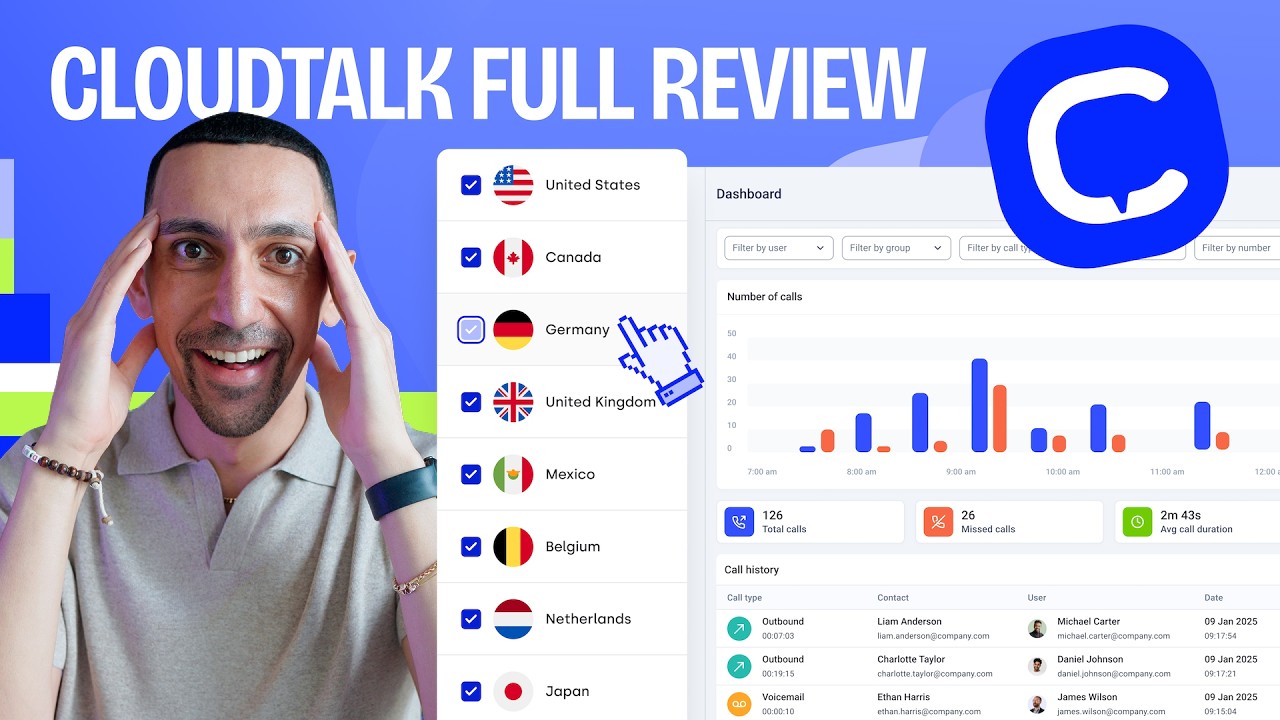
CloudTalk is a voice-first contact center platform for fast-growing small business and mid-market sales and support teams. It pairs global calling infrastructure with two-way CRM sync, outbound dialers, and AI voice solutions (AI specialists and receptionists) that answer and route real phone calls.
That combination is the whole argument: where Sierra AI hands you an agent and leaves the telephony to someone else, CloudTalk ships the agent and the phone system in one product you can set up yourself in an afternoon.
Why Is CloudTalk a Strong Sierra AI Alternative?
- The full AI calling stack in one place: Numbers, queues, routing, dialers, human agents, and AI agents share one platform, so a call handled by AI and a call handled by a person land in the same analytics and the same CRM record.
- Two AI products sized to the job: The AI Receptionist handles routine inbound calls in minutes of setup, while AI Voice Agents from $349/month run complex inbound and outbound workflows like lead qualification and booking.
- Outbound is a first-class citizen: The Power Dialer (Expert, or a $15/user/month add-on) and Parallel Dialer ($39/user/month add-on) put volume behind sales teams, something agent-only platforms don’t attempt.
- Deep CRM sync from Essential: 100+ integrations including HubSpot, Pipedrive, Intercom, and Zendesk log calls, recordings, transcripts, and contacts both ways. Salesforce deep-sync comes with Expert.
- Built for international calling: Local numbers in 160+ countries and globally distributed infrastructure keep quality steady across markets, with Smart Dialer insights (Expert) guiding cross-border campaigns.
What Are the Pros & Cons of CloudTalk?
| Pros | Cons |
|---|---|
| Flat per-seat pricing from $25/user/month with published AI add-on rates | Voice-first by design: no native live chat, email ticketing, or omnichannel inbox |
| Live in hours with self-serve setup and a 14-day free trial | Salesforce integration requires the Expert plan |
| 100+ CRM and helpdesk integrations from Essential (including Intercom and Zendesk) | Parallel Dialer costs $39/user/month as an add-on on any plan |
| AI Receptionist (50 free minutes on every account) and Conversation Intelligence at fixed monthly prices | |
| 24/7 chat and email support on all plans (phone on Expert) |
What Are CloudTalk’s Plans & Pricing?
CloudTalk pricing starts at $25/user/month (Starter, billed annually), with the following plans:
CloudTalk Plans and Pricing
| Plan | Price (annual billing) | Key Features |
|---|---|---|
| Starter | $25/user/month | Unlimited inbound & internal calls, 500 outbound minutes (regional calling bundle), call queues, transfers, click-to-call, automatic call recording (1-month retention) |
| Essential | $29/user/month | Everything in Starter + IVR and smart routing, 100+ CRM/helpdesk integrations, workflow automation, unlimited recording retention |
| Expert | $49/user/month | Everything in Essential + Power, Smart & Preview Dialers, Salesforce integration, 24/7 phone support (3-seat min) |
| Conversation Intelligence (add-on) | $9/user/month | AI transcripts, call summaries, call scoring, sentiment analysis, and agent coaching insights |
| AI Receptionist (add-on) | From $99/month (200 min) | Inbound AI call answering, routing, logging; 50 free minutes on every account; tiers up to $699/mo (2,500 min) |
| AI Voice Agent (add-on) | From $349/month (1,000 min) | Sales-led custom AI agents for inbound and outbound workflows; plans scale up to $1,249/mo (5,000 min) |
What Do CloudTalk’s Customers Say?
Across G2 and Capterra, reviewers most often praise how fast CloudTalk goes live, call quality on international routes, and CRM integrations that log calls without agent effort. Ease of use and ease of setup are its highest-scoring G2 categories.
The most common criticism is that Salesforce deep-sync requires the Expert plan, a real tier jump for smaller Salesforce shops. Some reviewers also want richer native reporting, which is usually where Conversation Intelligence enters the conversation.
CloudTalk AI Voice Agents in Action: Circle Gym’s Story
Circle Gym shows what AI calling looks like without the enterprise contract. The Spanish fitness studio, managed remotely from Denmark, replaced its “here’s a booking link” flow with CloudTalk’s AI voice agent for appointment scheduling. The agent asks callers what time works and locks the slot on the same call, the kind of workflow Sierra AI builds white-glove for Fortune 500 brands.
Christian Stistrup, Circle Gym’s owner, breaks down what changed:

How Do G2 Users Rate CloudTalk?
CloudTalk holds 4.4/5 on G2 across 1,800+ verified reviews, with ease of use and ease of setup among its highest-scoring categories.

Ready to Make the Switch?
2. PolyAI: Best for Enterprise Contact Centers Replacing Legacy IVRs with Voice AI

What Is PolyAI?
PolyAI is an enterprise voice AI platform built for high-volume contact centers in banking, insurance, hospitality, and telecom. Its assistants hold natural, multi-turn phone conversations, handle heavy accents and background noise, and replace the rigid menu trees callers hate.
Why Is PolyAI a Strong Sierra AI Alternative for Enterprise Voice AI?
- Voice is the entire company: Where Sierra treats voice as one of six channels, PolyAI has spent years on nothing but phone conversations, and it shows in how its assistants handle interruptions and messy audio.
- Proven in regulated industries: Banks, insurers, and telcos run PolyAI in production, the same compliance-heavy buyer profile Sierra courts.
- Same white-glove model, sharper scope: Enterprises that want a vendor-managed build but only need the phones covered get a more focused engagement than a full omnichannel agent program.
What Are the Pros & Cons of PolyAI?
| Pros | Cons |
|---|---|
| Voice-first assistants that survive accents, noise, and interruptions | Contracts reportedly start around $150,000/year plus per-minute usage |
| Enterprise deployments proven in banking, insurance, and hospitality | Every change goes through PolyAI; there’s no meaningful in-house editing |
| Vendor-managed builds with dedicated support teams | Very small public review base makes peer validation difficult |
What Are PolyAI’s Plans & Pricing?
PolyAI pricing is enterprise-only, quoted per engagement, and the publicly described structure looks like this:
PolyAI Plans and Pricing
| Plan | Price | What’s Included |
|---|---|---|
| Enterprise (annual) | From ~$150,000/year (estimated) | Custom voice assistant build, SOC 2, GDPR, dedicated support |
| Per-minute usage | Custom | Usage-based billing on top of the annual contract |
The Six-Figure Floor
PolyAI solves the same budgeting problem Sierra creates: you can’t know the price without a sales cycle, and reported contracts start around $150,000 a year before usage. If your call volume doesn’t justify that floor, a per-seat platform with fixed AI pricing covers the same inbound calls for a fraction of the commitment.
What Are PolyAI’s Customers Saying?
Enterprise users praise the naturalness of PolyAI’s conversations and the drop in abandoned calls after replacing IVR menus. The friction shows up post-launch: because assistants are vendor-built, even small changes route through PolyAI’s team, and Gartner Peer Insights reviewers note the dependency.
How Do G2 Users Rate PolyAI?
PolyAI holds 5/5 on G2, though from a very small review base; Gartner Peer Insights shows 4.7 to 4.8 across a similarly small set.

3. Retell AI: Best for Engineering Teams Building Custom Voice Agents
What Is Retell AI?
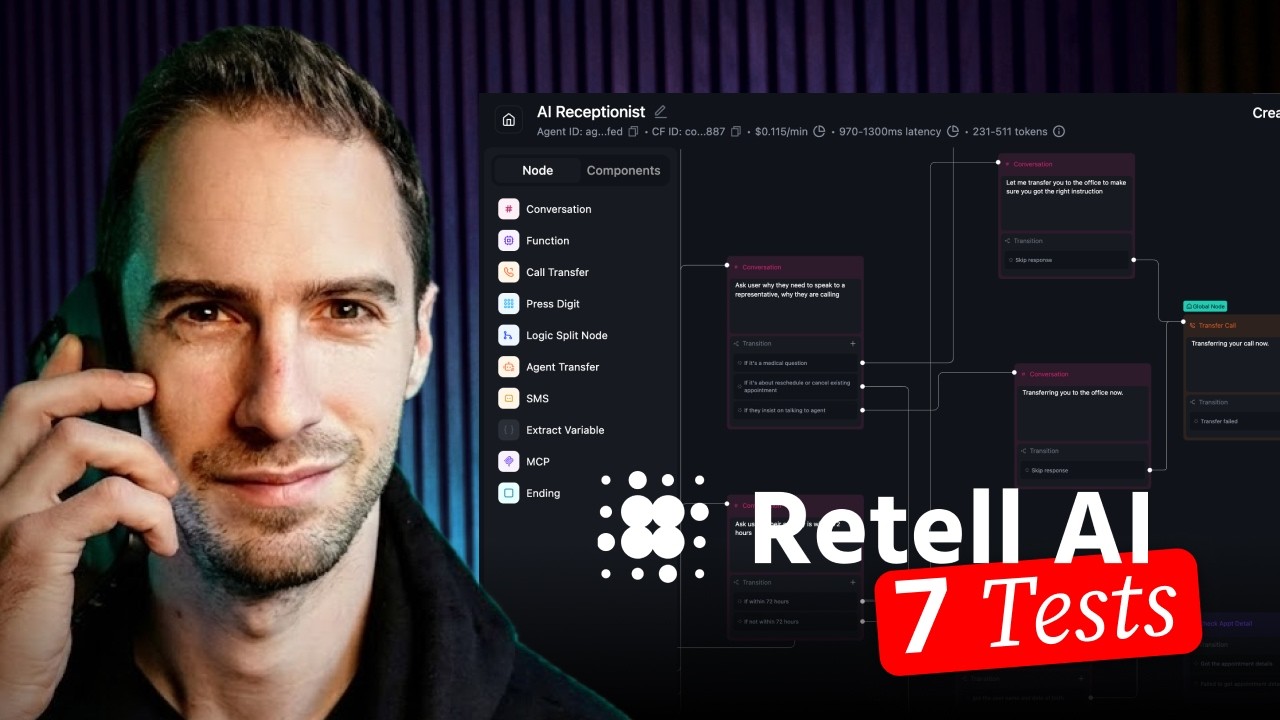
Retell AI is developer-first voice AI infrastructure. Engineering teams use its low-latency voice engine, API, and SDKs to build custom phone agents for support lines, appointment booking, and outbound campaigns, choosing their own LLM and telephony underneath.
Why Is Retell AI a Strong Sierra AI Competitor?
- Start today with published rates: Where Sierra requires a negotiated contract, Retell is pay-as-you-go from roughly $0.07/minute, and a working prototype can take an afternoon.
- Full technical control: Swap LLMs, tune conversation flows, and wire webhooks into your own stack. Teams with engineers get exactly the agent they design instead of a vendor-built black box.
- Built for concurrency: High parallel call volumes are the platform’s home turf, which is why agencies and SaaS teams run production deployments on it.
What Are the Pros & Cons of Retell AI?
| Pros | Cons |
|---|---|
| Low-latency voice engine with published pay-as-you-go rates | Requires engineering time; there’s no no-code path to production |
| Bring-your-own LLM and telephony for full technical control | Per-minute stack math (voice engine + LLM + telephony) makes bills volume-dependent |
| Strong developer community and a fast-moving feature set | No phone system features: queues, human-agent routing, and QA live elsewhere |
What Are Retell AI’s Plans & Pricing?
Retell AI pricing starts at roughly $0.07/minute for the voice engine on pay-as-you-go billing, and the full per-minute cost stacks these layers:
Retell AI Plans and Pricing
| Layer | Price | What It Covers |
|---|---|---|
| Voice engine | ~$0.07 to $0.08/min | Retell’s proprietary low-latency conversation engine |
| LLM usage | ~$0.006 to $0.50/min | Scales with the model you choose (GPT-4o, Claude, and others) |
| Telephony | ~$0.015/min | Twilio-based SIP; 20 free concurrent lines included |
| Enterprise | Custom (volume discounts) | Dedicated support, SLAs, higher concurrency |
The Per-Minute Stack Trap
Retell’s advertised $0.07/min is one of three meters running on every call. With a capable LLM and telephony added, real-world costs often land between $0.13 and $0.31 per minute, so a 10,000-minute month swings from $700 to $3,100 depending on configuration choices your engineers make.
What Are Retell AI’s Customers Saying?
Reviewers consistently praise Retell’s latency, voice quality, and how quickly a working prototype comes together. The friction points are the learning curve for non-developers and unpredictable monthly costs once usage scales, the same complaint that follows every per-unit pricing model on this list.
How Do G2 Users Rate Retell AI?
Retell AI holds 4.8/5 on G2 across 2,600+ verified reviews, one of the strongest scores in the voice AI category.

4. Synthflow: Best for Marketing Agencies and No-Code Builders Deploying Voice Agents
What Is Synthflow?
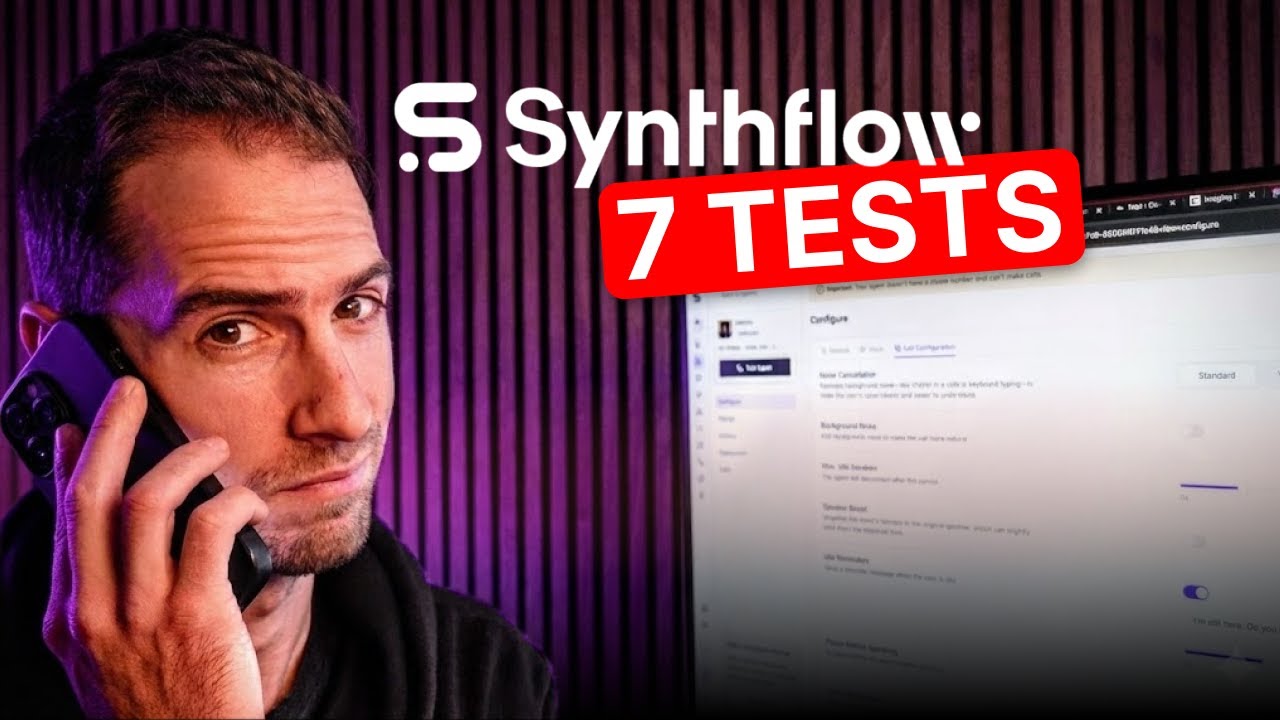
Synthflow is a no-code AI voice agent platform aimed at marketing agencies and non-technical builders. It ships a visual drag-and-drop workflow builder, natural-sounding voices, built-in telephony, and a deep GoHighLevel integration for agencies serving small-business clients.
Why Is Synthflow a Strong Alternative to Sierra AI?
- A $29 on-ramp instead of a sales cycle: Anyone can build and test a voice agent on the Starter plan the same day, which makes Synthflow the polar opposite of Sierra’s enterprise motion.
- No-code agent building: Flows, prompts, and actions are assembled visually, so agencies ship client-facing agents without touching an API.
- Telephony included: Numbers and calling come built in, so a small deployment doesn’t need a separate phone stack to go live.
What Are the Pros & Cons of Synthflow?
| Pros | Cons |
|---|---|
| Visual no-code builder with fast time to first agent | Steep tier jump from $29 straight to $450/month with no middle plan |
| Built-in telephony and white-label options for agencies | Overages at $0.09/min make busy months hard to predict |
| Deep GoHighLevel integration for client work | Built for agent deployment, not for running a full support or sales team |
What Are Synthflow’s Plans & Pricing?
Synthflow pricing starts at $29/month for 50 minutes (monthly billing), and the plans step up quickly:
Synthflow Plans and Pricing
| Plan | Price | Key Features |
|---|---|---|
| Starter | $29/month | 50 minutes, 1 assistant, basic integrations |
| Pro | $450/month | 2,000 minutes, custom actions, GoHighLevel integration |
| Growth | $900/month | 4,000 minutes, advanced workflows |
| Agency | $1,400/month | 6,000 minutes, white-label, multi-client management |
The Tier-Jump Trap
Synthflow bundles every use case into one per-minute product, and the first real plan after the $29 trial tier costs $450. CloudTalk splits the layer in two: a no-code AI Receptionist for inbound triage (50 free minutes on every account, then from $99/month) and sales-led AI Specialists from $349/month for complex outbound workflows. Matching the tool to the workflow keeps costs predictable.
What Are Synthflow’s Customers Saying?
Agencies like the speed from idea to working agent and the white-label options. The recurring complaints are the pricing cliff between Starter and Pro, and voice quality that reviewers describe as good but a step behind the dev-first engines at high volume.
How Do G2 Users Rate Synthflow?
Synthflow holds 4.5/5 on G2 across 1,000+ verified reviews.

5. Bland AI: Best for Developer Teams Scaling Concurrent Inbound and Outbound Calls

What Is Bland AI?
Bland AI is a developer-first voice AI API built for scalable enterprise calling. Teams script agents programmatically and run high concurrent call volumes for inbound answering and outbound campaigns, starting on a free base plan with pay-as-you-go minutes.
Why Is Bland AI a Strong Sierra AI Alternative?
- Free to start, minutes to test: The Start plan costs nothing up front with $0.14/min usage, so a developer can validate an AI calling use case before any commitment.
- Concurrency as a feature: Plans are built around parallel call capacity, which suits outbound-heavy workloads Sierra’s support-centric model doesn’t target.
- Self-hosted options for enterprises: The Enterprise tier offers dedicated infrastructure and compliance controls for teams that need calls kept close.
What Are the Pros & Cons of Bland AI?
| Pros | Cons |
|---|---|
| Free base plan with transparent per-minute rates | Extras stack on top of minutes: transfers, SMS, and outbound attempts all bill separately |
| High concurrent call limits for volume campaigns | Fewer than 10 verified G2 reviews to validate against |
| Programmatic control over every step of the call | Engineering-led setup; non-technical teams need outside help |
What Are Bland AI’s Plans & Pricing?
Bland AI pricing starts at $0.14/minute on the free Start plan, with paid tiers lowering the per-minute rate:
Bland AI Plans and Pricing
| Plan | Price | Key Features |
|---|---|---|
| Start | Free base, $0.14/min | 100 calls/day, 10 concurrent calls, no card required |
| Build | $299/month, $0.12/min | Higher concurrency, still per-minute |
| Scale | $499/month, $0.11/min | Higher concurrency and volume |
| Enterprise | Custom | Dedicated support, SLAs, self-hosted options |
The Cost Stack Trap
The per-minute rate is only the headline. Transfer minutes bill at $0.03 to $0.05, SMS at $0.02 per message, and outbound attempts at $0.015 each, so forecasting a busy campaign month means modeling four meters at once. Teams that want one predictable number tend to compare the alternatives side by side.
What Are Bland AI’s Customers Saying?
Developers praise the API’s flexibility and how quickly outbound campaigns spin up. The caution flags are the thin public review base and billing that’s hard to predict at volume, both worth weighing before moving a production call flow onto it.
How Do G2 Users Rate Bland AI?
Bland AI holds 5/5 on G2, though from fewer than 10 verified reviews, so treat the score as directional.

6. Decagon: Best for High-Growth Consumer Brands Automating Chat, Email, and Voice

What Is Decagon?
Decagon builds AI customer service agents for high-growth consumer and tech brands, with chat, email, and voice treated as first-class channels. Customers include Chime, Duolingo, ClassPass, Rippling, and Notion, and its agents follow operating procedures written in plain language rather than rigid decision trees.
Buyers researching alternatives to Sierra or Decagon are usually choosing between the two most direct rivals in enterprise AI agents, so the honest comparison is fit: Decagon leans toward fast-moving scale-ups, Sierra toward household-name enterprises.
Why Is Decagon a Strong Sierra Alternative for Enterprise AI Agents?
- Decagon Voice ships as a real channel: Phone conversations are handled natively alongside chat and email, so voice isn’t an afterthought bolted onto a chat product.
- Procedures your team maintains: Support teams describe workflows the way they’d brief a new hire, which reduces the vendor dependency that follows white-glove builds.
- Built for spiky consumer volume: Its reference customers run large, unpredictable support loads, exactly where per-outcome economics get uncomfortable.
What Are the Pros & Cons of Decagon?
| Pros | Cons |
|---|---|
| Chat, email, and voice covered by one agent platform | Quote-only enterprise pricing with no published rates |
| Natural-language procedures that support teams maintain themselves | Young platform with a small public review base (about 20 G2 reviews) |
| Proven with high-volume consumer tech brands | Enterprise sales motion; no self-serve way to test it |
What Are Decagon’s Plans & Pricing?
Decagon pricing is quote-only. The company discusses per-conversation and per-resolution models in its own materials but publishes no rates, so plan on a sales process to get numbers:
Decagon Plans and Pricing
| Plan | Price | What’s Included |
|---|---|---|
| Enterprise contract | Custom | AI agents across chat, email, and voice; plain-language workflow tooling; integrations |
Point Solution or Platform?
Decagon automates conversations impressively, but your phone numbers, routing, and human agents still need a home. Before adding another standalone layer, it’s worth understanding how a standalone voice agent compares with an integrated system where AI and agents share one platform.
What Are Decagon’s Customers Saying?
Early reviews are strongly positive: teams highlight resolution quality, fast iteration with plain-language procedures, and responsive deployment support. The caveats are a small review base, pricing you can’t see without a call, and a UI some reviewers find hard to navigate.
How Do G2 Users Rate Decagon?
Decagon holds 4.8/5 on G2, though from a small base of verified reviews.

7. Fin AI: Best for Helpdesk-First Support Teams Adding AI Voice Later
What Is Fin AI?
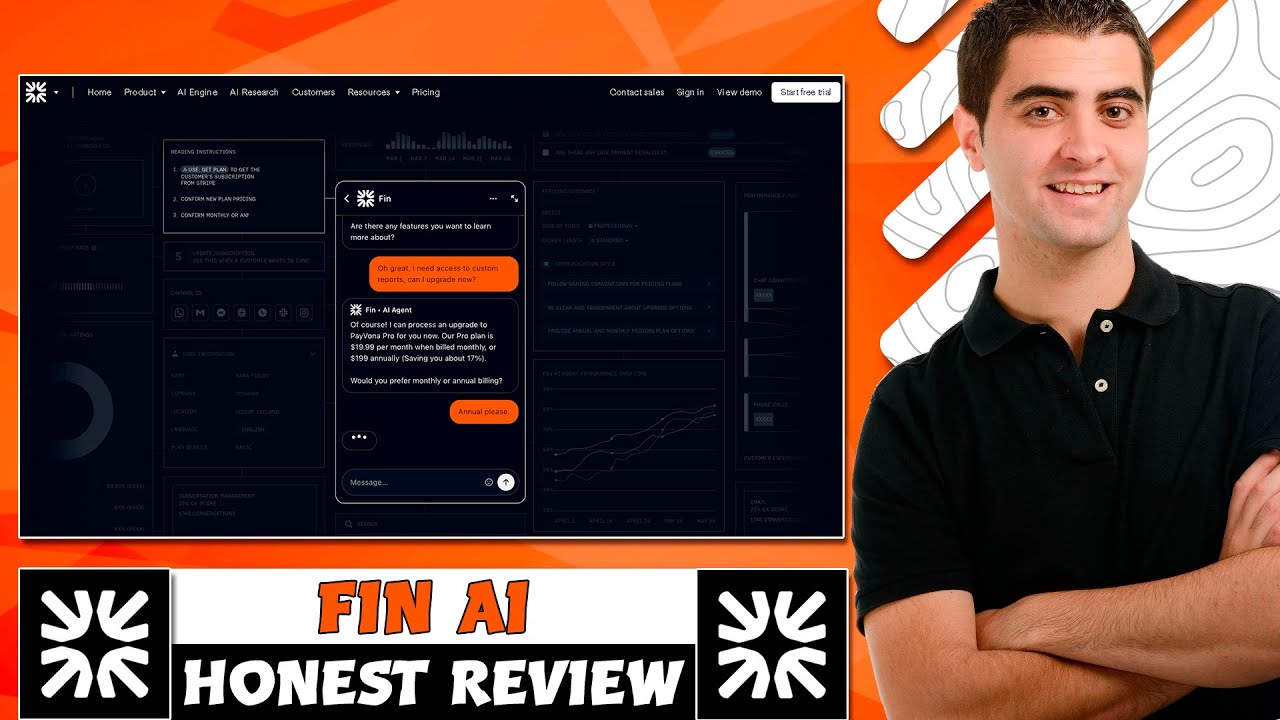
Fin AI is the AI customer service agent formerly known as Intercom Fin, resolving support conversations over chat, email, WhatsApp, and SMS at $0.99 per outcome. Fin Voice, its phone agent, exists but is custom-priced and available to select customers, which is why Fin sits in the helpdesk camp of this list.
Its future is also in motion: Salesforce signed a definitive agreement to acquire Fin for approximately $3.6 billion² in June 2026, expected to close in late 2026 or early 2027.
Why Is Fin AI a Strong Sierra AI Competitor?
- Published, metered pricing: $0.99 per outcome is a number you can model today, the transparency Sierra’s negotiated contracts don’t offer.
- Self-serve on your existing helpdesk: Fin runs inside Intercom, Salesforce, HubSpot, and Zoho setups without a migration project or a white-glove build.
- Best-in-class chat resolution: Fin publishes an average of 76% of support volume resolved end-to-end, with 3,800+ G2 reviews behind it.
What Are the Pros & Cons of Fin AI?
| Pros | Cons |
|---|---|
| Transparent $0.99/outcome pricing with a 14-day trial | Fin Voice is custom-priced, sales-led, and limited to select customers |
| Works inside Intercom and on external helpdesks | Per-outcome metering grows with every ticket the AI resolves |
| Large verified review base (3,800+ on G2) | Roadmap and pricing are open questions while the Salesforce acquisition closes |
What Are Fin AI’s Plans & Pricing?
Fin AI pricing starts at $0.99 per outcome (a resolution, procedure handoff, or disqualification), and the structure looks like this:
Fin AI Plans and Pricing
| Component | Price | What It Covers |
|---|---|---|
| Fin AI Agent | $0.99/outcome | Resolutions, procedure handoffs, disqualifications; 50-outcome monthly minimum on external helpdesks |
| Intercom seats (optional) | $29 to $132/seat/month | Helpdesk, inbox, and workflow tooling around the agent |
| Fin Voice | Custom | AI phone agent for select customers, quoted by sales |
The Meter That Never Stops
Per-outcome pricing means success gets more expensive every month it works: a team resolving 3,000 conversations pays $2,970 before seats and add-ons. And because Fin Voice is gated behind a sales process, the calls your customers make still need a phone system Fin doesn’t provide.
What Are Fin AI’s Customers Saying?
Hundreds of G2 reviewers praise Fin’s quick, accurate chat answers and easy setup. The recurring complaints are high pricing and unexpected bills, delayed human handoffs, and answers that occasionally lean on outdated information.
How Do G2 Users Rate Fin AI?
Fin AI holds 4.5/5 on G2 across 3,800+ verified reviews, the largest review base of any AI-native tool on this list.

8. Salesforce Agentforce: Best for Enterprise Teams Running AI Agents Inside Salesforce
What Is Salesforce Agentforce?
Salesforce Agentforce embeds autonomous AI agents directly into Salesforce, where they act on CRM data, cases, and workflows without leaving the platform. There’s a neat irony for this page: Sierra’s co-founder Bret Taylor once ran Salesforce, and Agentforce is what Salesforce itself now sells against him.
Why Is Agentforce One of the Best Sierra AI Alternatives for Enterprise?
- Agents native to your system of record: Agentforce reads and writes Salesforce objects directly, so resolutions update cases, contacts, and opportunities without an integration layer.
- Published consumption pricing: Flex Credits put a voice action at roughly $0.15 and a standard action at $0.10, numbers a buyer can model without an NDA.
- A roadmap with gravity: With the Fin agreement signed, Salesforce is pulling packaged AI agents into the Agentforce family, making it the safe-harbor pick for Salesforce-first enterprises.
What Are the Pros & Cons of Salesforce Agentforce?
| Pros | Cons |
|---|---|
| Deep native access to Salesforce data and workflows | Consumption pricing is hard to forecast: multi-step conversations burn multiple actions |
| Choice of per-action (Flex Credits) or per-conversation pricing | Assumes a Salesforce ecosystem; value drops sharply outside it |
| Enterprise governance, trust layer, and admin tooling built in | Real deployments are sales-led with credits, add-ons, and editions to reconcile |
What Are Salesforce Agentforce’s Plans & Pricing?
Salesforce Agentforce pricing starts at $0.10 per standard action via Flex Credits, and the published structure looks like this:
Salesforce Agentforce Plans and Pricing
| Component | Price | What It Covers |
|---|---|---|
| Flex Credits | $500 per 100,000 credits | Standard action = 20 credits (~$0.10); voice actions = 30 credits (~$0.15) |
| Conversations model | $2 per conversation | Flat rate for customer-facing agent conversations |
| Agentforce add-ons | $125/user/month | Agent capabilities added to existing Salesforce user licenses |
| Agentforce 1 Editions | From $550/user/month | Bundled editions including 2.5M Flex Credits per org per year |
The Credit Burn-Down Trap
A single phone conversation can trigger several billable actions: a lookup, an update, a routing step, a summary. At 30 credits per voice action, a four-action call costs about $0.60 on Flex Credits, and nothing on the pricing page caps how many actions a hard call takes. Model your worst calls, not your average ones.
What Are Salesforce Agentforce’s Customers Saying?
Reviewers like how naturally agents inherit Salesforce permissions, data, and flows, and enterprise admins praise the governance tooling. The recurring gripes are setup complexity outside simple use cases and difficulty predicting consumption costs before real traffic hits.
How Do G2 Users Rate Salesforce Agentforce?
Salesforce Agentforce holds 4.3/5 on G2 across 1,200+ verified reviews.

9. Aircall: Best for Support Teams Needing Broad App Integrations
What Is Aircall?
Aircall is a cloud business phone system for sales and support teams, known for its 200+ app marketplace and quick setup. It has been adding AI fast: every account now includes 50 free AI Voice Agent minutes per month, with AI Assist coaching features on higher plans.
Why Is Aircall a Strong Sierra AI Alternative?
- A phone system first, AI second: Numbers, IVR, recording, and routing are the core product, so the AI voice agent plugs into infrastructure you already run, the deployment model Sierra can’t offer.
- 200+ integrations out of the box: Helpdesk-heavy teams connect Zendesk, HubSpot, Salesforce, and Intercom without custom work.
- Published per-seat pricing: Plans start at $30/user/month on annual billing, budgetable without a sales cycle. However, Aircall’s plans require a 3-user minimum, something that very tiny teams should keep in mind.
What Are the Pros & Cons of Aircall?
| Pros | Cons |
|---|---|
| Easy setup with a large integration marketplace | 3-seat minimum on every plan (25 seats on Custom) |
| 50 free AI Voice Agent minutes per account, per month | Power Dialer and Salesforce CTI require the $50 Professional plan |
| Unlimited simultaneous outbound calls on all plans | AI Assist coaching and analytics bill as separate per-license add-ons |
What Are Aircall’s Plans & Pricing?
Aircall pricing starts at $30/user/month (Essentials, annual billing, 3-seat minimum), with the following plans:
Aircall Plans and Pricing
| Plan | Price (annual billing) | Key Features |
|---|---|---|
| Essentials | $30/user/month | IVR, call recording, click-to-dial, SMS/MMS, 200+ integrations and API access |
| Professional | $50/user/month | Everything in Essentials + Power Dialer, Salesforce CTI, advanced analytics, smart routing |
| Custom | Custom (25-seat minimum) | Custom onboarding, SLA, single sign-on, API developer support |
The Add-On Ledger
Aircall’s AI story spreads across separate meters: AI Voice Agent minutes beyond the free 50, AI Assist per license, AI Assist Pro per license, and Analytics+ per license. The $30 seat is real, but an AI-heavy team should price the full ledger next to platforms where conversation intelligence is one flat add-on.
What Are Aircall’s Customers Saying?
Reviewers consistently praise how quickly teams onboard and how many tools Aircall connects to. The recurring complaints are call quality wobbles on some routes and costs that climb once AI add-ons and the 3-seat minimum are factored in.
How Do G2 Users Rate Aircall?
Aircall holds 4.4/5 on G2 across 1,600+ verified reviews.

10. Dialpad: Best for Teams Wanting One App for Calls, Meetings, and Messaging
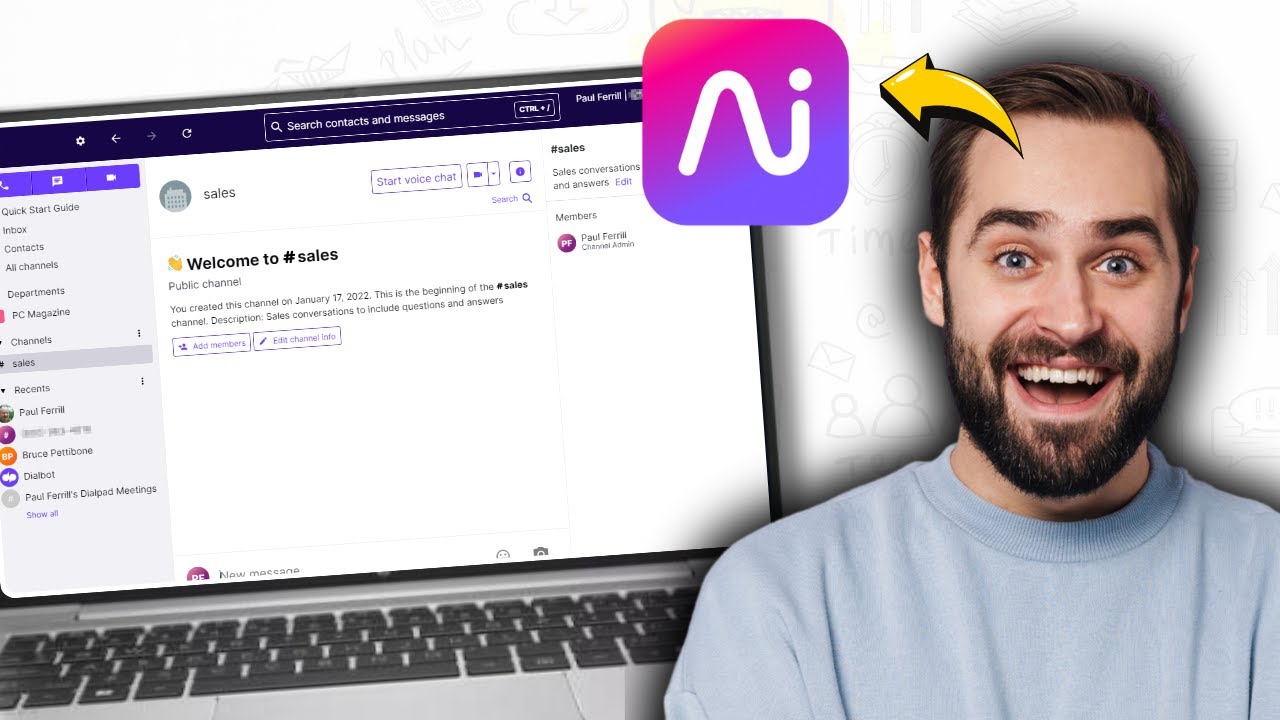
What Is Dialpad?
Dialpad is an AI-powered business communications platform that puts calls, video meetings, and messaging in one app. Dialpad Connect, its business phone product, bakes AI transcription and call summaries into even the cheapest plan, making it the most affordable way on this list to get AI on every call.
Why Is Dialpad a Strong Sierra AI Competitor?
- AI on every call from $15: Live transcription, post-call summaries, and voicemail transcription come with the Standard plan, priced per seat on a public page.
- One app for the whole stack: Calls, meetings, and team messaging share one interface, which suits teams consolidating tools.
- Real-time coaching on higher tiers: Live coach cards and sentiment cues help supervisors step in while the call is still happening.
What Are the Pros & Cons of Dialpad?
| Pros | Cons |
|---|---|
| AI transcription and summaries included from the $15 Standard plan | Call recording and CRM integrations (Salesforce, HubSpot) require Pro at $25/user/month |
| Unified app for calls, meetings, and messaging | The contact center is a separate product, Dialpad Support, from $80/user/month |
| Clean, modern interface that teams adopt quickly | Two product lines with similar names make quotes confusing |
What Are Dialpad’s Plans & Pricing?
Dialpad pricing starts at $15/user/month (Standard, annual billing), with the following tiers available:
Dialpad Connect Plans and Pricing
| Plan | Price (annual billing) | Key Features |
|---|---|---|
| Standard | $15/user/month | Unlimited calling, AI transcription, AI call summaries, SMS, voicemail |
| Pro | $25/user/month | Everything in Standard + call recording, CRM integrations, international numbers |
| Enterprise | Custom | SLA, advanced admin and analytics, priority support |
The Two-Product Trap
The $15 headline price buys the business phone; the contact center is a separate quote. Queues, agent monitoring, and real-time coaching live in Dialpad Support, which starts at $80/user/month, more than five times the Connect price. Check which product your quote actually names before comparing per-seat platforms.
What Are Dialpad’s Customers Saying?
Reviewers call out the accuracy of the AI transcriptions and the convenience of one app for everything. Complaints focus on features gated behind Pro, and on support responsiveness for smaller accounts.
How Do G2 Users Rate Dialpad?
Dialpad holds 4.4/5 on G2 across 4,200+ verified reviews on its platform-wide listing.

What Real Users Are Saying about Sierra AI and Its Alternatives
Pricing pages tell you what a tool does. Real user posts tell you whether it works as claimed, and with Sierra, whether anyone outside the Fortune 500 can even buy it. Here’s what buyers weighing Sierra AI competitors are saying across Reddit, Quora, and G2.
What Redditors Are Saying about Sierra AI Alternatives
We reviewed active threads in r/AI_Agents, r/CustomerSuccess, and r/AI_Agent_Reviews where buyers compare Sierra AI with the rest of the market:
- Sierra AI pricing opacity: A thread in r/AI_Agents asking “How much does Sierra AI cost?” drew one telling answer: reported minimum contracts around $150k annually with resolution pricing near $1 per ticket, and no official figures anywhere. The asker’s frustration, budgeting a tool whose price is invisible, is exactly why buyers gravitate toward transparent AI pricing published on a page.
- AI for burned-out support teams: In r/CustomerSuccess, a 15-person team drowning in ticket volume asked which AI tools actually help. The sober replies noted AI won’t fix personnel problems, named Decagon and Sierra as built for regulated industries, and stressed that customers still want a human when things break. That’s the argument for pairing AI with human agents assisted by AI on one platform instead of replacing them.
- AI receptionist and appointment-setter shortlists: An r/AI_Agent_Reviews breakdown comparing Retell, Bland, Vapi, Synthflow, and PolyAI kept returning to one requirement: the agent should finish the booking on the call instead of sending a calendar link. That’s the standard any AI call answering service has to meet.


What Quora Users Are Asking about Sierra AI Alternatives
Quora’s questions skew practical: which platforms handle phone support well, and which AI tools earn their keep day to day. The fact that Sierra isn’t mentioned (and neither are other exclusively AI-centric tools) only shows that for most teams, AI calling isn’t something they shop for as a separate product. It’s a capability they expect from the phone system they were already buying, which is why the answers below name platforms with AI built in, not standalone agents.
- Call center software for Zendesk: Users comparing phone systems for Zendesk phone support named CloudTalk for fast, easy setup with calls and tickets syncing cleanly, while Aircall, RingCentral, and Ringover came up as harder to start or more expensive. The thread doubles as a checklist for any Zendesk call center integration.
- The AI tools people actually use: In a thread on favorite AI tools, one answer names CloudTalk as their most-used AI tool for calls and customer communication, citing smart call routing, AI call summaries, and CRM integrations cutting manual work. For many teams, the highest-ROI AI is the one attached to their phone line.
- Auto dialer plus CRM integration: A researcher who tested 20+ VoIP and call center tools recommends CloudTalk, Aircall, JustCall, and RingCentral for keeping calls, notes, and contacts synced with HubSpot, Salesforce, Pipedrive, and Zoho, noting CloudTalk, Aircall, and JustCall come up most for sales teams and sales dialer workflows.


How CloudTalk, Sierra AI, Fin AI, and Synthflow Compare on G2
G2’s comparison tool gives the most level view of how the main Sierra competitors stack up. Its verified category scores for the four platforms in this page’s comparison set show where each one earns its rating:
- Ease of use and admin: CloudTalk leads ease of use at 9.1 against Fin AI’s 8.9, Sierra AI’s 8.8, and Synthflow’s 8.5, and the gap widens on ease of admin: CloudTalk 8.9 versus Sierra AI’s 7.6.
- Meets requirements and setup: CloudTalk and Fin AI tie at 8.7 on meets requirements, ahead of Synthflow (8.5) and Sierra AI (8.4). On ease of setup, CloudTalk’s 8.9 tops Sierra AI’s 8.4 and Synthflow’s 8.1.
- Support and product direction: Sierra AI’s small reviewer base rates its support highest at 9.0, ahead of CloudTalk (8.7), Fin AI (8.6), and Synthflow (7.8). Product direction goes to the AI-natives: Synthflow 9.4 and Sierra AI 9.3, with CloudTalk and Fin AI level at 8.8.

CloudTalk vs. Sierra AI: Final Head-to-Head Comparison
The core split is simple: Sierra AI builds managed, outcome-priced AI agents for enterprise customer experience programs, and CloudTalk is a business phone system with AI built in. One sells the agent, the other runs the calls.
Here’s the row-by-row version:
CloudTalk vs. Sierra AI: A Quick Overview
| Feature | CloudTalk | Sierra AI | Winner |
|---|---|---|---|
| Starting Price | $25/user/month (Starter) | Custom, outcome-based contracts | CloudTalk |
| Pricing Transparency | Every plan and AI add-on on a public page | Quote-only; rates negotiated per deployment | CloudTalk |
| Free Trial | 14 days | None; sales-led evaluations | CloudTalk |
| Deployment Speed | Self-serve; live in hours | White-glove build measured in weeks | CloudTalk |
| Managed Enterprise Builds | Sales-led AI Voice Agents from $349/month | Dedicated teams building and tuning agents end to end | Sierra AI |
| Calling Infrastructure | Numbers, queues, routing, dialers included | Voice channel only; phone system sold separately | CloudTalk |
| Omnichannel AI Resolution | Voice-first by design | One agent across chat, email, WhatsApp, SMS, voice, and ChatGPT | Sierra AI |
| Outbound Dialers | Power, Parallel, Smart & Preview Dialers | None | CloudTalk |
| CRM Integrations | 100+ two-way integrations from Essential | Custom enterprise integrations per build | CloudTalk |
| Compliance Certifications | GDPR-ready with secure call handling | SOC 2, ISO 27001, ISO 42001, HIPAA, PCI DSS, FedRAMP | Sierra AI |
| Global Number Coverage | 160+ countries | No phone numbers | CloudTalk |
| Fit for SMB and Mid-Market | Core market | Out of scope for most sub-enterprise budgets | CloudTalk |
| G2 Rating | 4.4/5 (1,800+ reviews) | 4.1/5 (fewer than 20 reviews) | CloudTalk |
The Structural Question
Sierra AI wins its rows fairly: no one on this list matches its omnichannel scope or its certification wall. But every Sierra win assumes an enterprise budget and a phone system bought somewhere else. If the job is AI calling for a team that has to budget this quarter, run your own volume through a free trial before entering anyone’s sales cycle.
How to Choose the Right Sierra AI Alternative for Your Business
The right Sierra AI alternative for business use depends on where your volume lives (phone or chat), your team size, your compliance needs, and whether AI costs need to be predictable. The questions below map the shortlist to your situation.
What Are the Best Sierra AI Alternatives for Small Businesses?
CloudTalk and Synthflow are the best Sierra AI alternatives for small businesses. Synthflow’s $29 starter tier suits a first experiment, while CloudTalk pairs per-seat plans from $25/user/month with AI voice agents built for SMBs that answer real calls from day one, no enterprise contract required.
What Is the Best Sierra AI Alternative for Enterprises With Strict Compliance Requirements?
PolyAI and Salesforce Agentforce are the strongest Sierra AI alternatives for enterprises with strict compliance requirements: PolyAI runs voice AI inside banks and insurers, and Agentforce inherits Salesforce’s governance stack. For regulated teams that mainly need compliant calling, CloudTalk’s AI voice agents for healthcare cover healthcare-grade use cases like appointment reminders at a fraction of those budgets.
Which Sierra AI Alternative Offers the Best Pricing and API Scalability?
Retell AI offers the best raw API scalability among Sierra AI alternatives, with published per-minute rates and high concurrency for engineering teams. For pricing predictability at scale, CloudTalk is the stronger pick: flat per-seat plans plus fixed AI voice pricing mean volume spikes don’t rewrite the invoice.
What Are the Best Sierra AI Alternatives for Enterprise Voice?
PolyAI and CloudTalk are the best Sierra AI alternatives for enterprise voice, from opposite directions. PolyAI replicates Sierra’s white-glove model with a voice-only focus, while CloudTalk’s sales-led AI Voice Agents (from $349/month) handle high call volumes on infrastructure your team controls from a dashboard.
What Is the Best Sierra AI Alternative for Ecommerce?
CloudTalk is the best Sierra AI alternative for ecommerce brands whose customers call about orders, returns, and deliveries. Its AI voice agents for ecommerce answer around the clock, and Shopify, HubSpot, and Zendesk sync from the Essential plan so every call lands on the right customer record.
What Is the Best Sierra AI Alternative for Growing Teams?
CloudTalk is considered the best Sierra AI alternative for growing teams, especially in sales and support. Everything that gets expensive as you scale stays flat: seats from $25/user/month, AI add-ons at fixed monthly prices, and numbers in 160+ countries you add from a dashboard. While Sierra’s negotiated contract grows opaquely, CloudTalk’s bill grows only when you hire. Start with the 14-day free trial, connect your CRM, and test the AI on live call volume.
Outgrowing Quote-Only AI Vendors?
Ready to Make the Switch from Sierra AI?
If you’re a household-name brand automating millions of conversations with a seven-figure CX budget, Sierra AI deserves its shortlist spot. The math changes when the job is AI calling: real phone numbers, real routing, and an AI bill your finance lead can read before signing.
For those teams, CloudTalk replaces the negotiated contract with a platform: calls, numbers, dialers, human agents, and AI features that show up on the invoice at the same price every month.
Here’s what the switch from Sierra AI to CloudTalk actually gets you:
-
Transparent per-seat pricingThree tiers from $25 to $49/user/mo on annual billing, with AI add-ons at published flat prices instead of negotiated outcome fees.
-
Coverage across 160 countriesBuy, port, and manage international numbers from the dashboard, backed by globally distributed infrastructure.
-
AI that’s easy to budget50 free AI Receptionist minutes on every account (then from $99/mo), Conversation Intelligence at $9/user/mo, and custom AI Voice Agents from $349/mo.
-
100+ integrations from EssentialHubSpot, Zendesk, Intercom, and the rest of your stack sync both ways, with Salesforce deep-sync on Expert.
-
5,500+ businesses on boardBacked by 99.999% uptime and 24/7 chat and email support on every plan (+ phone on Expert).
Join 5,500+ Businesses That Already Made the Switch
Sources:
- CNBC, Bret Taylor’s Sierra raises nearly $1B in latest AI capital push (May 4, 2026).
- Business Wire, Salesforce Signs Definitive Agreement to Acquire Fin (June 15, 2026).
Frequently Asked Questions about Sierra AI Alternatives
Direct answers to the questions buyers ask most when comparing Sierra AI with other AI agents and calling platforms.


