14 Best US Virtual Phone Number Providers for Growing Businesses in 2026
TL;DR:
We reviewed 30+ most popular providers of US virtual numbers for 1 based on call quality, US number availability, SMS support, CRM integrations, routing features, pricing, and scalability.
We prepared detailed breakdowns of 14 brands, but if you came for quick answers, here’s our top 10 virtual phone number providers to make and receive calls in the US:
-
CloudTalk — best overall US virtual number provider for scaling SMBs that need local trust, CRM visibility, automation, and global growth
-
Quo (formerly OpenPhone) — best for small businesses that need shared numbers, team texting, and fast setup
-
Nextiva — best for reliability and larger teams that need robust features and strong support
-
RingCentral — best unified communications platform for mid-market and enterprises
-
Grasshopper — best for solopreneurs needing multiple extensions and a second line
-
Google Voice — best for Google Workspace-based calling with basic workflows
-
Dialpad — best for AI transcription and unified calling/meetings
-
JustCall — best for outbound sales teams calling US leads at scale
-
Ooma Office — best budget-friendly business VoIP with a free number included
-
AVOXI — best for inbound-focused international virtual numbers with advanced routing
This guide also breaks down US number types, pricing models, SMS compatibility, and real-world use cases, so you can choose a US virtual phone number provider that works today…and won’t limit you as your team scales in 1.
The US is one of the biggest growth markets in the world. It’s also one of the easiest to lose leads in, without even realizing it.
American buyers expect businesses to sound local, be reachable instantly, and respond fast.
But there’s a problem most scaling teams don’t see until it’s too late: people simply don’t answer calls that feel unfamiliar. In fact, Pew Research Center found that 80% of Americans don’t generally answer their cellphone when an unknown number calls.¹
That means if your outreach shows up as foreign, unrecognized, or “unknown,” you might be losing 8 out of every 10 leads.
The good news is you don’t need a physical US office to look and sound local. For most scaling SMBs, a US virtual phone number is the fastest way to build trust, boost pickup rates, and route calls intelligently across time zones.
Now that you know why you need a US virtual number, let’s discover the 14 best US virtual phone number providers for scaling SMBs…and the ultimate solution that fits how your team works today and as you grow in 1 and beyond.

Build U.S. Presence Without a Local Office

How We Chose the Best US Virtual Phone Number Providers for SMBs
Choosing a virtual phone number provider can get quite overwhelming. That’s why we kept this guide practical and focused on what actually matters for expanding businesses.
To build our final 14, we reviewed 30+ US virtual phone number providers, from small-business apps to enterprise UCaaS platforms and global virtual number players.
We also analyzed verified user reviews (mainly from G2) to understand how these tools perform in real sales and support environments.
We narrowed the list down using six core criteria:
-
Availability of US local or toll-free numbers (the most important types for sales and support)
-
Call quality, routing options, and reliability
-
CRM and helpdesk integrations
-
Analytics, reporting, and call visibility
-
Pricing transparency and scalability
-
SMS compatibility and compliance readiness (A2P, toll-free verification, etc.)
Most importantly, we focused on fit for scaling SMBs. Not enterprise-only platforms with heavy implementation requirements, and not “solo tools” that teams outgrow in a year.
Why Trust Our Software Reviews?
Over the last decade, we’ve helped over 30,000 professionals find and implement smarter communication tools.
We’ve reviewed hundreds of products, analyzed thousands of verified reviews from business-relevant platforms like G2 and Capterra, and drawn insights from real user discussions on forums like Reddit or Quora.
In the past year alone, we published 1,000+ articles, all written and reviewed by humans, for humans, to provide reliable, data-backed insights you can trust.
Learn how we keep our content integrity and our software review methodology.
Top 14 US Virtual Phone Number Solutions in 2026
Before we break down each provider in detail, here’s a quick side-by-side comparison table of the best US virtual phone number providers.
It shows who each platform is best for, what US virtual number types they offer, and how pricing typically works.
Comparison Table: Best American Virtual Phone Number Providers in 2026
| Number Provider | Best for | Number Types | Monthly Price |
|---|---|---|---|
| CloudTalk | Scaling SMBs that need a US virtual phone number plus CRM syncing, smart routing, AI automation, and clear analytics as they grow. | Local (can be enabled for 2-way SMS) Toll-free | Numbers: 1 free number included, extra numbers at just $6 Platform: from $19/user |
| Quo | Small businesses that want shared US numbers, team texting, and fast setup with a modern interface. | Local Toll-free | Numbers: 1 included/user; extra numbers at ~$5 Platform: from ~$15/user |
| Nextiva | Bigger teams and enterprises that prioritize reliability and support and want a robust US business phone system for larger rollouts. | Local Toll-free Vanity (availability-based) | Numbers: usually included Platform: from ~$15/user |
| RingCentral | Mid-market and enterprise teams that want a full unified communications suite with US numbers and advanced admin controls. | Local Toll-free Vanity (availability-based) | Numbers: typically included (1 per user) Platform: from ~$20/user |
| Grasshopper | Solopreneurs who need a simple US virtual number with multiple extensions and business/personal separation. | Local Toll-free Vanity | Numbers: included (1–5 depending on plan) Platform: from ~$14/user |
| Google Voice | Small teams already on Google Workspace that need basic US calling with minimal setup. | Local | Numbers: included with license Platform: from $10/license (+ requires a Workspace subscription) |
| Dialpad | Teams that want AI transcription and unified calling/meetings in one platform with US numbers. | Local Toll-free | Numbers: typically included (1 per user) Platform: from ~$15/user |
| JustCall | Outbound sales teams that want US local caller ID, dialer automation, and CRM-driven SMS follow-ups. | Local Toll-free | Numbers: 1 local number per user usually included; additional US numbers cost extra Platform: from ~$29/user |
| Ooma Office | Budget-conscious SMBs that want a reliable US VoIP system with core business features and no long contracts. | Local Toll-free | Numbers: included Platform: from ~$19.95/user |
| AVOXI | Inbound-heavy teams that need reliable US numbers with advanced routing and global coverage. | Local Toll-free | Numbers: from ~$9.99 Platform: usage-based or quote-based |
| Phone.com | SMBs that want flexible pricing and an easier path to vanity numbers for marketing and call tracking. | Local Toll-free Vanity | Numbers: 1 included; extra numbers cost more Platform: from ~$12.99/user |
| Vonage | Technical teams that want programmable voice and the ability to build custom calling workflows via APIs. | Local Toll-free | Numbers: priced separately (often quote-based) Platform: from ~$19.99/user |
| Global Call Forwarding | Businesses that mainly need to route inbound US calls to teams or call centers abroad. | Local Toll-free Vanity (availability-based) | Numbers: from ~$7.95 Platform: usage-based |
| 8×8 | Global businesses that want US numbers as part of a unified communications platform with international reach. | Local Toll-free Vanity (availability-based) | Numbers: typically included Platform: from ~$15/user |
1. CloudTalk — Best Overall Virtual US Phone Number Provider for Scaling SMBs

Best for:
Scaling SMBs expanding into the US that need local trust, CRM visibility, automation, and predictable scaling across regions and time zones—without opening local offices.
Why CloudTalk:
CloudTalk is not just a provider of US virtual phone numbers. It’s widely recognized as the best cloud-based call center software for growing teams that treat calling as the source of revenue.
For SMBs entering or expanding in the US, CloudTalk solves multiple problems at once: sounding local with the right +1 US area codes, handling calls intelligently across time zones, and keeping sales and support data connected to the rest of your workflows.
Unlike most VoIP solutions, CloudTalk is designed to scale from a few agents to multi-region or multi-country teams without forcing you into a complex platform switch later.
Types of US virtual numbers:
-
Local (geographic) numbers with US area codes across major cities and states
-
Toll-free numbers (800, 888, 877, 866, 855, 844, 833)
-
Local numbers can be SMS and WhatsApp-enabled
Pricing (numbers & plans):
-
US virtual numbers: just $6/number/month
-
Platform plans: from $19 (NA & LATAM) or $25/user/month (rest of the world)
-
Unlimited calling packages available for predictable scaling
Key features for scaling SMBs:
-
Automatic outbound number matching (automatically shows US prefixes to your US leads)
-
Advanced call routing (time-based, skill-based, and geographic routing)
-
Virtual receptionists & multi-level IVR (with custom menus and fallbacks)
-
AI agents handling routine calls like lead qualification, FAQs, callbacks, or CSAT collection
-
24/7, multi-lingual coverage (60+ languages available) models with smart, condition-based routing options
-
Crystal-clear call quality with 99.999% uptime across all covered regions
-
Conversation Intelligence add-on with AI call summaries, sentiment analysis, and smart notes
-
-
Real-time dashboards & live agent monitoring
-
Global coverage: virtual business numbers in 160+ countries
Platform limitations:
-
Advanced AI features like Voice Agents and Conversation Intelligence are add-ons rather than included in base plans (still well worth the investment)
-
Built for fast-scaling SMBs and mid-market teams, not enterprises that require on-premise PBX or carrier-negotiated contracts
What real users say:
-
G2 rating: 4.4/5 (1,600+ reviews)
-
Real experience: Users consistently praise CloudTalk for ease of setup, CRM integrations depth, AI-powered workflows, reliable global calling, and complete call visibility.
CloudTalk offers a clean and intuitive interface, excellent call quality, and seamless CRM integrations. Its real-time analytics, global virtual numbers, and quick setup make it easy to manage and scale customer communication.
CloudTalk really helped us in our outbound and inbound calling needs. It truly helped us maintain a good relationship with our customers with no buffers in communication. Their number buying process is also smooth. Highly recommend.
Try a US Virtual Number, Without the Commitment
2. Quo — Best for Small Businesses and Growing Teams

Best for:
Small businesses and growing teams that want shared US numbers for collaboration, team texting, and a fast, modern setup without contact-center complexity.
Why Quo:
Quo (formerly known as OpenPhone) is built for modern SMB teams that want a simple way to handle calls and texts as a group. It’s especially strong for shared numbers and inbox-style collaboration. This makes it easier for small teams to reply quickly, assign conversations, and keep customers from falling through the cracks.
For teams that need a virtual American phone number primarily for US calling and business texting, Quo is one of the cleanest and easiest tools to adopt.
Types of US virtual numbers:
-
Local
-
Toll-free
Pricing (numbers & plans):
-
Quo plans start at $15/user/month
-
One US number typically included per user
-
Additional US numbers: from $5/number/month
Key features for scaling SMBs:
-
Shared phone numbers for teams
-
Unlimited US/Canada calling and texting
-
Internal notes, tagging, and assignment
-
Basic call routing and business hours logic
-
App integrations (tier-dependent)
-
AI features (tier-dependent)
-
Global coverage: local numbers for US and Canada only
Platform limitations:
-
Not ideal for high-volume support teams or multi-region routing complexity (local numbers available only in US and Canada, toll-free numbers only for NA)
-
Less depth for agent analytics and queue performance reporting
What real users say:
-
G2 rating: 4.7/5 (3,200+ reviews)
-
Real experience: Quo users highlight ease of use, team collaboration features, and modern texting workflows.
3. Nextiva — Best for Reliability and Larger Teams Scaling towards the Enterprise Level

Best for:
Growing SMBs and mid-market teams that prioritize uptime, call quality, and strong customer support, especially when rolling out VoIP across larger departments.
Why Nextiva:
Nextiva is a well-known US VoIP provider with a strong reputation for reliability. It’s a good option for larger teams that want an all-in-one business phone system with admin controls, call analytics, and a broad feature set.
For scaling businesses that mainly need US calling, internal collaboration features, and predictable performance, Nextiva is often considered a safe choice.
Types of US virtual numbers:
-
Local
-
Toll-free
-
Vanity (availability-based)
Pricing (numbers & plans):
-
Nextiva pricing starts at $15/user/month
-
One US number per user included in the plan
-
Additional numbers and toll-free options cost extra
Key features for scaling SMBs:
-
Strong uptime and call quality
-
Multi-level auto-attendant and IVR
-
Call queues and ring groups
-
Team collaboration tools (chat/video depending on plan)
-
CRM integrations (tier-dependent)
-
Call analytics and reporting
-
Global coverage: Nextiva doesn’t promote how many countries they offer numbers for
Platform limitations:
-
Can become expensive as you upgrade tiers for advanced features
-
Some advanced integrations and analytics require higher plans
-
Heavier UCaaS approach may be overkill for smaller sales teams
What real users say:
-
G2 rating: 4.5/5 (3,400+ reviews)
-
Real experience: Nextiva users praise reliability and support, but mention pricing increases and feature gating at higher tiers.
4. RingCentral — Best Unified Communications Provider for Mid-Market and Enterprise

Best for:
Growing businesses and enterprise teams that need a full unified communications platform (voice, video, messaging) with advanced administration and reliability.
Why RingCentral:
RingCentral is a leader in unified communications. It’s best for teams that want a full UCaaS suite rather than a calling-first tool.
For businesses scaling across multiple departments and needing centralized user management, compliance features, and deep integrations, RingCentral offers a mature and highly capable platform.
Types of US virtual numbers:
-
Local
-
Toll-free
-
Vanity (availability-based)
Pricing (numbers & plans):
-
RingCentral plans start at $20/user/month
-
One US number per user is typically included
-
Additional numbers cost extra
Key features for scaling SMBs:
-
Unified voice + video + messaging
-
Advanced admin controls and user provisioning
-
Call routing, IVR, and auto-attendant
-
Call recording and voicemail
-
Integrations (Salesforce, HubSpot, Microsoft Teams, and more)
-
Call analytics and reporting
-
Global coverage: virtual numbers for 99+ countries
Platform limitations:
-
More expensive than SMB-first virtual phone number providers
-
Setup and configuration can feel heavy for small teams
-
Some features require higher tiers or add-ons
What users say:
-
G2 rating: 4.3/5 (2,800+ reviews)
-
Real experience: RingCentral users highlight reliability and features, but mention pricing and complexity compared to simpler tools.
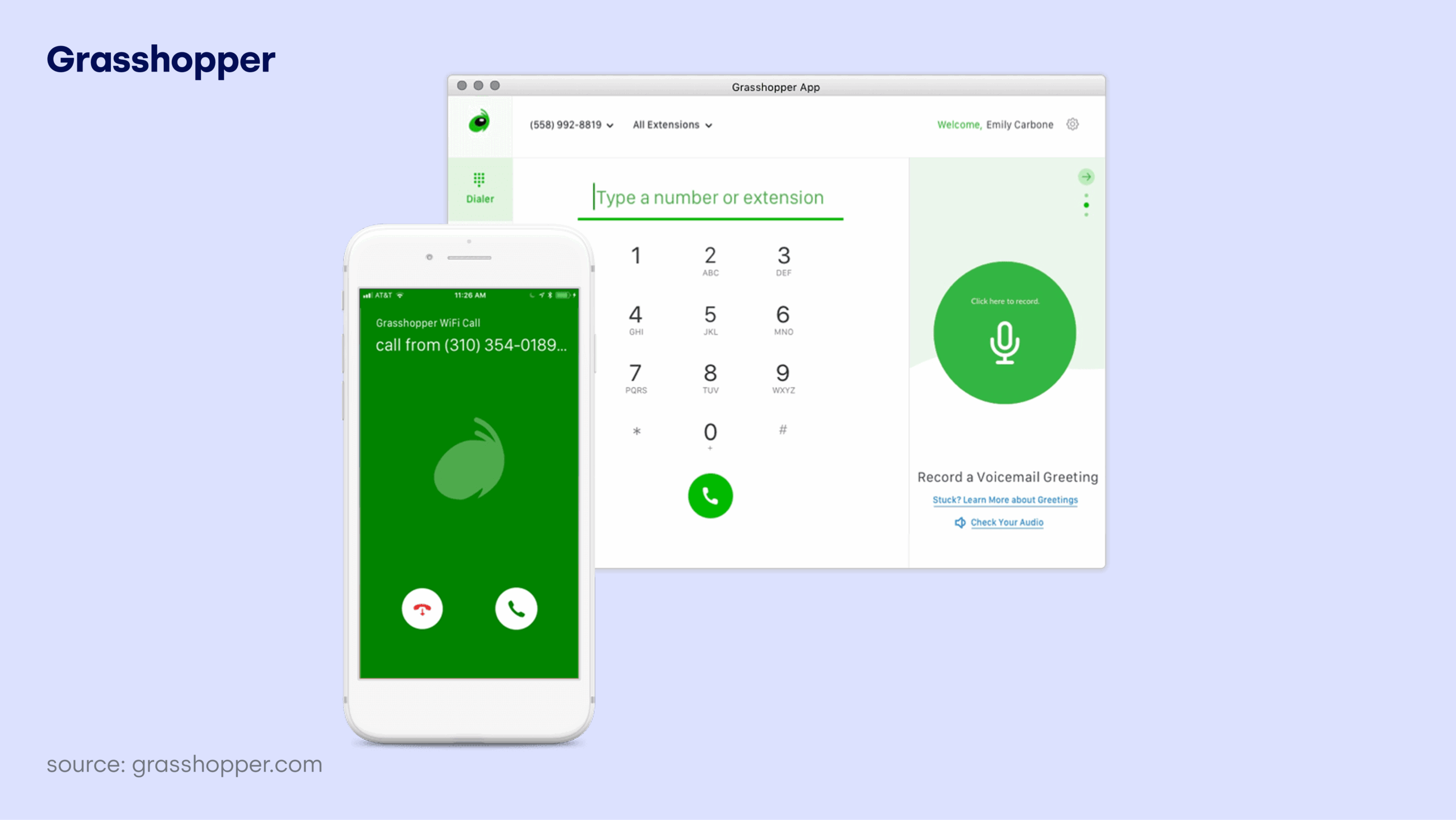
5. Grasshopper — Best for Solopreneurs and Freelancers Needing Extensions
Best for:
Solopreneurs and micro-businesses that want a simple US virtual phone number with multiple extensions and business/personal separation.
Why Grasshopper:
Grasshopper is designed for simplicity. Instead of a full VoIP system for teams, it focuses on giving entrepreneurs and freelancers presence with one number, extensions, voicemail, and call forwarding.
If you need a virtual cell phone number for a small business and don’t require CRM workflows, advanced routing, or team analytics, Grasshopper is a straightforward option.
Types of US virtual numbers:
-
Local
-
Toll-free
-
Vanity (availability-based)
Pricing (numbers & plans):
-
Grasshopper pricing starts at $14/user/month
-
Numbers are included based on plan (1–5)
Key features for scaling SMBs:
-
Multiple extensions
-
Business hours and call forwarding
-
Voicemail transcription
-
Custom greetings
-
Mobile and desktop apps
-
Unlimited minutes on most plans
-
Global coverage: virtual numbers for US and Canada only
Platform limitations:
-
Limited integrations and automation
-
Not built for teams that need CRM sync, analytics, or call center workflows
-
Routing and reporting are basic
What users say:
-
G2 rating: 3.9/5 (150+ reviews)
-
Real experience: Grasshopper users like its simplicity and extensions, but mention limitations for teams and integrations.
6. Google Voice — Best for Simple Google Workspace-Based Calling

Best for:
Small teams already using Google Workspace that need basic calling without advanced routing, analytics, or call center features.
Why Google Voice:
Google Voice is simple and dependable, and it works seamlessly inside the Google ecosystem. For small teams that mainly want a US number for straightforward calling and voicemail, it’s an easy option, especially when Gmail and Calendar workflows matter more than advanced call handling.
That said, it’s not designed for structured sales or support operations where routing, reporting, and CRM visibility are critical.
Types of US virtual numbers:
-
Local (availability varies by region)
Pricing (numbers & plans)
-
Requires Google Workspace subscription
-
Google Voice licenses: start at $10/license/month
-
US numbers are included with the license (if supported in your region)
Key features for scaling SMBs:
-
Basic calling and voicemail
-
Voicemail transcription
-
Spam filtering
-
Easy setup and admin controls
-
Gmail and Calendar integration
-
Mobile and desktop apps
-
Global coverage: the number of supported countries not publicly promoted
Platform limitations:
-
No advanced call routing or multi-level IVR
-
Limited analytics and reporting
-
Not suitable for call centers or outbound sales teams
-
You can’t use Google Voice without a Google Workspace subscription
What users say:
-
G2 rating: 4.1/5 (only 150+ reviews)
-
Real experience: Users love simplicity and Google integration, but note limitations for serious sales/support workflows.
7. Dialpad — Best for Teams Prioritizing AI Transcription and Unified Calling

Best for:
Teams that value AI call transcription and want calling, meetings, and messaging in one unified tool.
Why Dialpad:
Dialpad stands out for real-time transcription and AI insights during calls. It’s a good fit for teams that want visibility into conversations and basic call analytics without running a full contact center platform.
For teams that want a modern UCaaS product with AI built in, Dialpad is often a strong contender.
Types of US virtual numbers:
-
Local
-
Toll-free
Pricing (numbers & plans):
-
Dialpad plans start at $15/user/month
-
One US phone number per user is typically included
-
Toll-free numbers may cost extra depending on plan
Key features for scaling SMBs:
-
AI summaries and keyword tracking
-
Unified calling and meetings
-
CRM integrations (tier-dependent)
-
Desktop and mobile apps
-
Call recording and call analytics
-
Global coverage: virtual numbers for 50+ countries
What users say:
-
G2 rating: 4.4/5 (4,400+ reviews)
-
Real experience: Dialpad users praise AI transcription and usability, but note limitations in routing complexity and pricing at higher tiers.
8. JustCall — Best for Outbound Sales Teams Calling US Leads at Scale

Best for:
Sales teams scaling outbound calling and SMS follow-ups in the US, with CRM-driven workflows and dialer automation.
Why JustCall:
JustCall is built around sales productivity. It helps reps reach more US prospects using local caller ID, automated dialing, and strong CRM integration.
For SMBs running outbound campaigns into the US, JustCall can improve pickup rates and increase rep efficiency, especially when SMS follow-ups are part of the core workflow.
Types of US virtual numbers:
-
Local
-
Toll-free
Pricing (numbers & plans):
-
JustCall plans start at $29/user/month
-
One local number per user is usually included
-
Additional US numbers or toll-free numbers cost extra
Key features for scaling SMBs:
-
Local caller ID for US outreach
-
Power and predictive dialers
-
CRM integrations (HubSpot, Salesforce, Pipedrive, and more)
-
SMS campaigns and automated follow-ups
-
Call recording and tagging
-
Analytics focused on sales activity
-
Global coverage: virtual numbers available in 70+ countries
Platform limitations:
-
Inbound routing and IVR logic is limited compared to contact-center platforms
-
Analytics are sales-focused rather than support-oriented
-
Not ideal for teams needing 24/7 inbound coverage with complex routing
What users say
-
G2 rating: 4.3/5 (2,200+ reviews)
-
Real experience: JustCall users enjoy outbound workflows and CRM sync, but mention limits for inbound support and routing complexity.
9. Ooma Office — Best Budget Platform for Basic US Business Calling

Best for:
Budget-conscious SMBs that need a reliable business phone system with predictable pricing and no long-term contracts.
Why Ooma Office:
Ooma Office is meant for small businesses that want core VoIP features like a virtual receptionist, call forwarding, voicemail, and mobile apps at a cost-friendly price point.
It’s a good fit for teams that want a traditional business phone setup without contact-center-level complexity.
Types of US virtual numbers:
-
Local
-
Toll-free
Pricing (numbers & plans):
-
Ooma plans start at $19.95/user/month
-
A US phone number is typically included
-
Toll-free numbers may be included or priced based on usage/plan
Key features for scaling SMBs:
-
Virtual receptionist and auto-attendant
-
Ring groups and call queues (tier-dependent)
-
Call forwarding and voicemail-to-email
-
Mobile and desktop apps
-
Basic call analytics
-
No long-term contracts
-
Global coverage: Ooma doesn’t say how many countries they offer virtual numbers for
Platform limitations:
-
Limited deep CRM integrations compared to SMB-first cloud call centers
-
Analytics and reporting are basic
-
Less flexibility for complex routing and high-volume teams
What users say:
-
G2 rating: 4.6/5 (130+ reviews)
-
Real experience: Ooma users appreciate the platform’s ease of use, but mention limitations for integrations and advanced analytics.
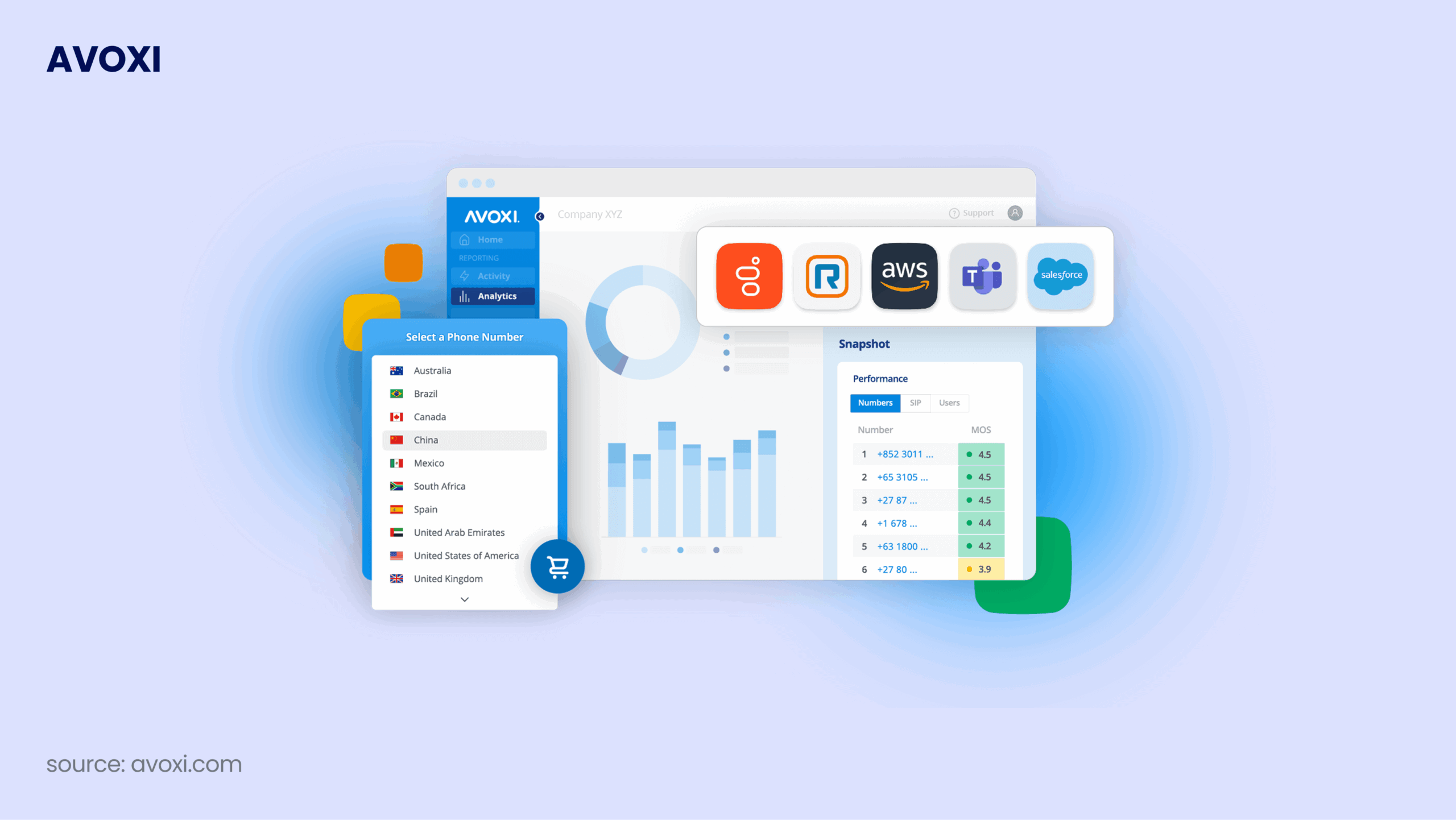
10. AVOXI — Best for Inbound-Focused Teams that Need to be Reached Internationally
Best for:
Inbound-heavy teams that need reliable US numbers with strong routing and IVR capabilities.
Why AVOXI:
AVOXI is very decent at inbound calling and routing. It’s often used by companies that want enterprise-grade inbound handling without managing telecom infrastructure.
For teams where the US number is primarily a customer support entry point, and routing reliability matters more than CRM-driven sales workflows, AVOXI is a strong fit.
Types of US virtual numbers:
-
Local
-
Toll-free
-
Vanity (availability-based)
Pricing (numbers & plans):
-
AVOXI plans are usage-based and tied to inbound call volume.
-
US virtual numbers typically start at $9.99/number/month depending on number type
Key features for scaling SMBs:
-
Advanced IVR menus
-
Flexible routing rules and schedules
-
Call logging and reporting
-
Global coverage and international number availability
-
Reliable inbound infrastructure
-
Global coverage: Virtual numbers in 170+ countries
Platform limitations:
-
Focused almost entirely on inbound use cases
-
Limited CRM workflows compared to sales & support platforms like CloudTalk
-
Pricing can become expensive for SMBs as call volume scales
What users say
-
G2 rating: 4.4/5 (only 27 reviews)
-
Real experience: AVOXI users appreciate inbound reliability and routing, but mention cost and limits for CRM-based workflows.
11. Phone.com — Best for Flexible Pricing and Vanity Numbers

Best for:
SMBs that want flexible pricing models (metered or unlimited) and easy access to vanity numbers.
Why Phone.com:
Phone.com is designed to offer flexibility. It supports both usage-based and unlimited calling plans, making it a good option for teams that want to control costs as they scale.
It’s also a strong choice if you want vanity numbers for marketing, or if you need a US virtual phone number provider pricing structure that isn’t strictly per-user.
Types of US virtual numbers:
-
Local
-
Toll-free
-
Vanity (availability-based)
Pricing (numbers & plans):
-
Phone.com pricing starts at $12.99/user/month (metered) or $22.99/user/month (unlimited tiers)
-
One US phone number is often included
-
Extra numbers cost more depending on type
Key features for scaling SMBs:
-
Flexible pricing options (metered vs unlimited)
-
Vanity number selection options
-
Auto-attendant and call routing
-
Call forwarding and voicemail
-
SMS and MMS (plan-dependent)
-
Global coverage: Phone.com supports international calling, but doesn’t say how many countries they offer numbers for
Platform limitations:
-
UX and feature polish can feel behind newer SaaS platforms
-
Analytics and routing depth depend heavily on plan tier
-
CRM integrations are more limited than contact-center-first platforms
What users say:
-
G2 rating: 3.5/5 (only 30+ reviews)
-
Real experience: Users of Phone.com like flexibility and pricing options, but mention UI and limits for complex team workflows.
12. Vonage — Best for Technical Teams Building Custom Voice Workflows with APIs

Best for:
Technical or engineering-led teams that want to build custom calling workflows using APIs.
Why Vonage:
Vonage offers programmable voice and messaging tools. Instead of relying on prebuilt workflows, it gives teams flexible building blocks to design their own call logic, integrations, and automation.
It’s a popular choice for companies that want to embed calling into products or internal systems rather than just using a business phone app.
Types of US virtual numbers:
-
Local
-
Toll-free
-
Vanity (availability-based)
Pricing (numbers & plans):
-
Vonage pricing starts at $19.99/user/month
-
US numbers are often included on business plans
-
Programmable APIs and additional numbers may be priced separately
Key features for scaling SMBs:
-
Programmable voice APIs
-
SMS and messaging APIs
-
Custom integrations with internal systems
-
Flexible call logic and automation
-
Scalable telecom infrastructure
-
Global coverage: virtual numbers for 20 countries
Platform limitations:
-
Requires technical resources to implement effectively
-
Not plug-and-play for sales or support teams
-
Minimal out-of-the-box analytics and dashboards for non-technical users
What users say:
-
G2 rating: 4.3/5 (1,000+ reviews)
-
Real experience: While Vonage offers a lot of flexibility and API power, some users aren’t happy about the complexity and implementation effort.
13. Global Call Forwarding — Best for Inbound US Calls Routed to Global Teams

Best for:
Businesses that mainly receive inbound calls from the US and need to forward them reliably to teams or call centers abroad.
Why Global Call Forwarding:
Global Call Forwarding focuses mainly on routing and forwarding inbound calls across borders without compromising connection quality and reliability.
It’s a good fit if your US number is mainly an entry point that forwards calls to an existing phone system, rather than a full CRM-driven sales or support workflow.
Types of US virtual numbers:
-
Local
-
Toll-free
-
Vanity (availability-based)
Pricing (numbers & plans):
-
US numbers start from $7.95/number/month
-
Global Call Forwarding pricing depends on number type and forwarding destination
-
Usage-based call charges apply
Key features for scaling SMBs:
-
Time-of-day routing
-
IVR and auto-attendant
-
Call forwarding to any global destination
-
Voicemail-to-email
-
Global coverage: virtual numbers in 160+ countries
Platform limitations:
-
The platform doesn’t feature deep CRM integrations
-
There’s minimal agent analytics available
-
Not designed for dialing and outbound workflows
What real users say:
-
G2 rating: 5/5 (only 17 reviews)
-
Real experience: GCF users value reliability and coverage, but mention the platform isn’t designed for analytics or modern sales/support workflows.
14. 8×8 — Best for International Teams Needing Unified Communications with US Numbers

Best for:
Global teams that want US virtual numbers inside a unified communications platform for voice, messaging, and collaboration.
Why 8×8:
8×8 is a UCaaS platform for international businesses that want to standardize communications across regions they operate in. It works well when you need US numbers alongside other global markets, and you want one platform for internal and external calling.
Types of US virtual numbers:
-
Local
-
Toll-free
-
Vanity (availability-based)
Pricing (numbers & plans):
-
8×8 pricing starts at $15/user/month
-
One US number per user is typically included
-
Higher tiers may be required for advanced analytics and integrations
Key features for scaling SMBs:
-
Unified voice, messaging, and collaboration
-
Call routing and auto-attendant
-
Global number availability
-
Team management and admin controls
-
Global coverage: virtual numbers in 160+ countries
Platform limitations:
-
More enterprise-oriented pricing and packaging
-
Less optimized for sales/support calling workflows than contact-center-first platforms
What real users say:
14 Providers Reviewed. 1 Stands Out.
What Is a US Virtual Phone Number?
TL;DR:
A +1 virtual phone number USA lets your business sound local in the United States without opening an office or buying hardware.
Biggest gains for scaling SMBs:
-
Local US presence without US infrastructure
-
Higher answer rates and customer trust
A US virtual phone number is very similar to a standard +1 US phone number, only it works over the internet instead of a physical phone line.
In practice, this means:
-
You don’t need am actual office
-
You don’t need extra calling hardware
-
You don’t need a US SIM card
-
You can route calls to your team anywhere, using VoIP apps and smart call flows
Calls to your virtual US number are routed through a cloud platform to your:
-
Sales team
-
Support team
-
Remote reps
-
Call centers outside the US
This is why businesses that want to expand to the states often use a virtual American phone number as the first step towards their growth there.
Why Your Business Needs a Virtual American Phone Number?
US buyers tend to distrust unfamiliar caller IDs, probably because “local-looking” spam is everywhere.
In fact, Nomorobo reports that 74% of robocalls used fake local area codes in 2025, which makes caller ID trust even more fragile.²
Want to avoid ending up in your leads’ spambox? Then you need a local US virtual number, which helps you:
-
Sound local from day one (with a +1 area code)
-
Increase answer rates by making outreach look familiar
-
Build trust faster without physical presence
-
Route calls smarter across teams and time zones
-
Keep every call logged in your CRM so follow-ups don’t disappear
For growing SMBs, this is often the fastest and lowest-risk way to scale in the US with professional calling infrastructure.
Which Businesses Need a US Virtual Phone Number?
TL;DR:
An American virtual business number is most valuable for teams that sell, support, or scale across regions.
Best fit businesses:
-
Non-US companies entering the US market
-
US companies expanding into new states and regions
-
Support, CX, and appointment-driven teams handling inbound US calls
US virtual telephone numbers aren’t just for call centers. They’re especially important for SMBs that fall into one of the categories below.
1. Non-US Companies Expanding into the US
If your business is based outside the US, a local +1 caller ID helps you:
-
appear familiar and established
-
avoid the cost of opening a US office too early
-
route calls to your existing team
-
test demand before committing to expensive infrastructure
This is common for SaaS, e-commerce, logistics, travel, and fintech companies testing demand before committing to local infrastructure.
2. US Companies Expanding Into New States
Even US-based companies hit the same friction when expanding nationwide.
If you’re entering new states like Texas, California, Florida, or New York, local area codes help your outreach feel more relevant + it boots your answer rates.
A local presence strategy also helps with:
-
regional sales teams and territory expansion
-
multi-location service businesses
-
local marketing campaigns and call tracking
-
franchises and growing branch networks
-
state-specific support lines
Instead of building a new phone system for every region, you can assign local numbers by state and manage them in one platform.
3. Customer Support, CX, and Appointment-Based Teams
If customers call you to book, reschedule, troubleshoot, or ask questions, your calling setup directly affects revenue and retention.
With the right US virtual phone number provider, you’ll help your teams:
-
route calls correctly with queues and IVR
-
use AI agents to handle peak demand or call spikes without missing a single conversation
-
follow business hours and time-zone logic
-
recover missed calls with callbacks and tracking
-
keep customer context visible through CRM sync
Why Just Any “Good” US Virtual Number Provider Is Not Enough
This is where many companies get it wrong.
They focus on how to get a virtual phone number, but ignore what happens after the call starts.
A virtual US number alone won’t help if:
-
Calls ring at the wrong time
-
Customers get bounced between agents
-
No one knows who called or why
-
Missed calls aren’t recovered
-
Your CRM stays out of sync
The real value comes from how the number is used, not just where it’s from.
That’s why modern businesses look for virtual US number providers that combine:
-
Compliant US virtual numbers
-
Powerful AI automation (e.g., AI sales dialers for faster outreach and AI agents and virtual receptionists for 24/7, multi-lingual support)
-
Intelligent call routing
-
Native CRM integrations
-
Analytics and reporting
-
Pricing that keeps predictable as you grow
Key Considerations When Choosing Your US Virtual Phone Number
TL;DR:
Your success in the US mostly depends on how calls are handled, tracked, and scaled.
What to get right:
-
The right number type (local, toll-free, or vanity)
-
Smart routing that works across time zones
-
CRM sync so calls don’t disappear
-
Call analytics to spot missed revenue early
-
Predictable pricing that won’t break as your team grows
-
AI automation to handle more calls without hiring more people
Getting a US virtual phone number is easy. Choosing the right provider is where most teams make costly mistakes.
The main trap is that many providers can sell you a +1 number, but only a few can support how your team actually works once call volume scales.
Before you buy, these are the criteria that make the biggest difference in results and long-term cost.
1. Choosing the Right Number Type
Your number choice should depend mainly on how you connect with your customers (or how you’re planning to in the future).
-
Local US numbers (+1 US prefix and area codes like 212, 415, 305):Local American virtual numbers feel familiar and trustworthy, mainly because they always show a number format that your prospects find familiar. They’re best for sales teams and support lines where answer rates matter.
-
Toll-free US numbers (+1 prefix and toll-free codes like 800, 888, 877):US toll-free numbers are a great choice if you want to be reached on a national level. However, their biggest benefit lies in the fact that they let your customers or potential buyers reach your teams free of charge. This is why they’re mainly used by support teams.
-
Vanity numbers (+1 US prefix and a 800-HOCKEY-style formatting):Thanks to custom slugs featuring letters, vanity numbers are super easy to remember, especially when used by already familiar brands.This US number type is ideal for marketing campaigns, billboards, radio, and brand recall.
Pro Tip:
If you’re planning to scale in the US, choose a provider that gives you both local and toll-free US virtual numbers—and supports routing, CRM logging, and analytics in one platform. CloudTalk offers US local and toll-free numbers built for scaling teams.
2. Call Routing and Business Hours Logic
Ask yourself:
-
What happens if someone calls after hours?
-
What if your team is offline?
-
What if volume spikes suddenly?
Without routing rules, calls get missed.
Without time-based logic, customers get angry, fast.
Look for providers of US virtual numbers that support:
-
Time-zone-based routing, including business hours
-
Skill-based routing
-
IVRs or AI assistants in English, including various regional accents
-
Callback or overflow handling
The More Languages You Know…
Mind that CloudTalk offers AI agents and virtual receptionists speaking 60+ languages and hundreds of different accents, which is vital when reaching customers in such a vast country as the states.
3. CRM and Helpdesk Integration

Manual call logging doesn’t scale.
If your phone system isn’t connected to your CRM or helpdesk:
-
Agents often spend more time on admin than actual conversations
-
Context gets lost quickly
-
Follow-ups slip through, resulting in missed opportunities
The best US number provider should:
-
Automatically log calls
-
Sync contacts and notes
-
Show caller context before you answer
Pro Tip:
CloudTalk syncs natively with 100+ CRMs and helpdesks, so every call, note, and outcome when using your virtual US number is logged automatically.
4. Analytics and Visibility
If you can’t see call performance, you can’t improve it.
Your virtual phone number US provider should give you clear call analytics, including:
-
How many people call you, and how many actually connect with someone
-
Where and why calls are getting missed
-
How your agents perform and how they handle call volume
-
What was said on important calls (a great coaching material!)
5. Pricing and Scalability
Are you looking for a cheap US virtual phone number provider, or even one offering free US virtual phone numbers?
You might find a “free” option or a very low-cost plan, but the real question is: will it still work when you scale fast?
As your team expands across countries, time zones, and call volumes, you want:
-
Clear per-user pricing that grows with your team
-
Transparent costs for US virtual numbers
-
Predictable calling rates, especially if you call internationally or support global teams
-
No surprise fees for basics like routing, call recording, or analytics
That’s why you shouldn’t choose cheap. Instead, choose the best US virtual number providers like CloudTalk (whose pricing is still very affordable), which let you add users, numbers, or regions without rethinking your entire phone budget every quarter.
6. AI Automation for Inbound and Outbound Calls
As call volume increases, manual calling becomes harder and harder to scale. AI automation helps teams handle more US calls without constantly adding new reps.
Look for USA virtual number providers that offer:
-
AI dialers (power + parallel modes):Power dialing keeps reps moving by automatically calling one lead after the other. Parallel dialing goes even further by dialing multiple leads at once, detecting AMDs, and only sending real answers to agents.
-
Virtual receptionists for 24/7 call answering:Automatically greet and route inbound US calls based on business hours, team, language, or reason for calling, so customers reach the right place faster.
-
AI agents for routine inbound & outbound tasks:Handle repetitive questions (FAQs), qualify leads, capture details, schedule callbacks, and route calls before handing off to a human.
Ready to boost your sales & support game?
CloudTalk’s AI sales dialer helps reps spend less time waiting and more time talking. Teams report up to 2.5x higher call volume, and you can call up to 10 leads at once while skipping voicemails.
When It’s not the Best Idea to Use a Virtual US Phone Number
TL;DR:
If your business depends on on-premise phone hardware, runs only locally with no plans to scale, or needs carrier-negotiated enterprise contracts, a US virtual phone number may not be the best fit.
A US virtual phone number works extremely well for most growing SMBs. However, it’s not the right solution in every scenario.
If your business model fits one of the cases below, a virtual number platform might add extra layers instead of simplifying your communication.
1. You Need On-Prem Telecom Infrastructure
If your business requires:
-
physical PBX systems
-
on-site telephony hardware
-
strict internal network control
-
legacy phone wiring or compliance tied to physical infrastructure
…then a cloud-based US virtual phone number provider may not align with how your environment is built.
2. You Operate Only Locally and don’t Plan to Expand
If your business:
-
operates in a single city or region
-
doesn’t have remote teams
-
has consistent, low call volume
-
doesn’t depend on calls for sales or customer support
…a traditional landline or a simple VoIP plan might be more than enough. In this case, a complete US virtual number platform could be unnecessary.
3. You Require Carrier-Negotiated Enterprise Contracts
Some larger companies need:
-
custom SLAs negotiated directly with carriers
-
strict compliance and procurement requirements
-
deep integrations with legacy telecom systems
In these situations, enterprise telecom providers or carrier-level solutions may be a better match than an SMB-focused SaaS platform.
However, for everyone else—especially scaling teams, distributed operations, and businesses expanding across US states—a virtual phone number US is usually one of the highest-ROI communication upgrades you can make.
Are You that Everyone Else? Then Start with a US Virtual Number
Recommended Articles
The Bottom Line: How to Choose the Best US Virtual Phone Number
If you’re expanding into the US, you don’t need a Manhattan lease to look local. And, trust us, getting one wouldn’t be very ROI-minded.
According to New York Offices, the average Manhattan asking rent sits at $74.73 per square foot (per year).³ That means a tiny 500 sq ft office can cost ~$37,365/year in rent alone. And that’s before utilities, insurance, furniture, or staffing.
On the other hand, a US virtual phone number gives you the same “local presence” signal…at a fraction of the cost.
But here’s the catch: you don’t just need the right number, you need the right provider.
The best virtual US number provider gives you:
-
Local +1 presence that helps you look established across the US
-
Better pickup rates with a familiar caller ID strategy
-
Smart routing that keeps calls from bouncing or getting missed as volume grows
-
CRM and helpdesk integrations so every call is tracked, searchable, and follow-up-ready
-
Call analytics + QA to spot bottlenecks and improve performance
-
AI automation (dialers, virtual receptionists, AI agents) to scale without extra headcount
That’s why CloudTalk is the best US virtual phone number provider for scaling SMBs. It gives you local and toll-free US numbers at just $6/month + the calling infrastructure to grow without switching tools later.
Meet the Best US Virtual Numbers for Scaling Teams
Sources:
-
01
Pew Research Center
-
02
Nomorobo
-
03
New York Offices